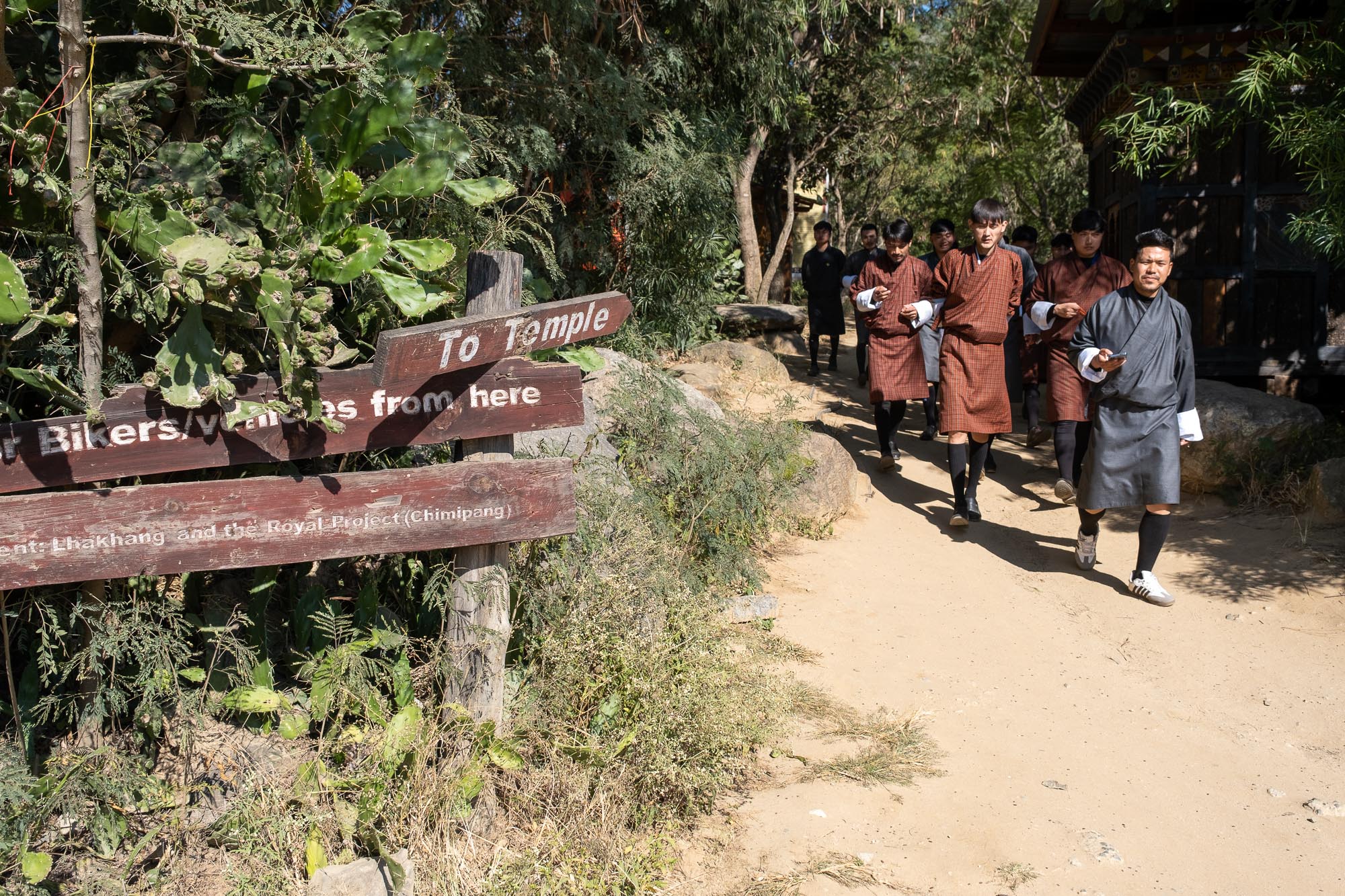
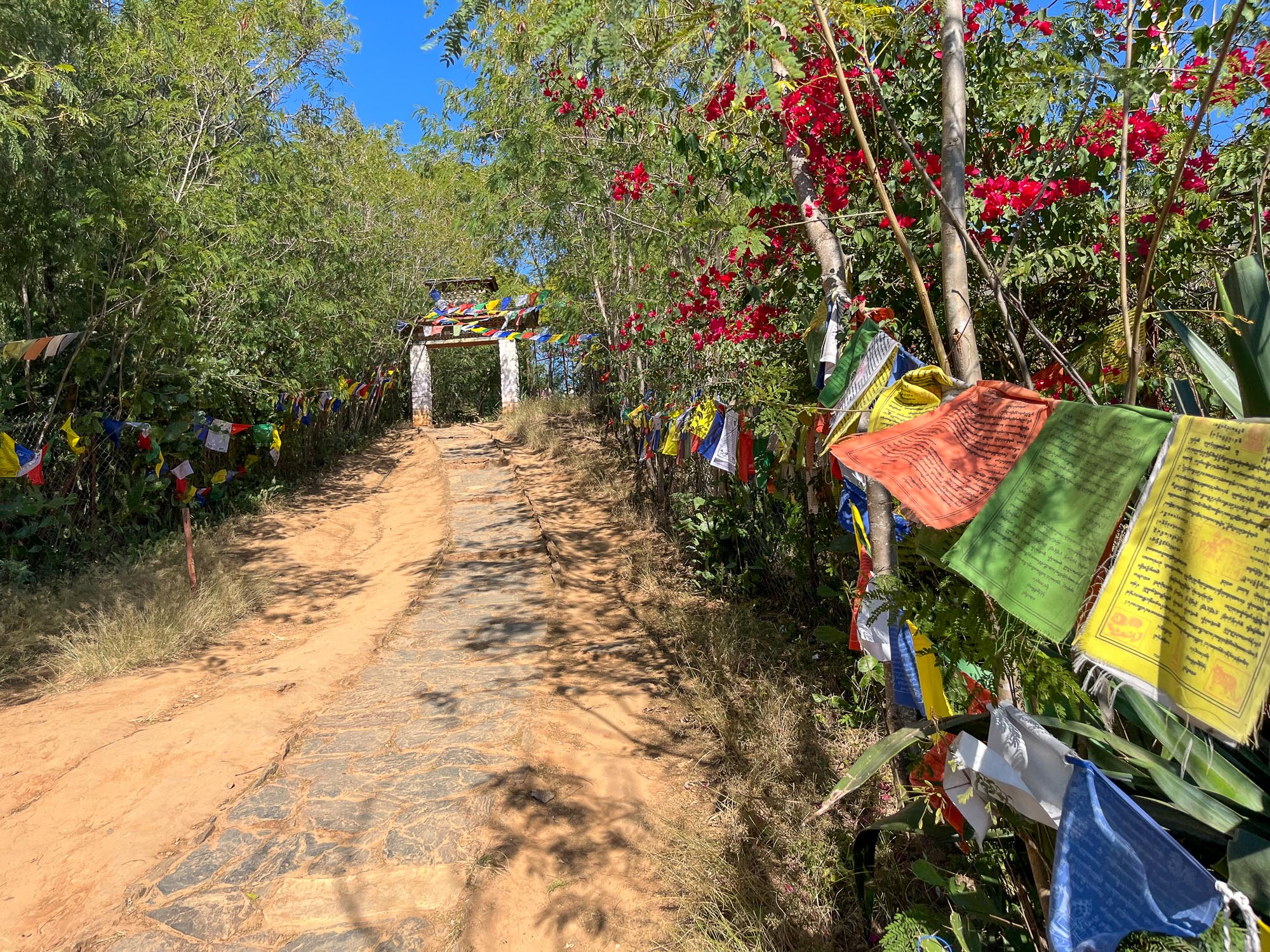
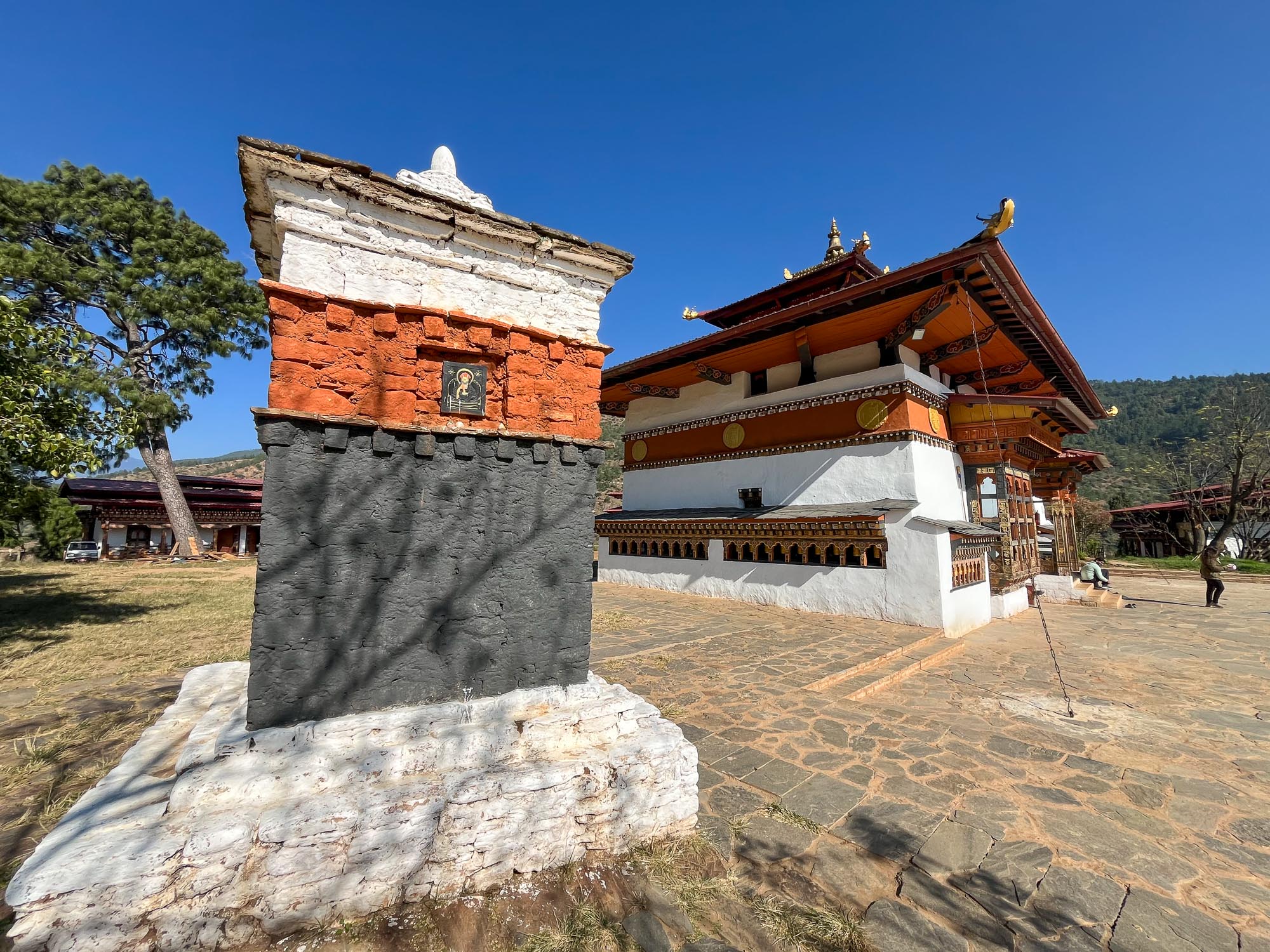
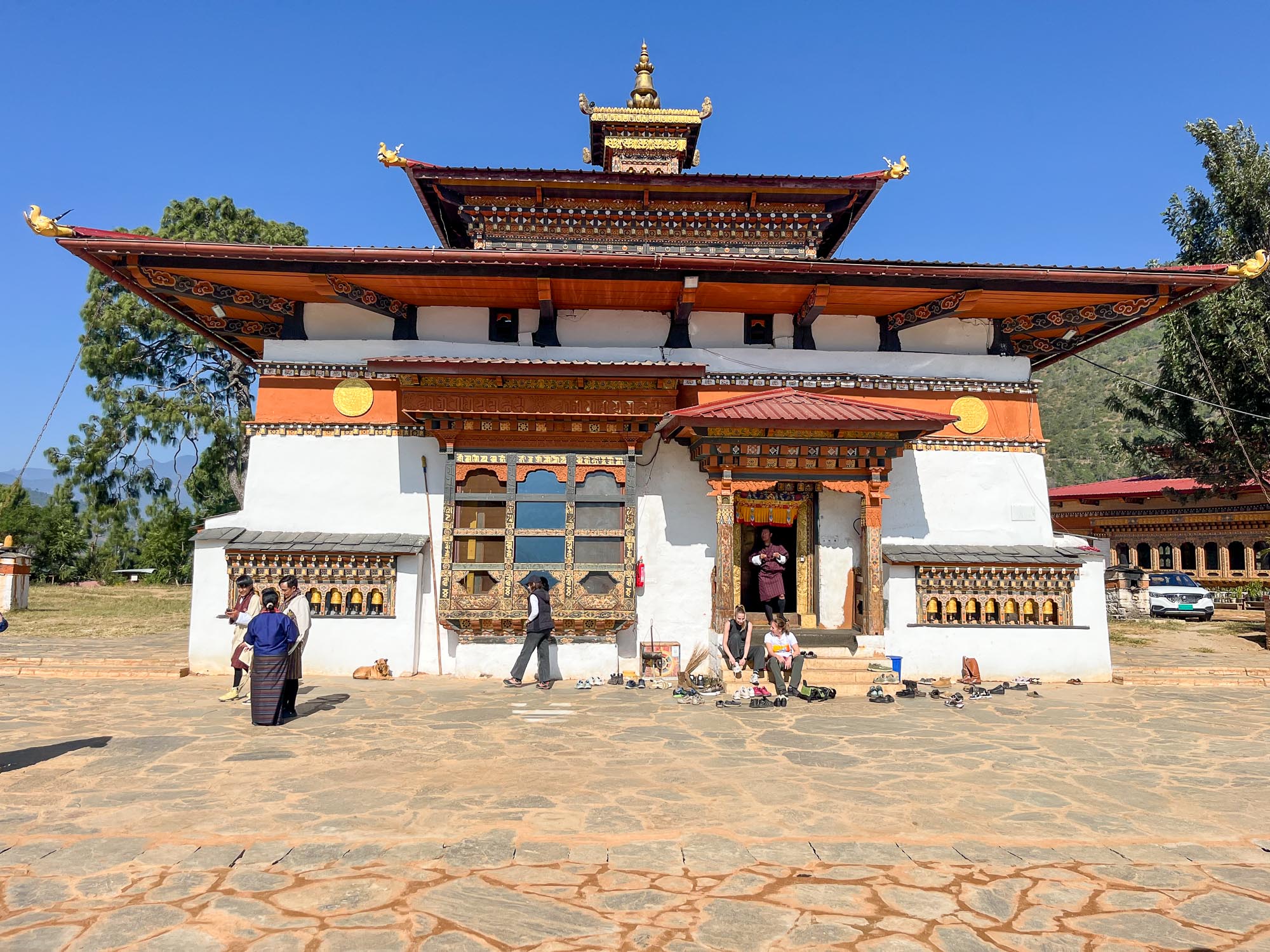
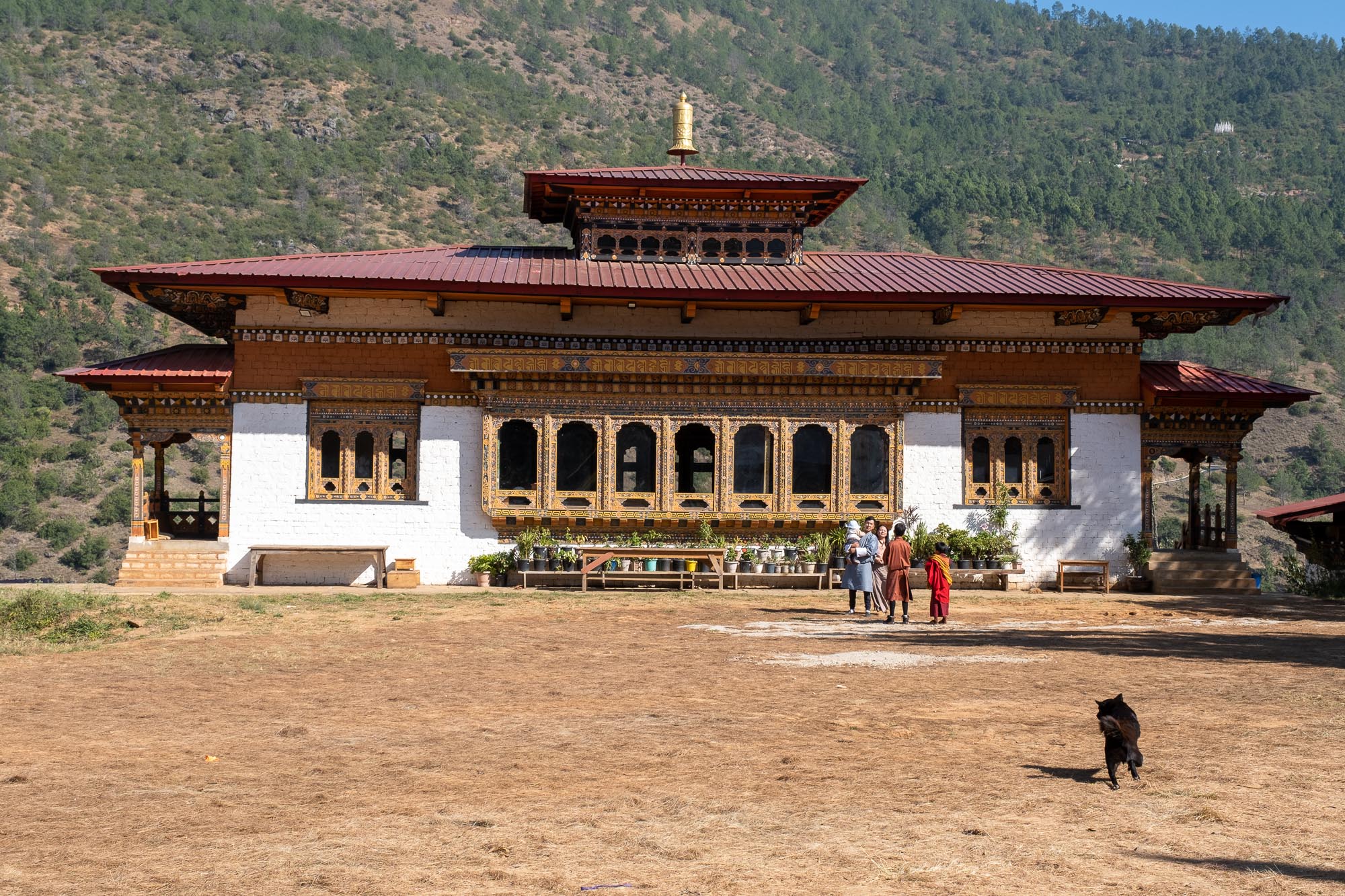
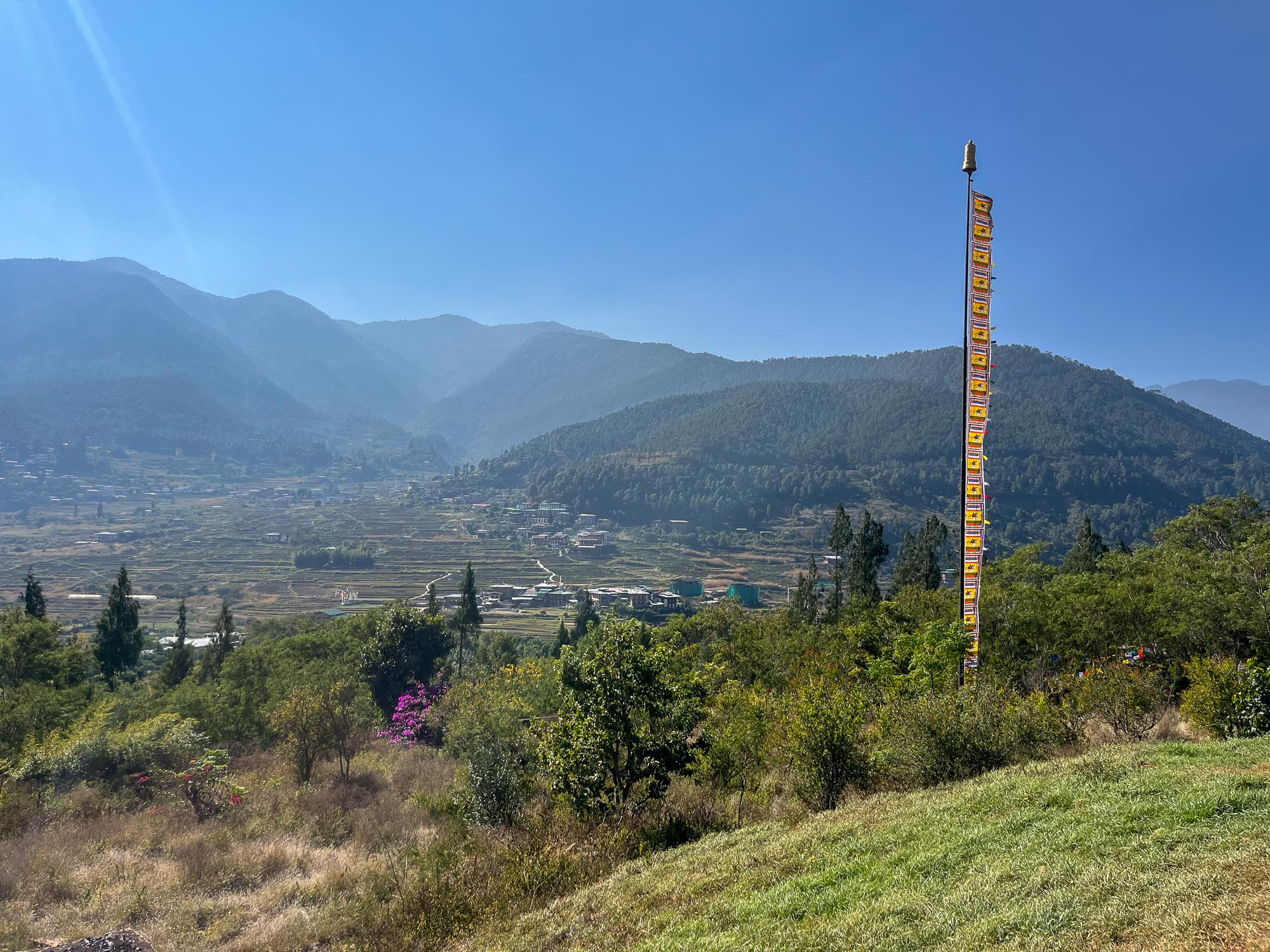
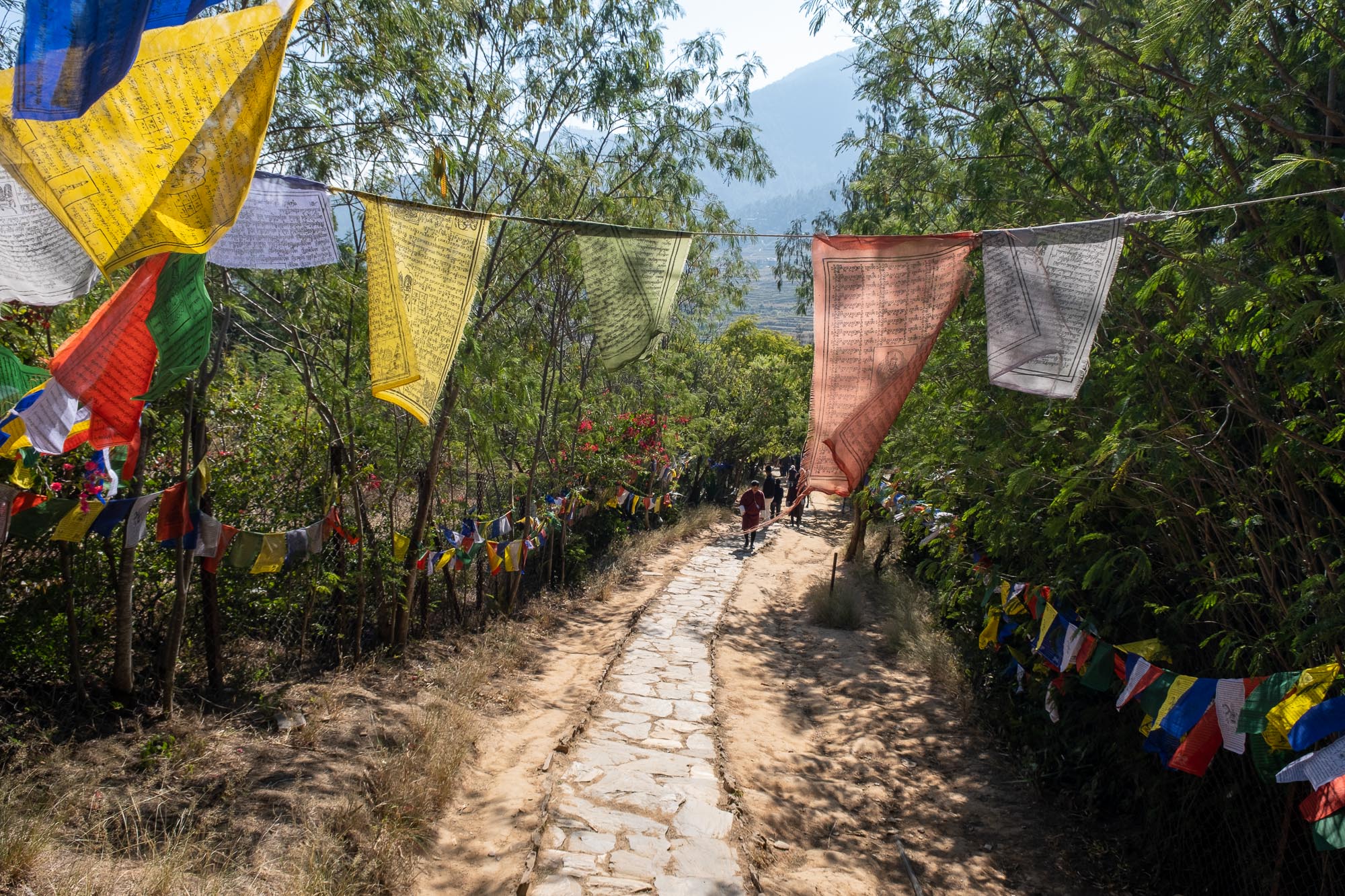
On the way to Punakha, our first stop was Chimi Lhakhang, better known as the fertility temple. From the parking area it’s about a 15-minute walk, but what caught my eye most—at least personally—were the women: Bhutanese women making their way down the hill wearing skirts and high heels. The path is far from well maintained—certainly not designed for heels—which gives the whole scene an almost surreal feel. From the outside, the temple itself is nothing particularly special, but it stands on a small hill with lovely views of the surrounding landscape. And it was only inside the temple that it became clearer to me how and why it is so famous…
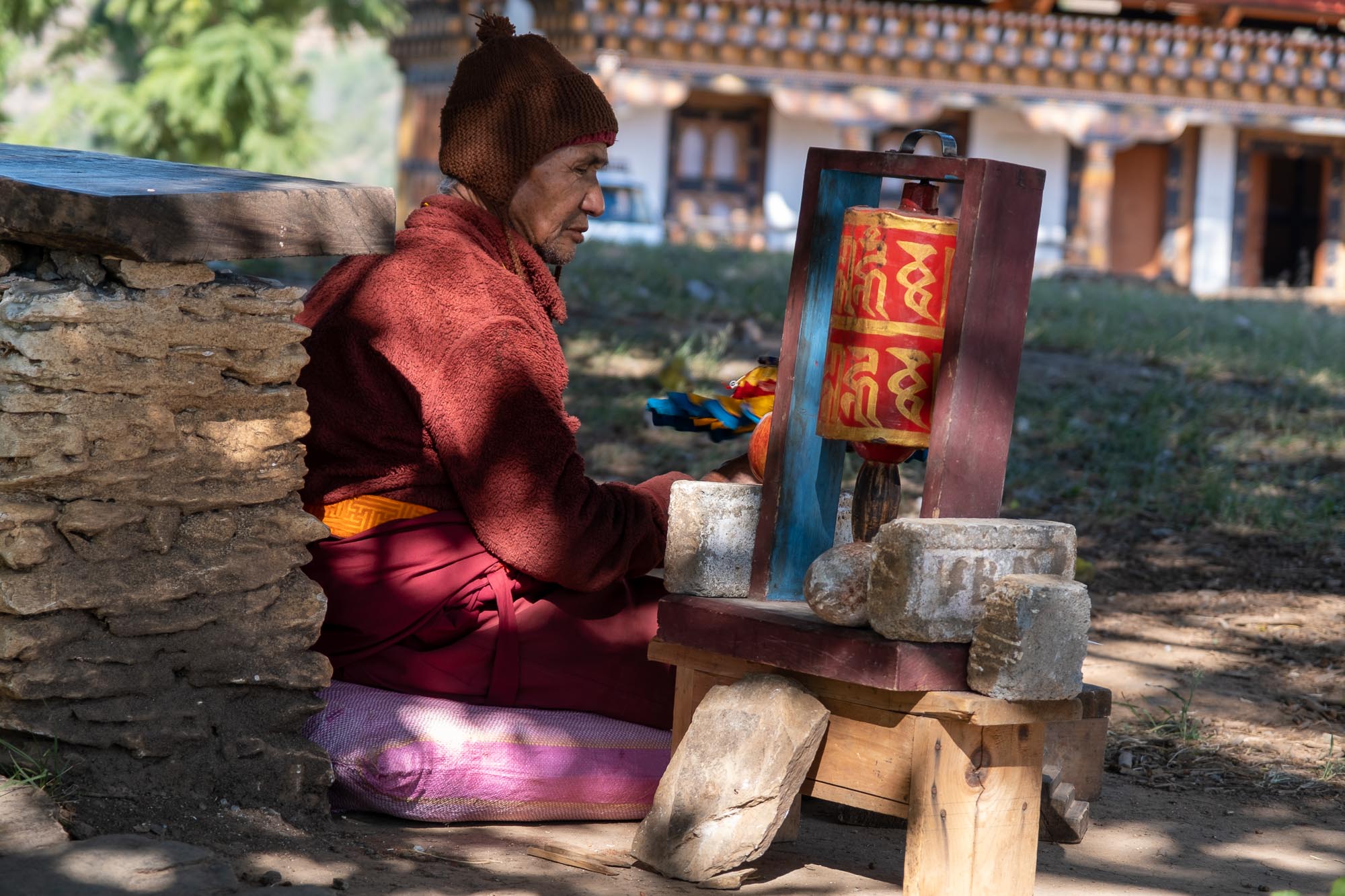
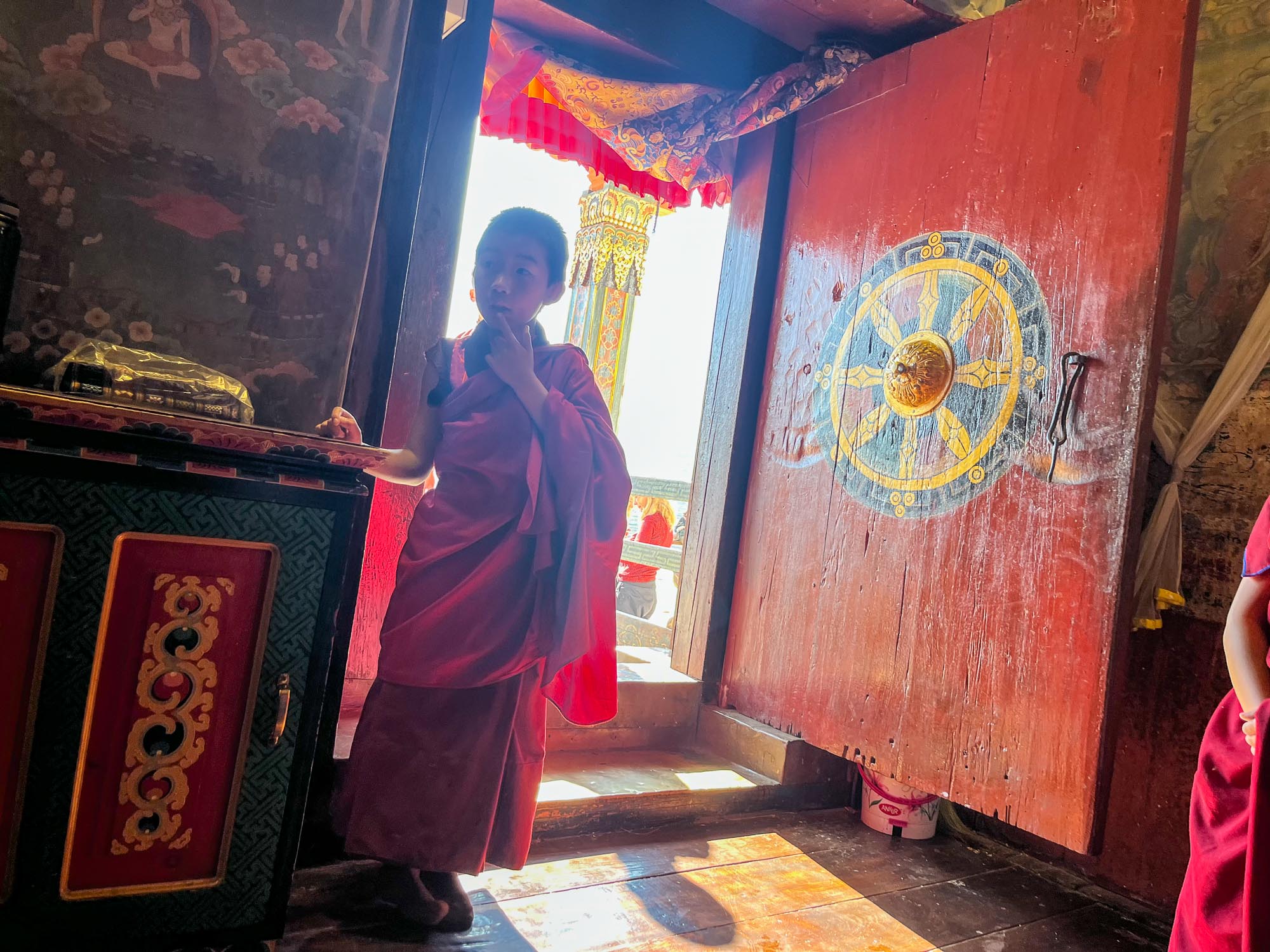
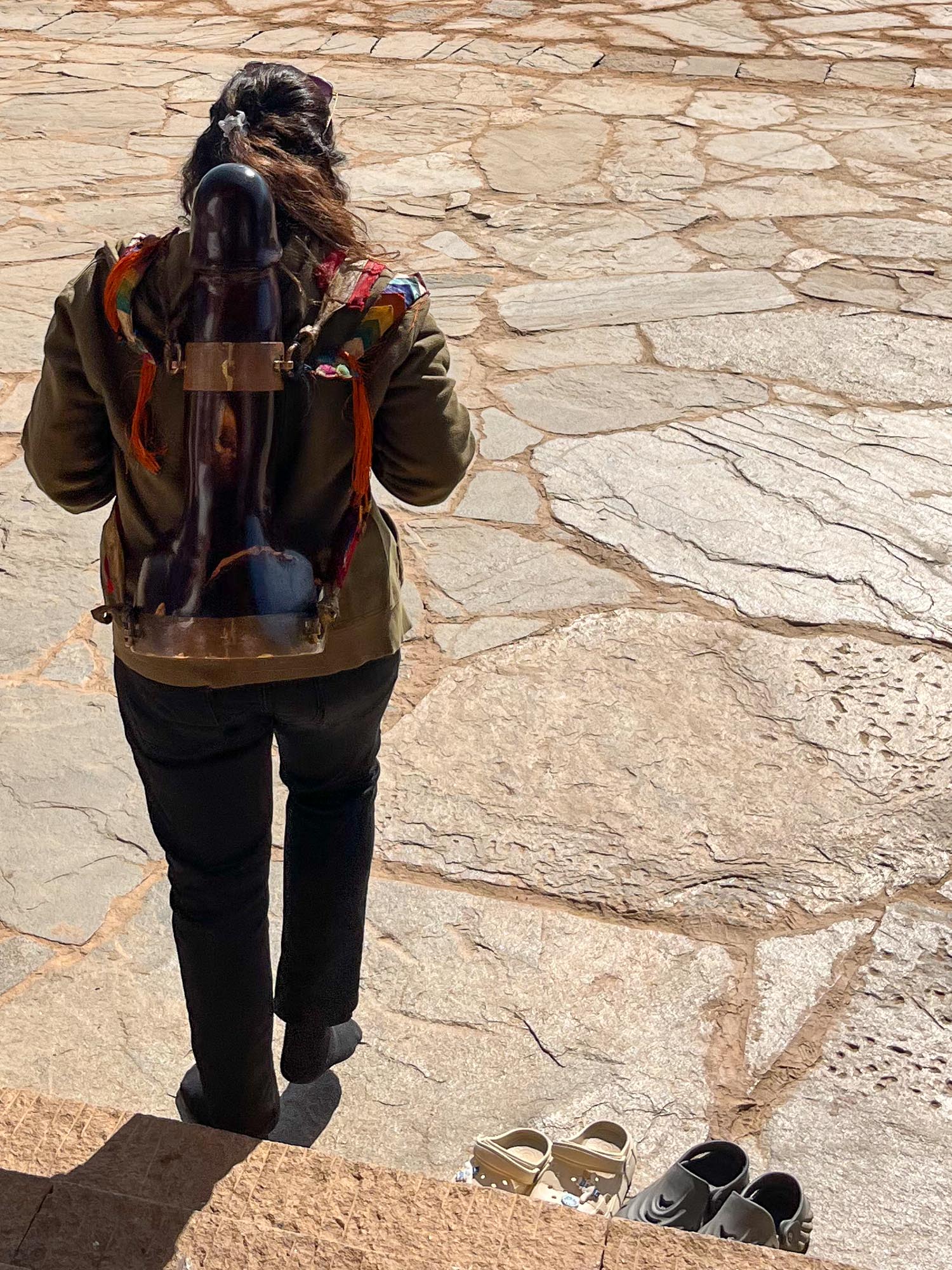
Chimi Lhakhang is renowned for rituals connected with fertility and blessings for couples who wish to have children. According to tradition, women (and couples?) walk around the temple three times, carrying a large wooden phallus on their backs, symbolizing protection from evil spirits, fertility, and, of course, blessings for families. These rituals are not limited to locals—Chimi Lhakhang is also visited by many foreigners and pilgrims from neighboring countries, especially India. Inside, prayers are held, and due to the temple’s small size it is packed with people—including a very spiritual group of Spanish tourists who would accompany us, at least at the main sights, the following day as well. Even more interesting was the sight of a young man climbing up the hill with a baby. According to the guide, he had come to present and bless the “final product”—the result of his wife’s circumambulation of the temple. Bhutan can be very direct, yet at the same time surprisingly natural.
Lunch was finally truly excellent. For the first time so far, we were served very good food, even though it was a self-service buffet. Momos were also available—traditional Himalayan dumplings, found in various forms all across Asia, but with a distinctive local character here.
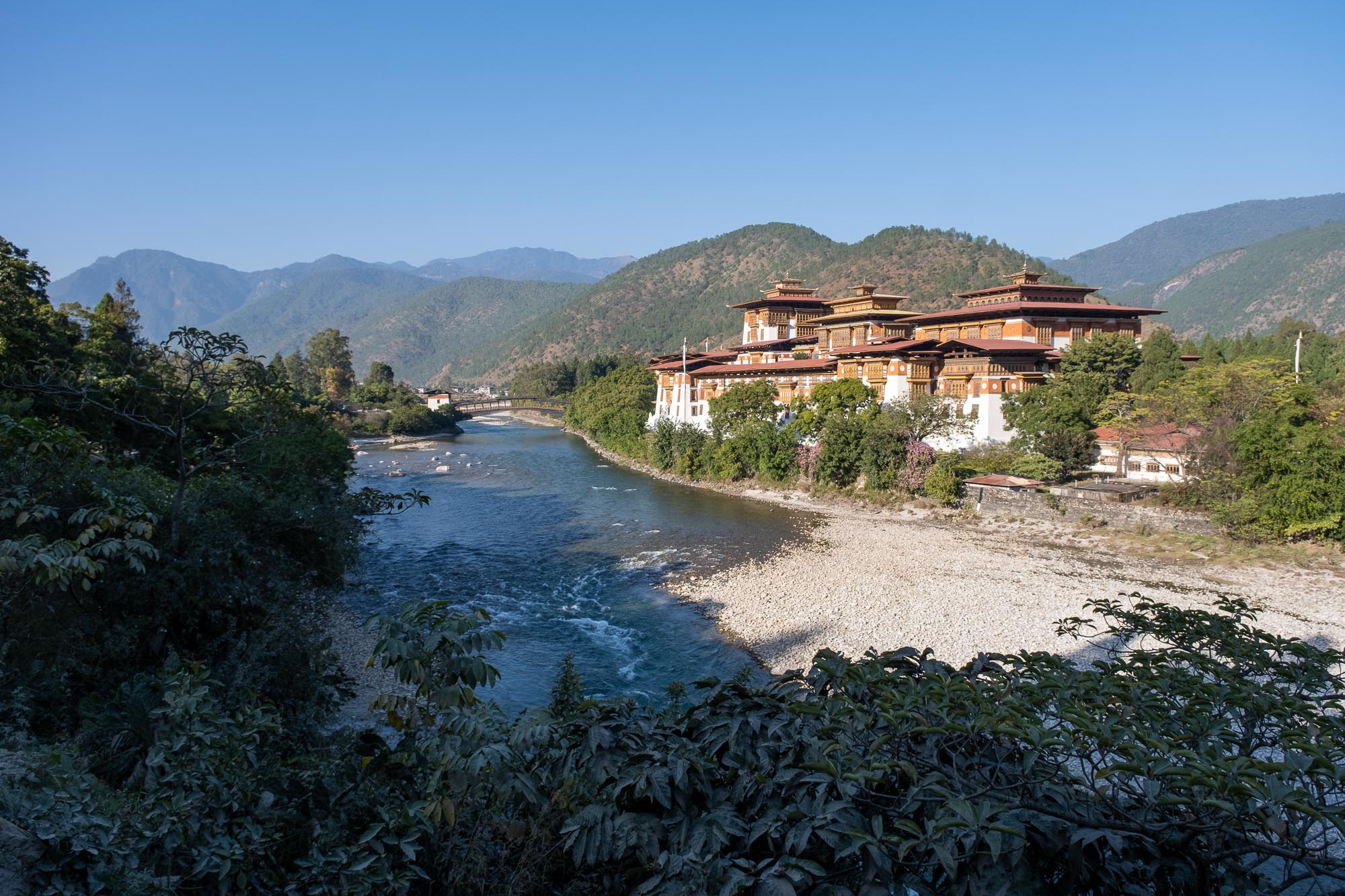
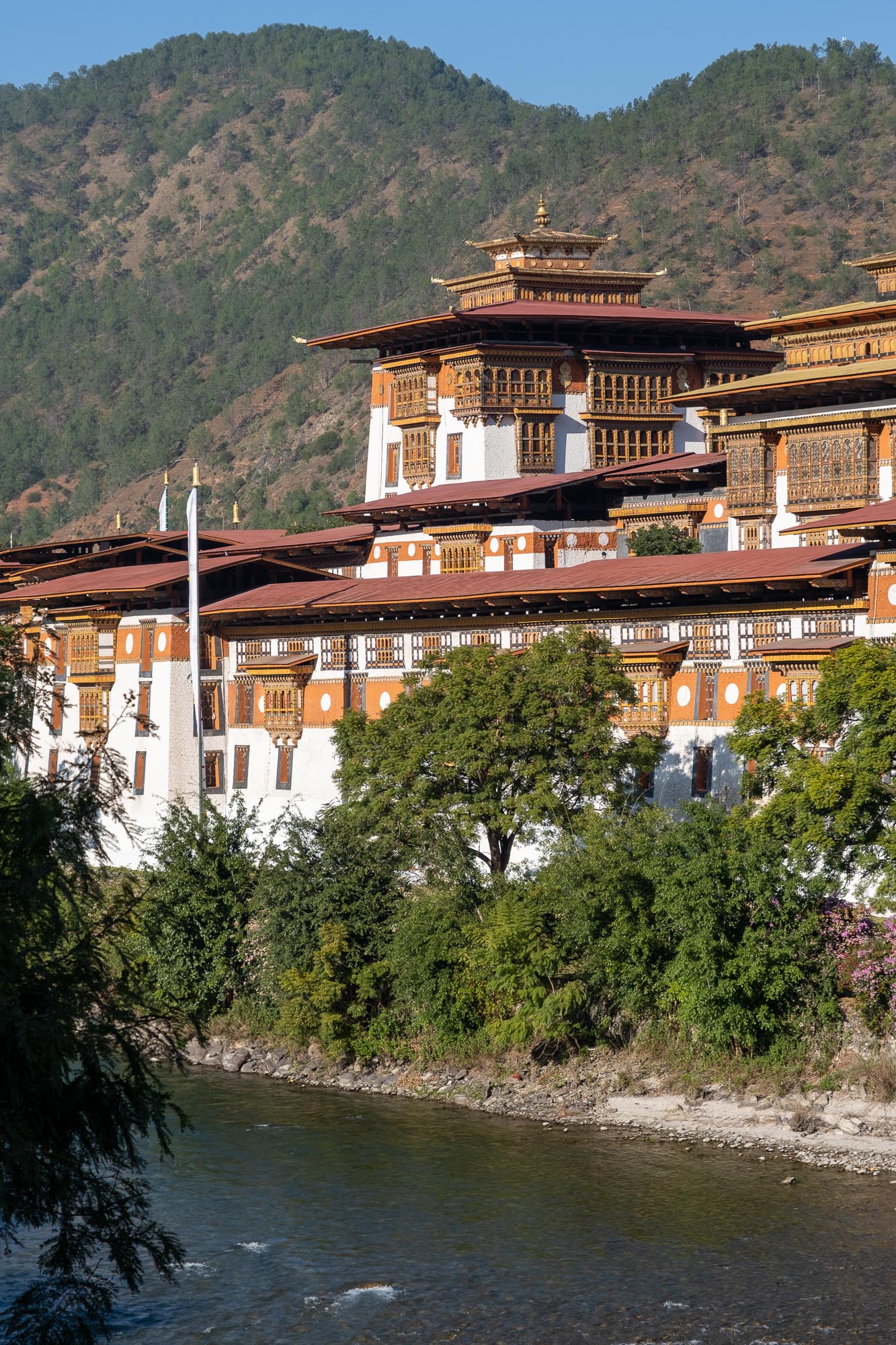
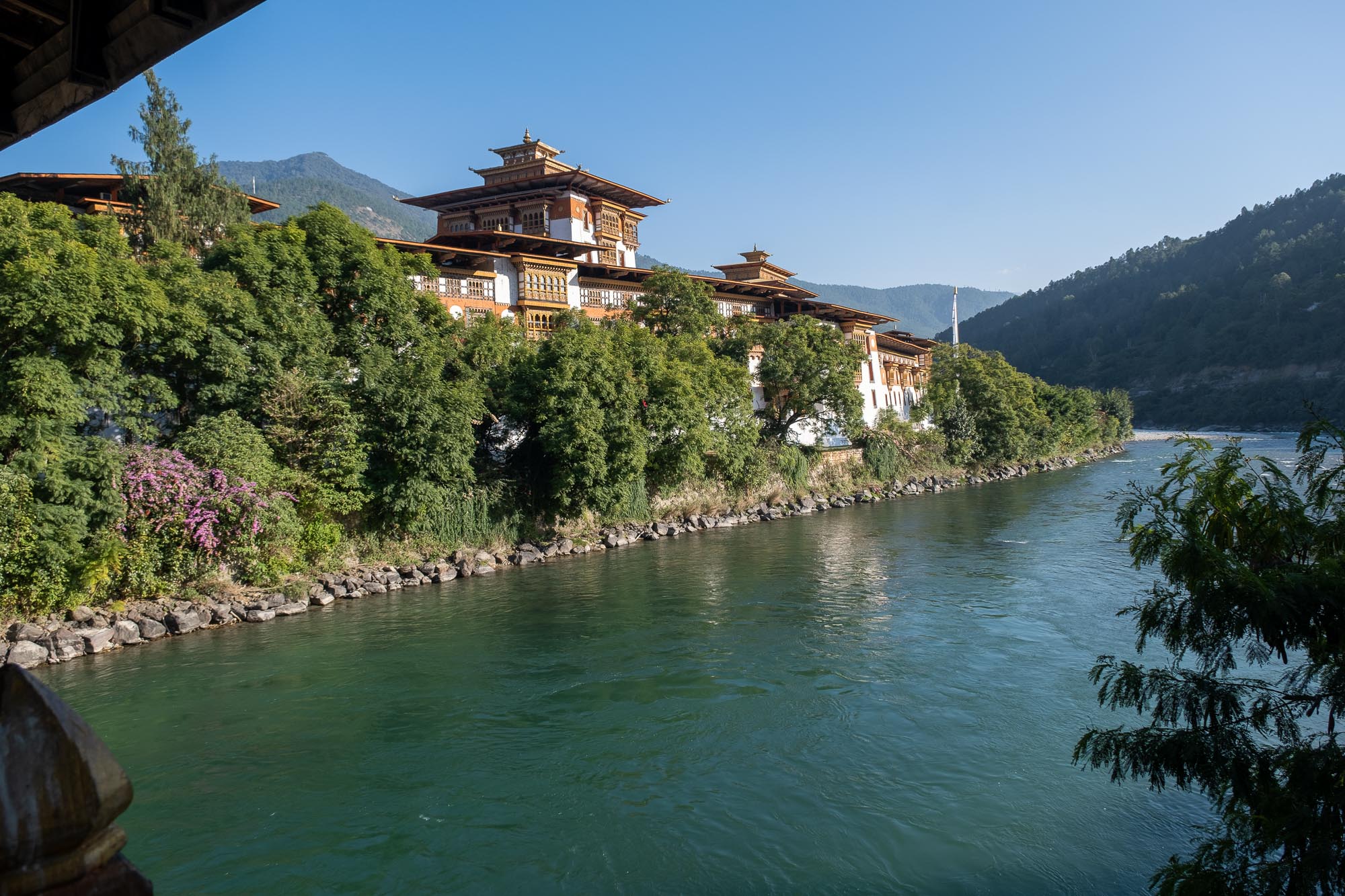
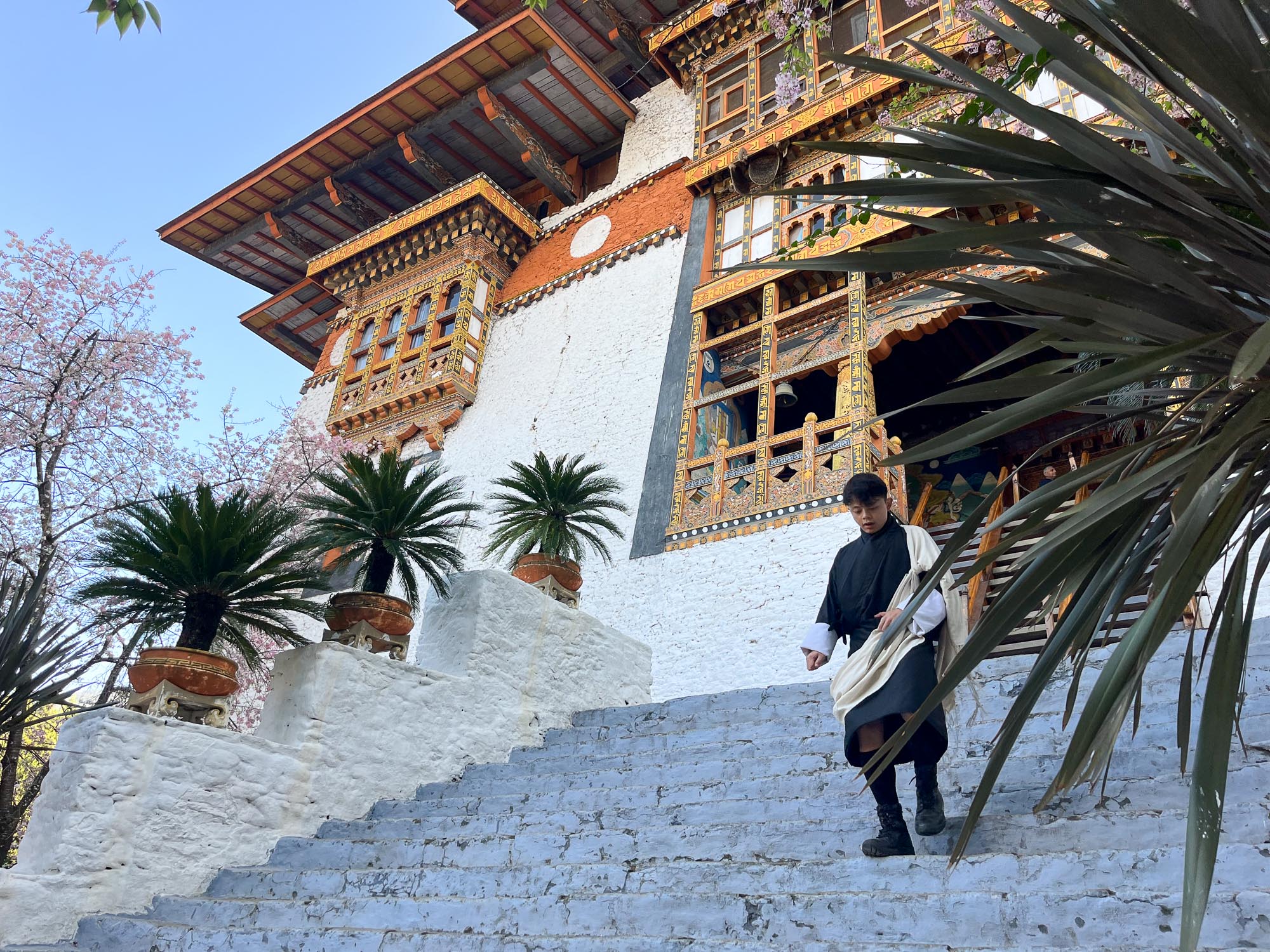
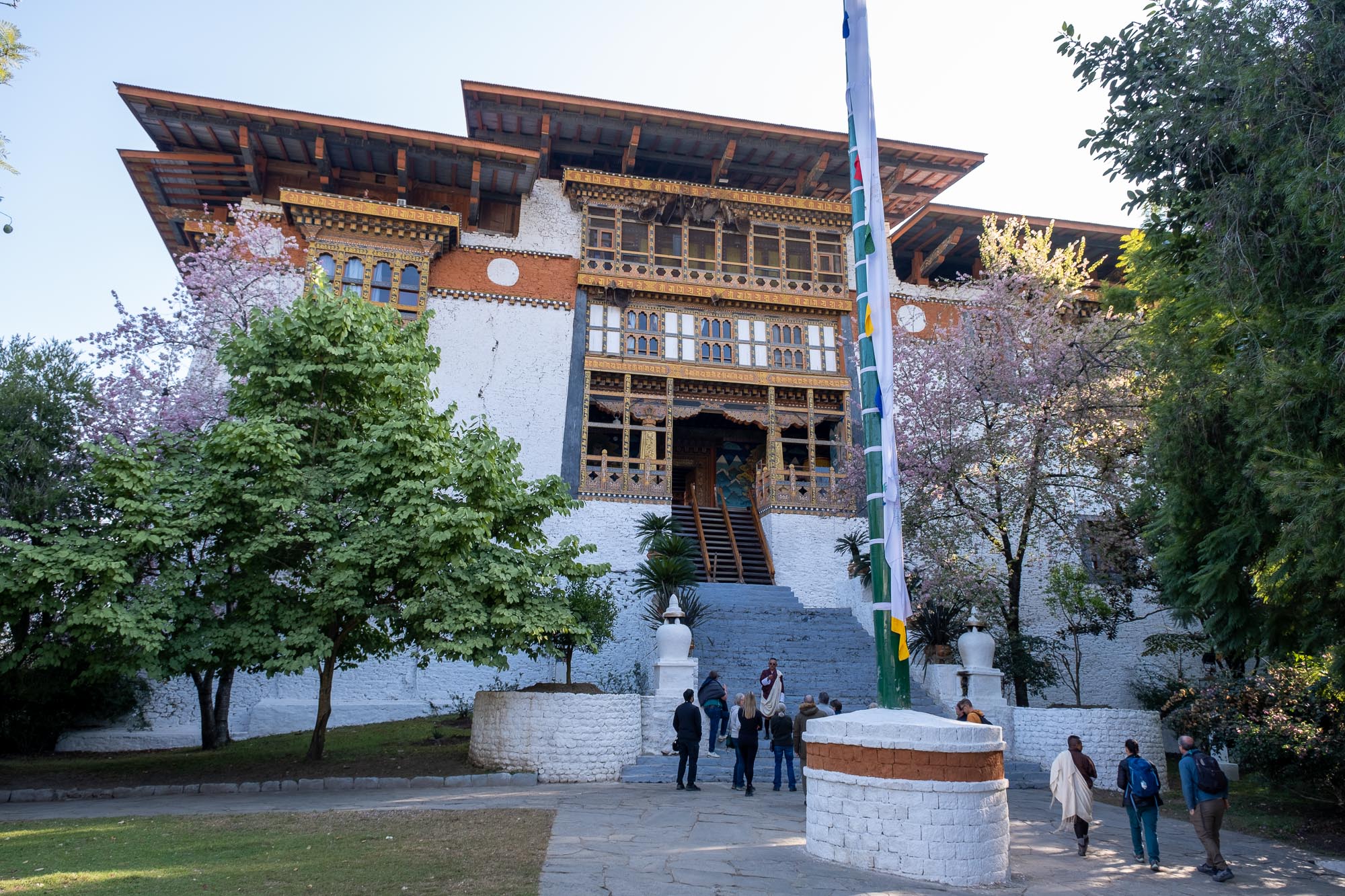
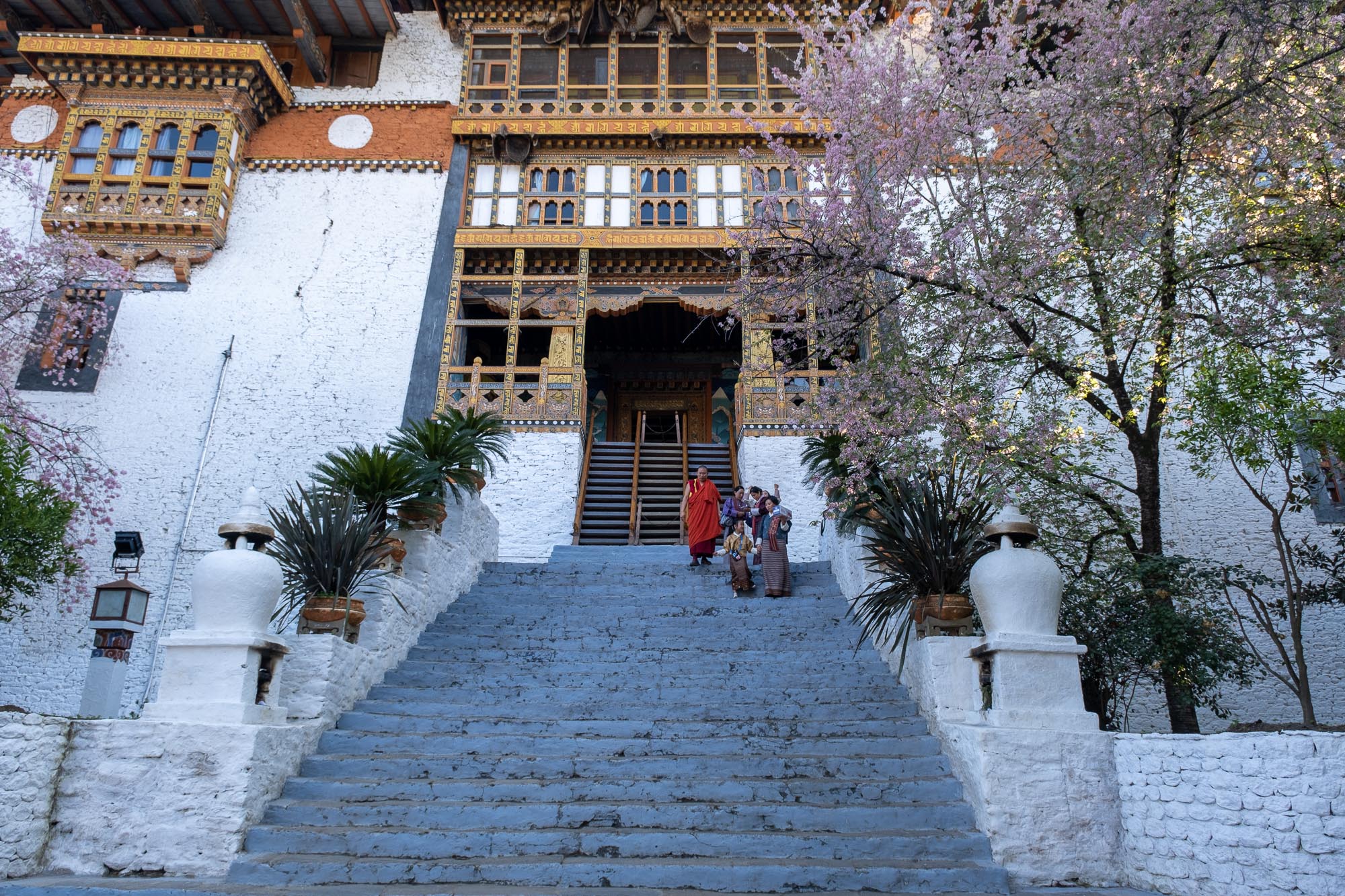
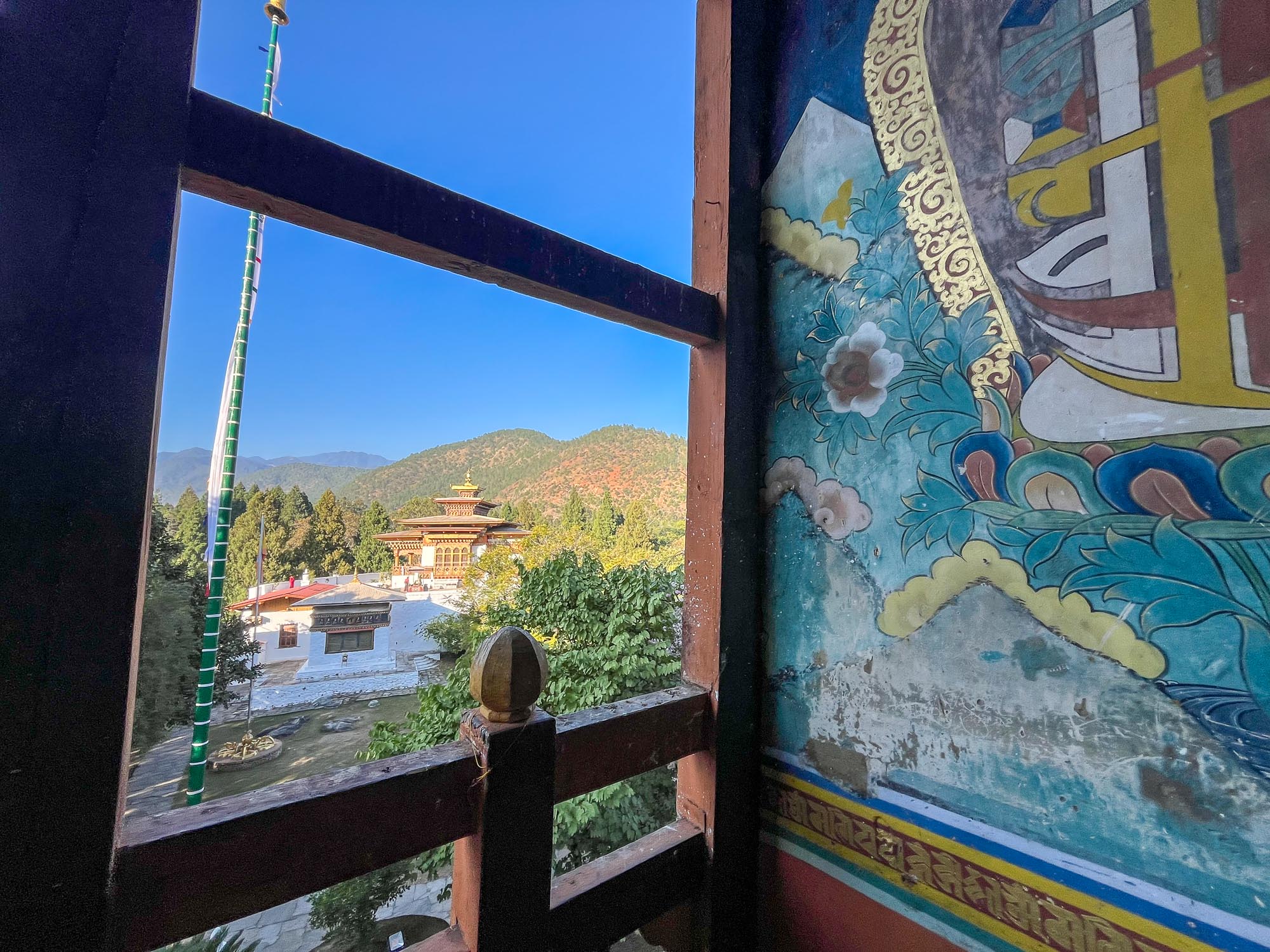
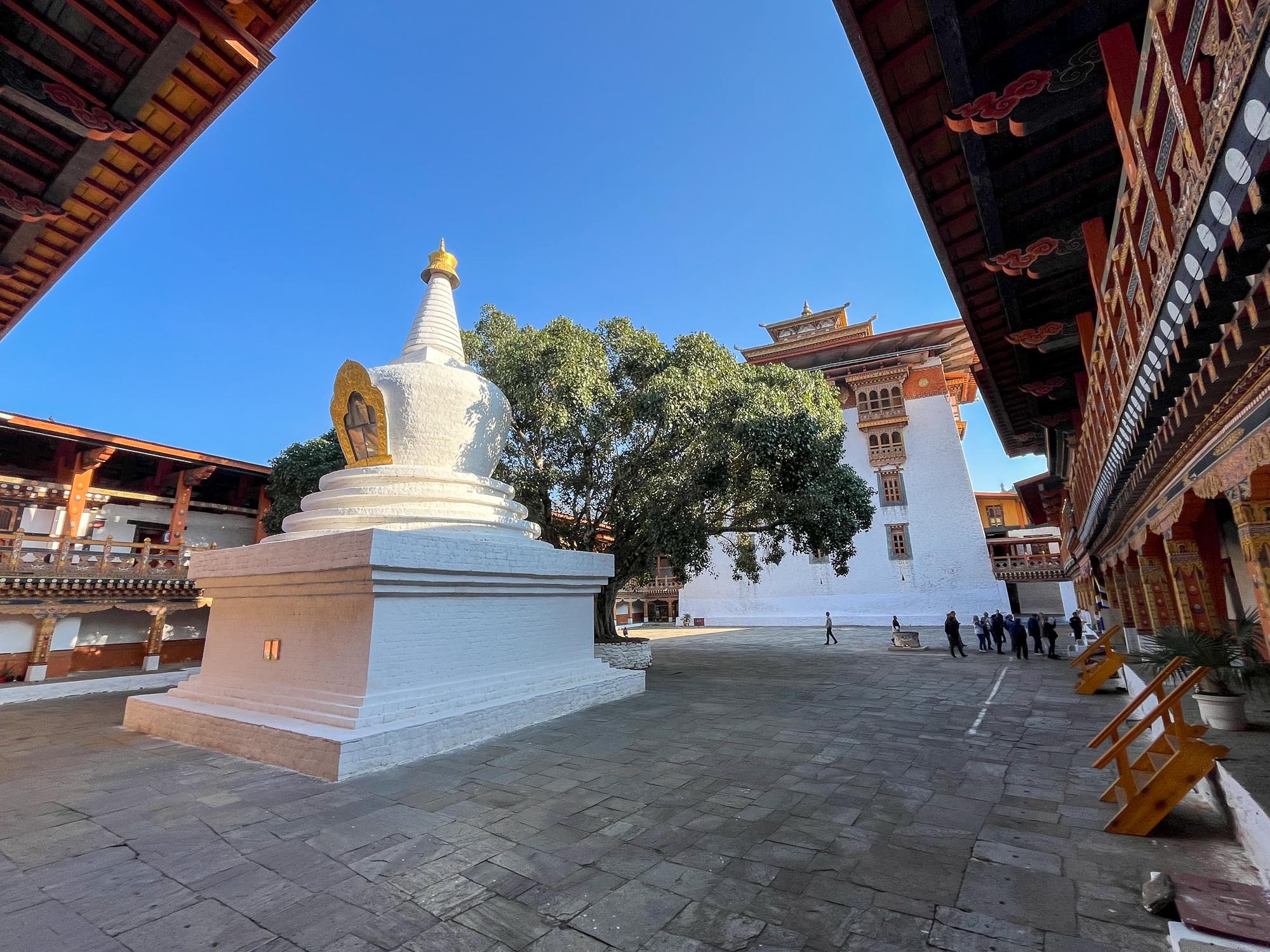
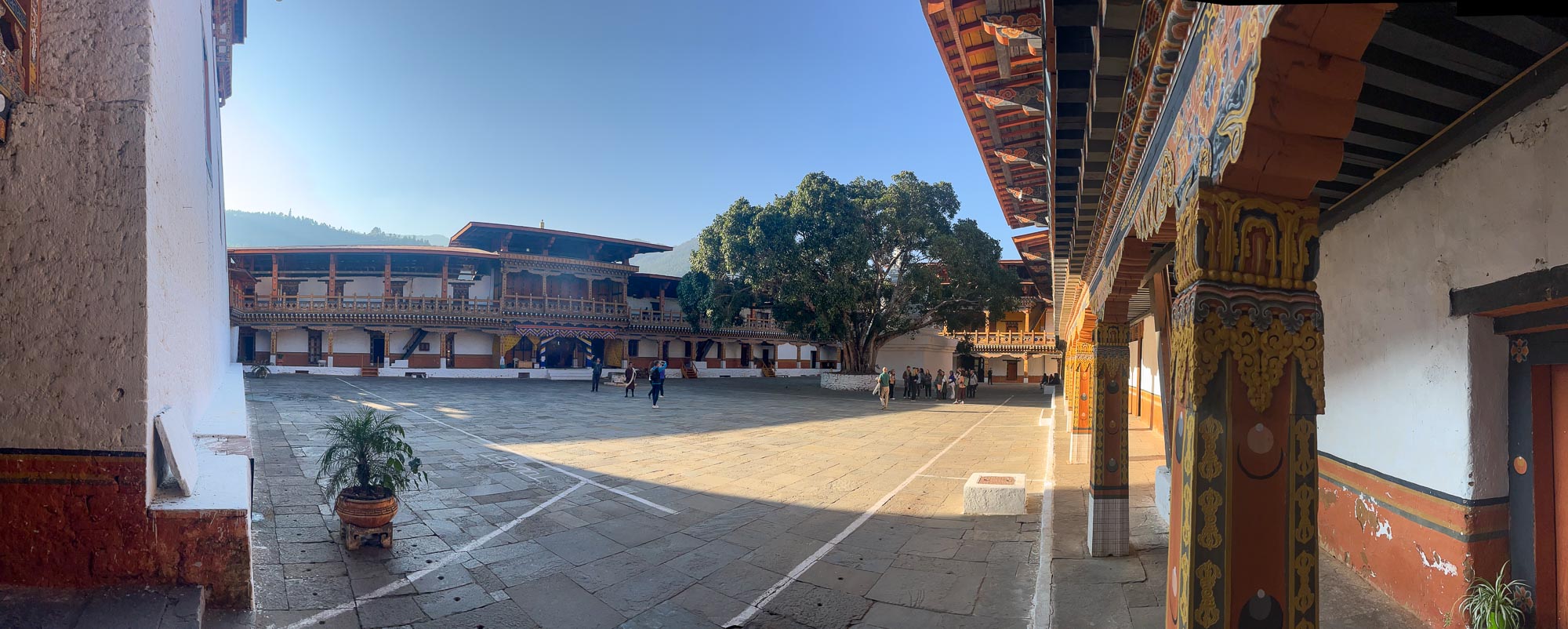
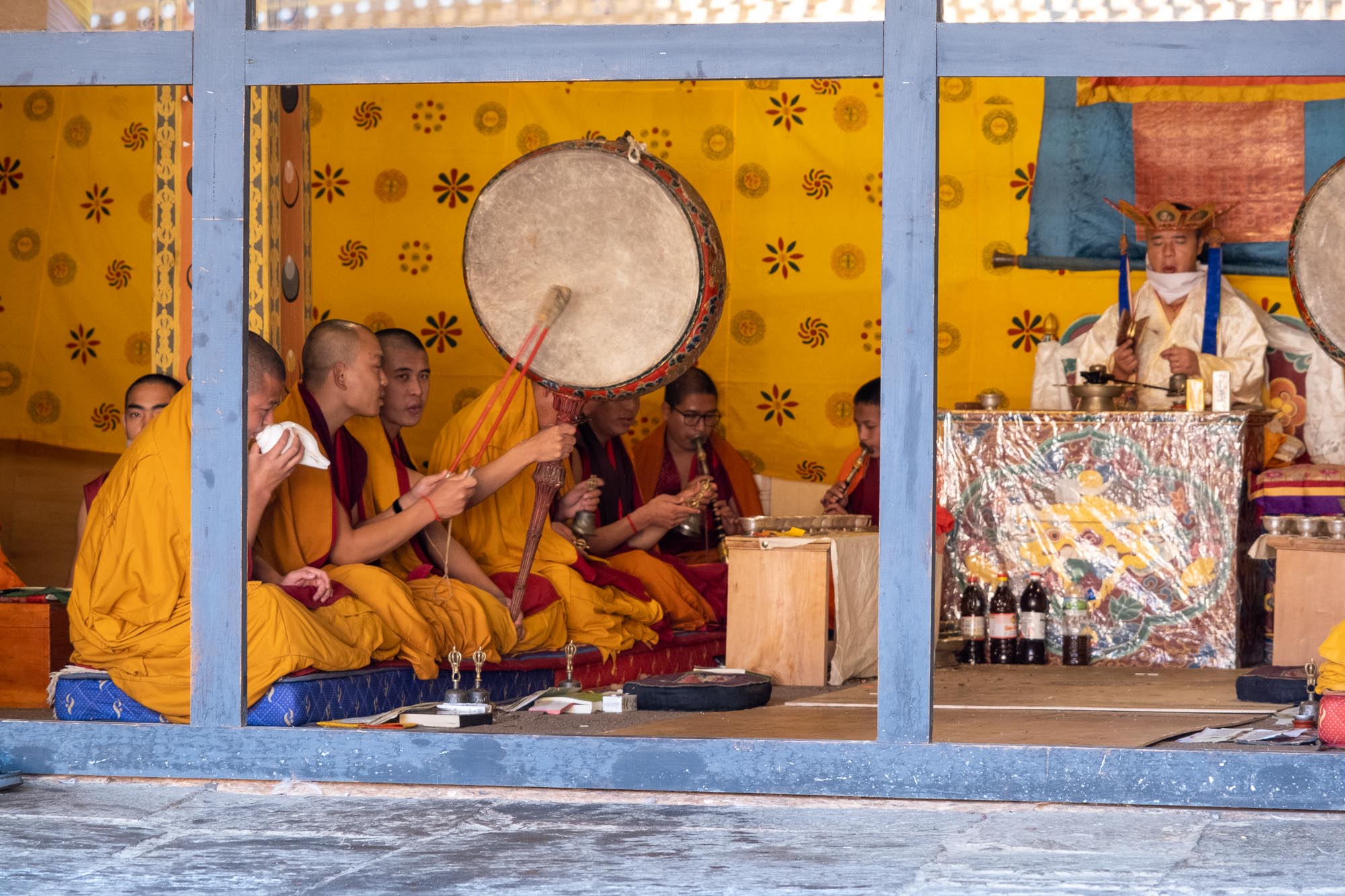
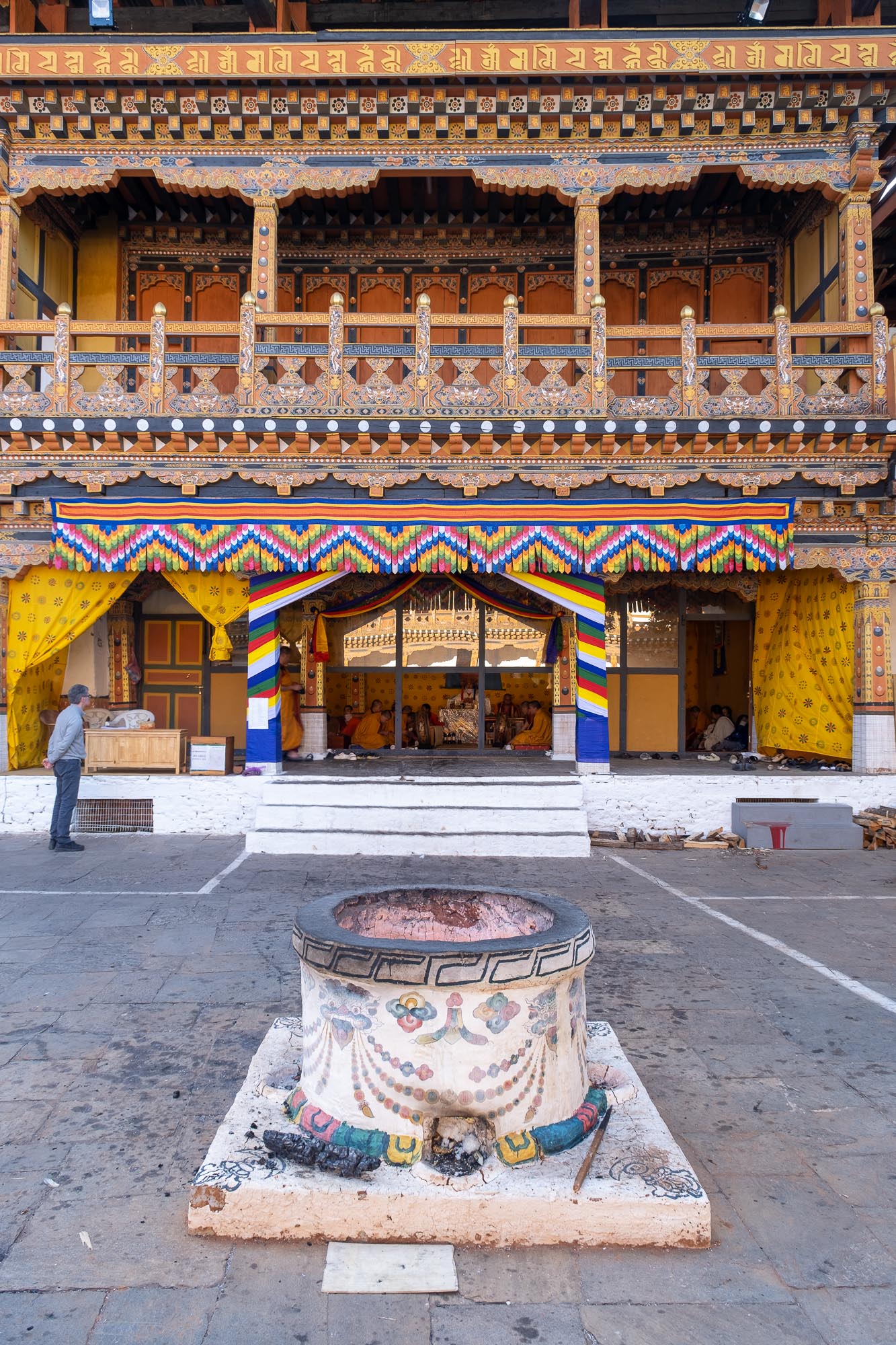
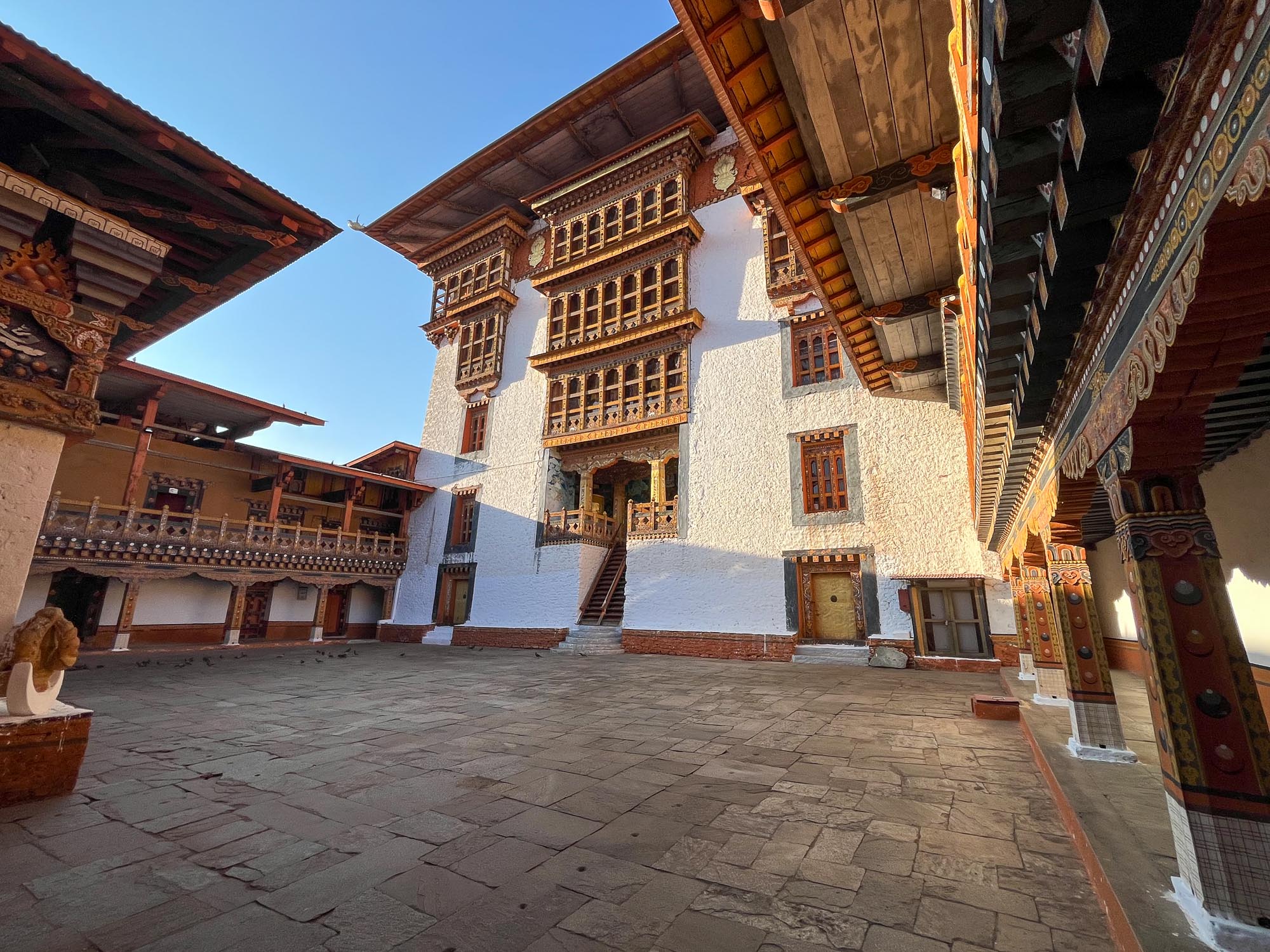
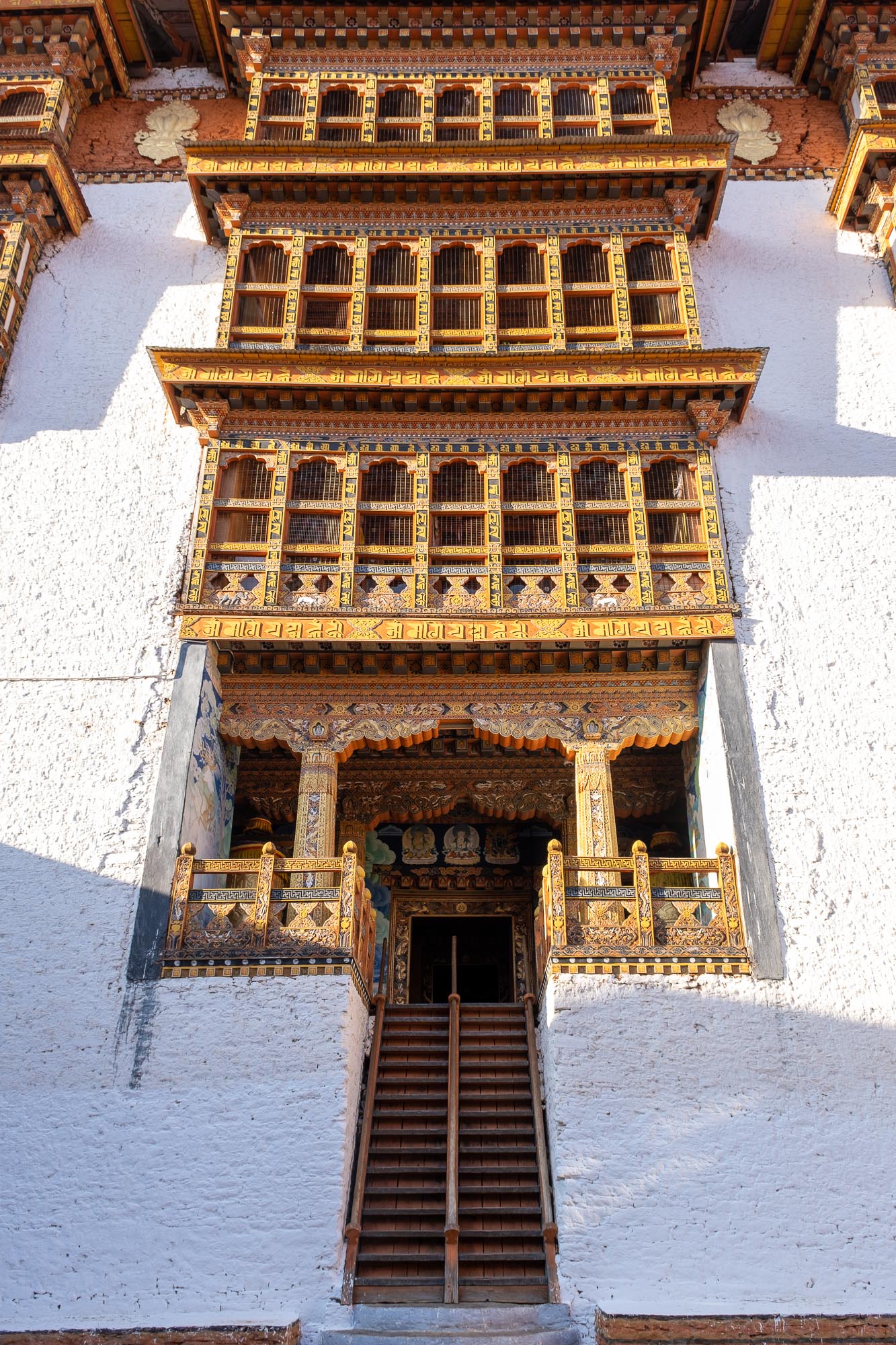
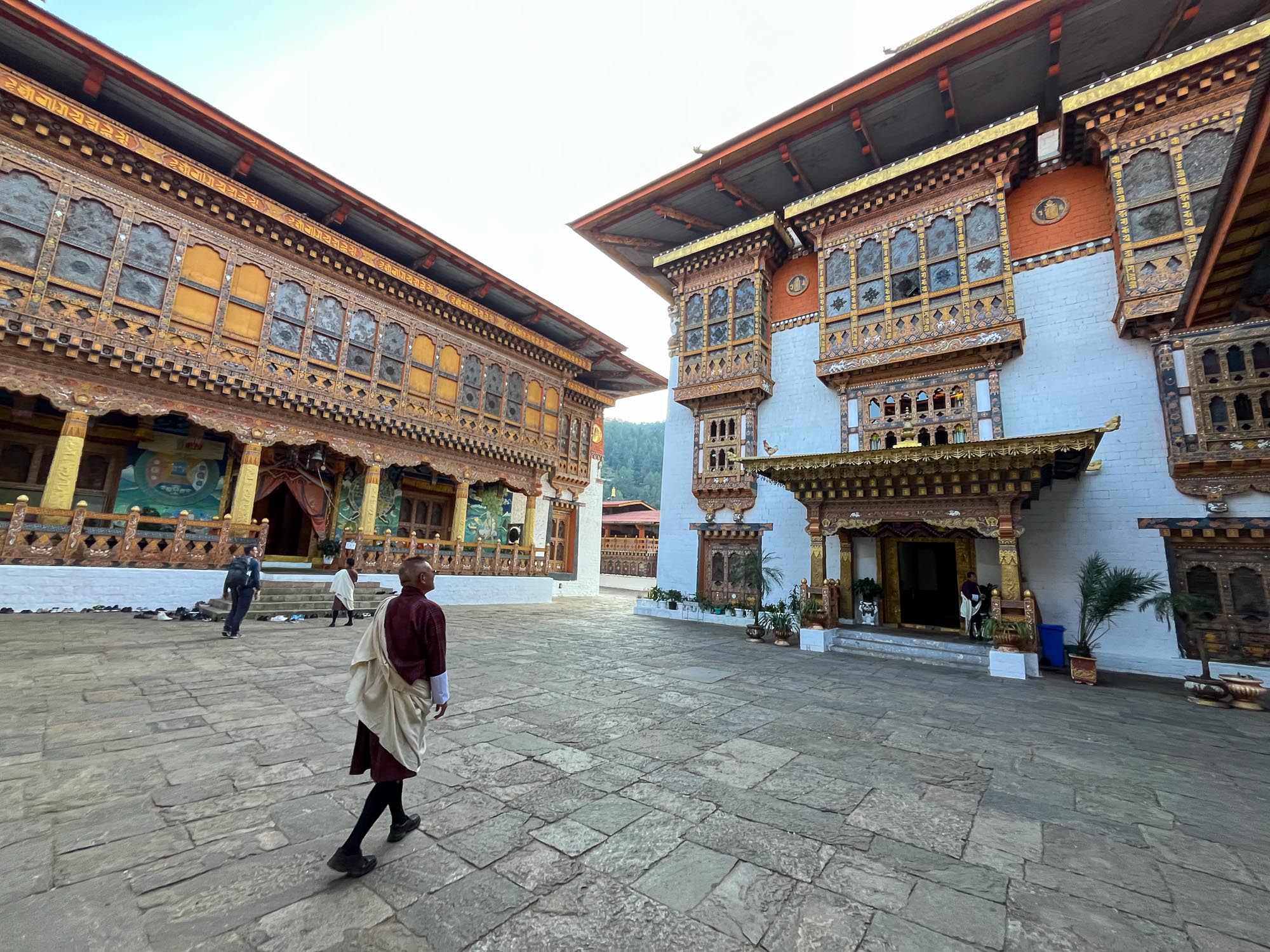
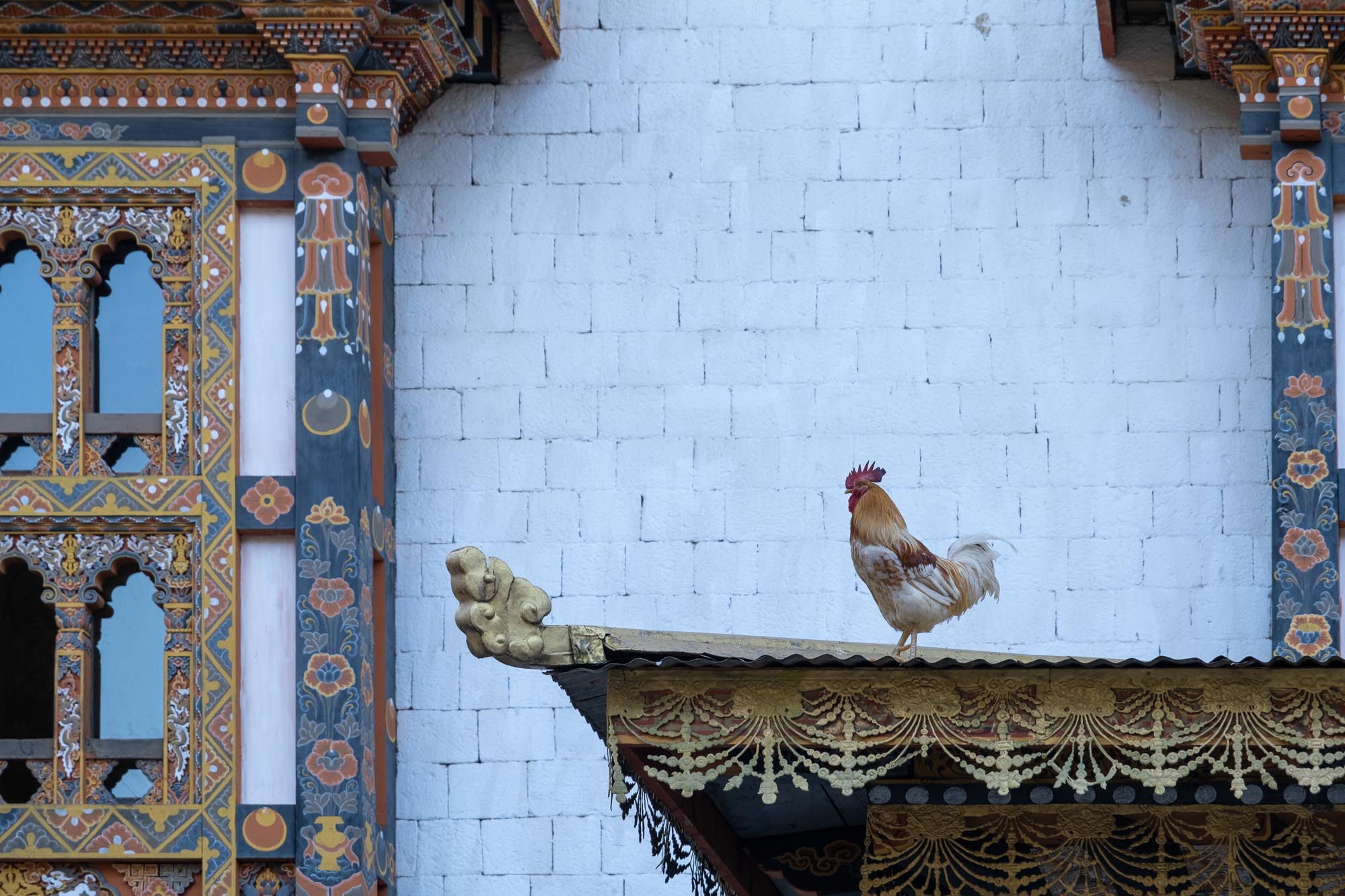
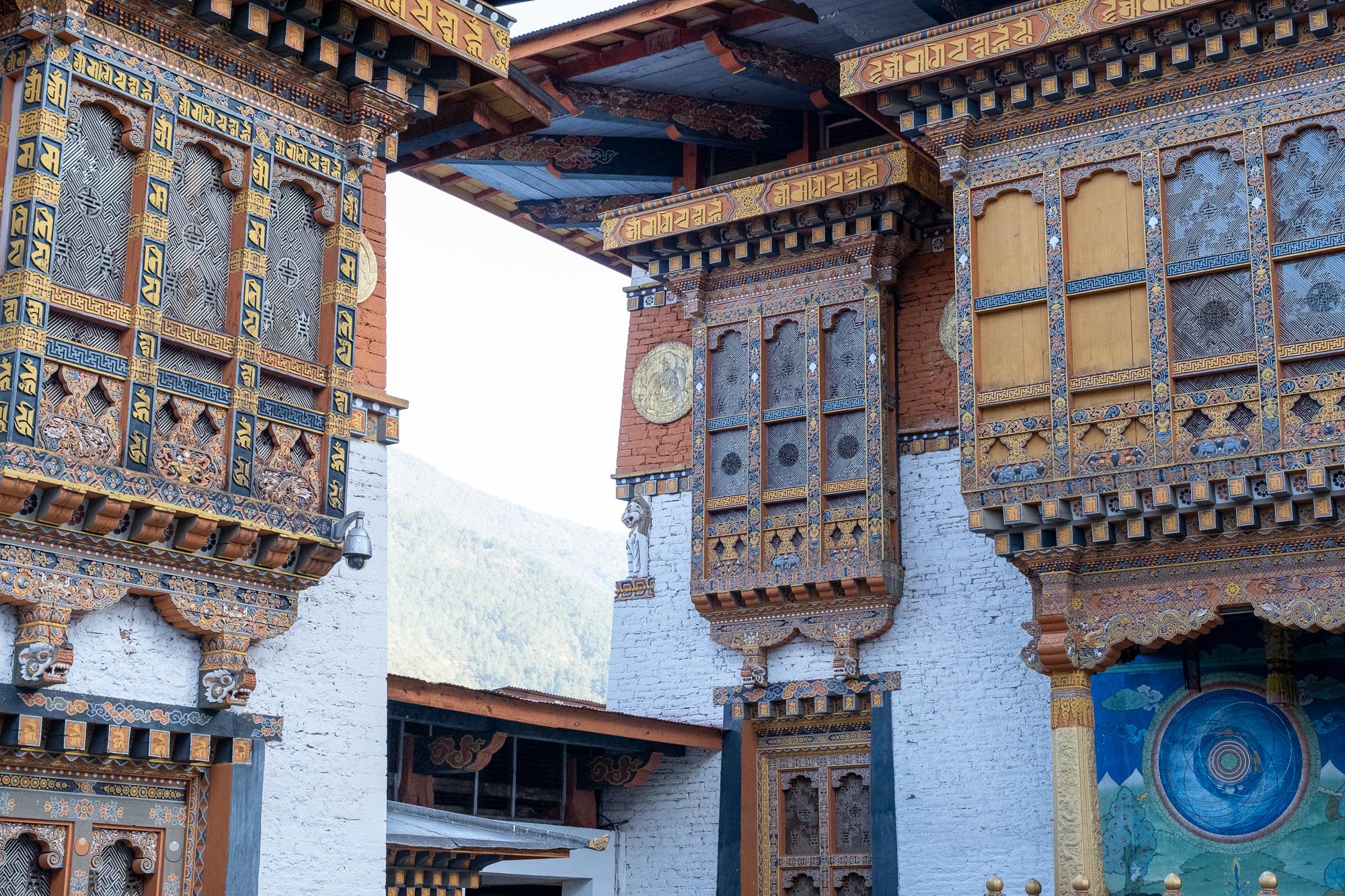
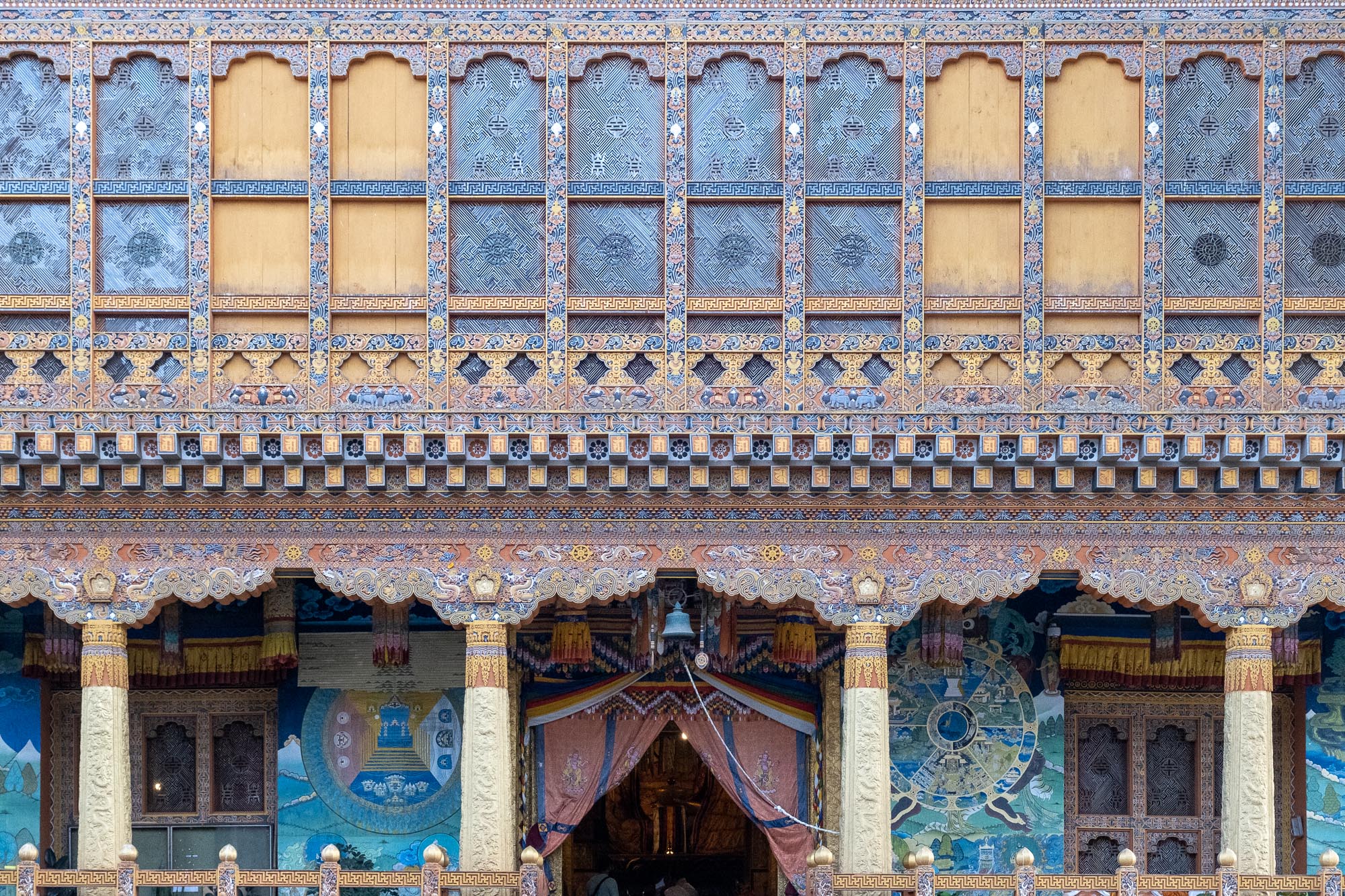
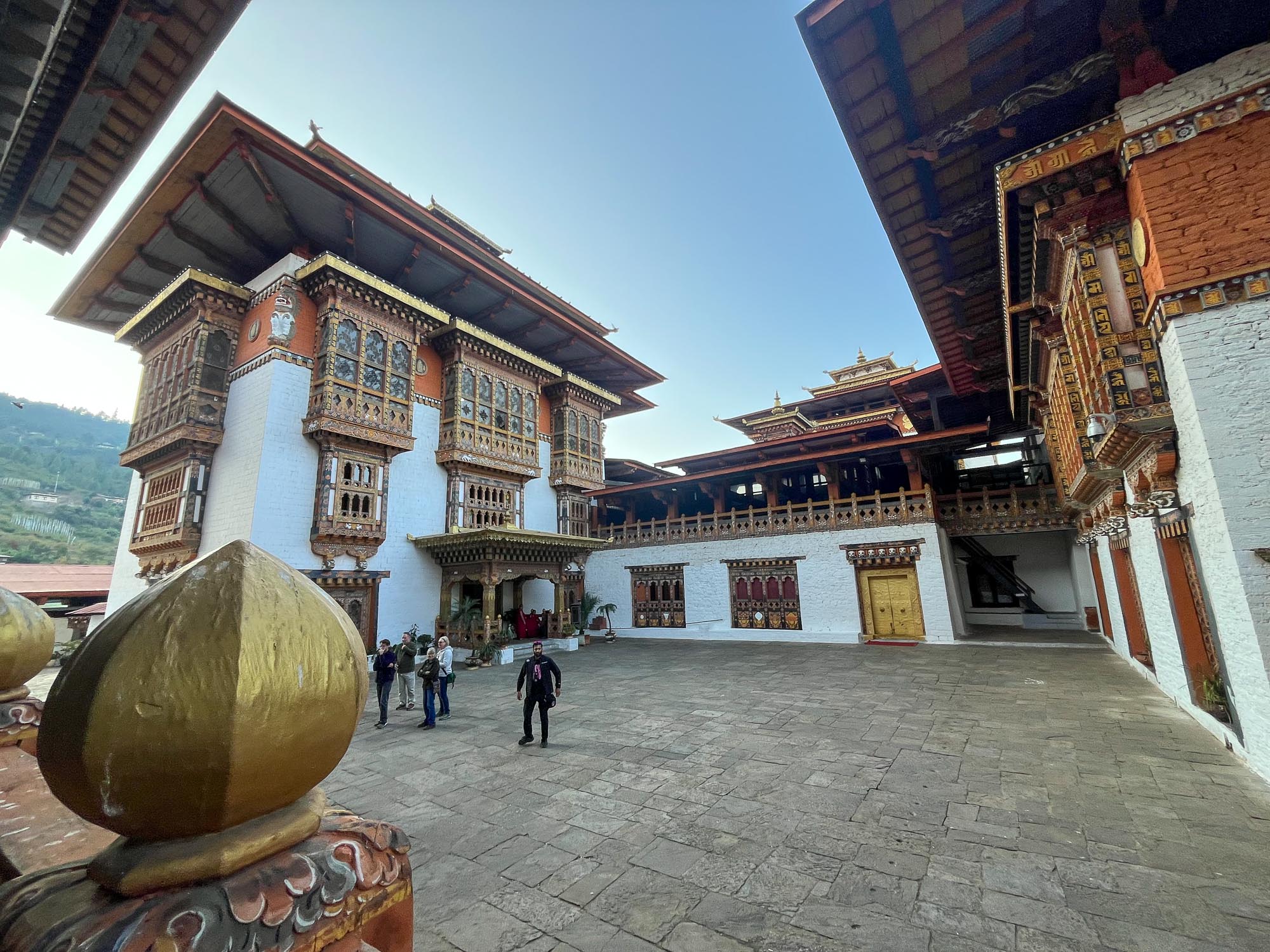
The next stop was Punakha Dzong (or the Palace of Great Happiness), one of the most important historical and religious institutions in Bhutan. Built in 1637, it stands at the confluence of the Pho Chhu and Mo Chhu rivers and is considered one of the most beautiful dzongs in the country. Punakha was the capital of Bhutan for centuries and also the winter residence of the king, as it lies at around 1,400 meters above sea level—almost a thousand meters lower than Thimphu and Paro—and, due to warm air masses from the south, enjoys a much milder climate. Punakha Dzong still plays an important role today: key religious ceremonies take place here, the first Bhutanese royal dynasty (the current Wangchuck dynasty) was crowned here in 1907, and the country’s first constitution was signed here in 2008.
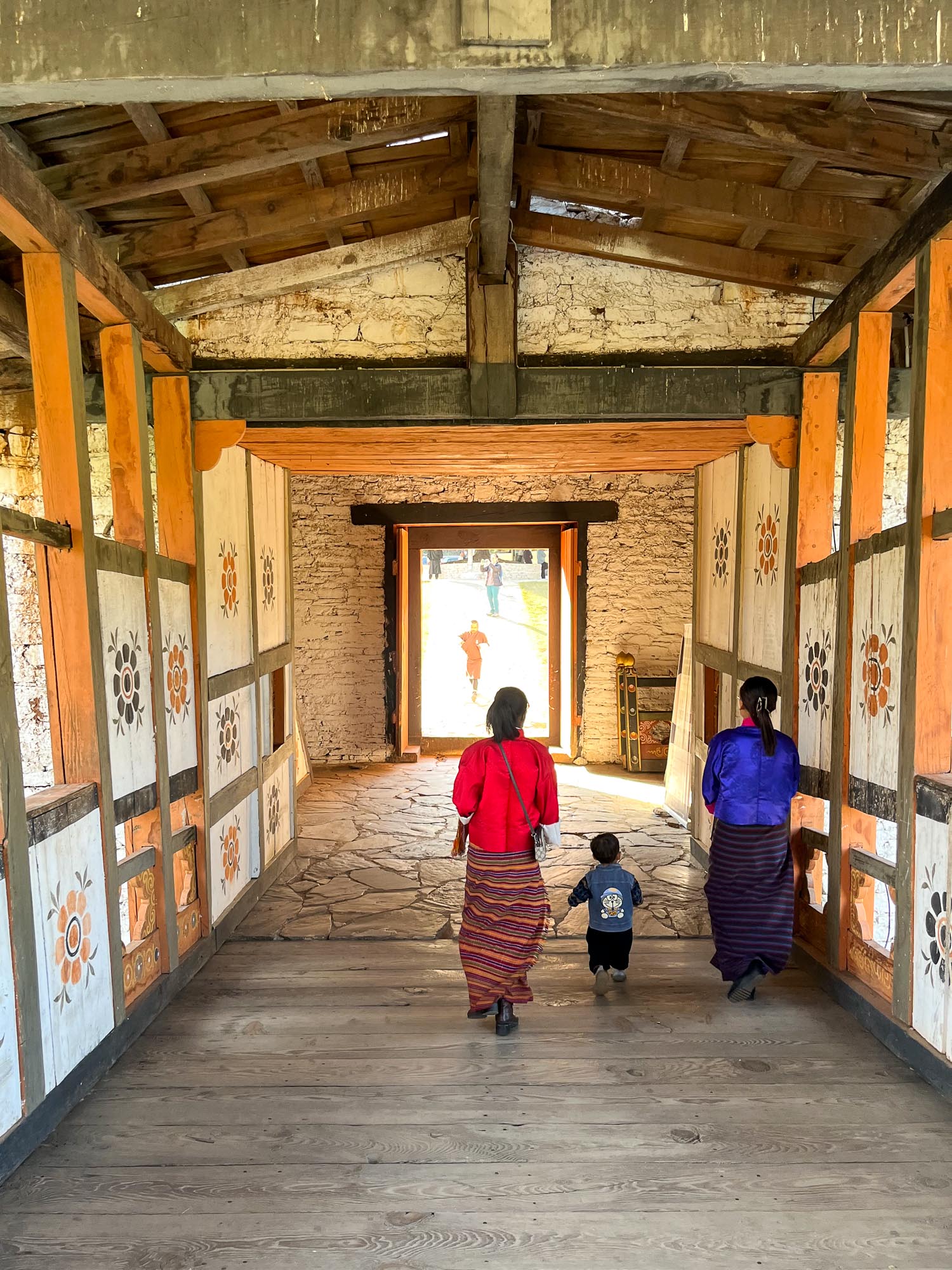
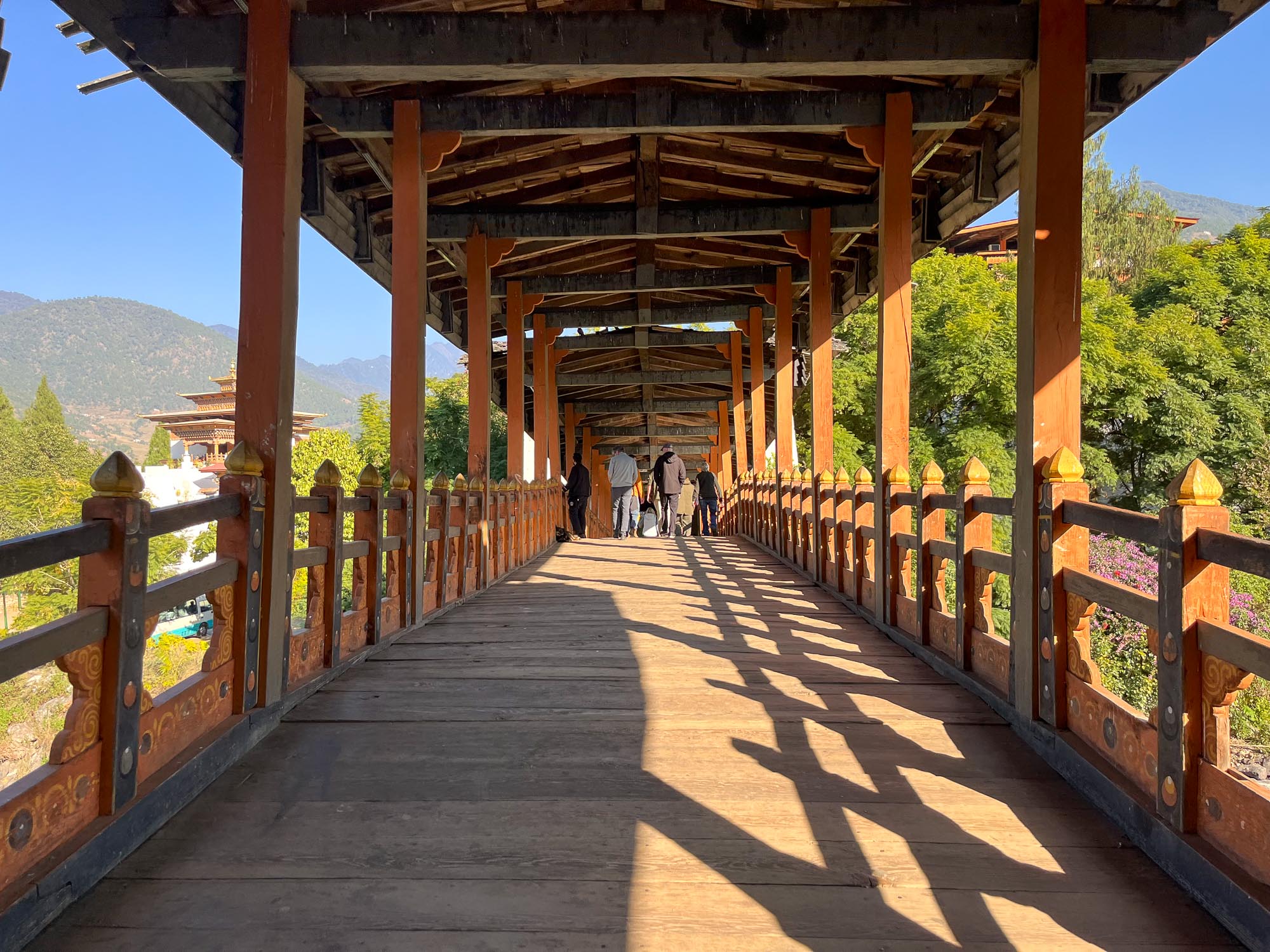
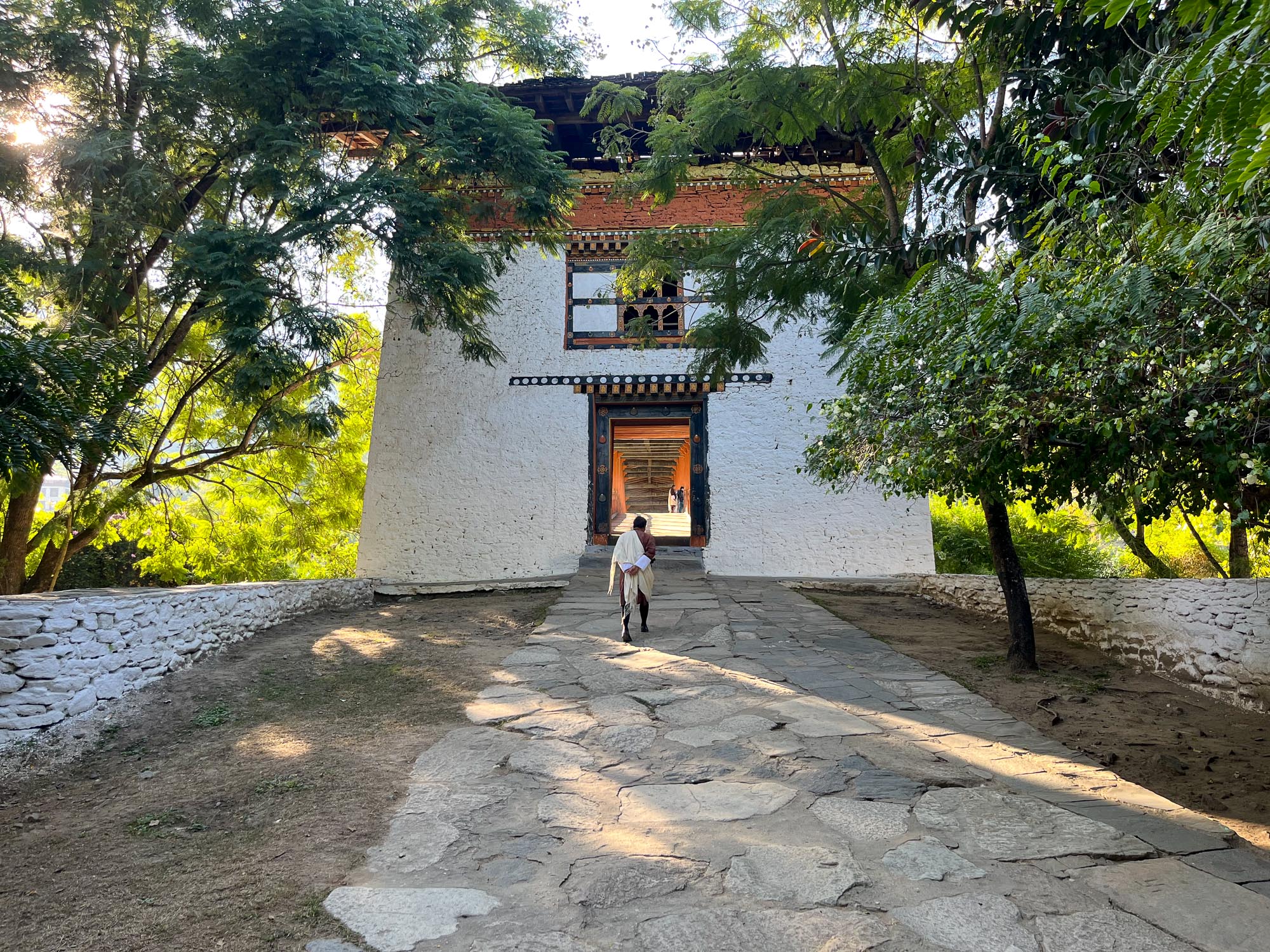
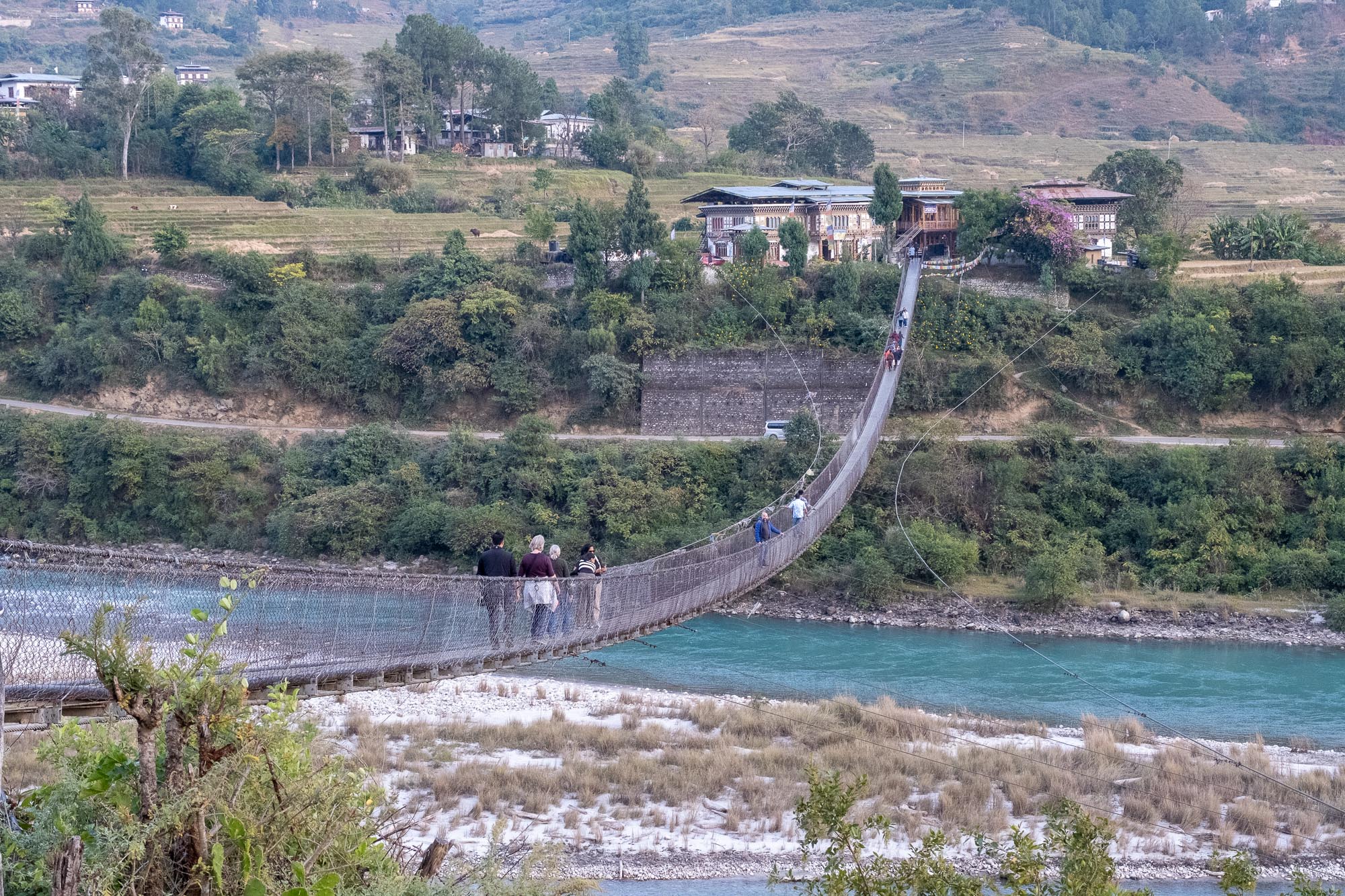
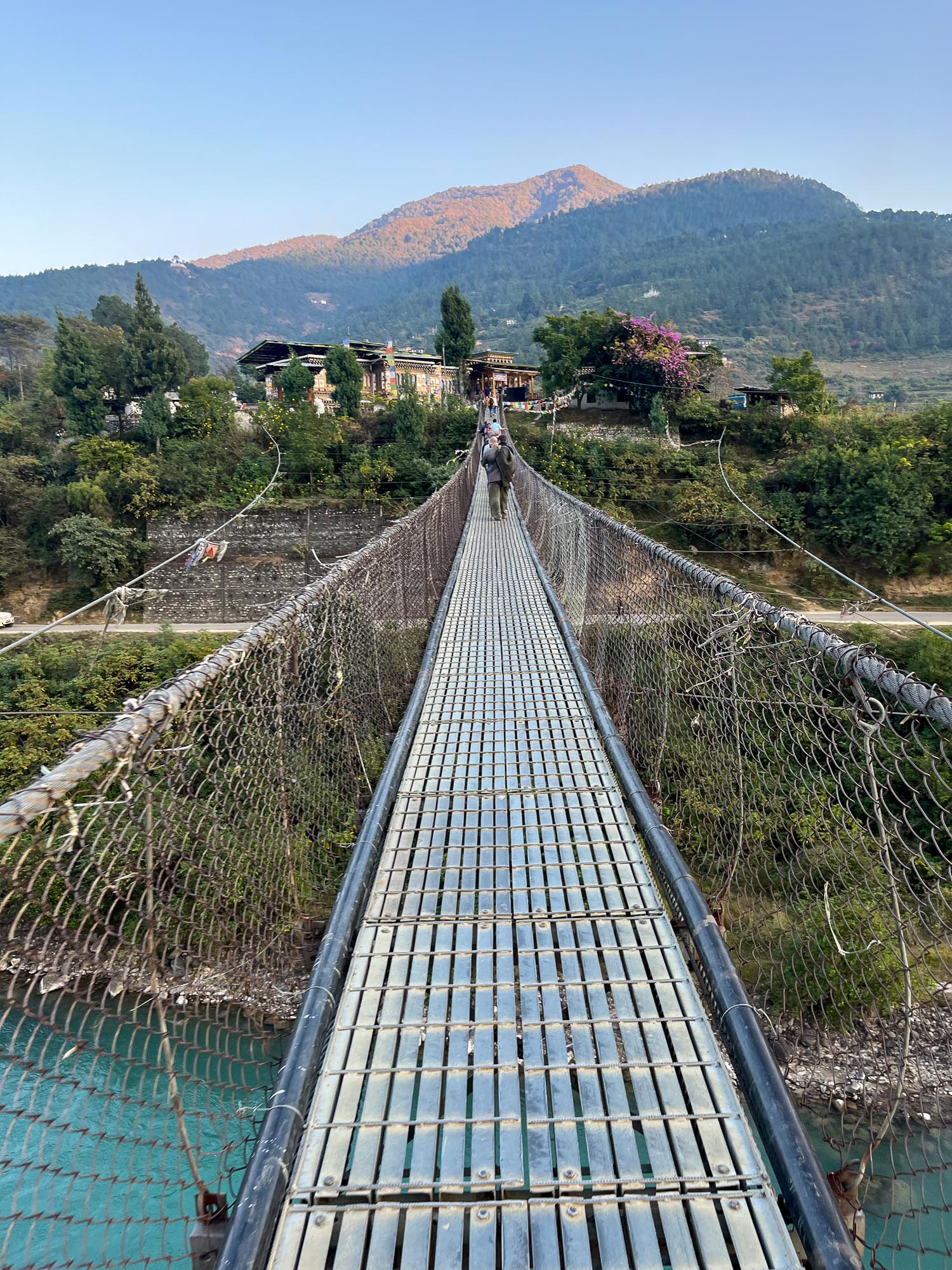
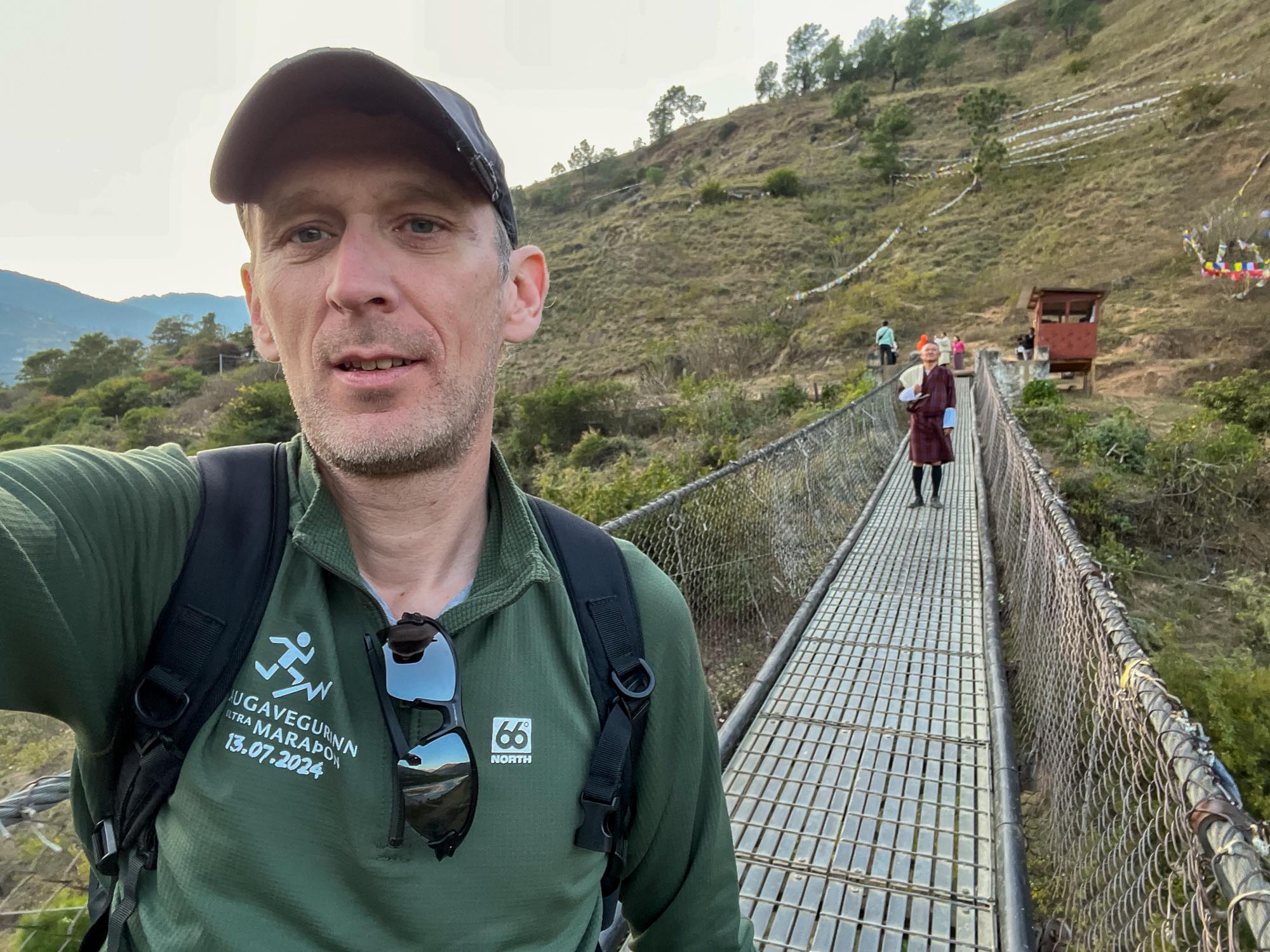
This was followed by a short walk to a suspension bridge, considered one of the longest pedestrian suspension bridges in Bhutan (and according to some sources, even beyond… 180m in length). It dates back all the way to 1637 when Punakha was in its glory as the capital city of Bhutan. The bridge hangs high above the river and is generally free to cross, but tourists are advised not to use it after 5 p.m., as no security guard is present (i wonder why, officially due to security reasons, though apparently tourists can be troublemakers – and crossing the bridge during the night could be a bit scary, if not dangerous). On the other side of the bridge is our homestay, where we spent the night. Well… almost, at a part of our group…