Morning in Thimphu. We’re staying in the city for two nights, and of course Gorazd and I agreed that we’d go for a run at least once. But the last few days of traveling had taken their toll—after about eight hours of sleep, I wasn’t exactly thrilled by the idea of a morning run in the cold. The sun rises around 6:45, but it starts getting light 15–20 minutes earlier. Our wake-up call came from the local stray dogs. They’re incredibly peaceful, but they can be very loud—and they can keep it up all night.
Today’s plan was to explore the city and nearby sights. Thimphu is Bhutan’s capital and also its largest city, as well as the administrative center of the country. Even so, it maintains a fairly calm pace, without the typical chaos of larger Asian capitals.
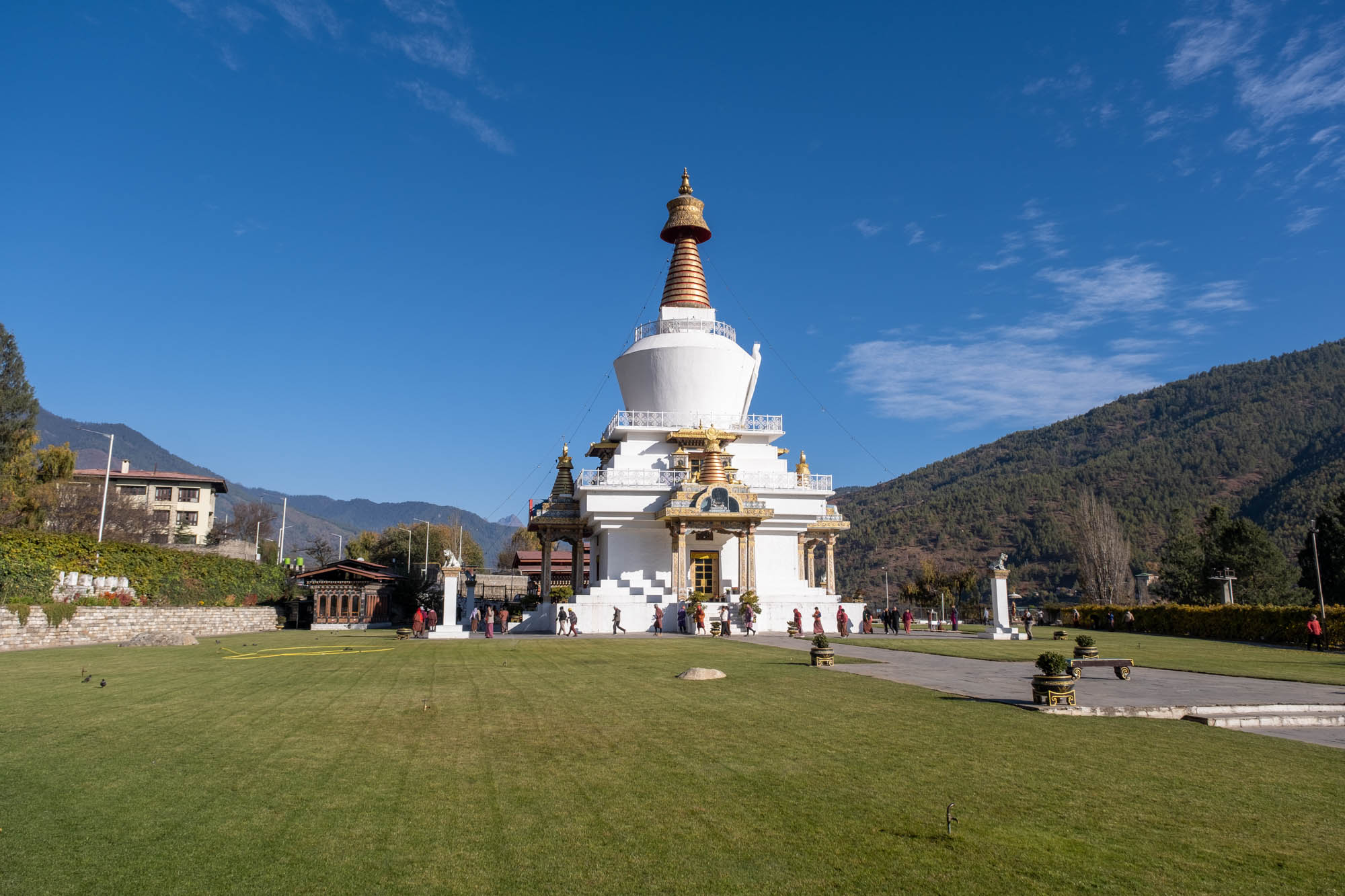
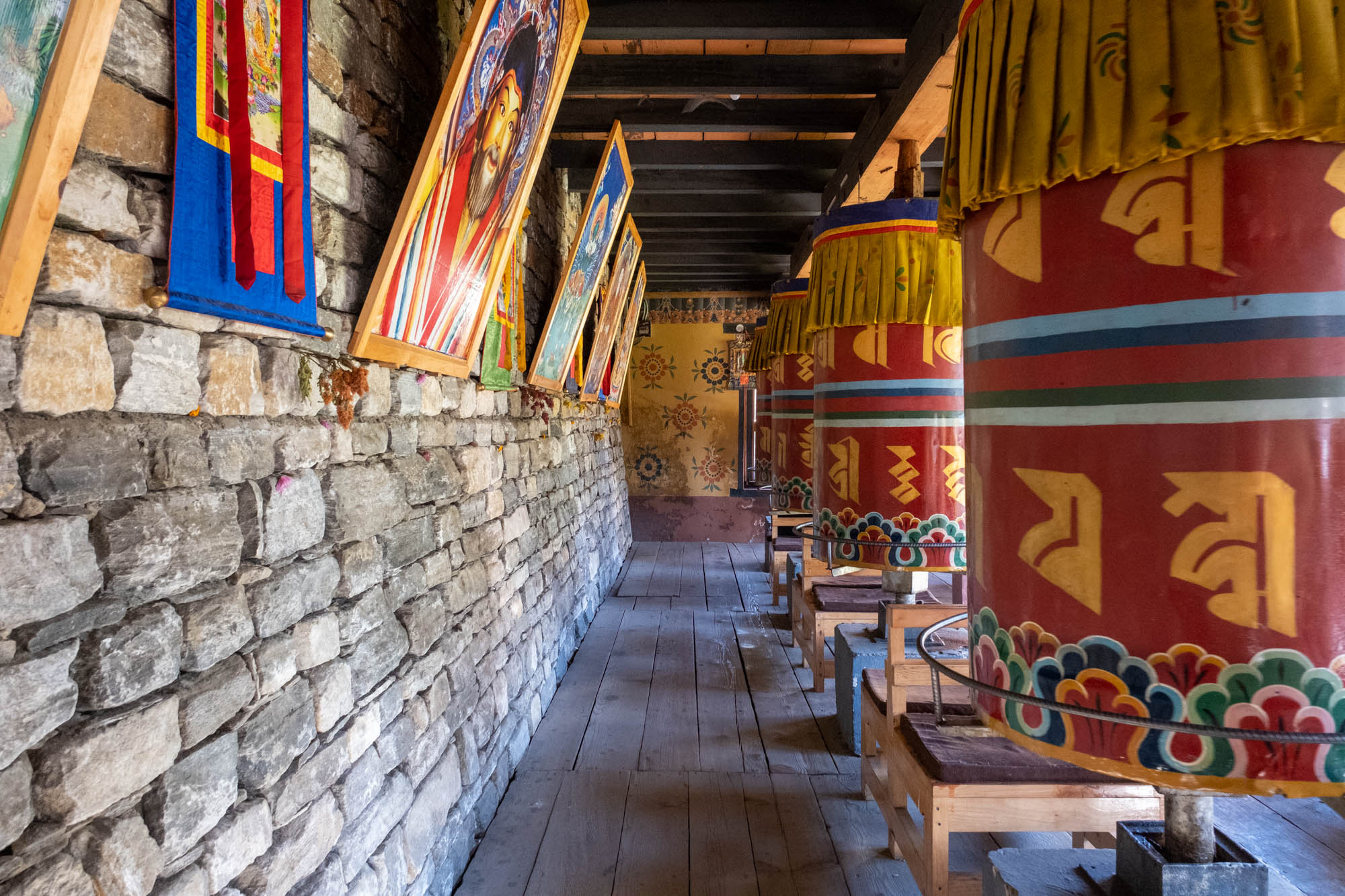
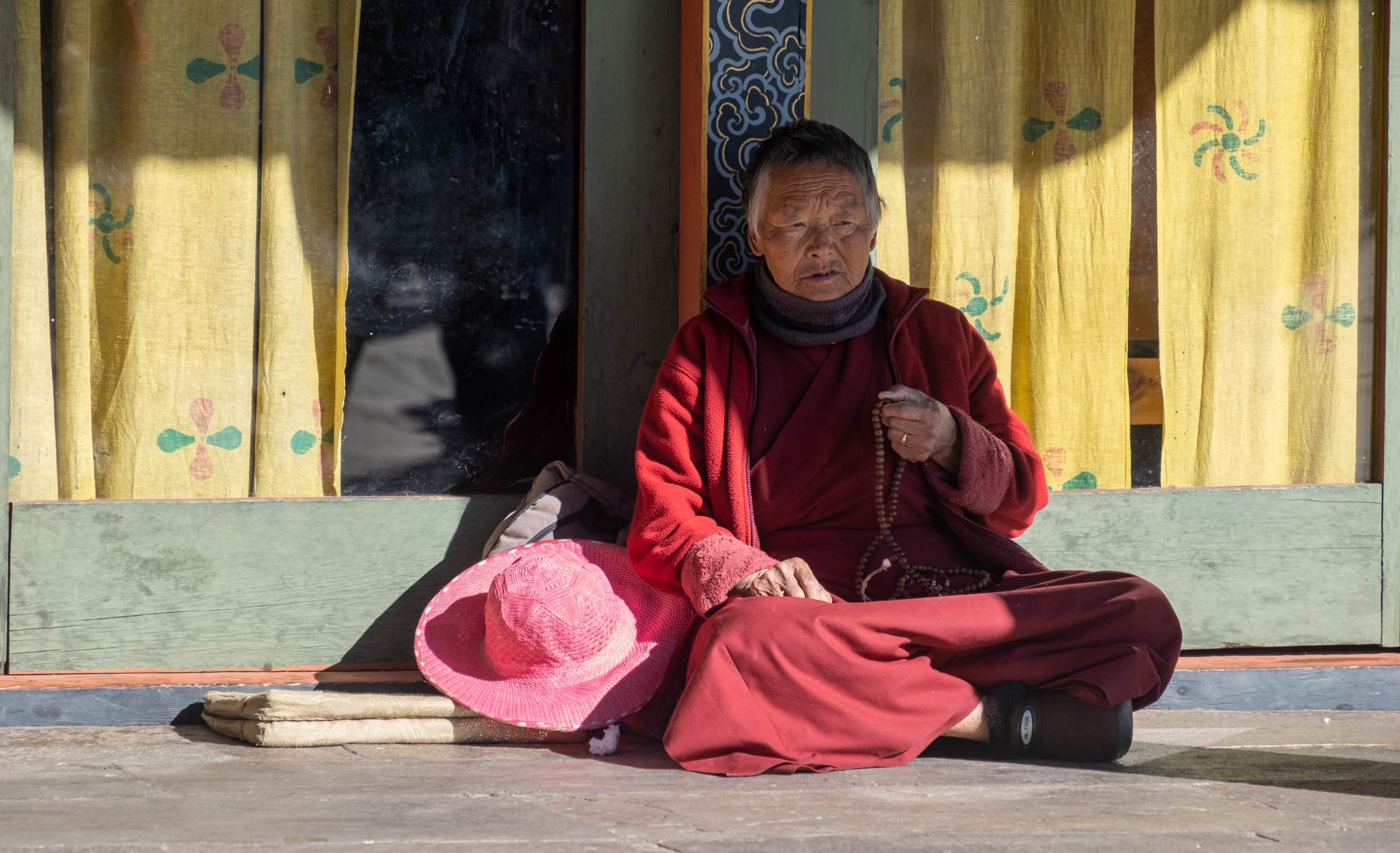
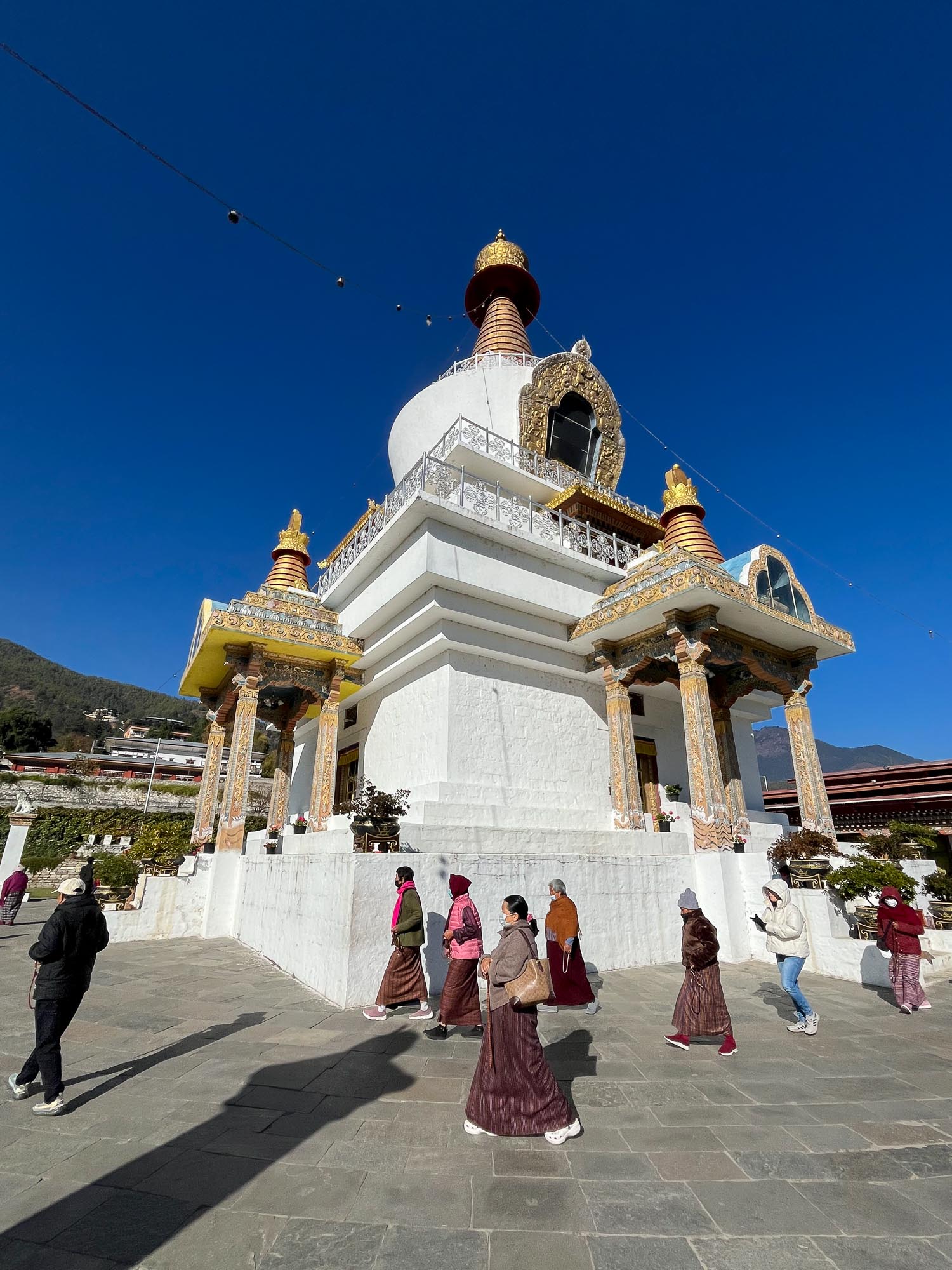
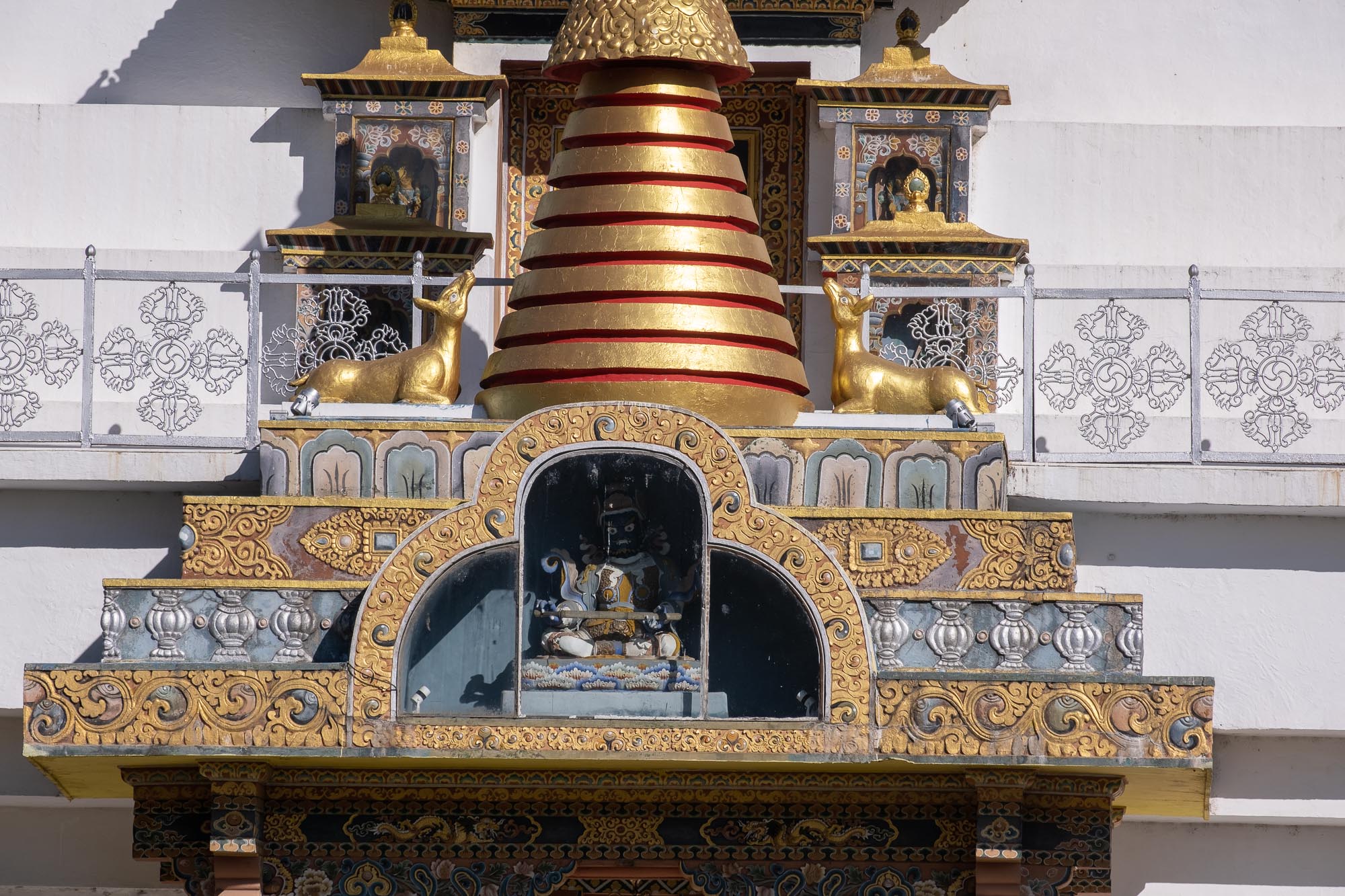
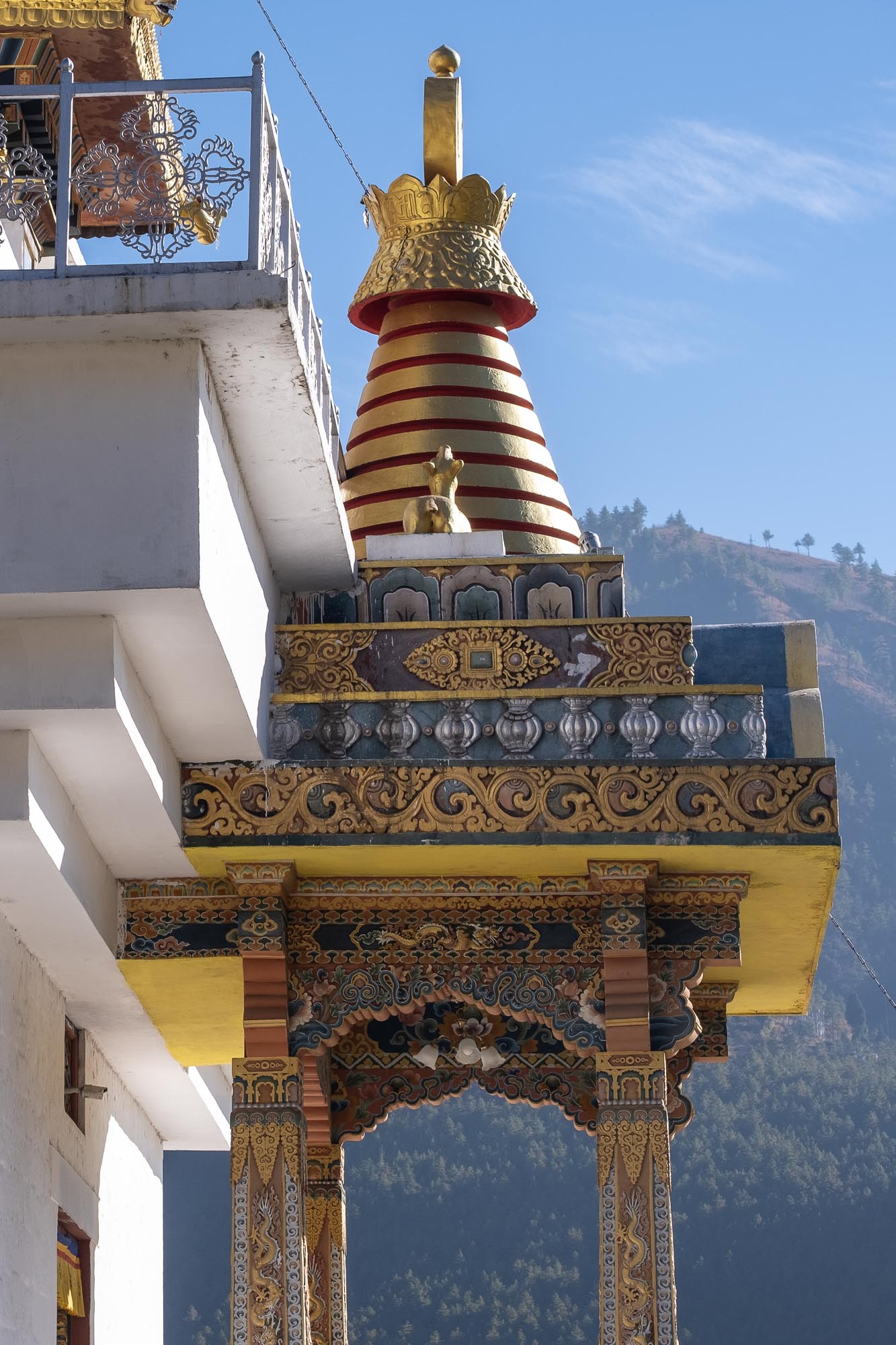
Our first stop was the Memorial Chorten, built in honor of the third Bhutanese king, Jigme Dorji Wangchuck, who is considered the father of modern Bhutan. Once again, it became clear just how proud Bhutanese people are of their monarchy. Locals walk silently in circles around the stupa, praying, spinning prayer wheels, and chatting quietly—there’s a very peaceful atmosphere, but also something deeply spiritual. Unlike most chortens, which usually contain relics, this one does not hold any remains. The inside of the stupa is divided into several levels, decorated with mandalas, statues of deities, and symbolic representations of tantric Buddhism. Either way, it’s fascinating—and it’s just as interesting to observe the locals.


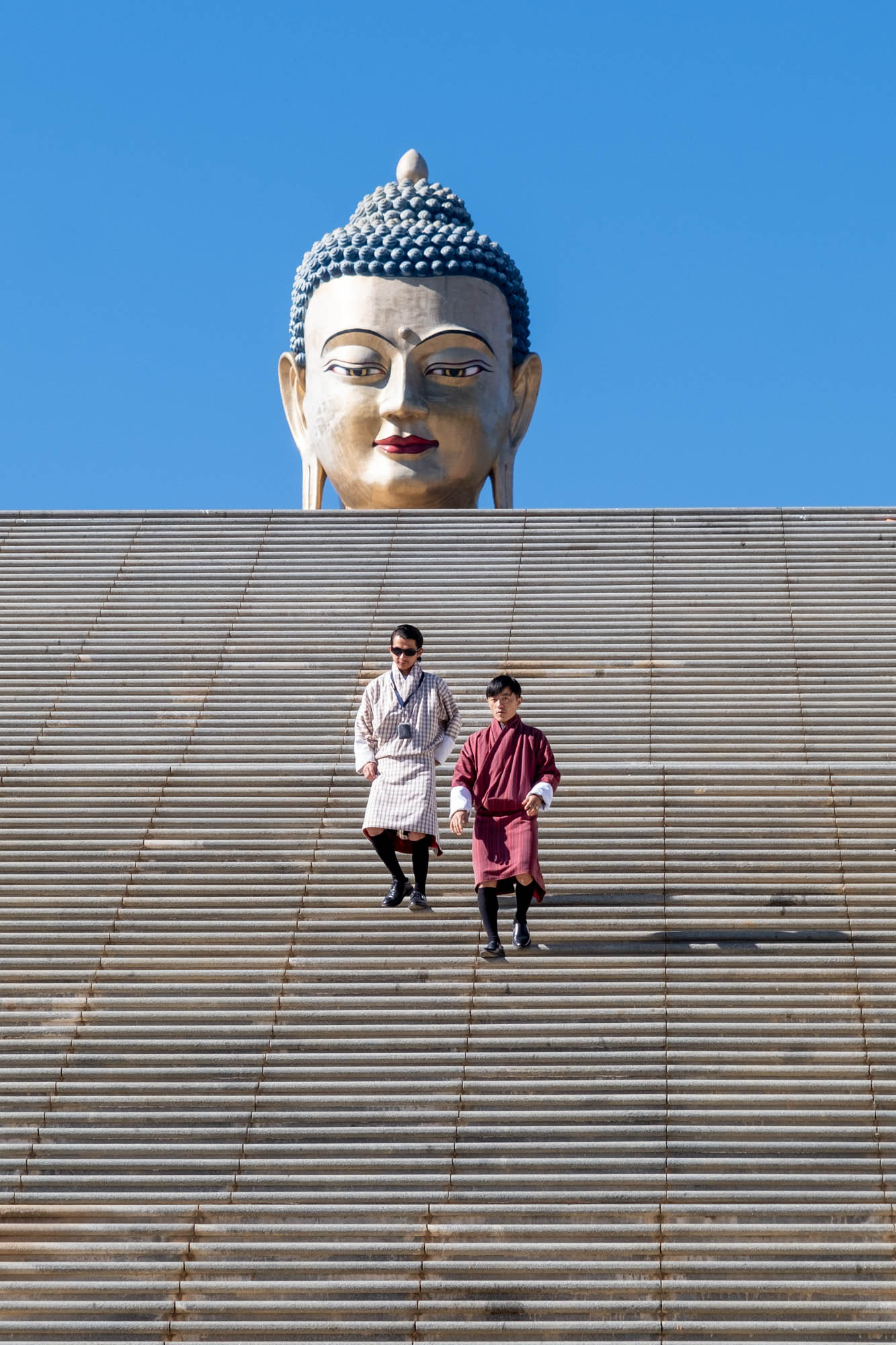
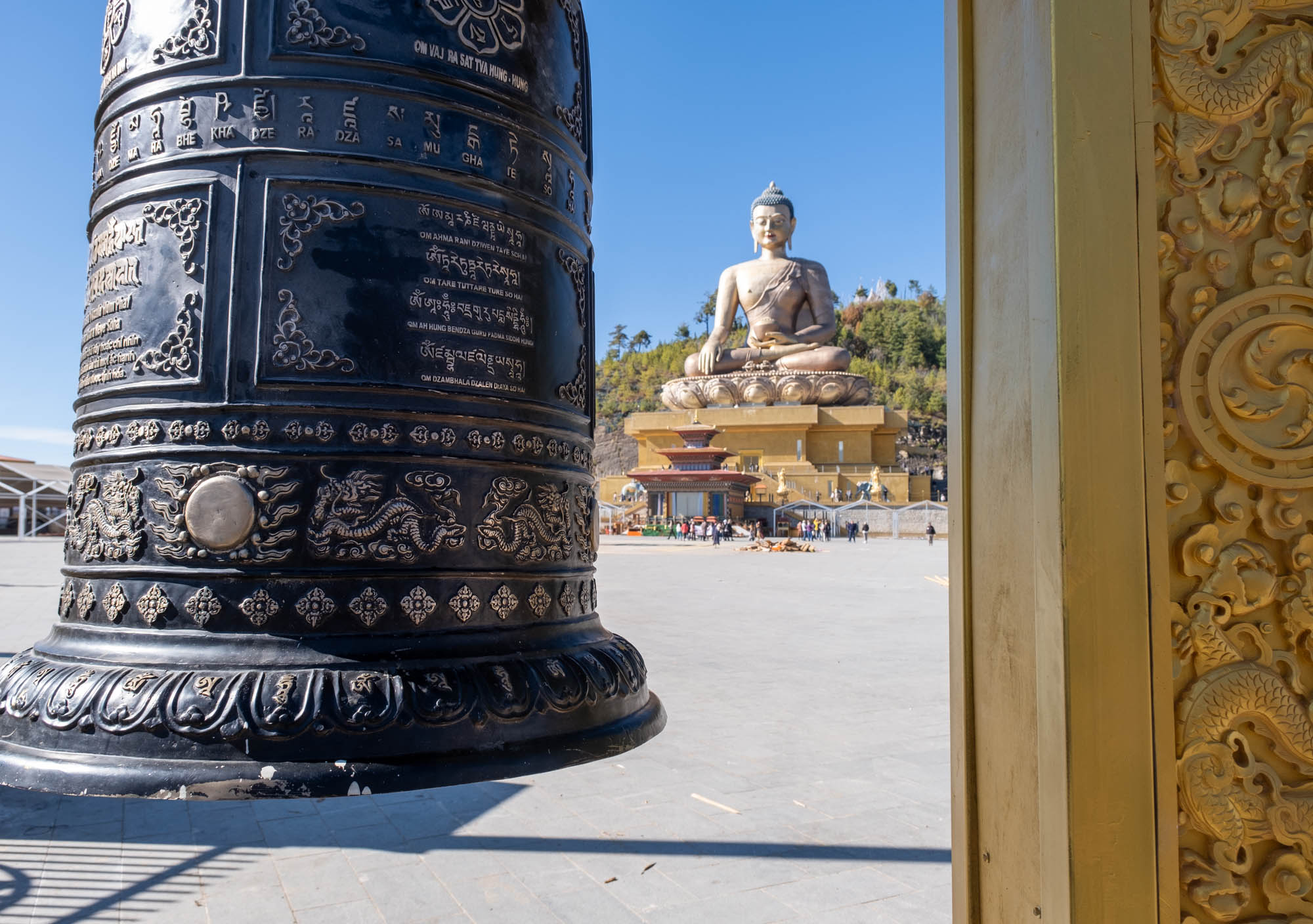
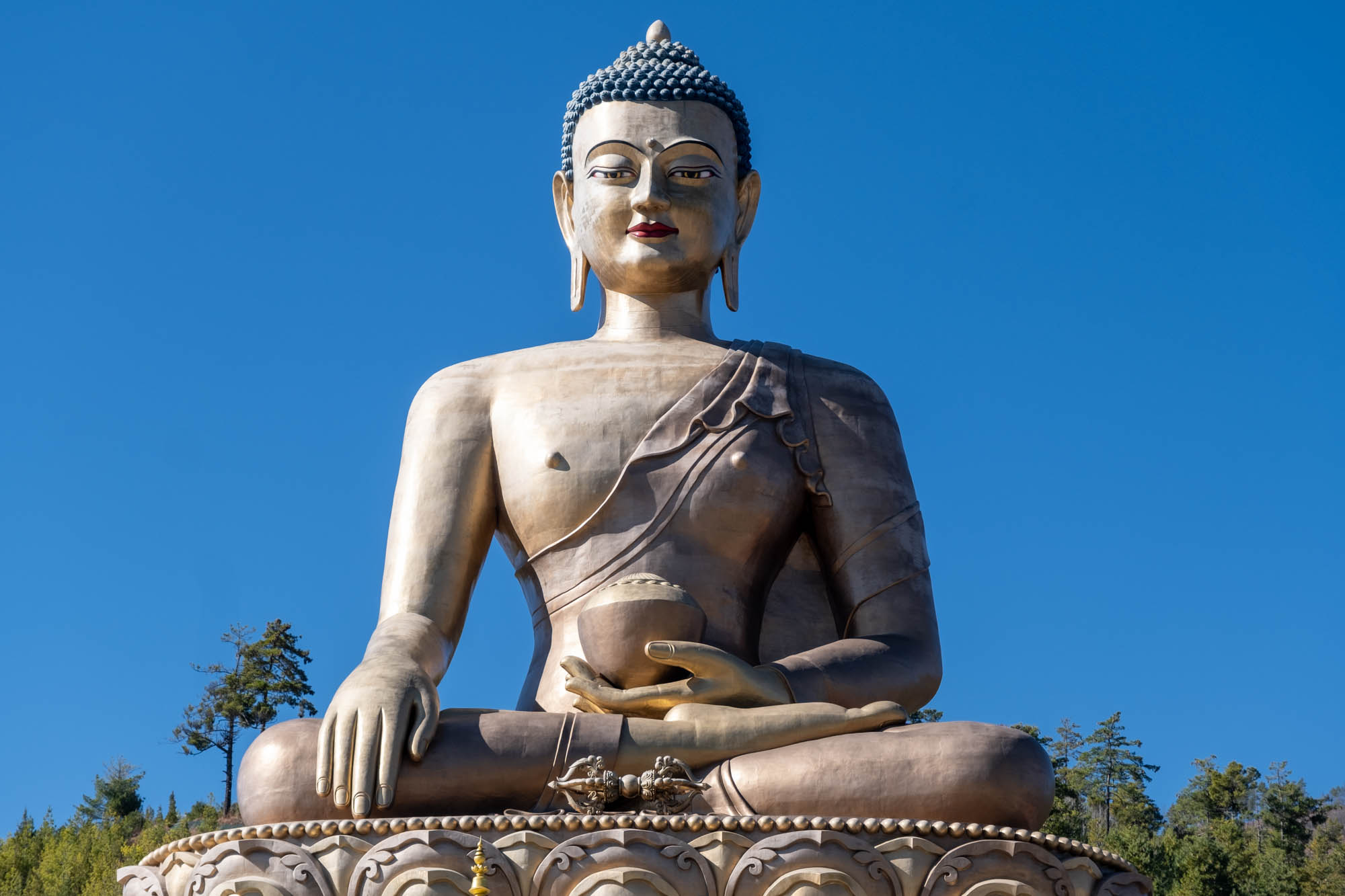
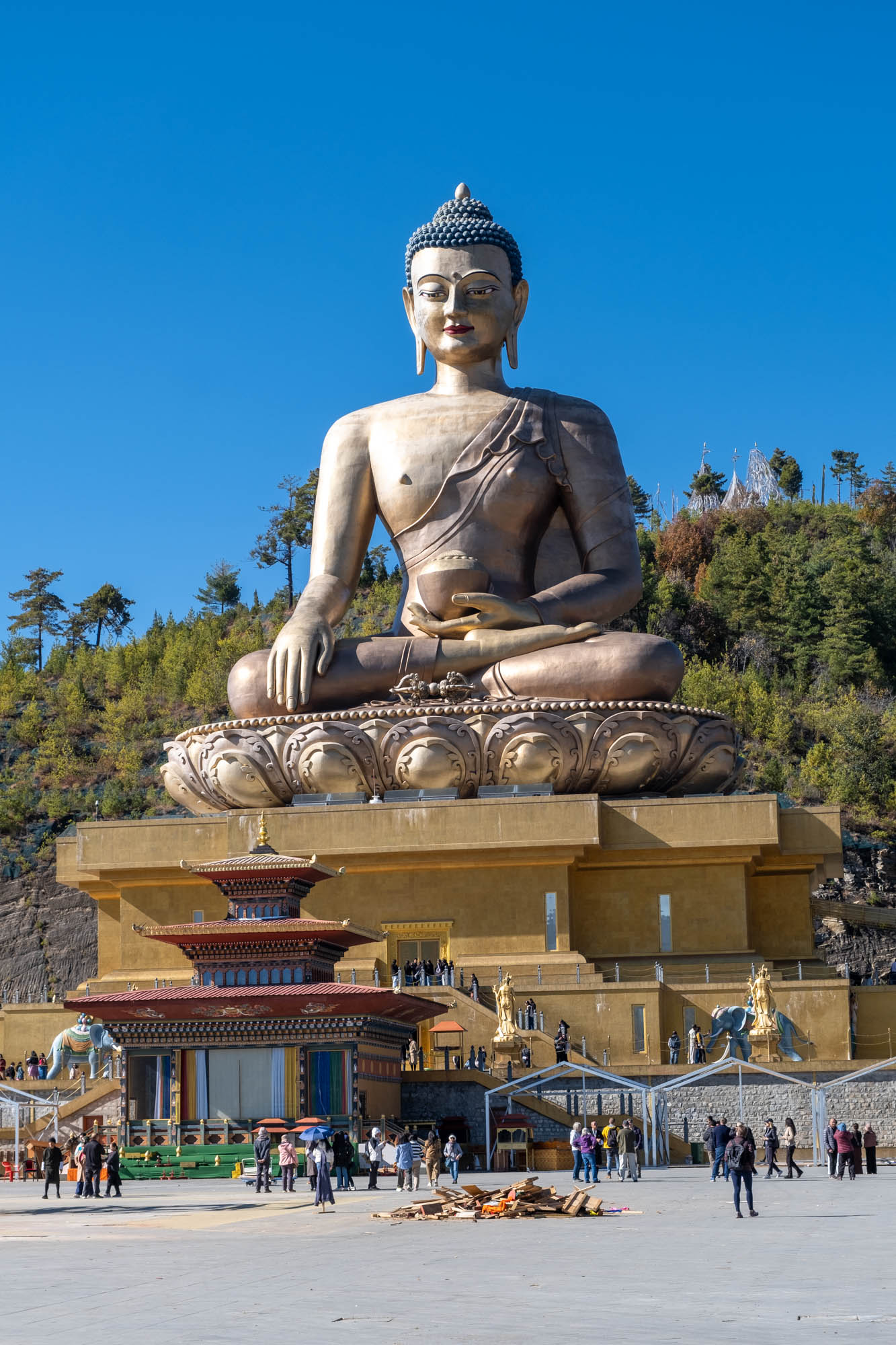
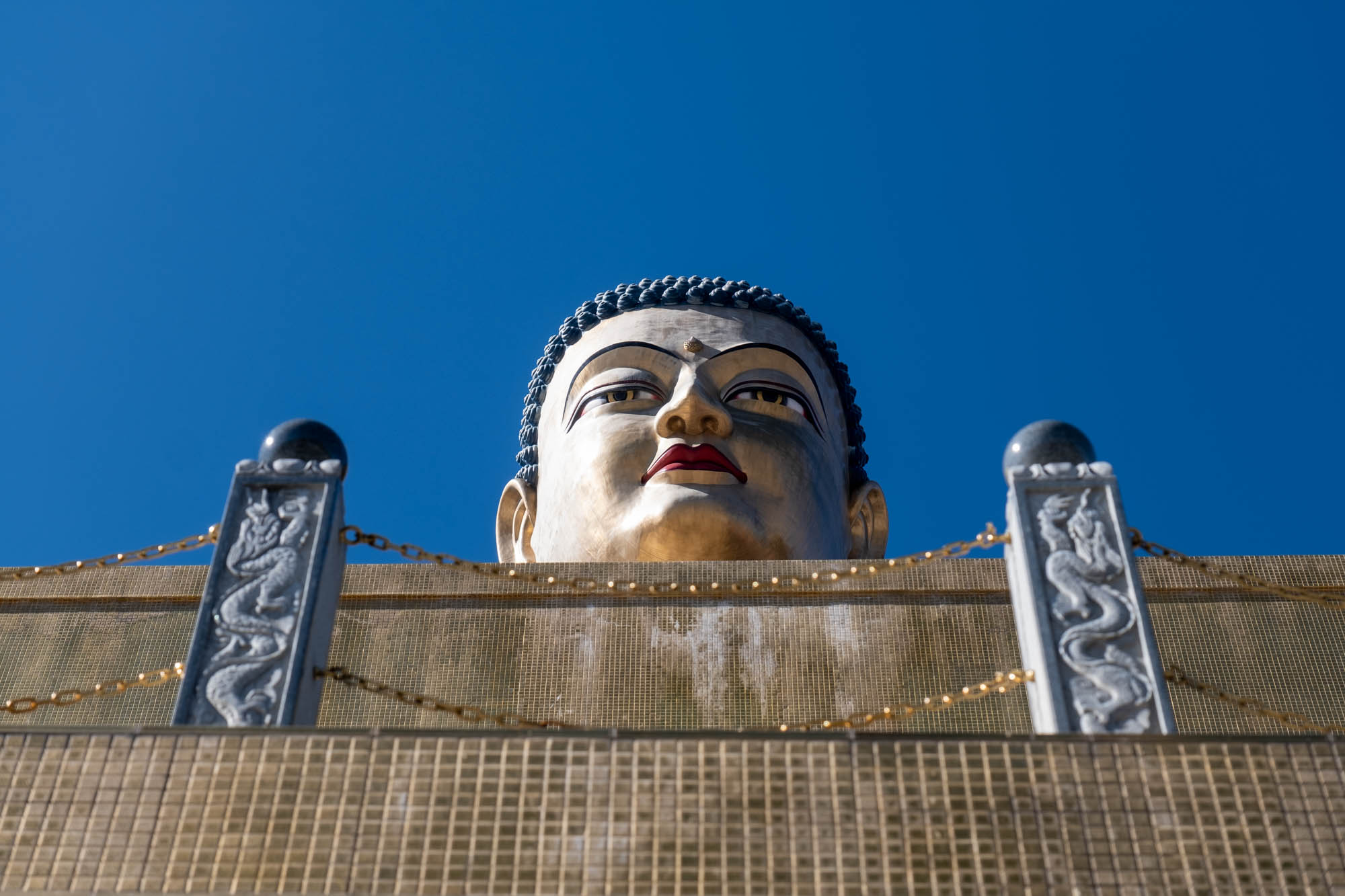
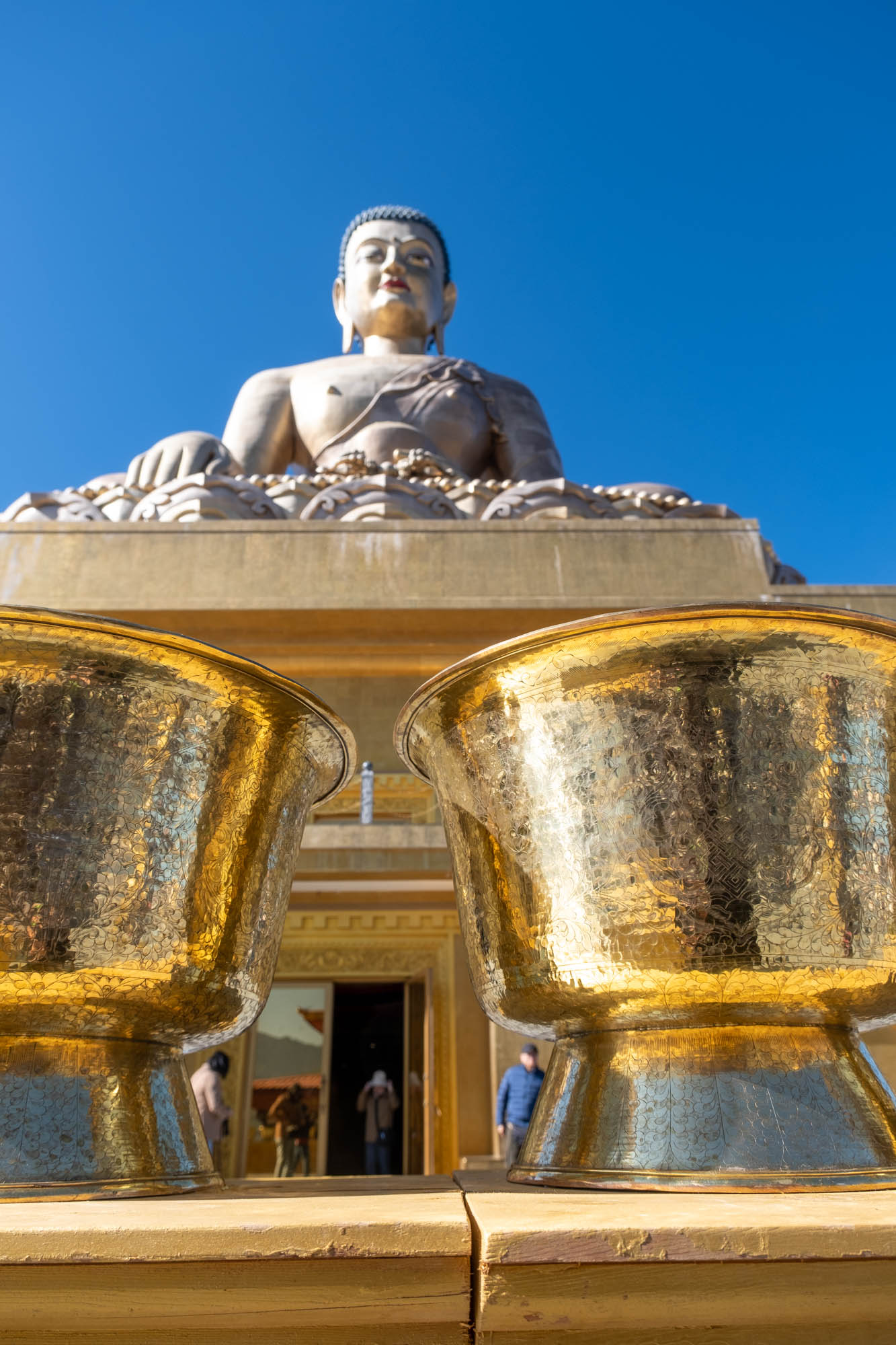
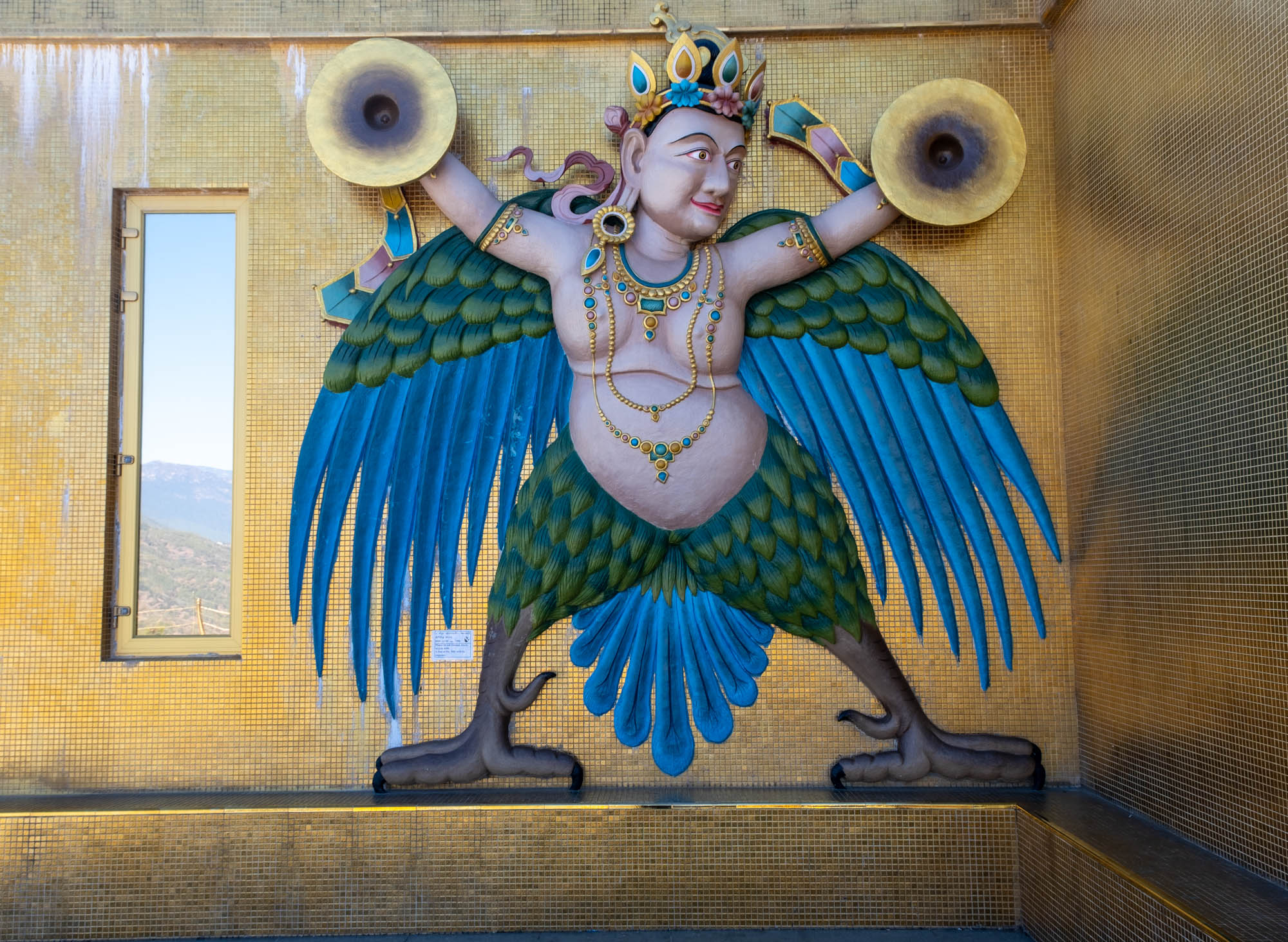
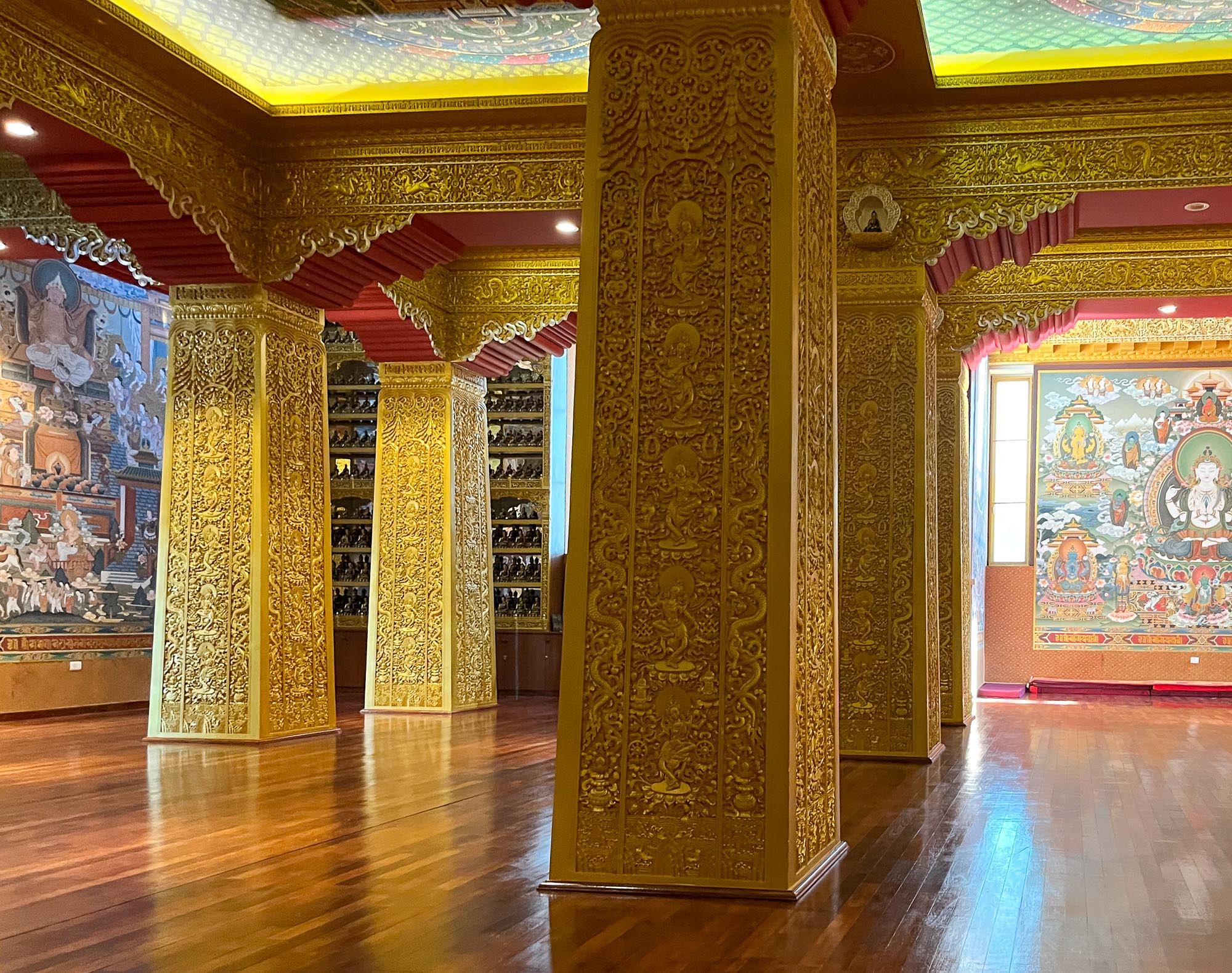
Next came a visit to the seated Buddha statue (Buddha Dordenma), which stands (sits?!) on a hill above Thimphu. According to some sources (and our guide), it’s one of the largest seated Buddha statues in the world. The enormous bronze statue, gilded in gold, stands on Kuensel Phodrang hill above the city and looks out over the Thimphu valley. Inside the statue is a temple containing thousands of smaller Buddha statues arranged across multiple levels. The statue was built to honor the 60th anniversary of the reign of Bhutan’s fourth king and symbolizes peace, prosperity, and the protection of the country. Because of its size and location, it’s visible from almost everywhere in the city. Only from up there do you really see the scale of Thimphu—it’s a narrow, elongated city squeezed between hills, and when you’re down in it you don’t really feel that there are between 100,000 and 120,000 inhabitants. The seated Buddha was also the place where I first really noticed the presence of tourists. Even if there aren’t many around the city, a decent number gather here. Most of them are Indian tour groups; there are far fewer Western visitors. There aren’t any truly big groups (maybe up to around 15 people). That’s also due to logistics, since Bhutan doesn’t really have classic large tour buses—everything is slightly smaller, and vans and minibuses usually take a maximum of around 20 people.