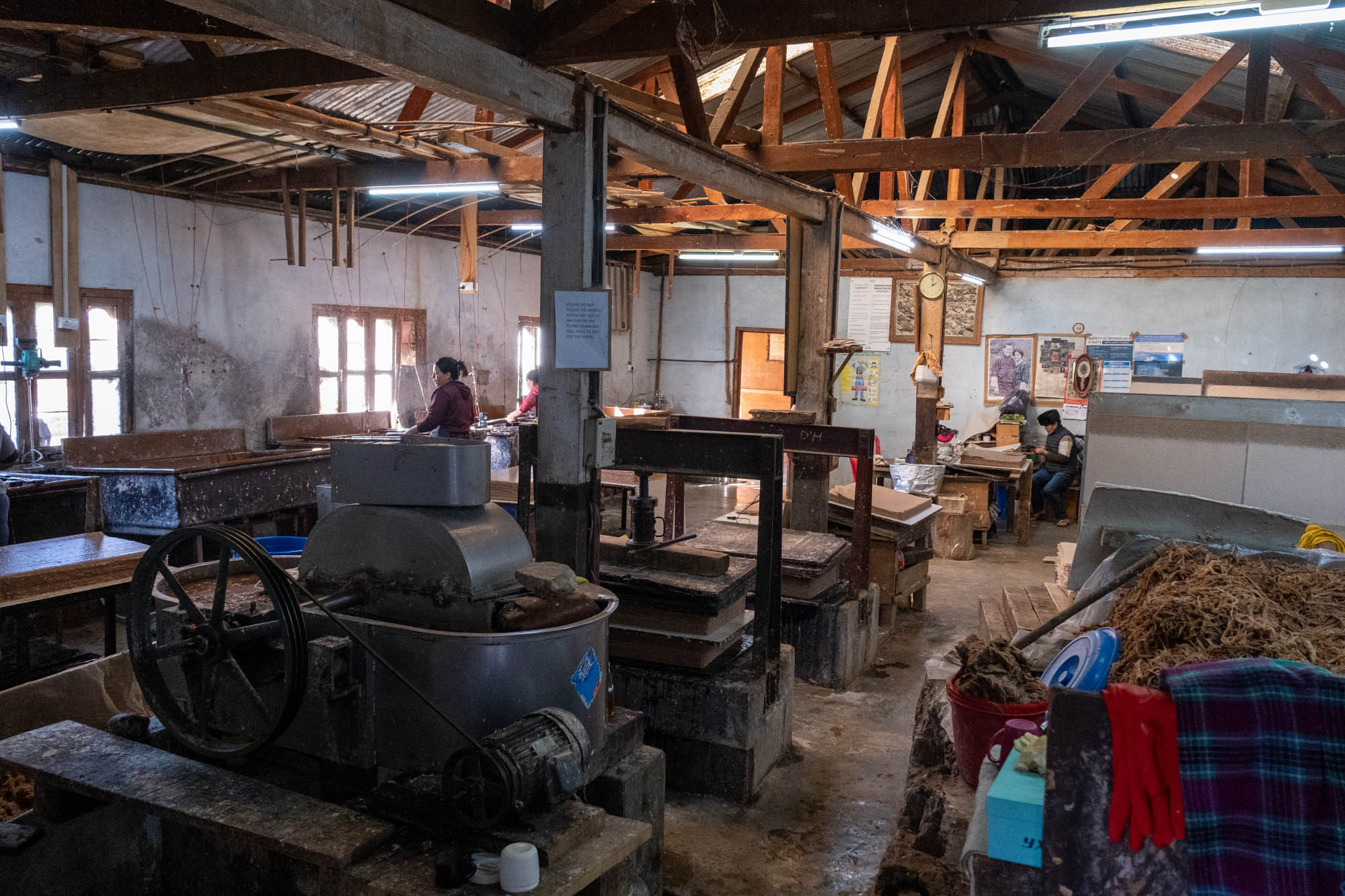
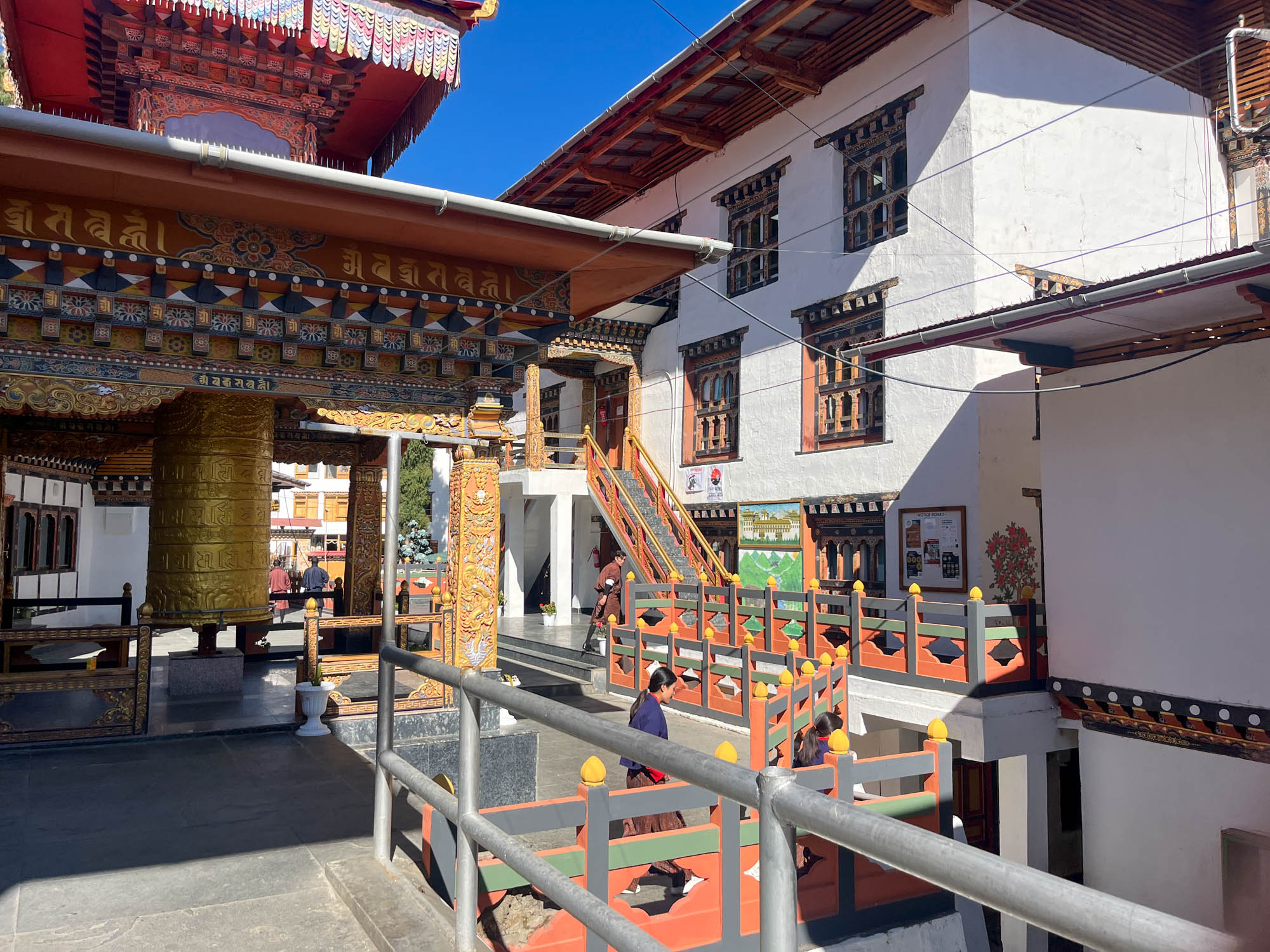
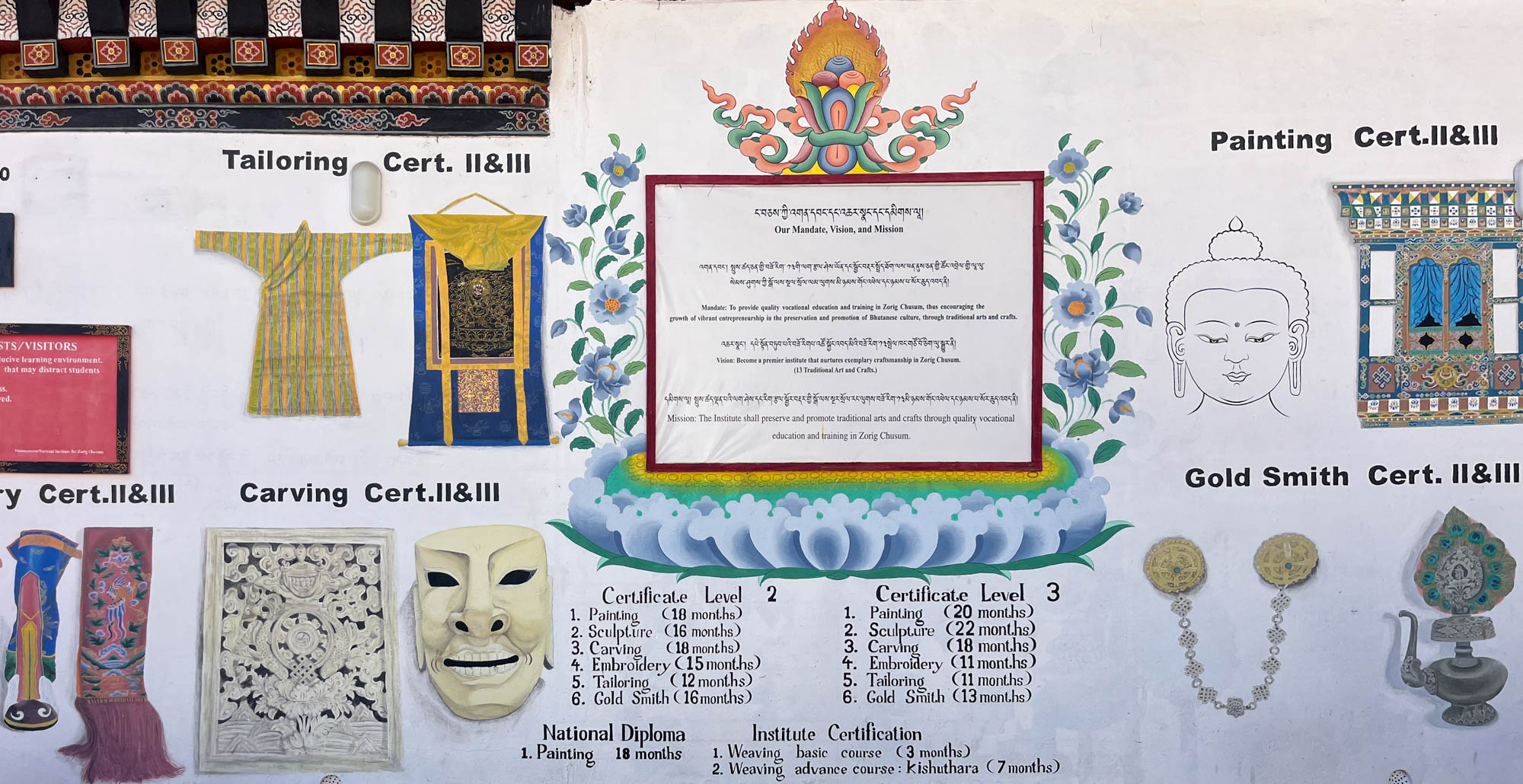
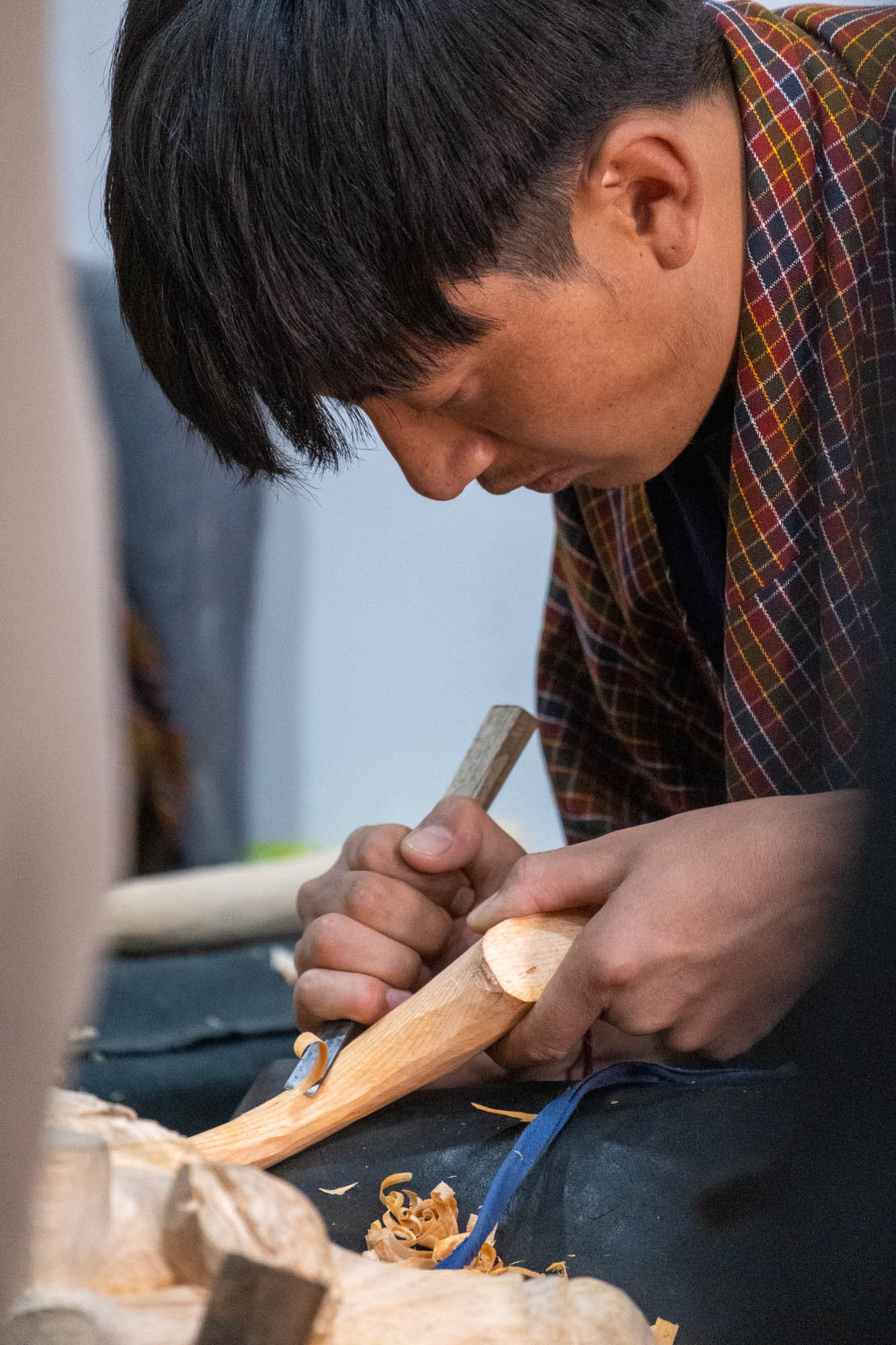
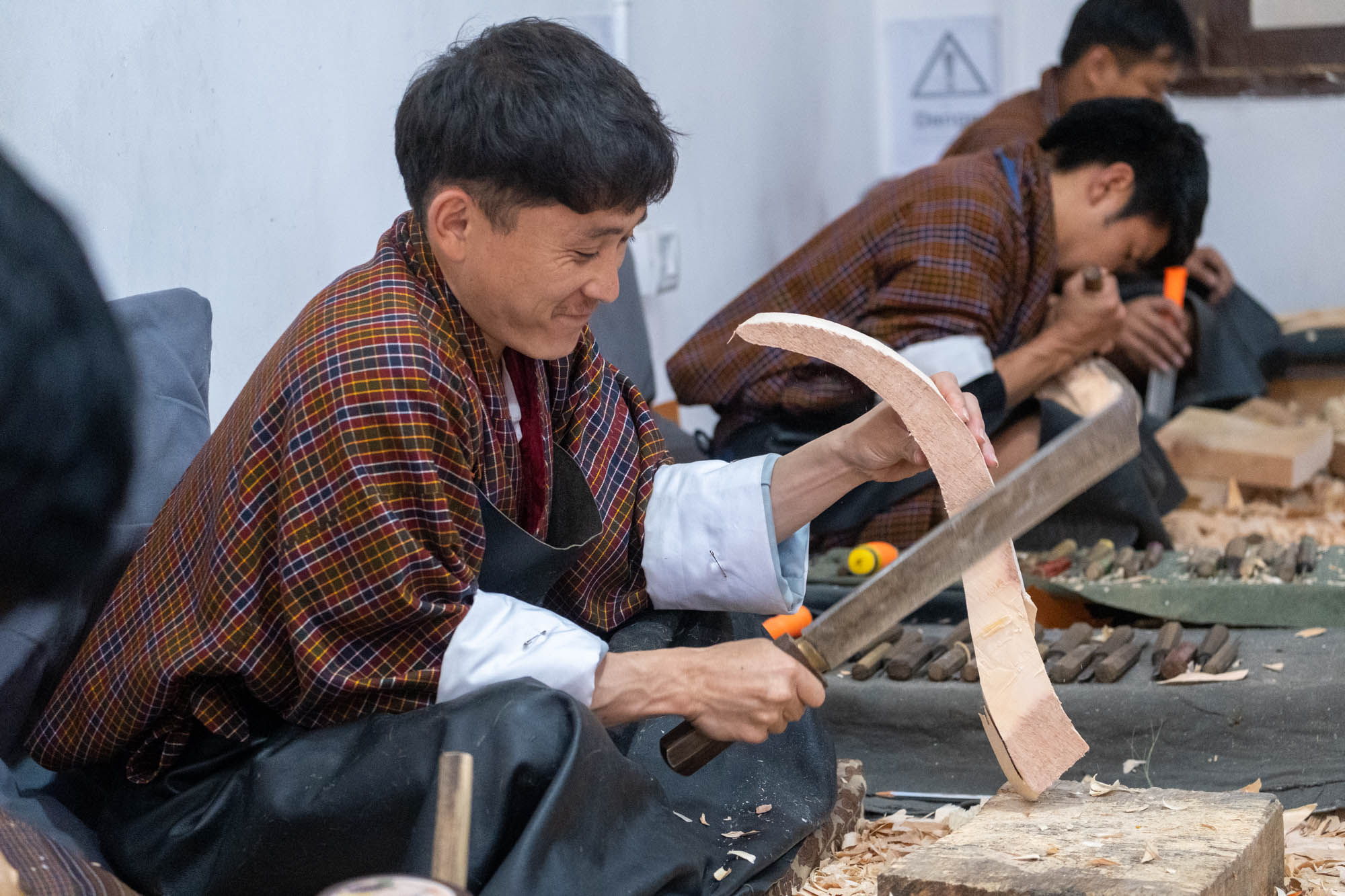
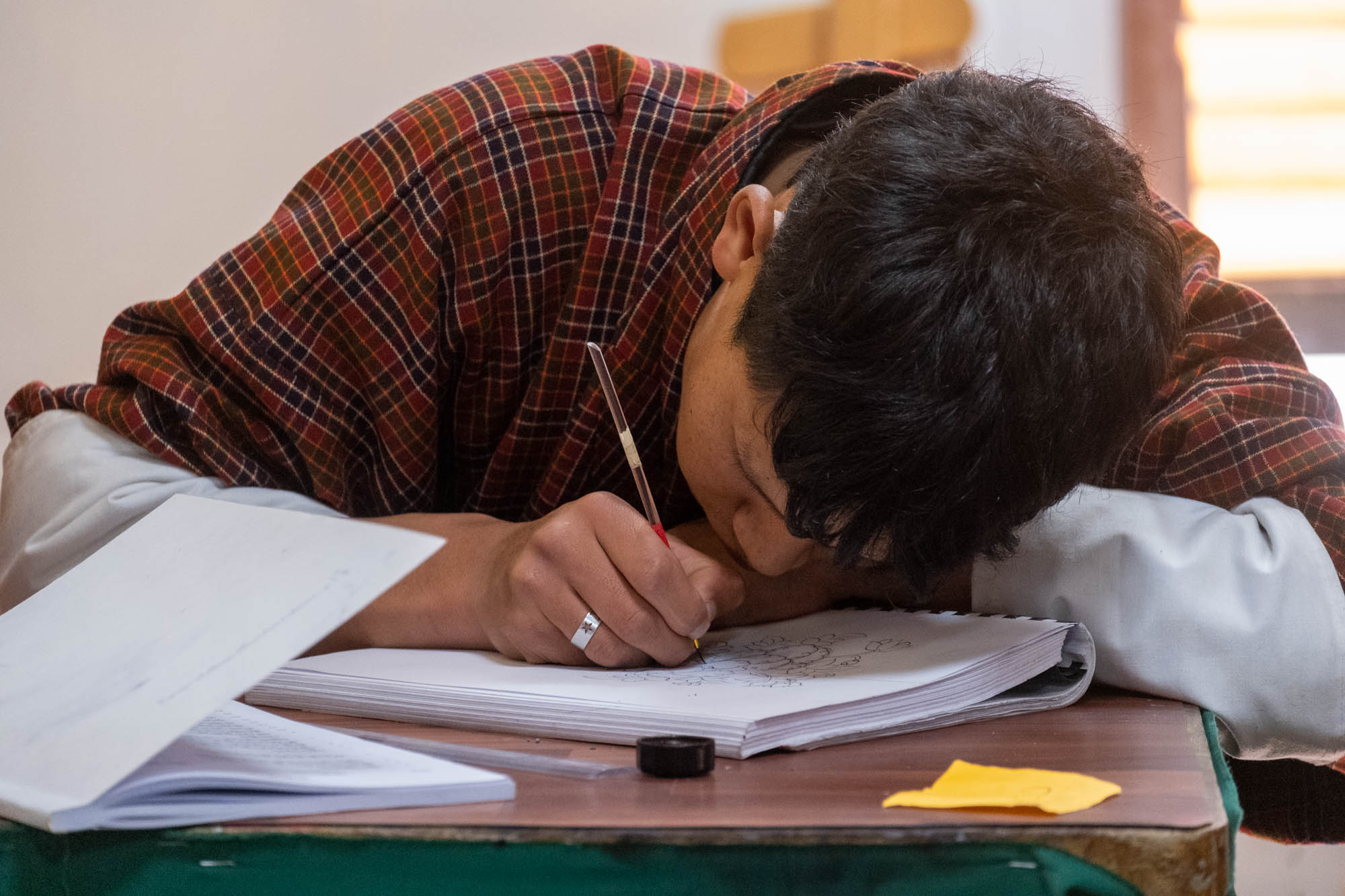
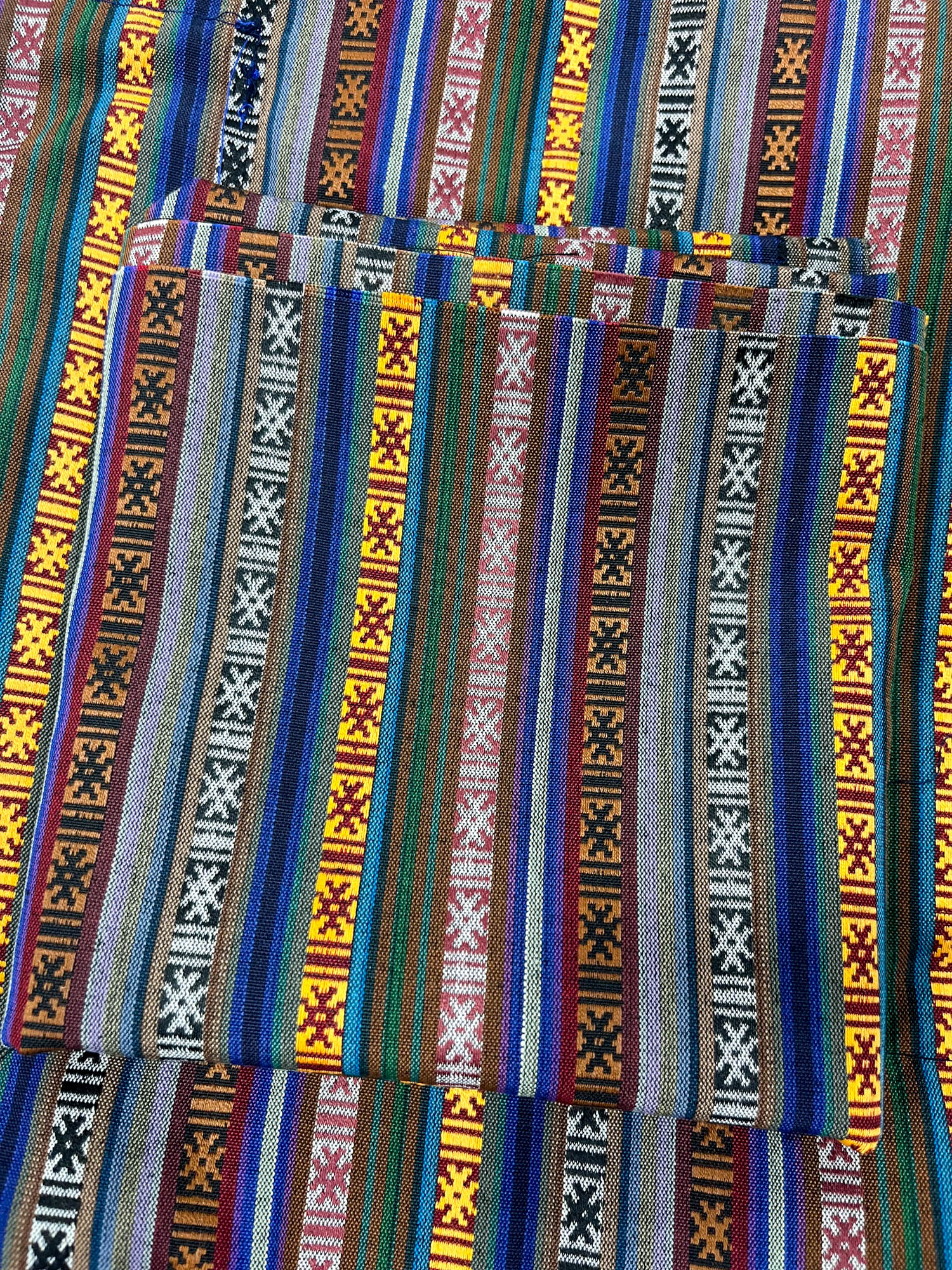
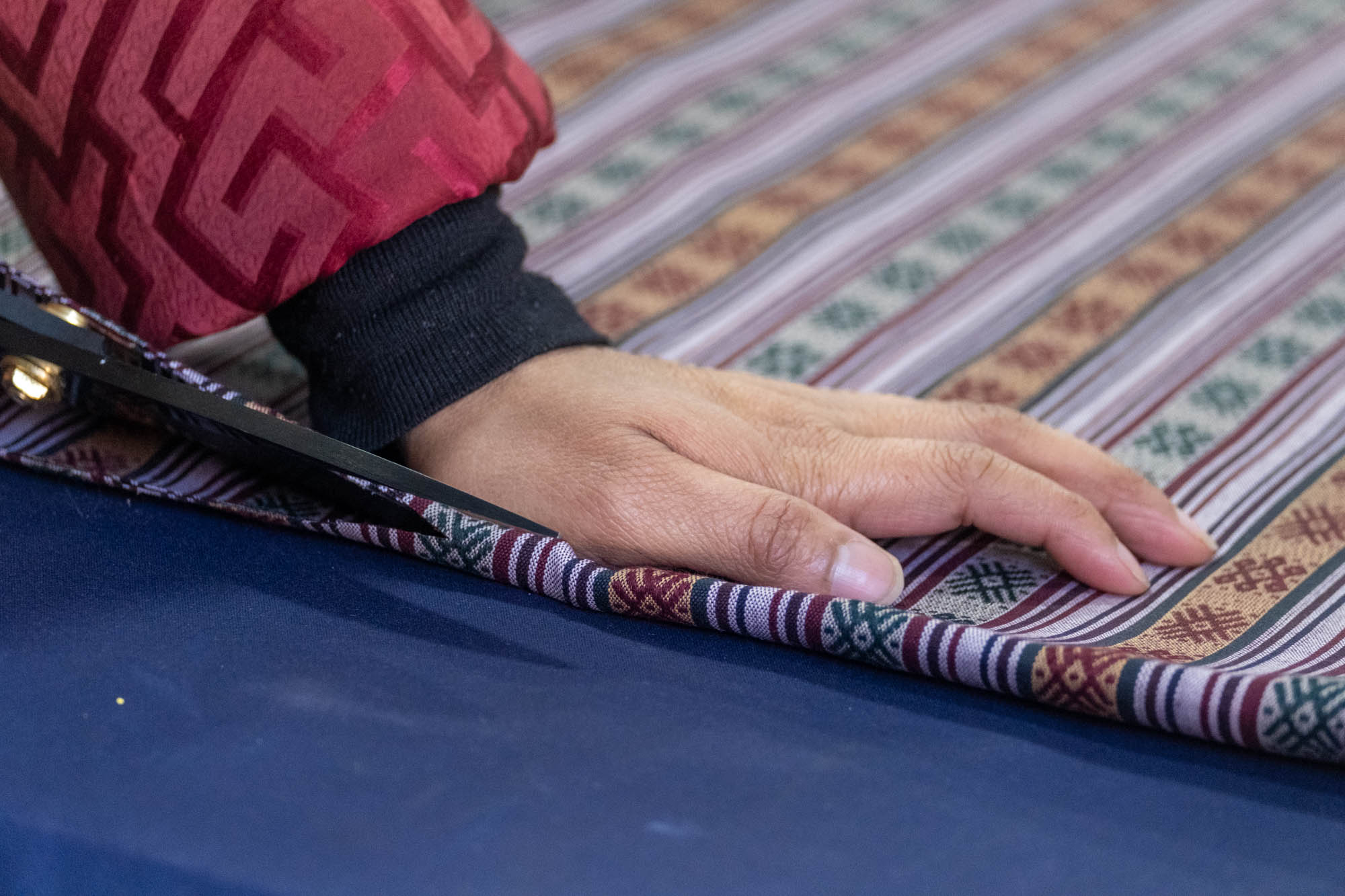
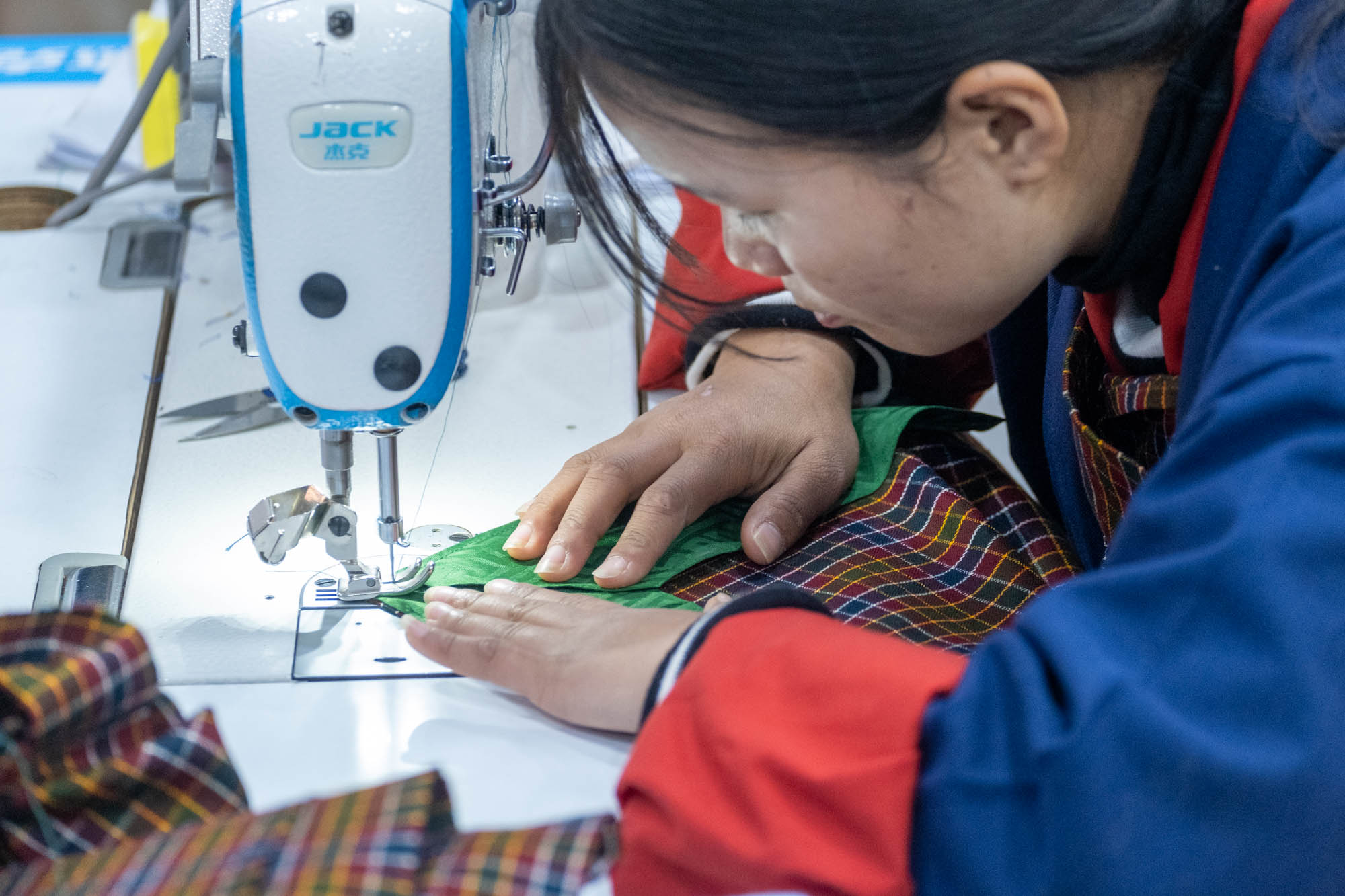
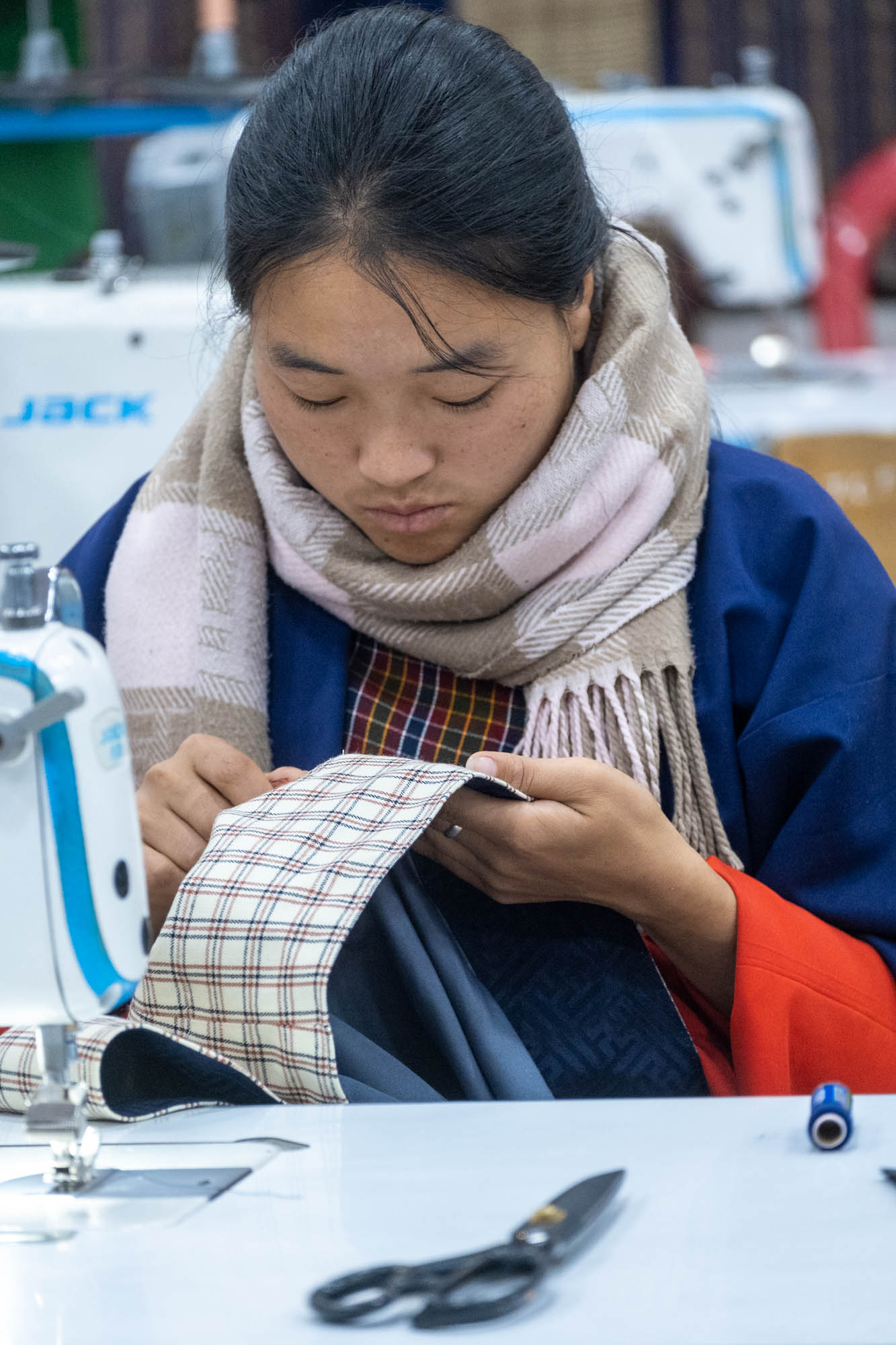
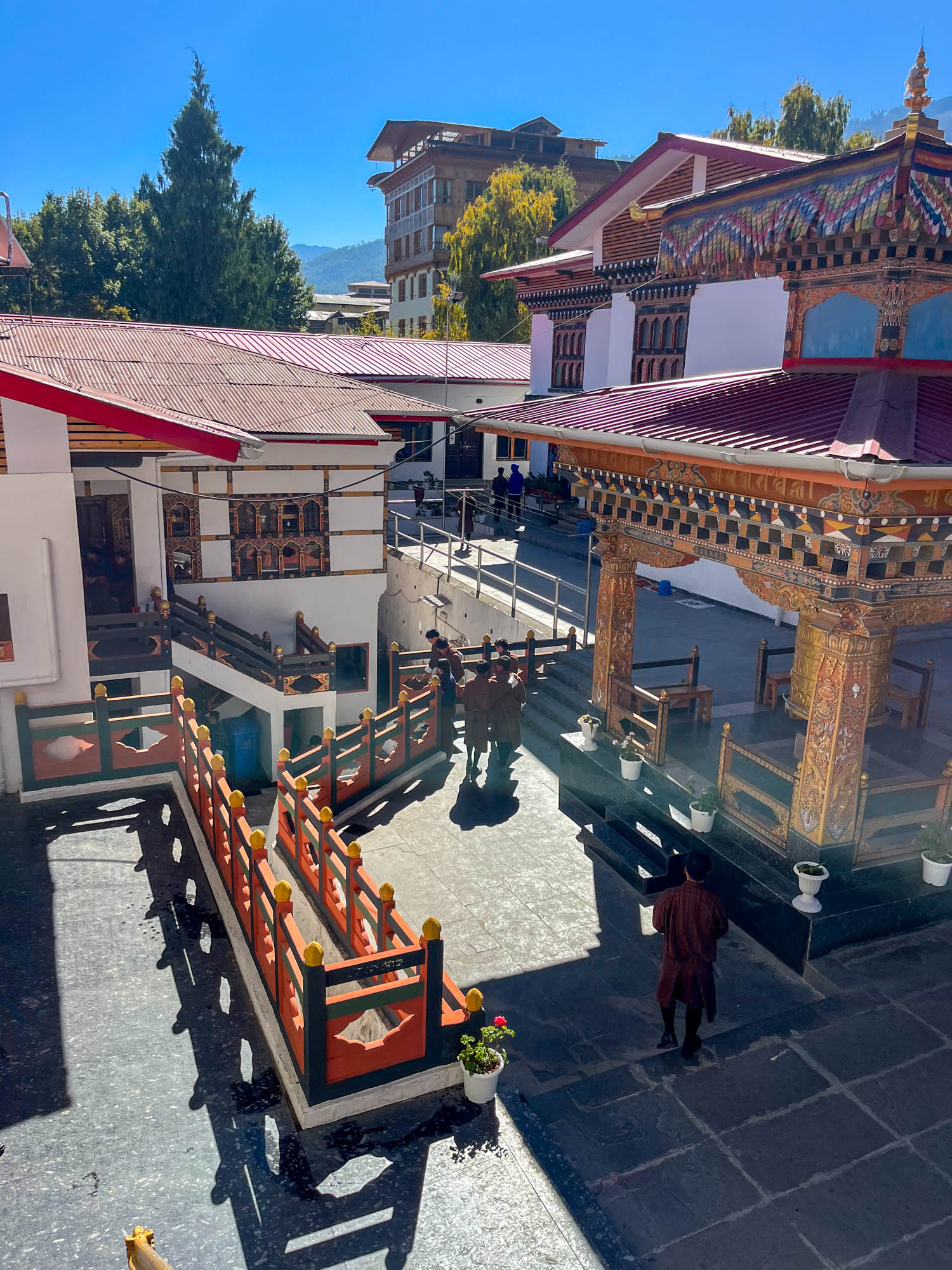
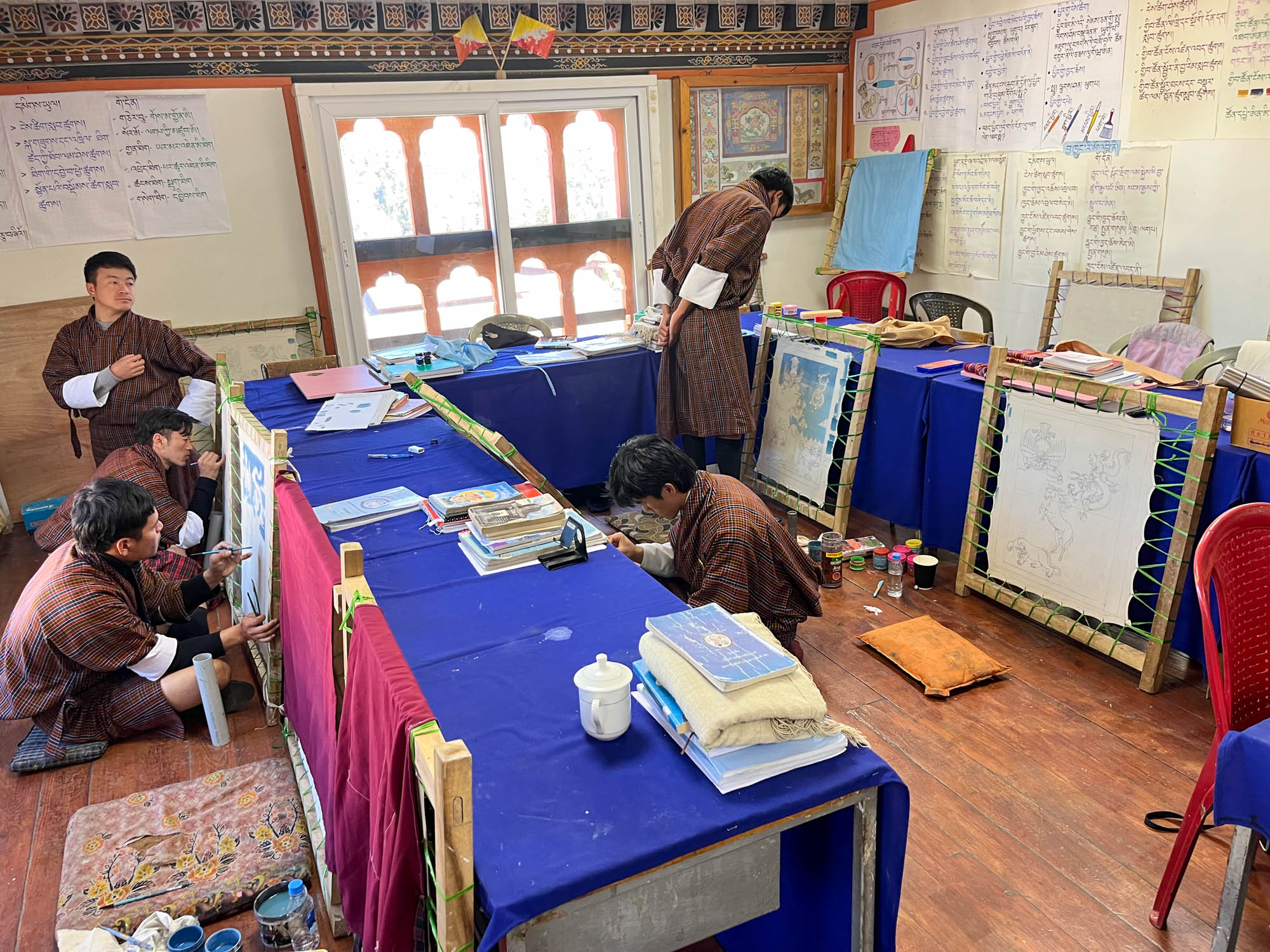
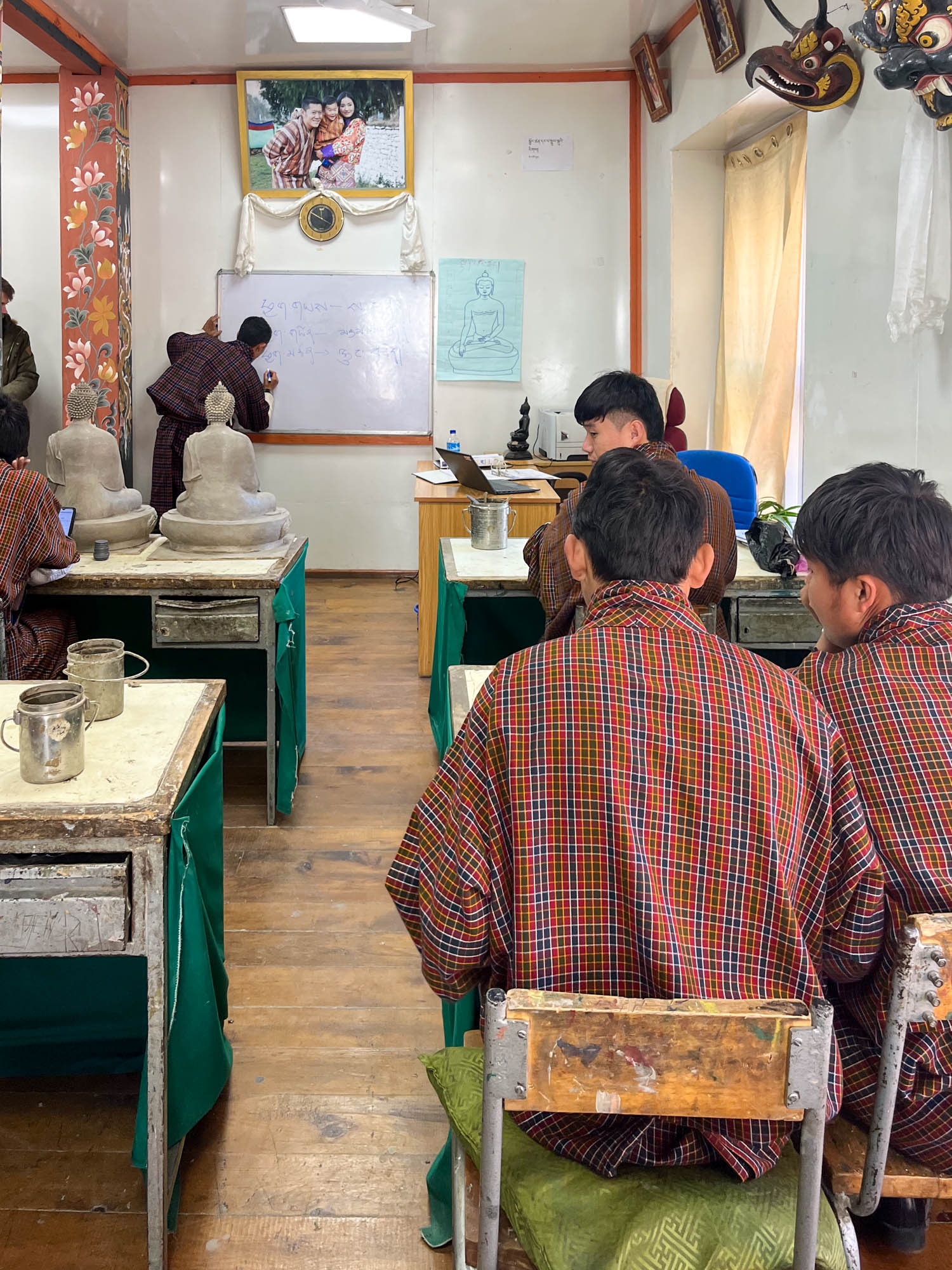
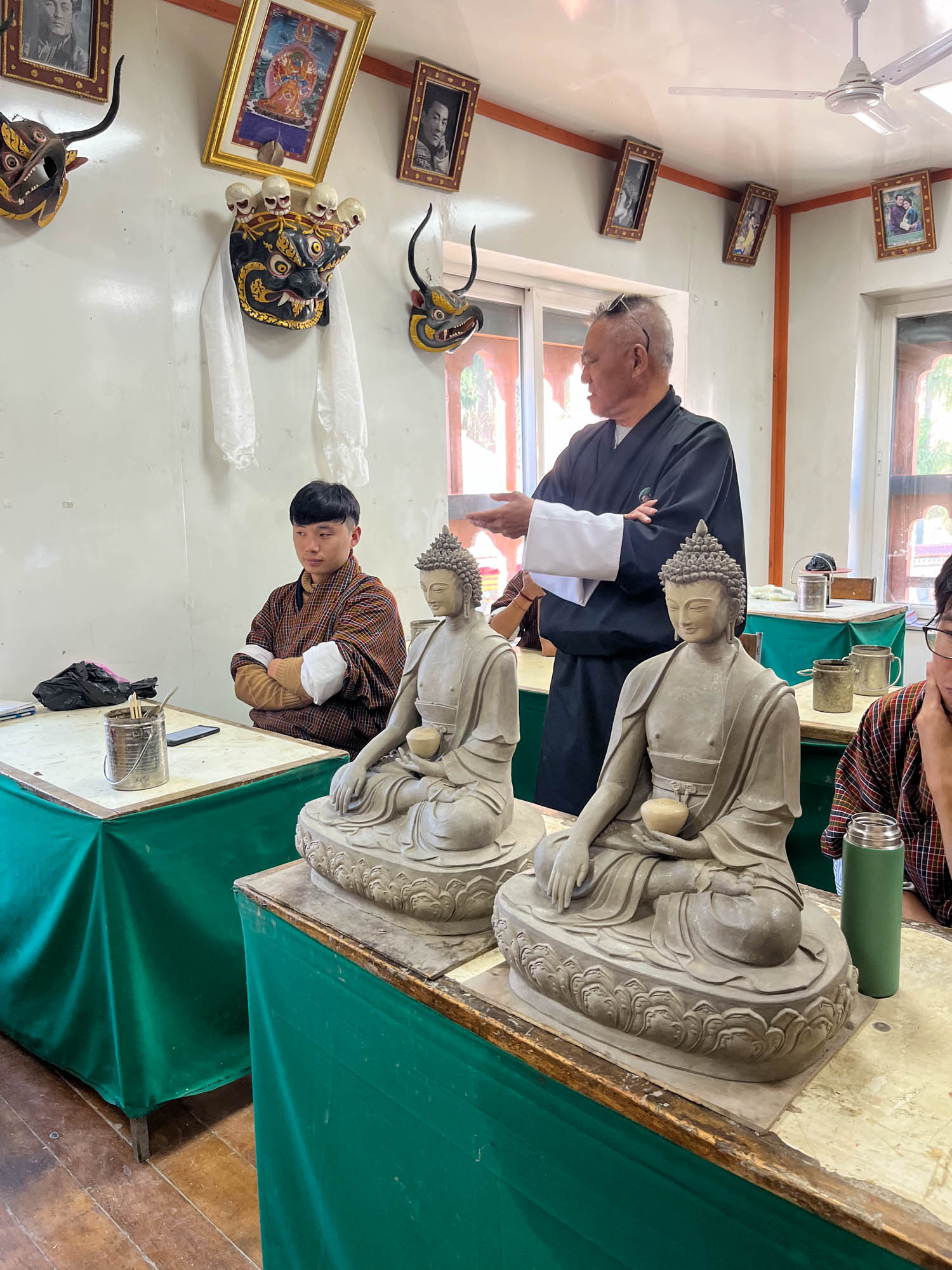
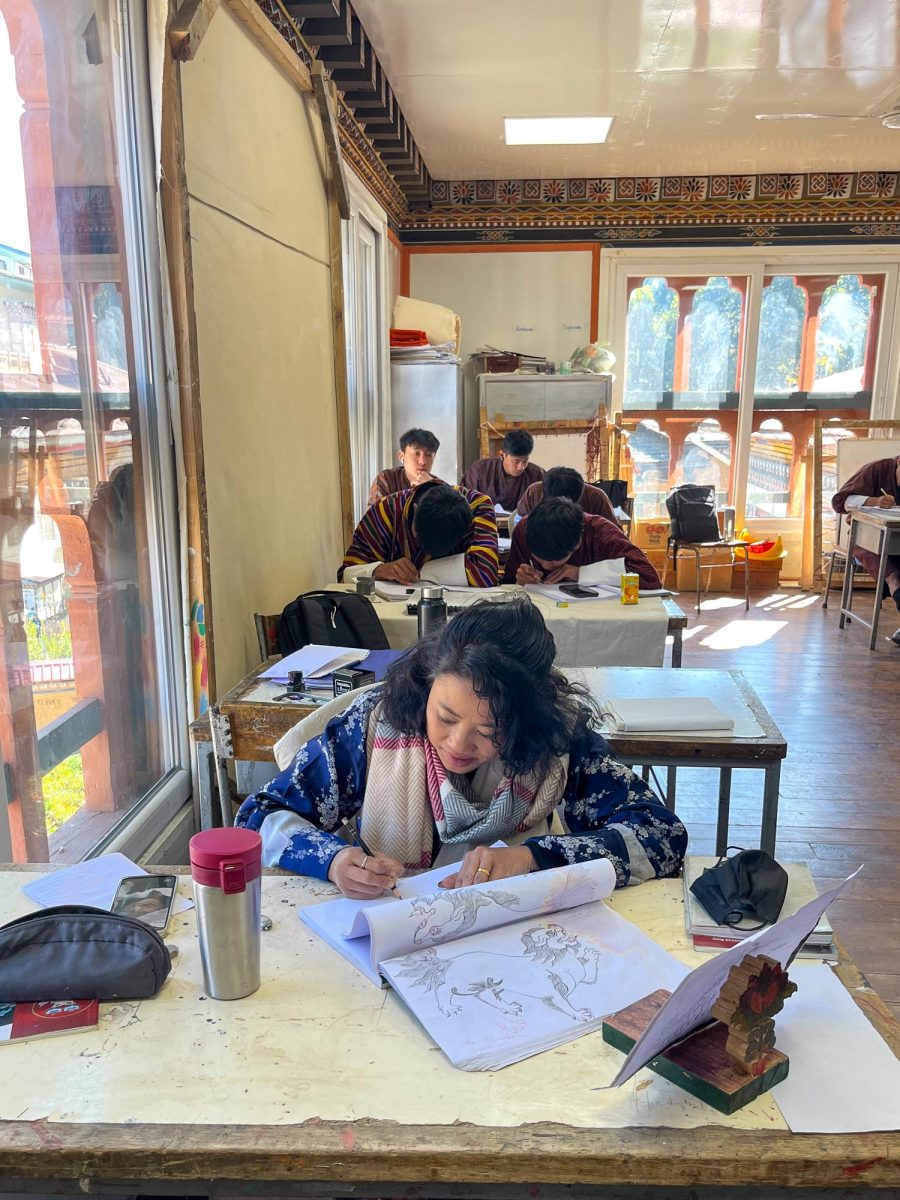
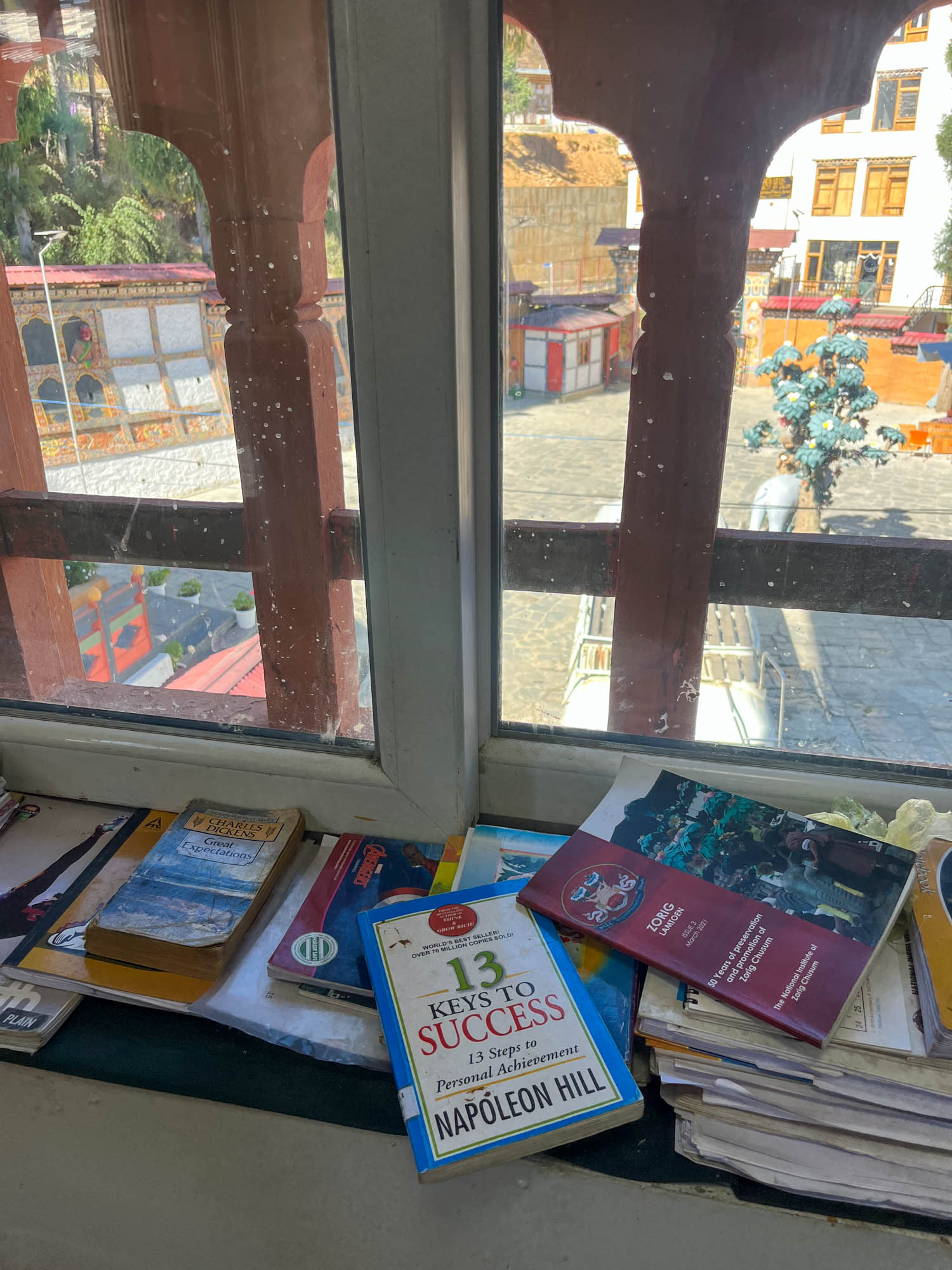
We continued with a visit to the Zorig Chosum Institute (school of traditional arts). Here, young people—and also some slightly older students—learn practical skills such as sculpture, wood carving, textile work, and traditional painting. Programs last anywhere from three to sixteen months, depending on the complexity and the chosen field. It was very interesting, but at the same time I found it hard to imagine what it must be like to be a student there, since tourist groups arrive every few hours, walk through the school, take photos, and generally disturb the atmosphere. Personally, I would find that quite annoying—probably they do too. On the other hand, I understand that these visits are an important source of funding for the school and its activities. Bhutan’s education system is largely publicly funded and free, and closely tied to the national philosophy of Gross National Happiness. Primary and secondary education are free for Bhutanese citizens, and textbooks, school uniforms, and often even accommodation in boarding schools are also provided free of charge, since many children come from remote mountain areas. Teaching is mostly conducted in English, which is a legacy of British influence in the region, while Dzongkha (the official language) is a compulsory subject. At the tertiary level, Bhutan has relatively few universities and higher education institutions. The main institution is the Royal University of Bhutan (RUB), which functions as a network of specialized colleges and institutes across the country rather than a classic university located in a single city. Still, young people who want to study medicine, law, or certain scientific fields often have to go abroad—especially to India.



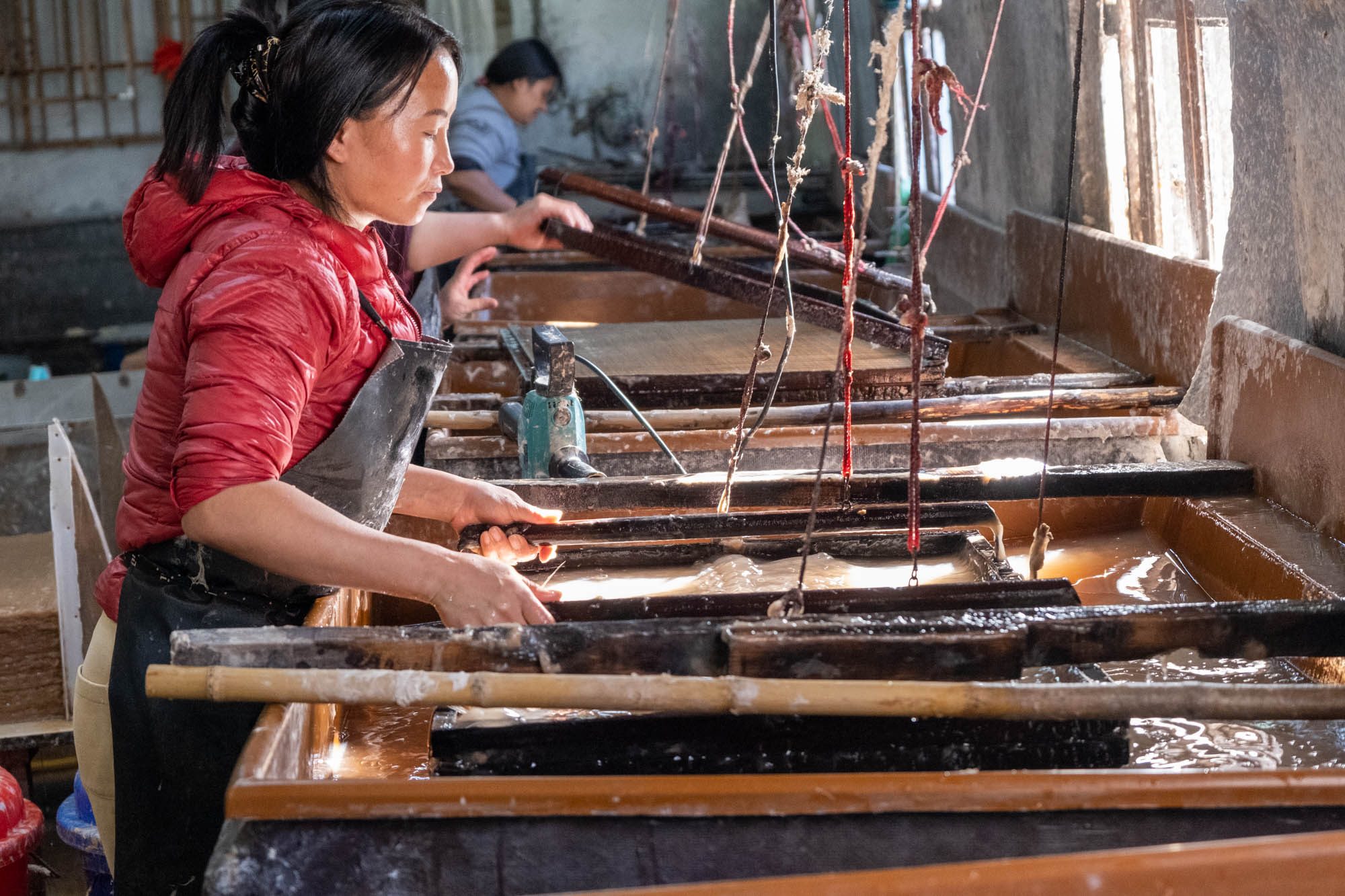
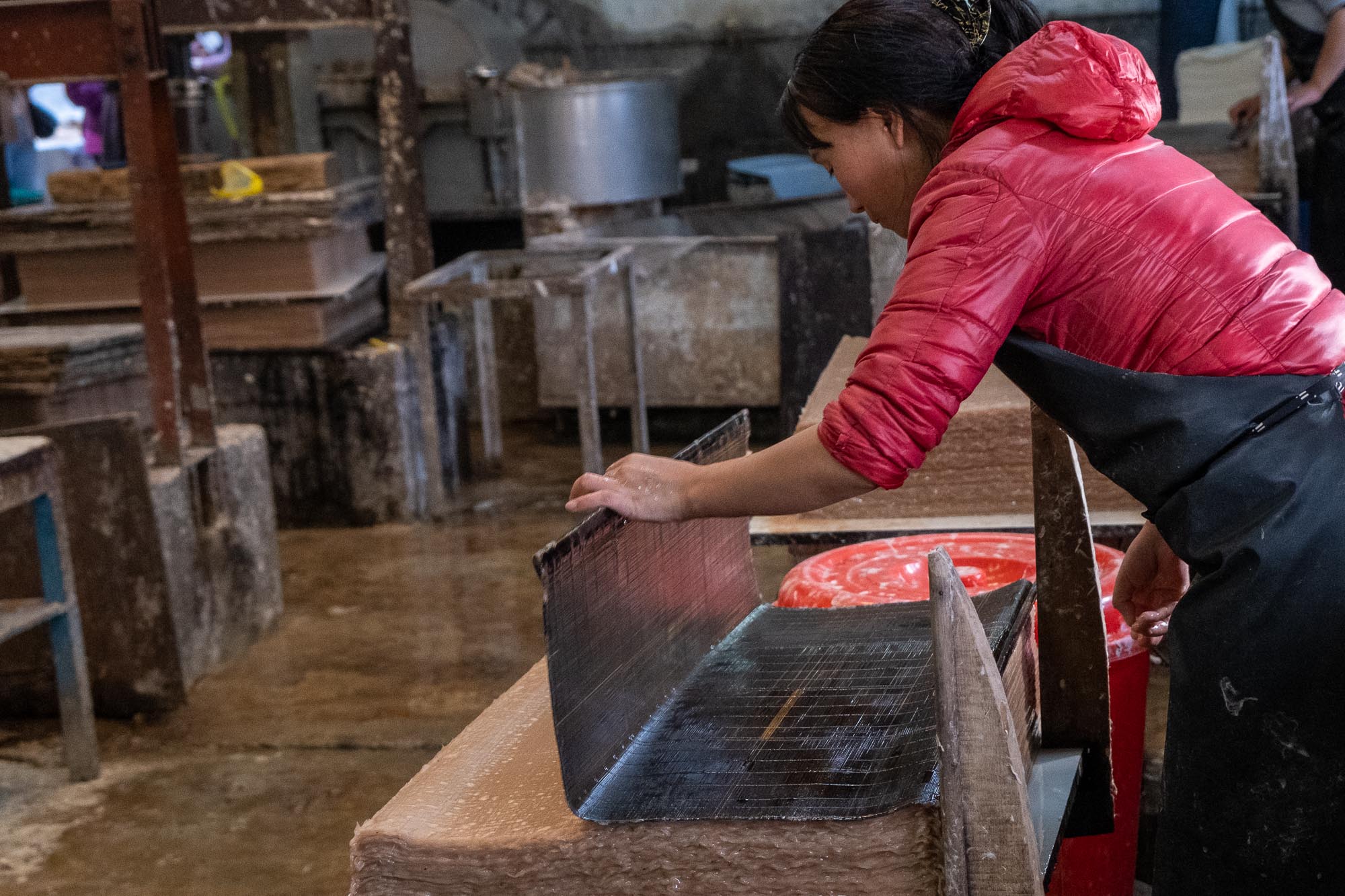
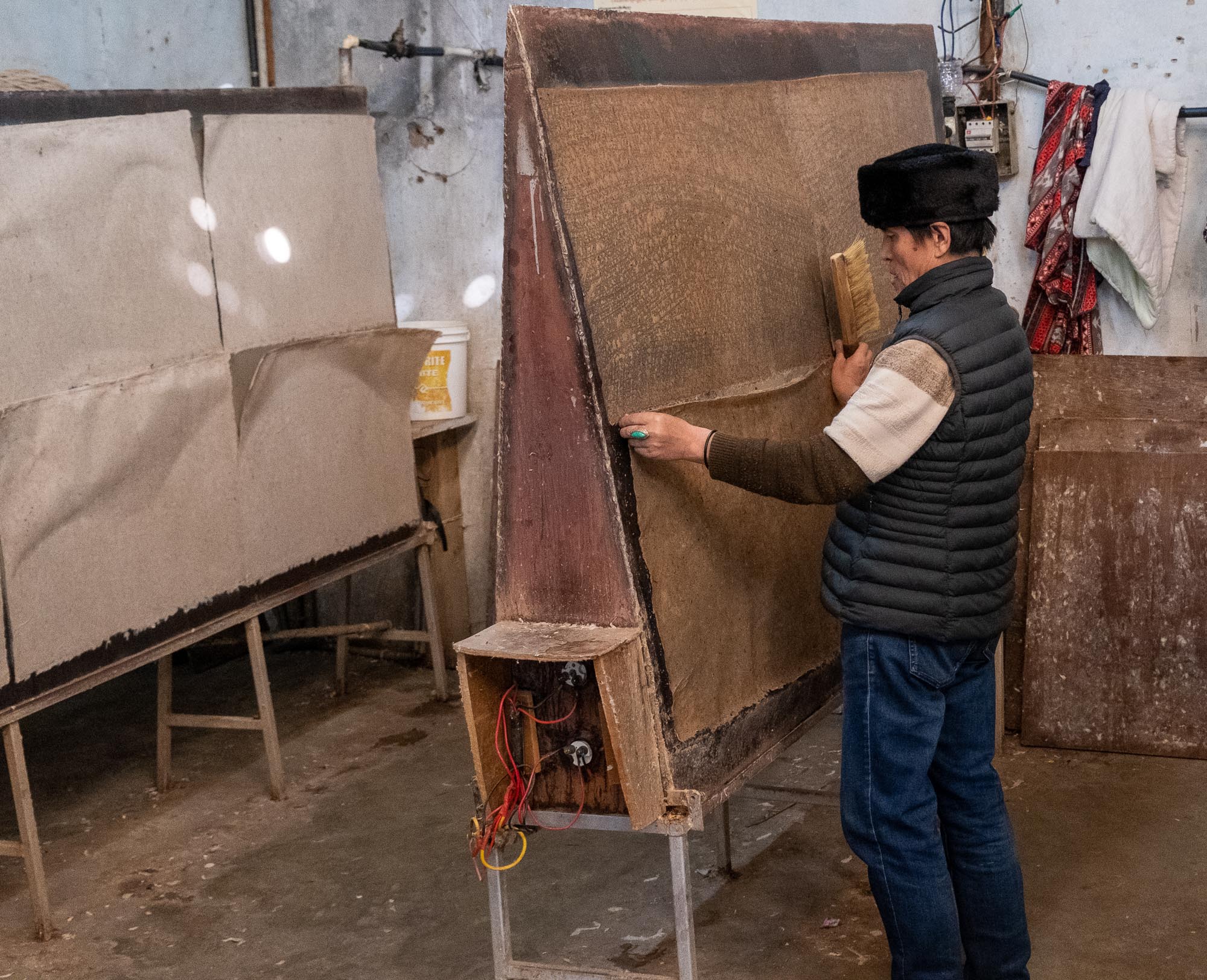
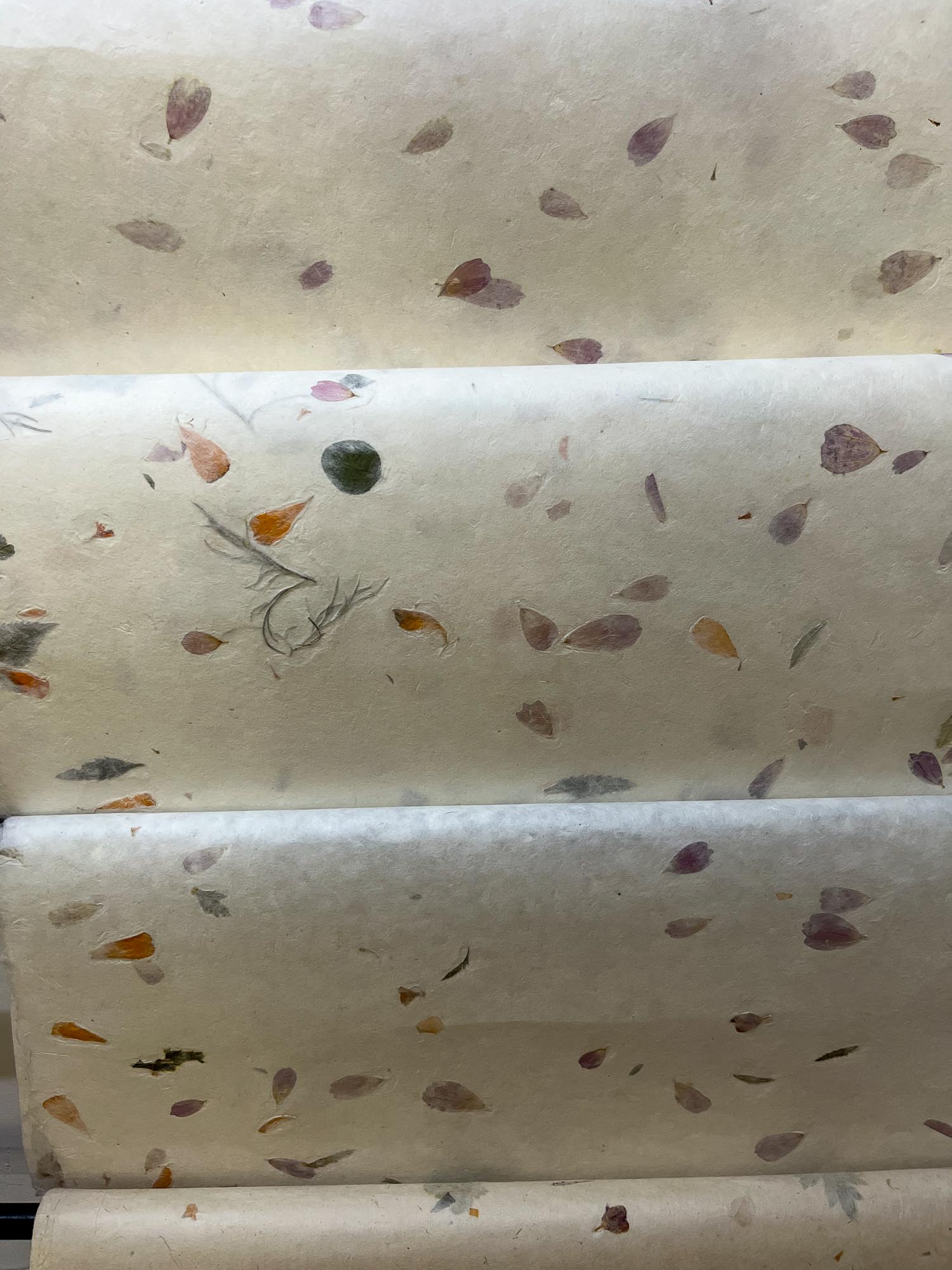
Next, we stopped at a workshop “Jungshi Handmade Paper Factory” where they help protect and preserve the ancient practice of traditional paper making. The paper is made from the bark of the daphne plant, which is first dried, then boiled for hours, and later manually ground into a soft pulp. From there, the craftspeople form each sheet by hand, gently lifting it from the water and shaping it with calm, practiced movements. The freshly made pages are then laid out to dry in the sun, almost like laundry—except what’s hanging is something far more delicate and meaningful. There’s something almost meditative about the whole process: slow, repetitive, and completely unhurried, as if the rhythm of the work is designed to match the pace of Bhutan itself. This handmade paper is traditionally used for religious texts, calligraphy, and painting, and you can immediately feel the difference compared to anything mass-produced. It has a soft texture, slightly uneven edges, and a natural warmth that makes it feel alive. Watching the process, you really understand how much patience and skill goes into even one simple sheet, and why these crafts still matter here—not as souvenirs, but as a living part of culture. At the end, I couldn’t resist and bought a few small paintings.