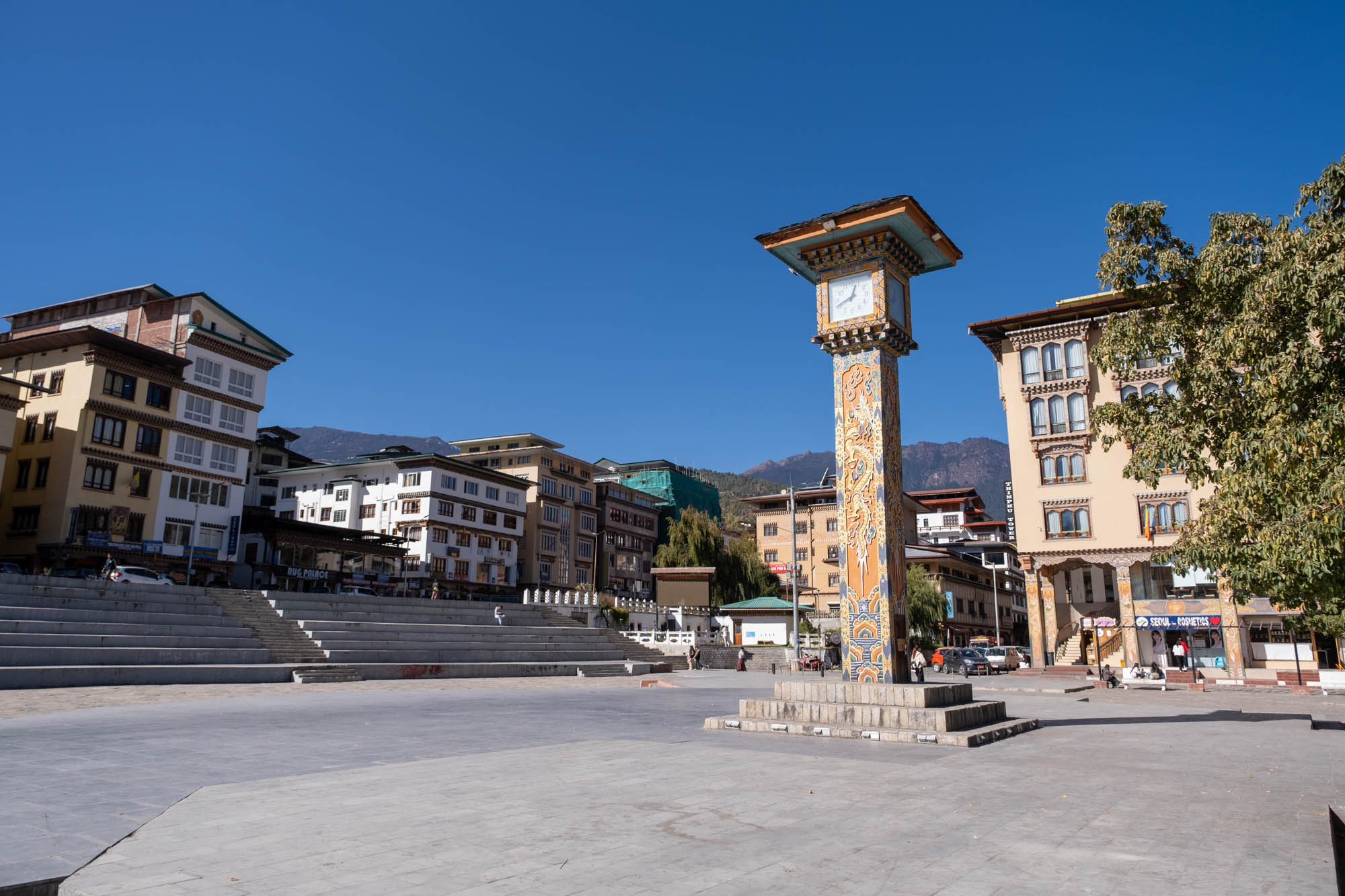
Lunch at a restaurant in Thimphu was—mildly put—a disappointment. Yet another buffet, where the “meat options” were either chicken with an unbelievable amount of bones, or beef in a kind of beef jerky style that was almost impossible to chew. The restaurant does offer classic à la carte dishes as well, but personally, I wouldn’t go back. The Google reviews tell the same story. The only real advantage of the place is its location: right in the very center of town, by the clock tower.
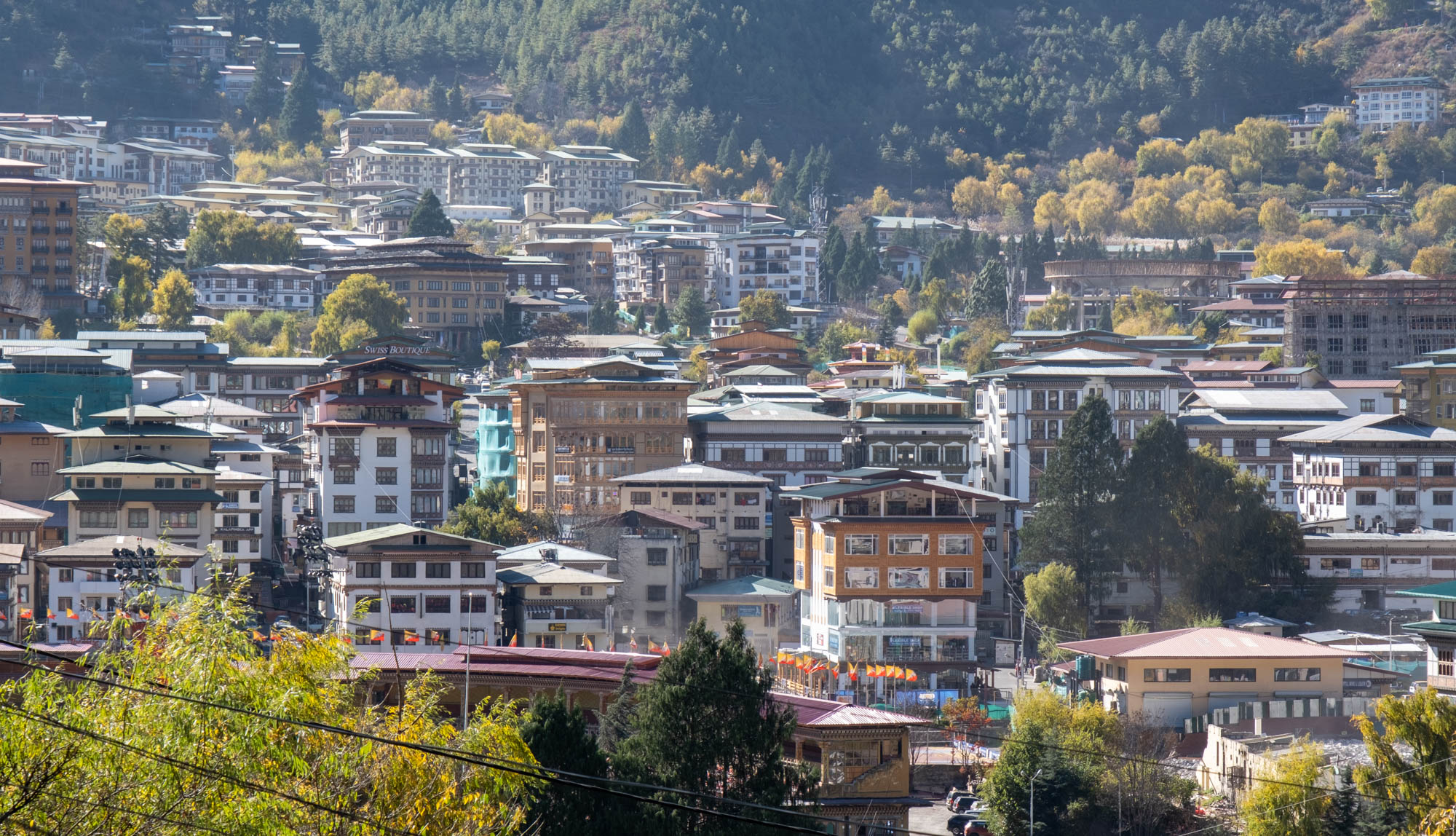
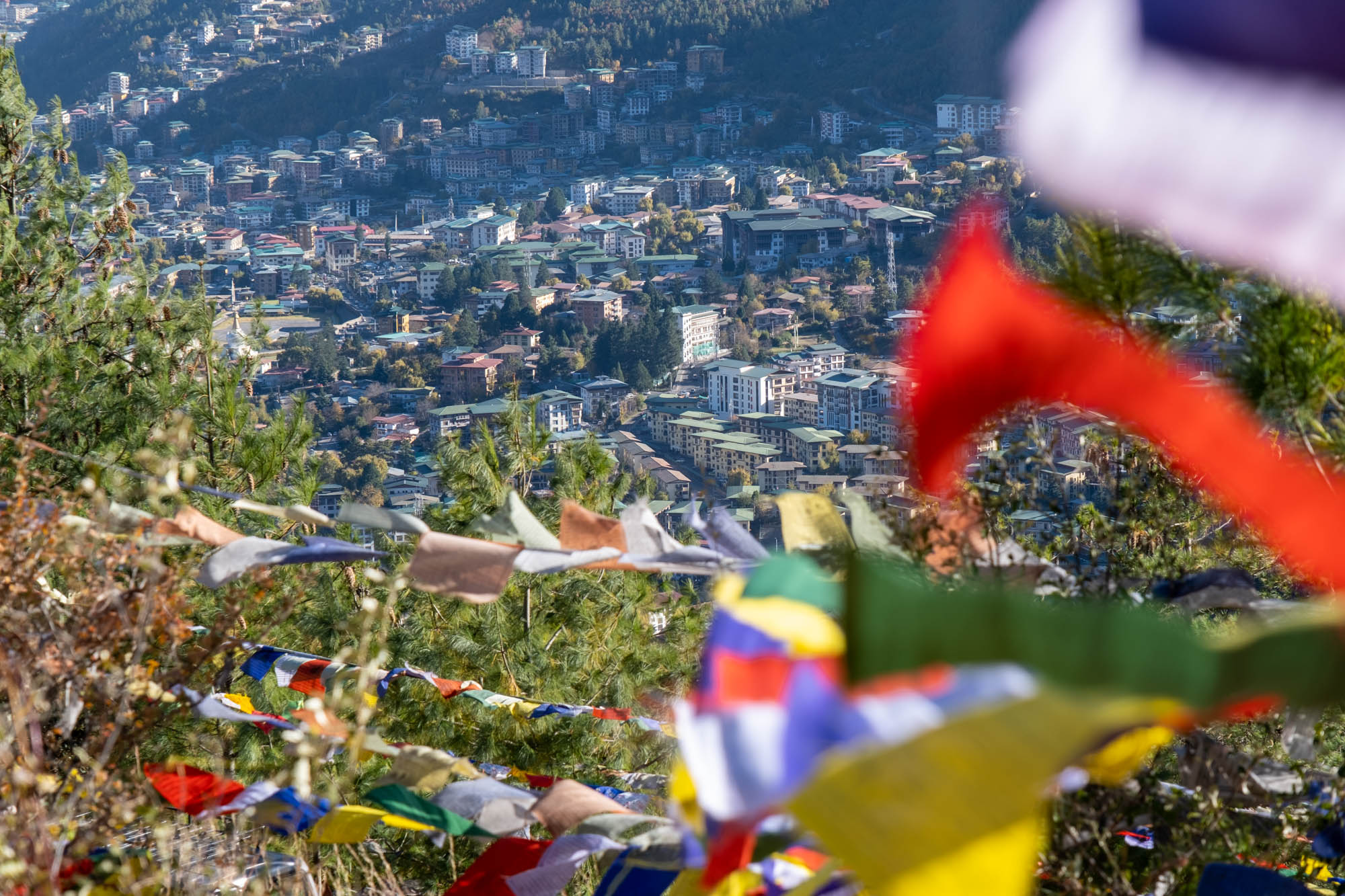
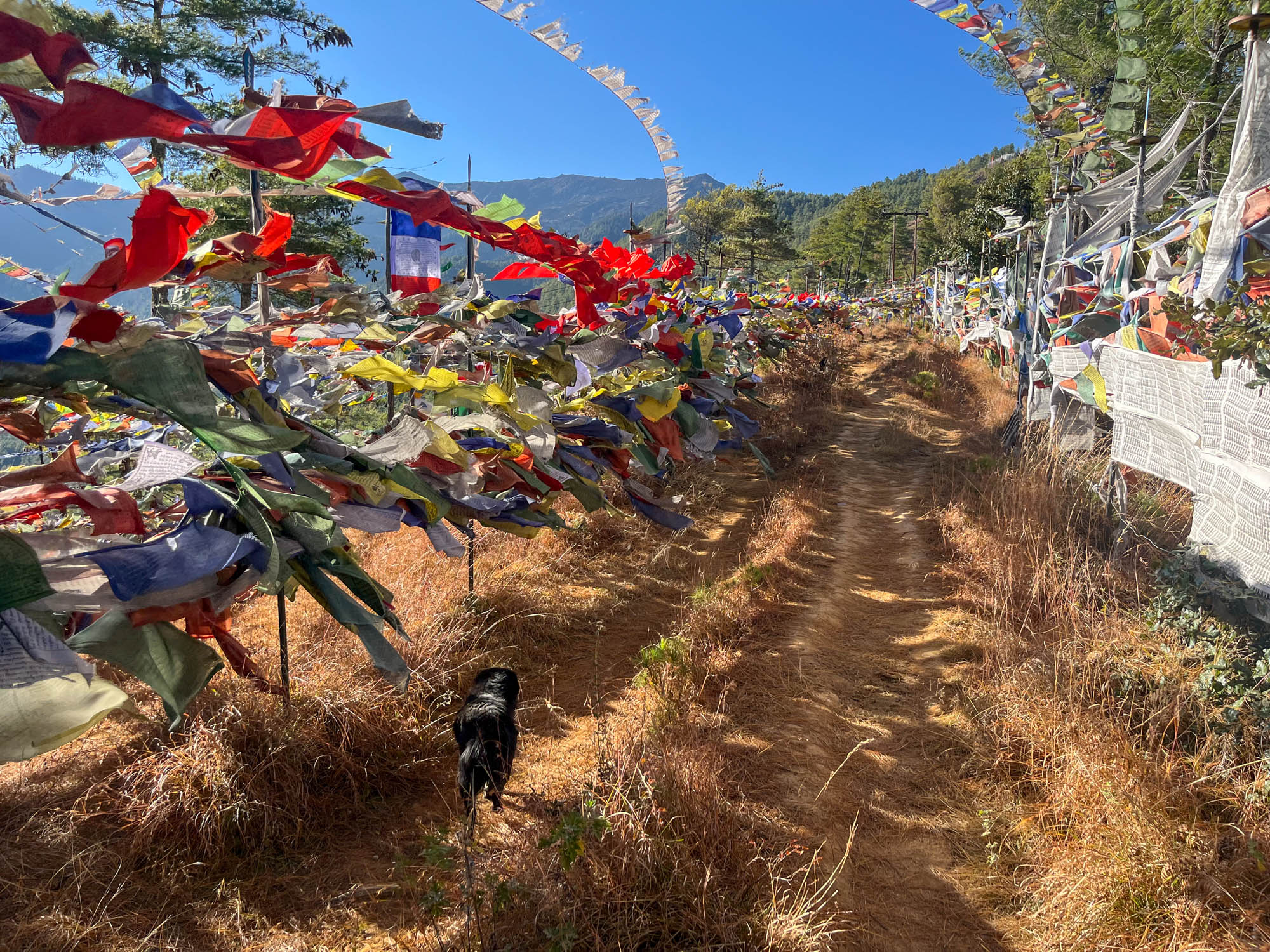
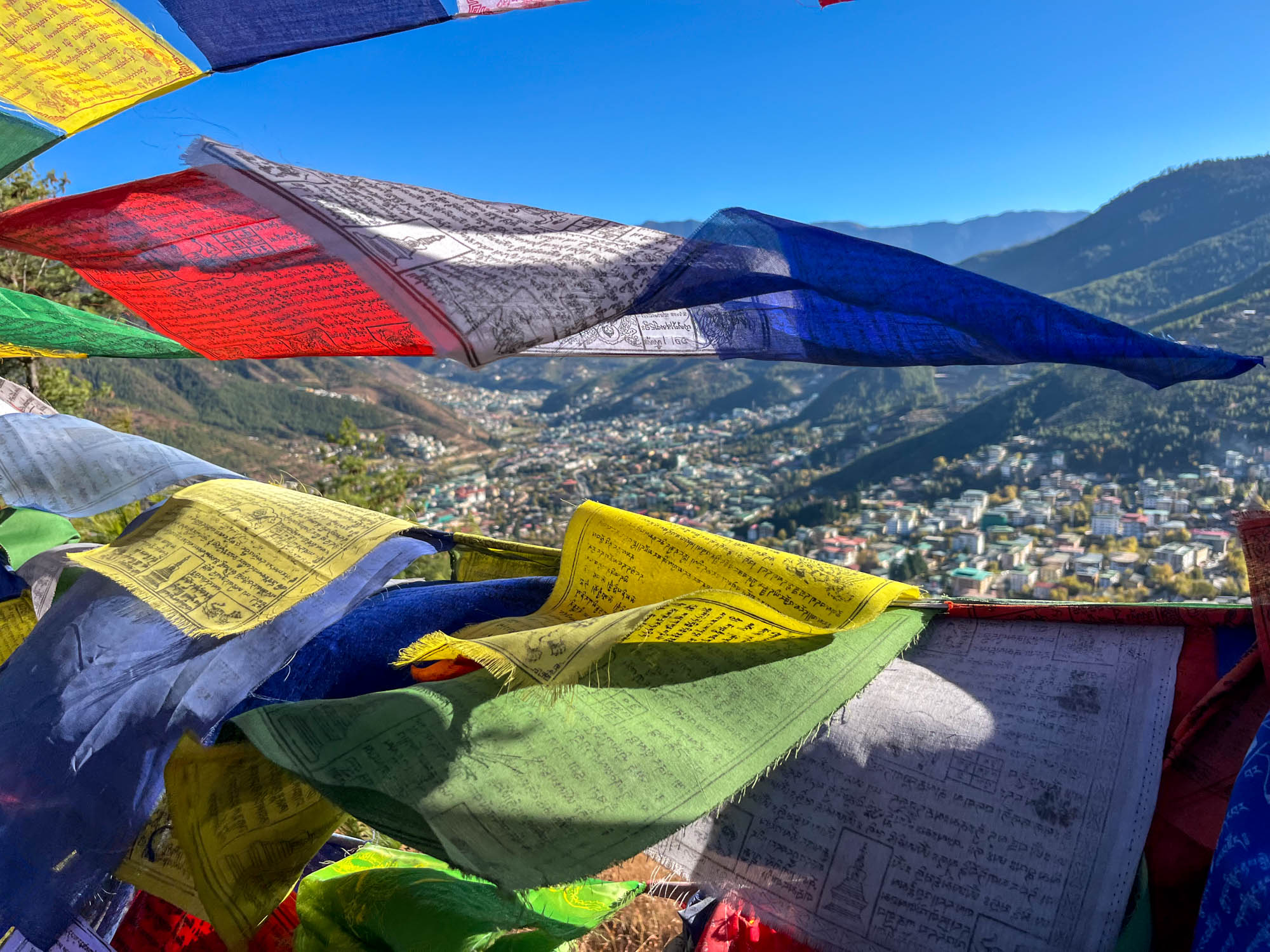
After lunch we went to a spot I had actually wanted to run to in the morning… the Sangaygang viewpoint above Thimphu, with thousands of prayer flags and one of the most beautiful views over the city. I don’t know why, but for me it was the highlight of the day. Beautiful light, peace and quiet… and stunning views. If I had had more time (I was tempted to tell them to just leave me there and let me skip the visit to the Royal Takin Reserve), but okay…


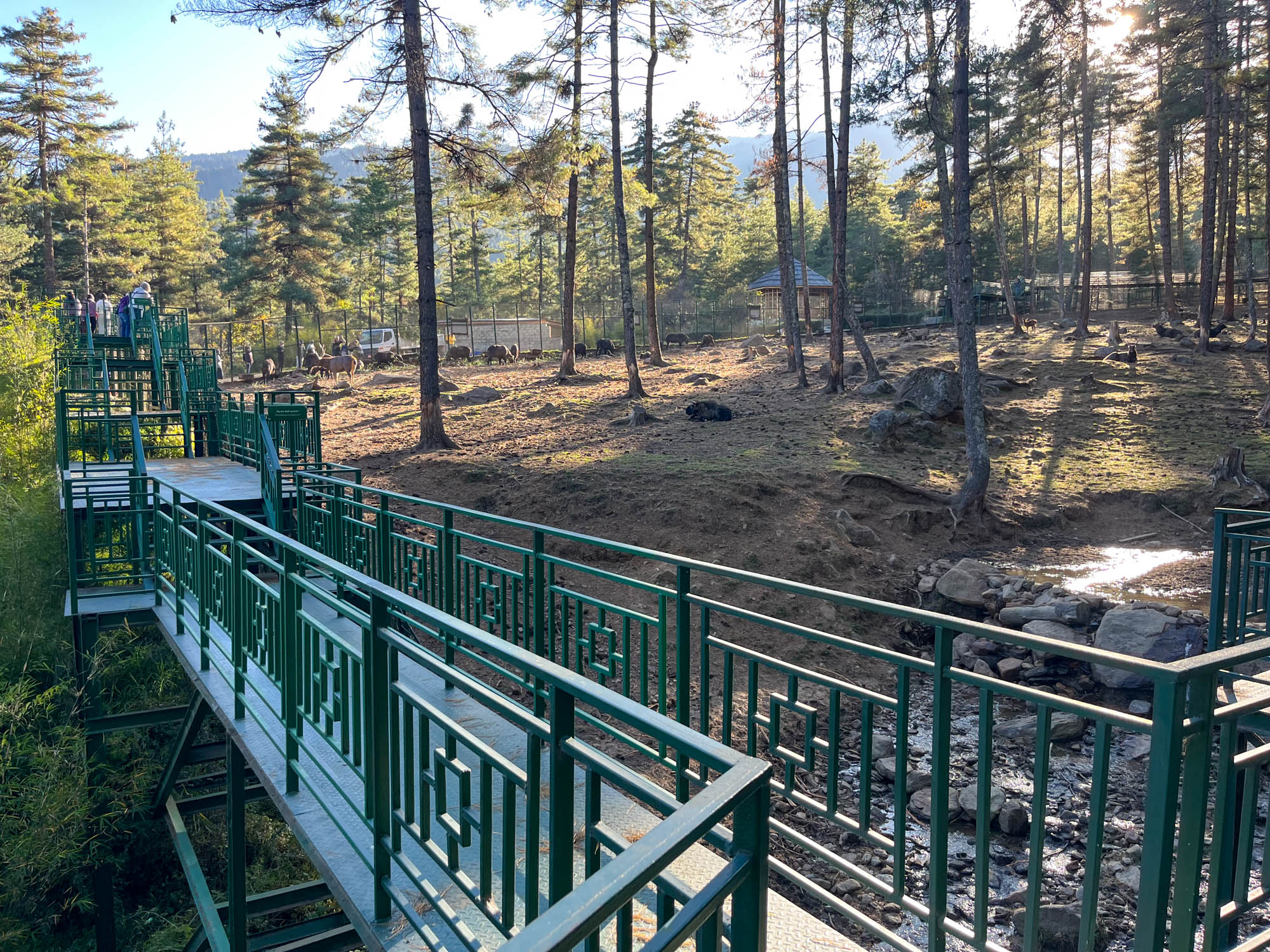
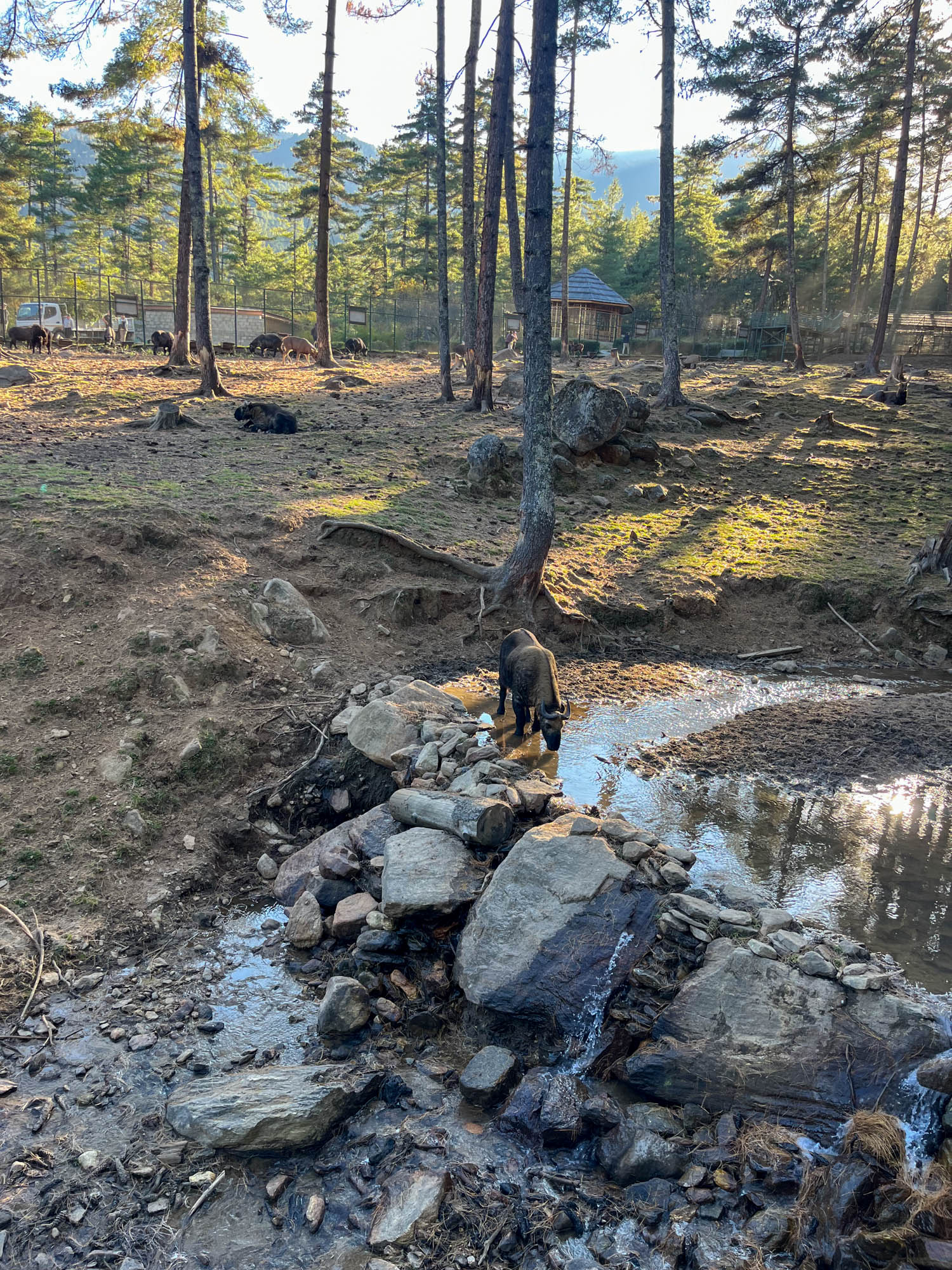
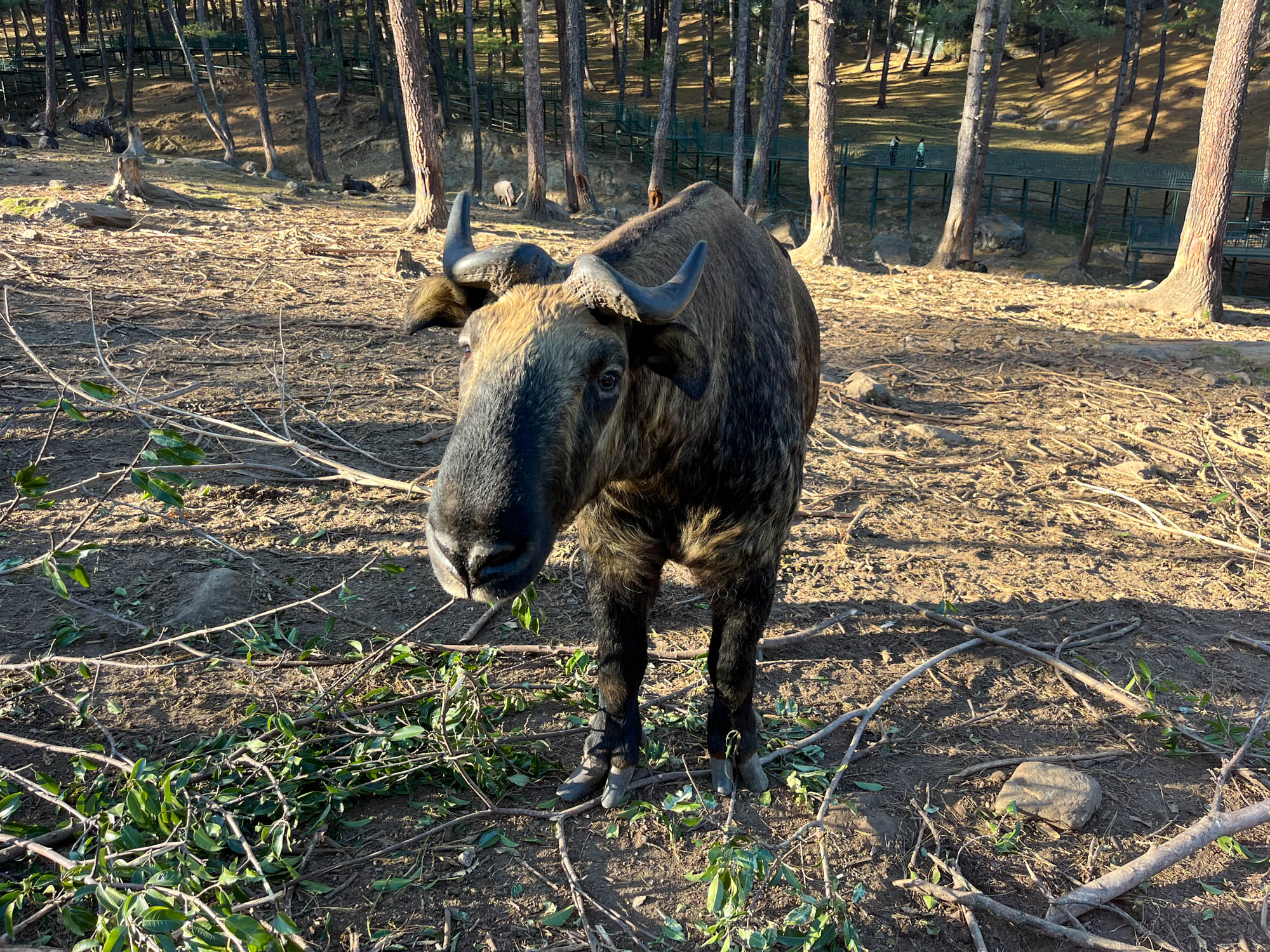
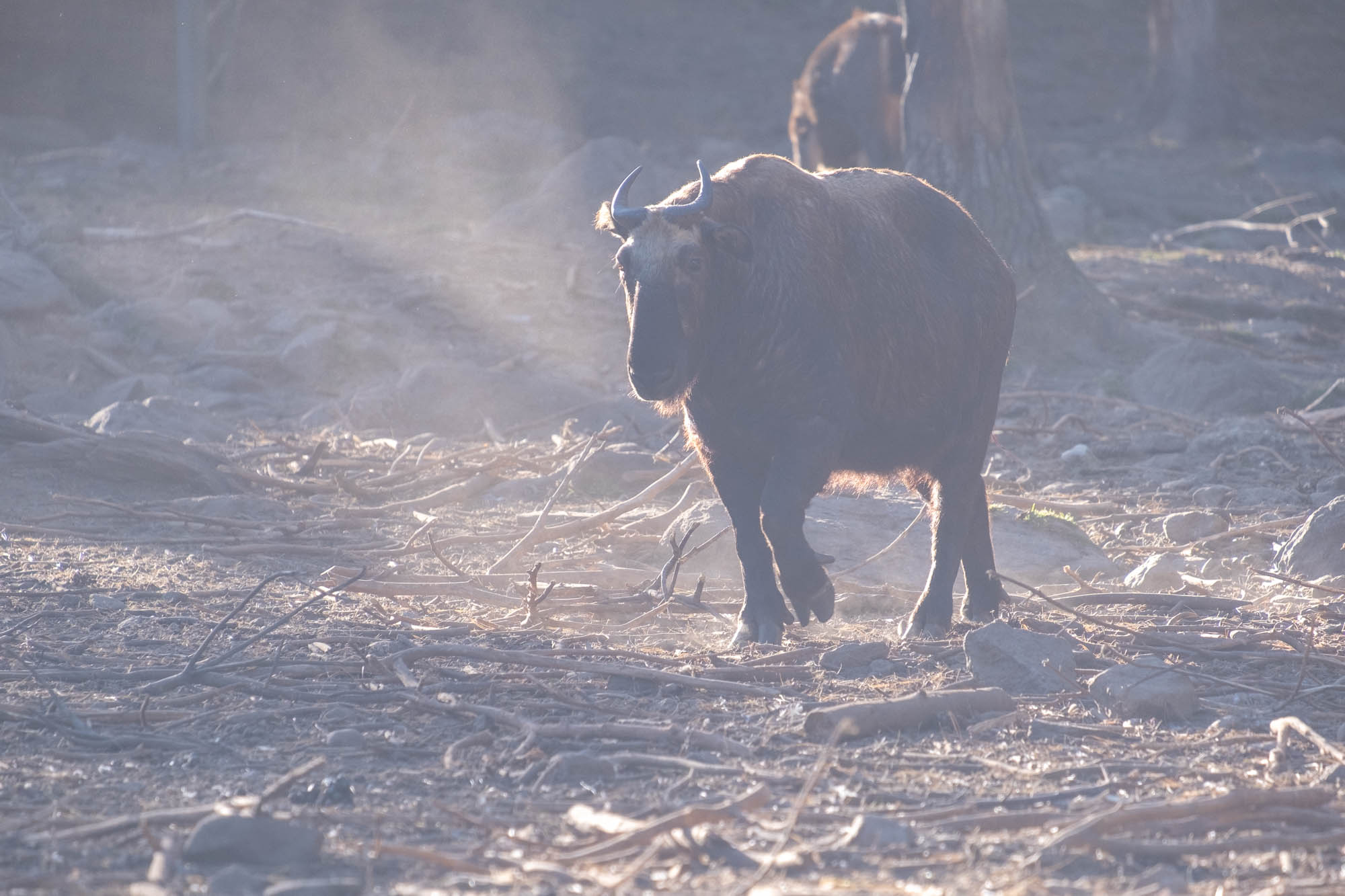
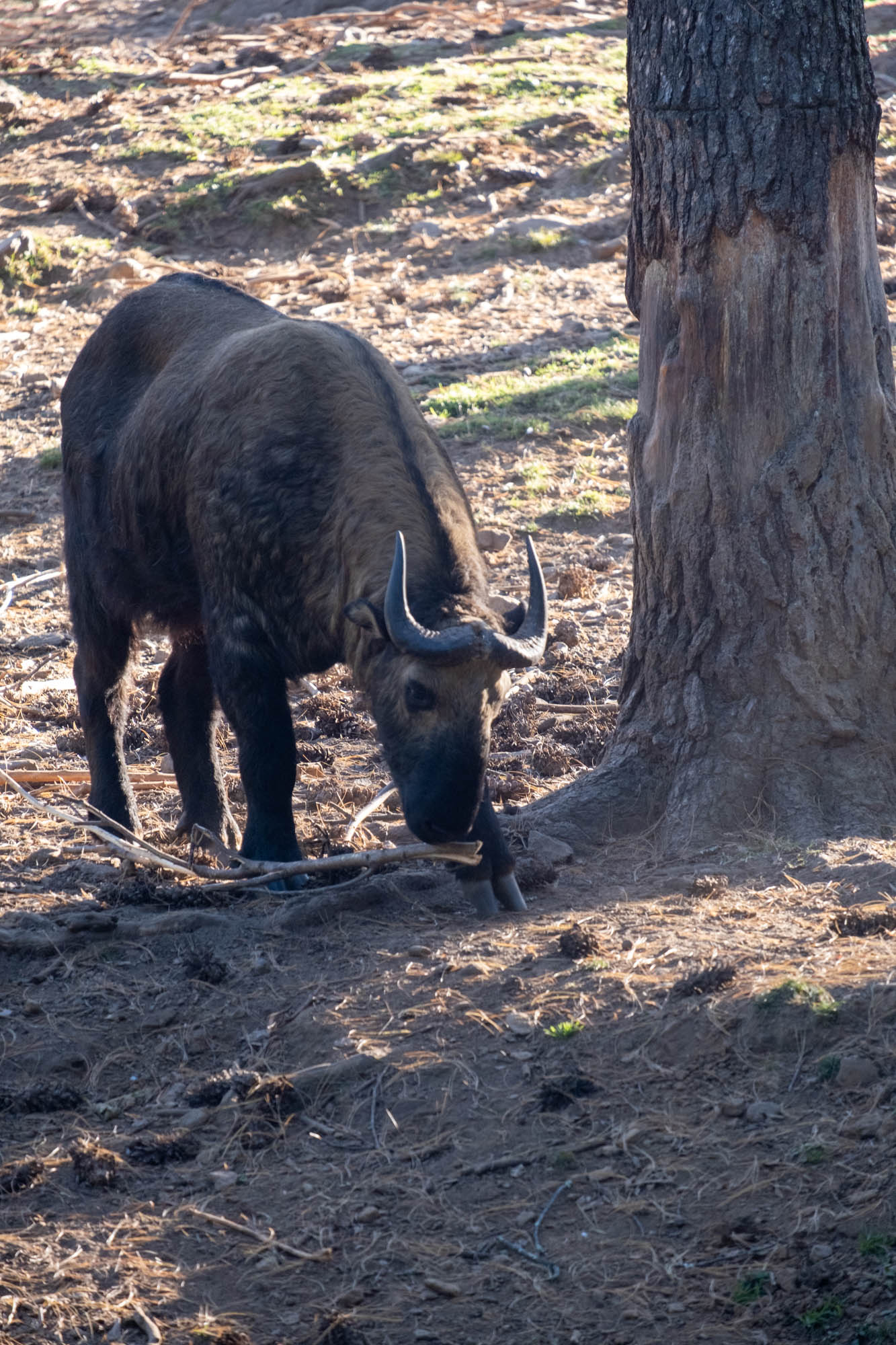
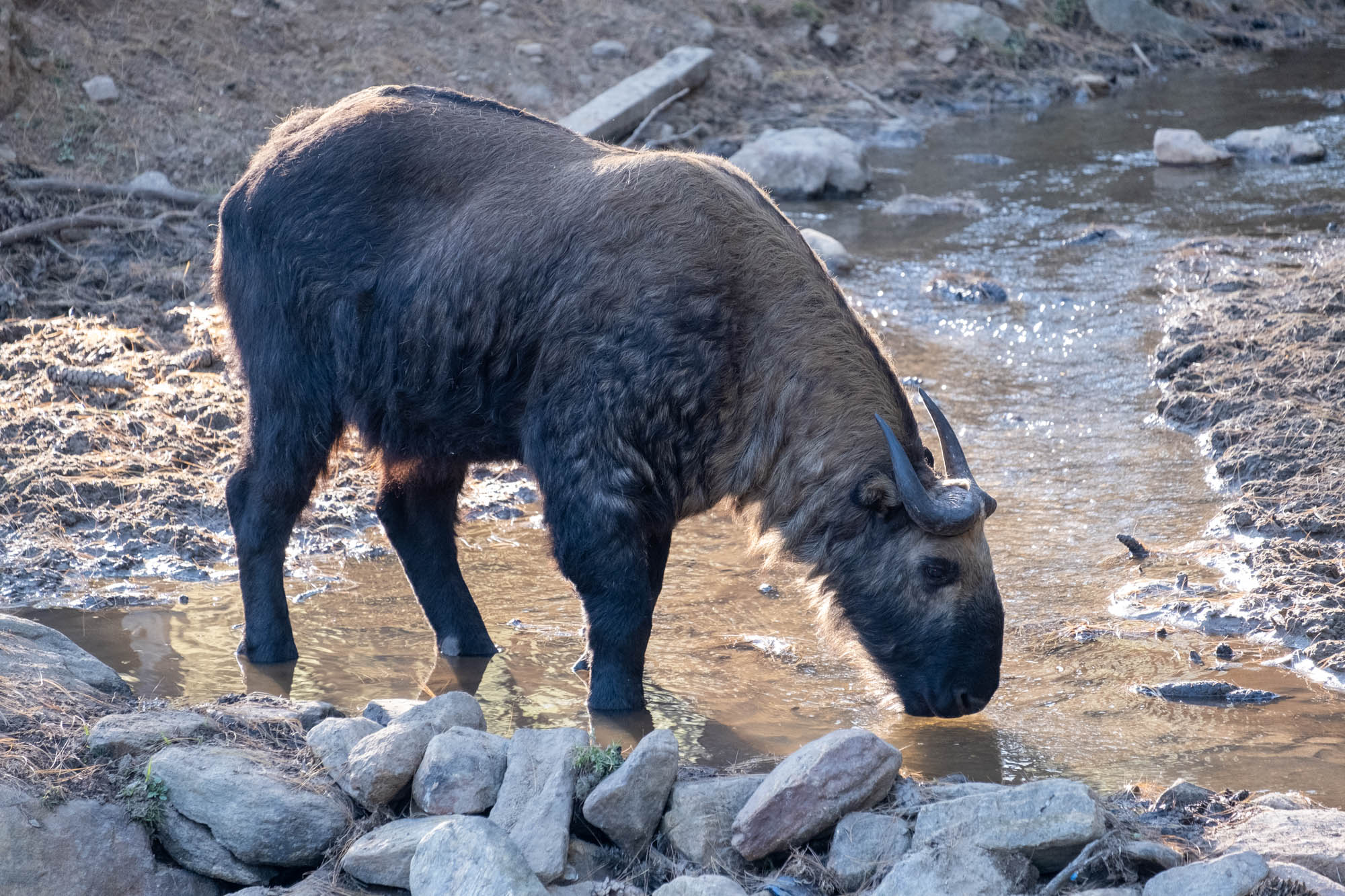
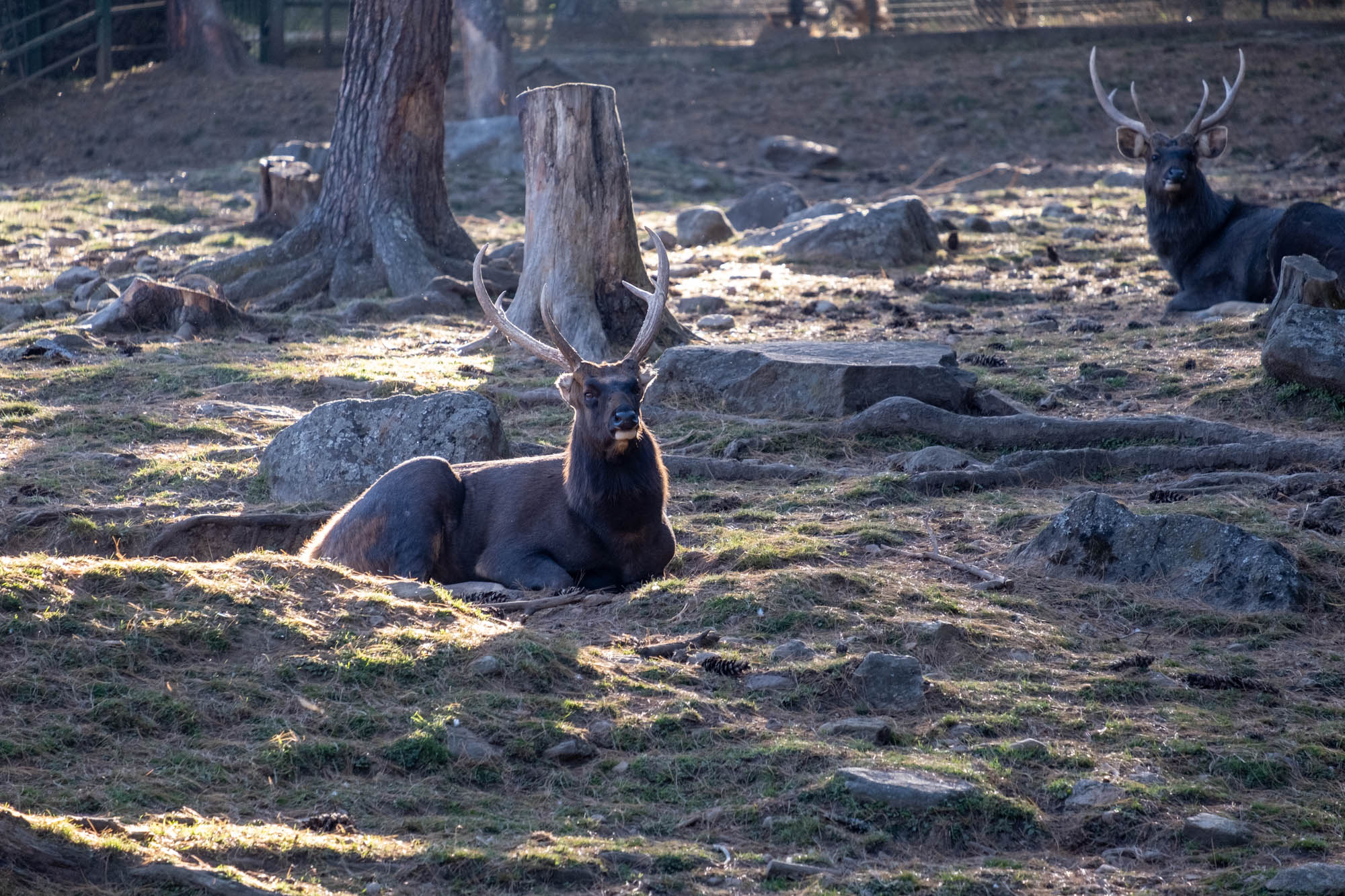
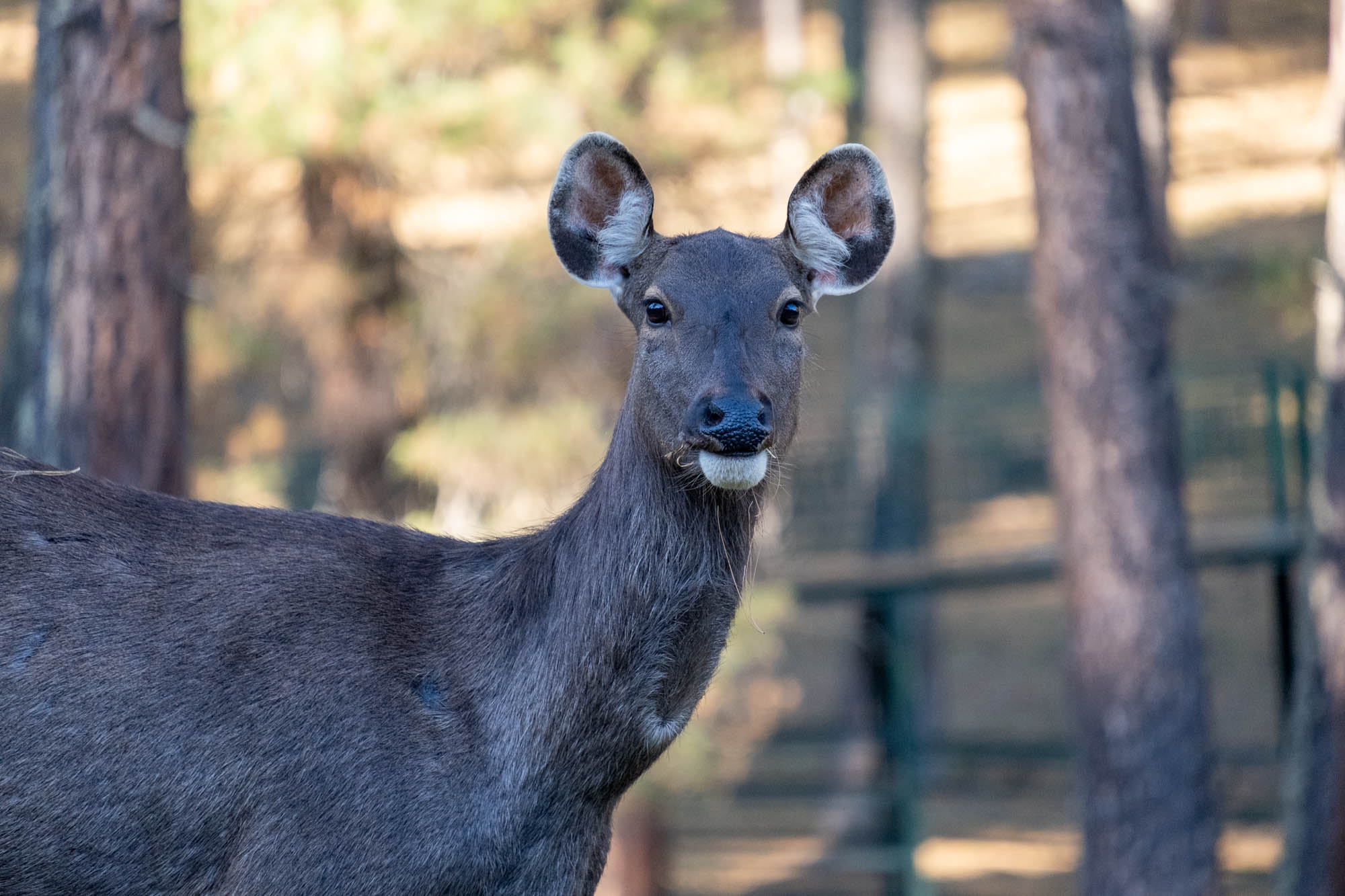
And yes, Royal Takin Reserve is one of the more unusual, yet charming stops in Thimphu. It’s a small animal reserve on a hillside above the city, home to the takin—Bhutan’s national animal, which is truly something special. At first glance it looks like a mix between a goat and an African wildebeest, with a huge nose and a completely “prehistoric” expression. And of course, there’s a story behind it too: according to legend, the takin was created by the Buddhist saint Drukpa Kunley, also known as the “Divine Madman,” who came from Tibet. After a feast, he supposedly combined the head of a goat with the body of a cow—and voilà, the takin was born. The reserve used to be a small zoo, but today it’s more of an open space where the animals live in a fairly natural environment, surrounded by forest and bamboo. Besides takins, there are also a few deer and other animals wandering around, but the takin is obviously the star of the show.

Near our hotel there’s also the Bhutan Postal Museum. It’s not especially exciting, but Gorazd and I had a clear goal: postcards and stamps. In fact, we made custom stamps—with our own photo on them, taken that morning in front of the giant Buddha statue. A nice and pretty unique souvenir.
It gets dark quickly in Thimphu, so in the afternoon we used the time for a visit to the local souvenir market. And that turned out to be an excellent decision. We bought most of our gifts and souvenirs there and got a good overview of what’s available. Most stalls sell very similar products, but the big difference compared to shops is that many of the stalls are owned by the women selling there—who often make the products themselves: scarves, bags, tablecloths, clothing. A lot of items are labeled “made in Bhutan”—whether everything is truly made locally is hard to know, but it definitely feels more authentic. As for bargaining: yes, prices are quite flexible. But Gorazd and I didn’t bargain aggressively in the style of “you say 1000, we offer 500.” Most of the time the conversation just flowed naturally, and after 10 minutes they lowered the price themselves, without any pressure (who knows—maybe we just talked too much and wore them out… also, there were very, very few other customers). Everyone was happy—us and the sellers. As one of them said: Indians can be quite annoying and start negotiating prices as if they were still back home in India. We left with a few T-shirts, scarves, and a really good feeling.