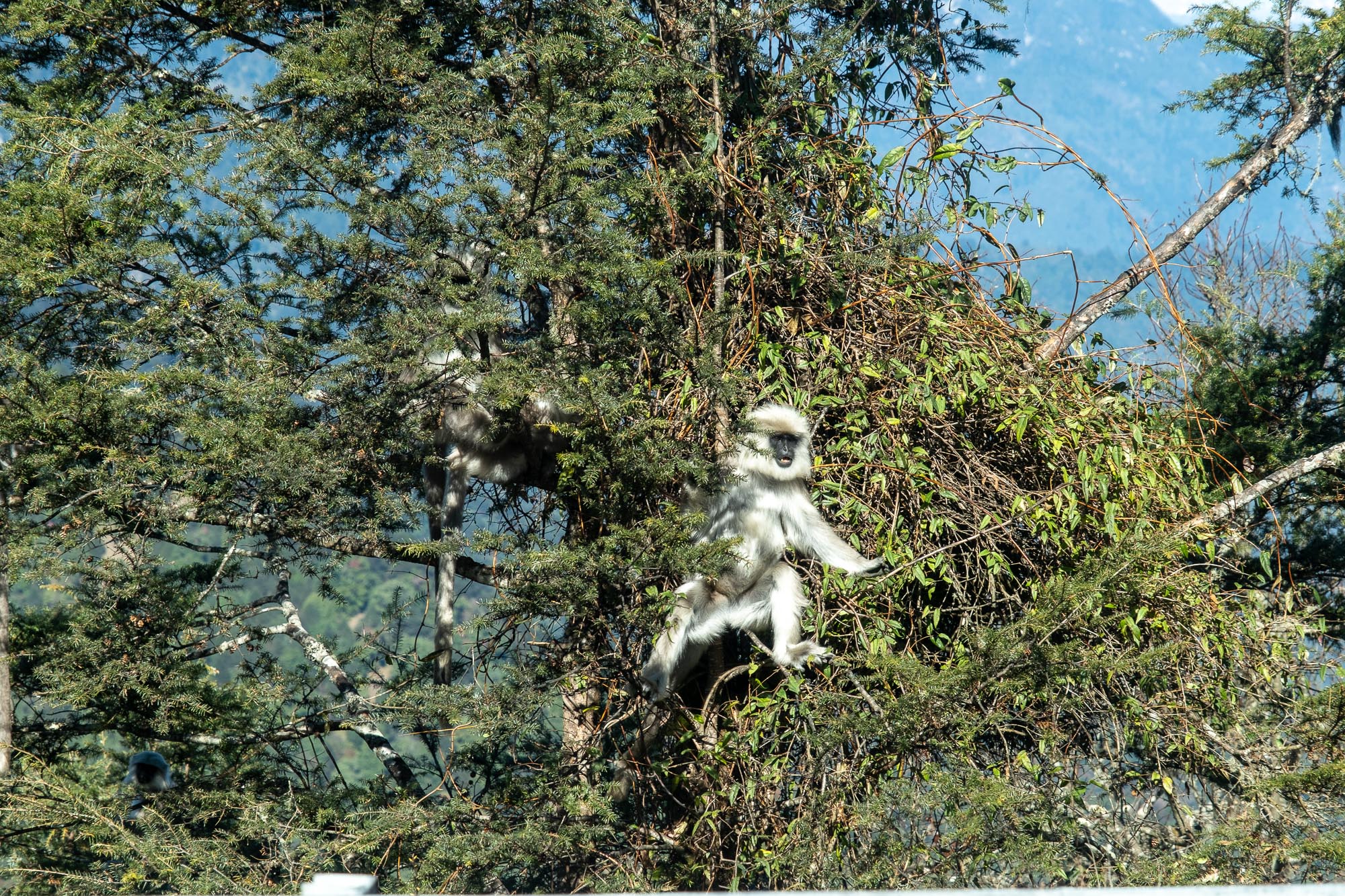
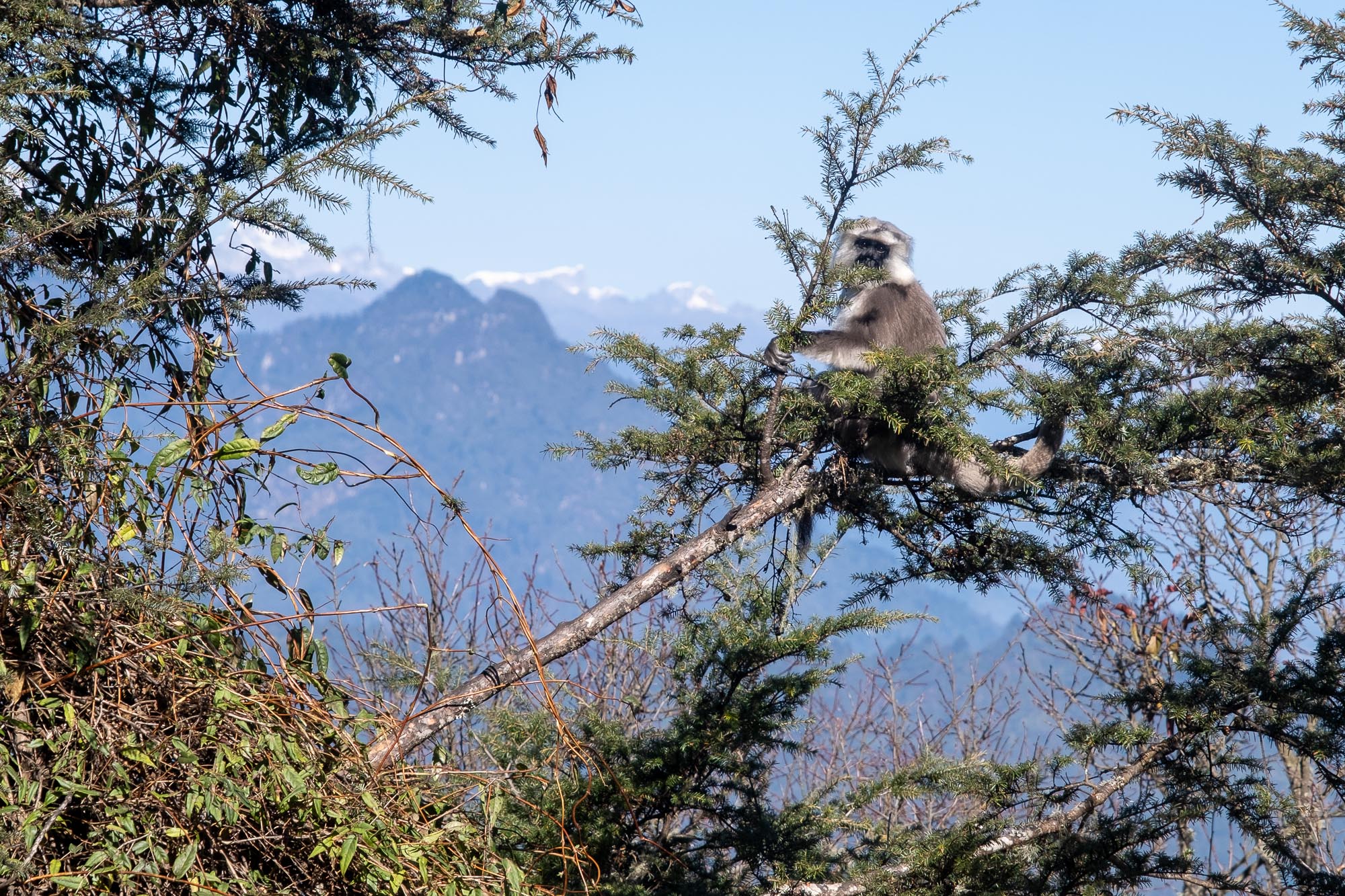
Today’s program included a fairly long drive to Paro. Although the distance is “only” about 120 kilometers, in Bhutan that means three to four hours of driving along narrow, winding roads, where the pace adapts to the terrain rather than the other way around. Once again we pass the 108 stupas (driving the same roads in both directions is simply one of Bhutan’s downsides, as there aren’t many roads and the valleys are narrow), but along the way we also spot several monkeys… at an altitude of almost 3,000 meters.
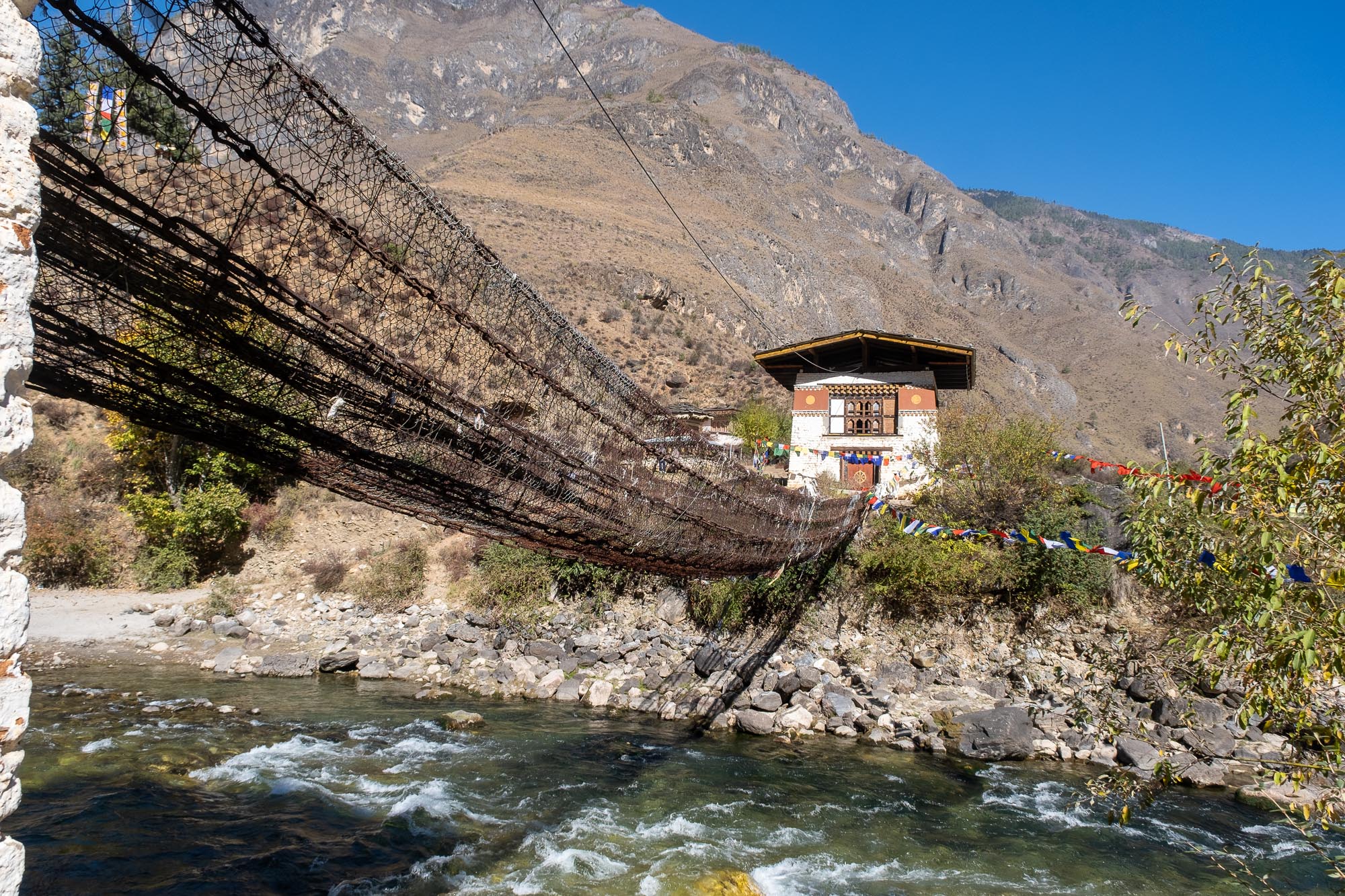
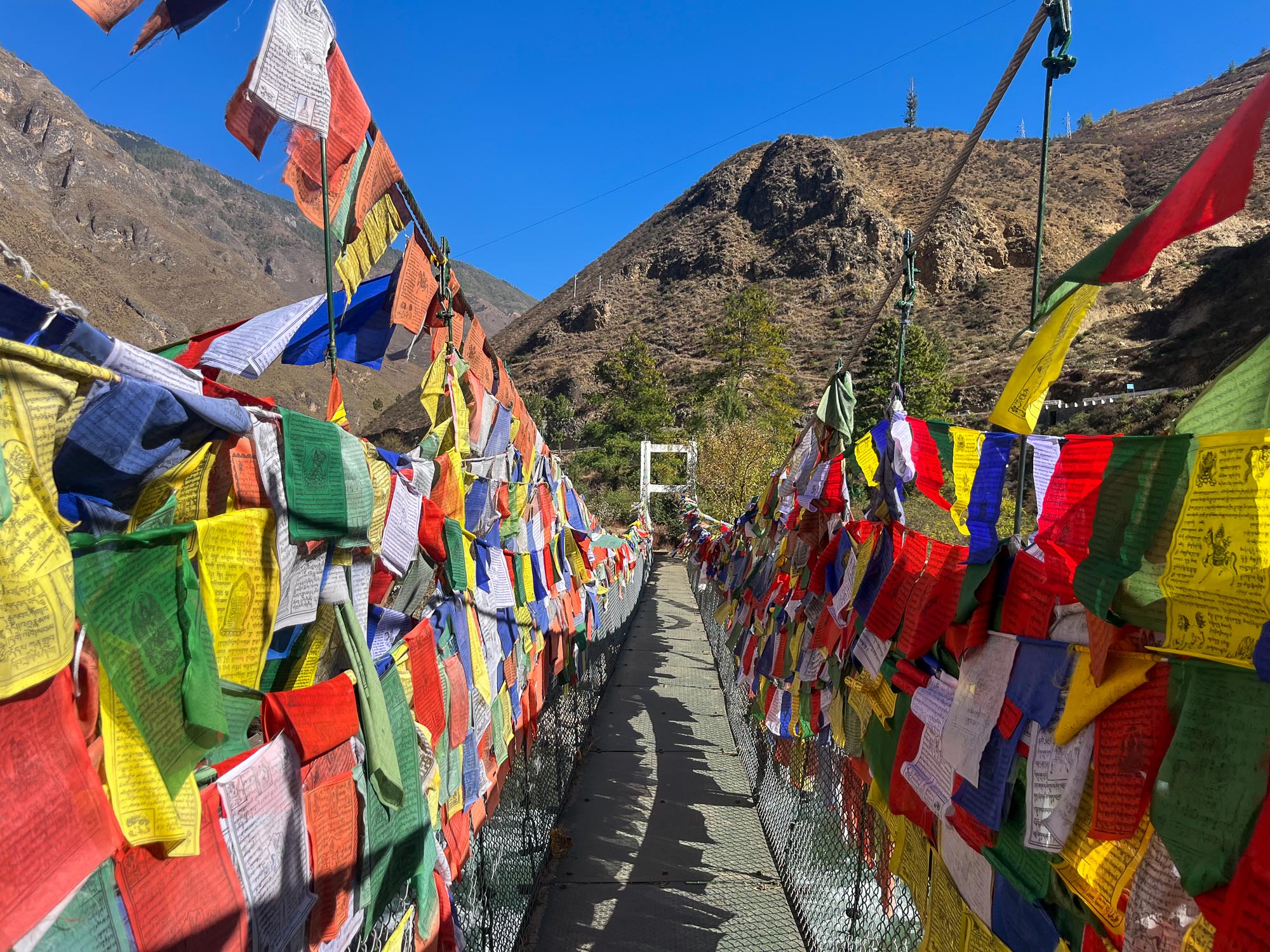
On the way, we stop at one of the more unusual sights: the iron suspension bridge of Tamchog Lhakhang, built in the 15th century by the legendary Tibetan master Thangtong Gyalpo, famous for constructing iron bridges across the Himalayas. Made of iron chains, the bridge is more than 600 years old and still serves its purpose today (though of course it requires maintenance, and in the past people even removed iron from it). Crossing it is currently not allowed due to renovation, but it is still standing—a living testament to ancient engineering knowledge.
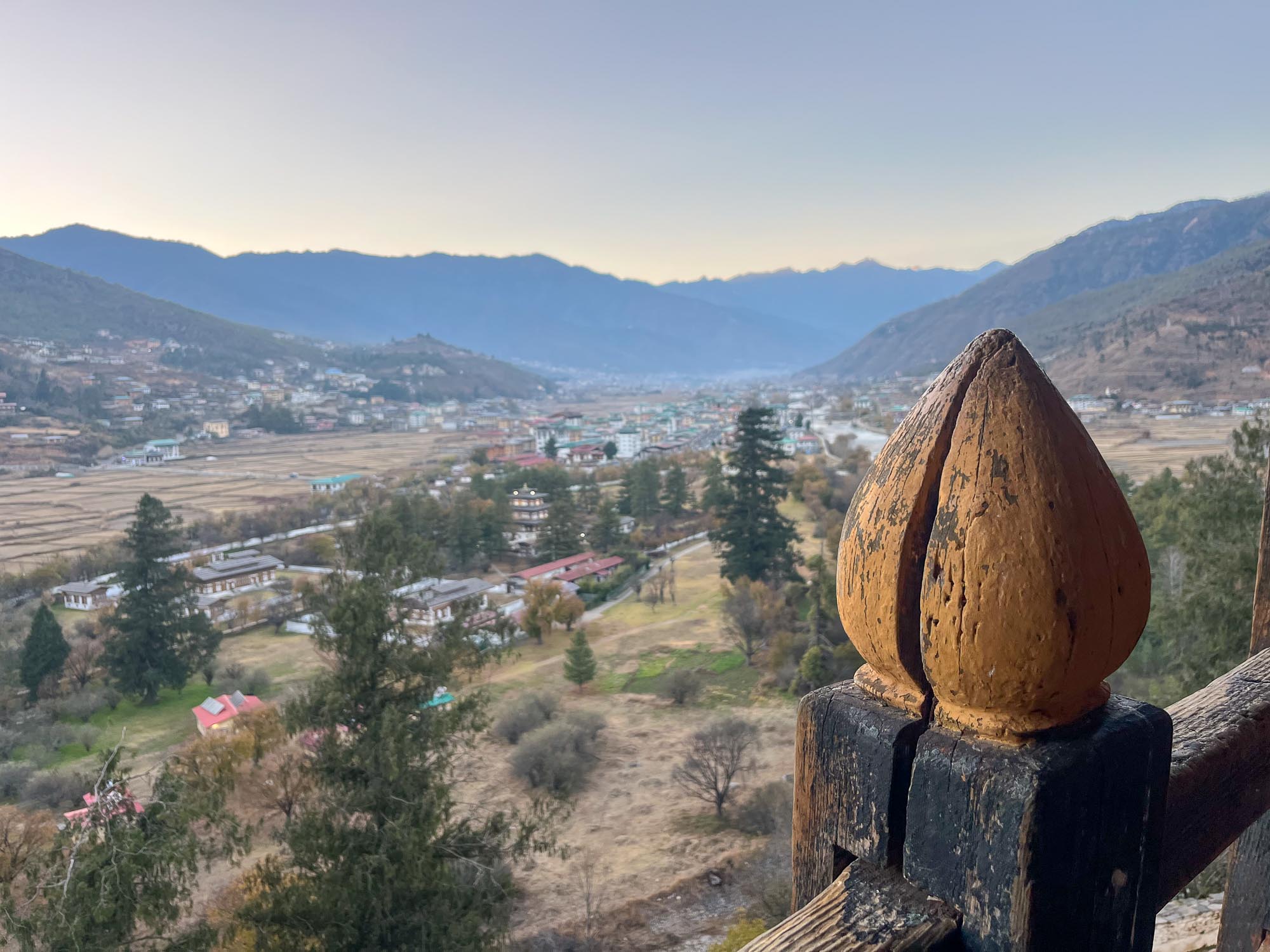
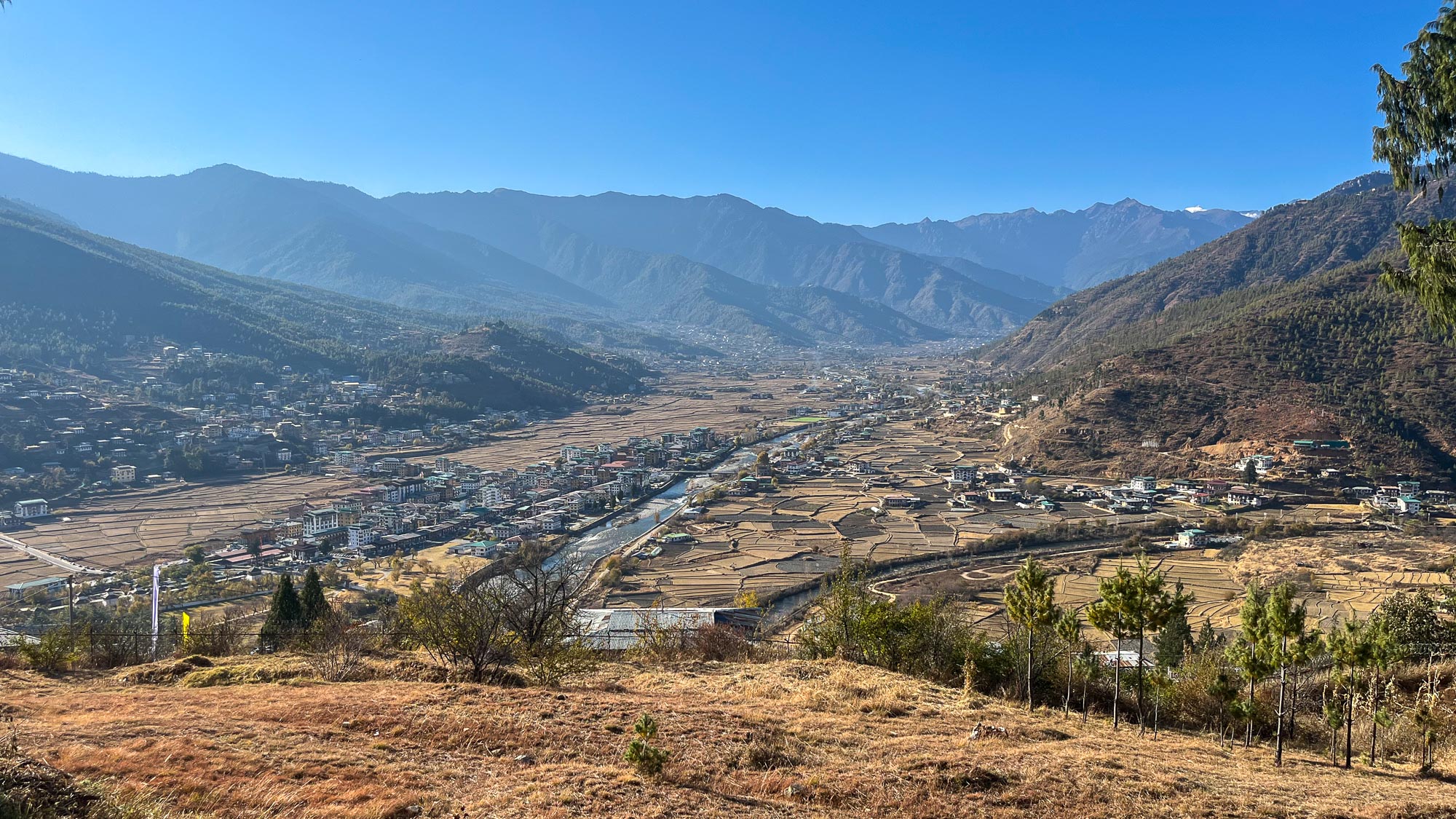
Paro lies in a broad valley surrounded by forested hills and high mountain ridges, and it is also one of the few places in this western part of Bhutan where it is even possible to have an airport. The town retains a distinctly traditional character (although the main street is practically nothing but souvenir shops for tourists, noticeably more than in Thimphu). The area is not urbanized in the classic sense, but rather functions as a dispersed community of smaller settlements, farms, and temples. Cultivated fields dominate the valley, especially rice paddies, which stretch in flat bands along the river and give the landscape an open feel.
We arrive in Paro right around lunchtime and head to Momo Corner restaurant. Finally, no self-service buffet—this time we order from a menu. A small restaurant, but with fast and efficient service. They offer an excellent selection of momos, several soups (including local Bhutanese bhakpo noodles), and classic fried rice. For the second day in a row, we eat really well, which—given earlier experiences—is a very pleasant surprise.
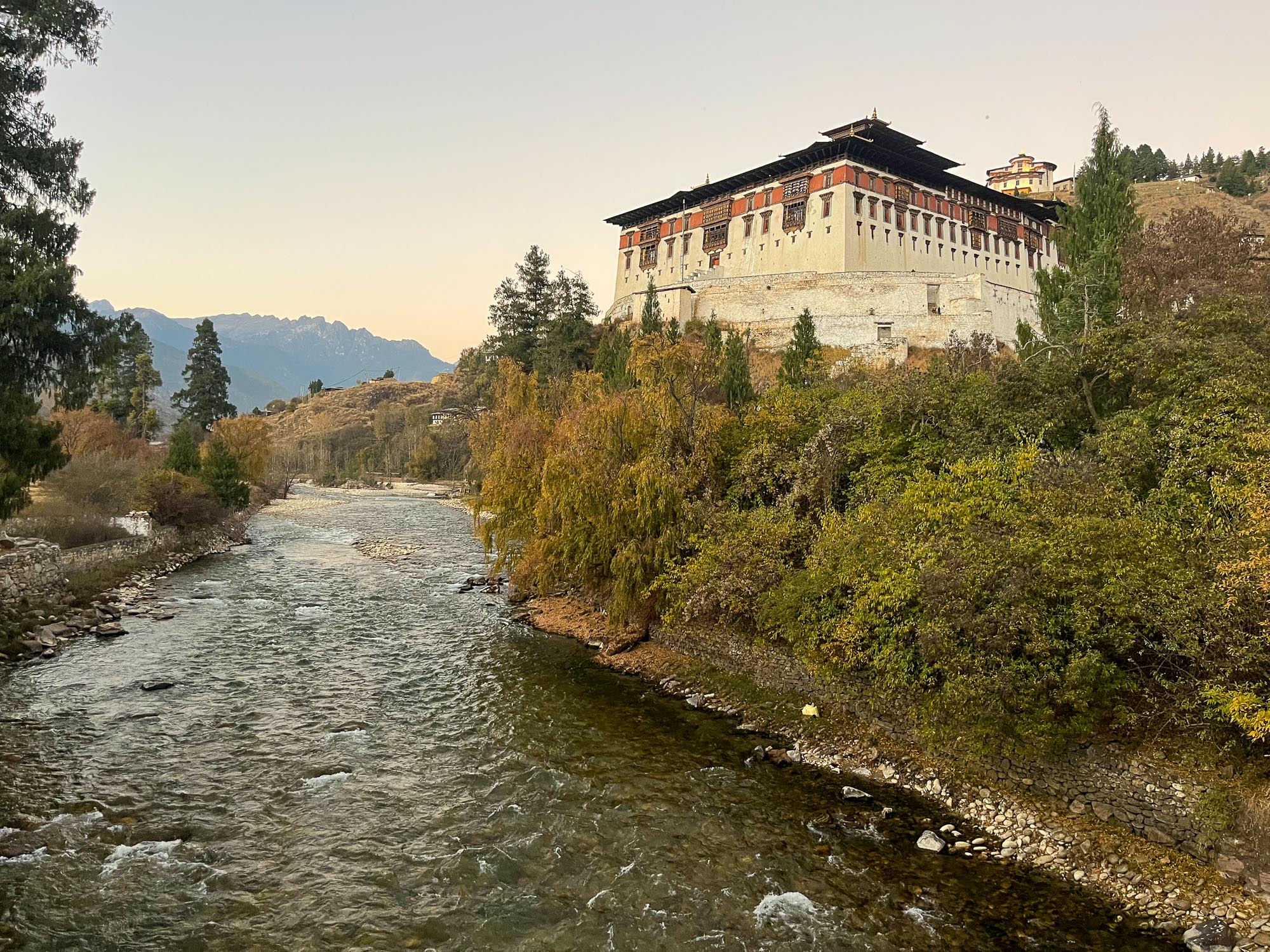
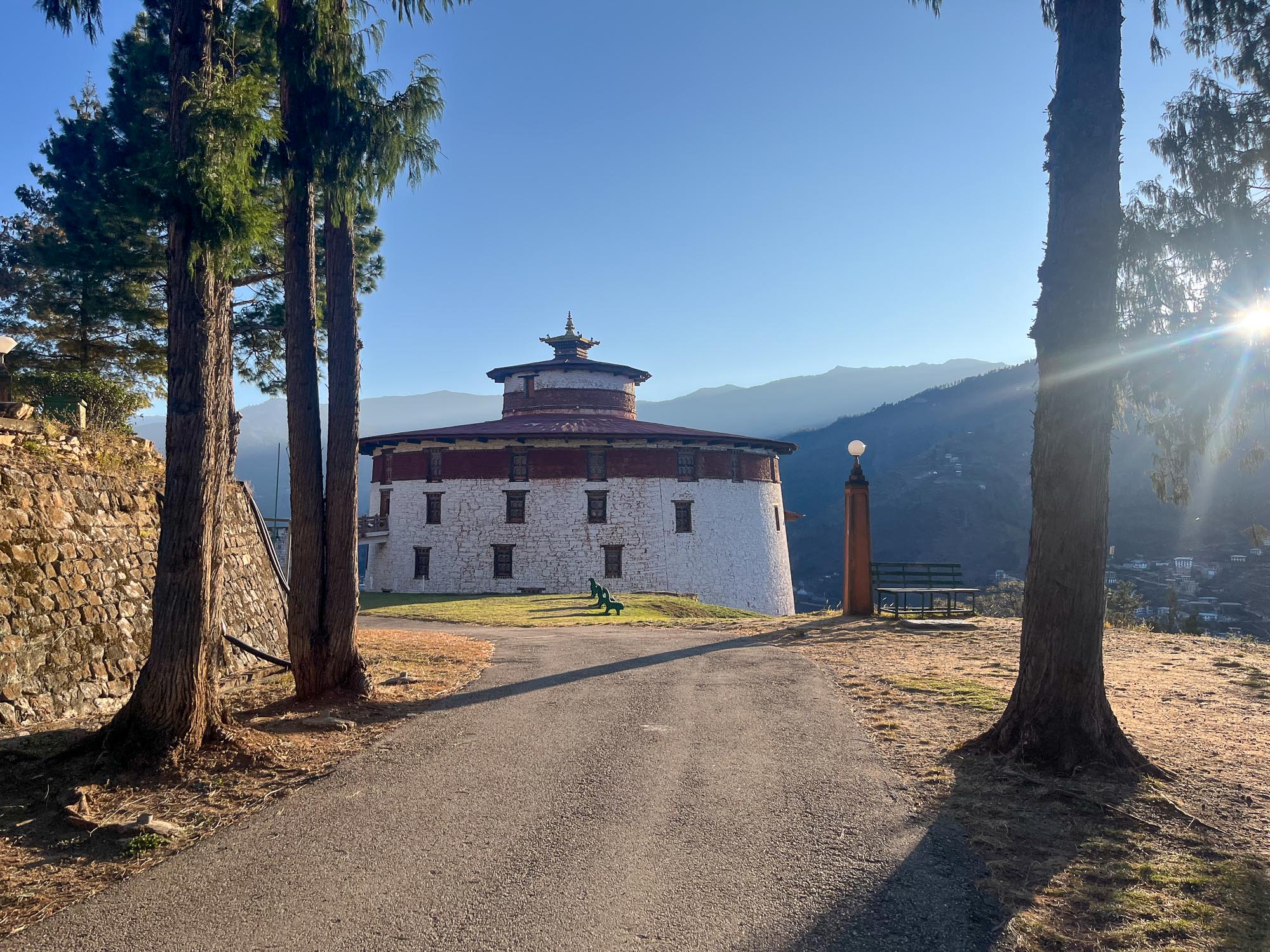
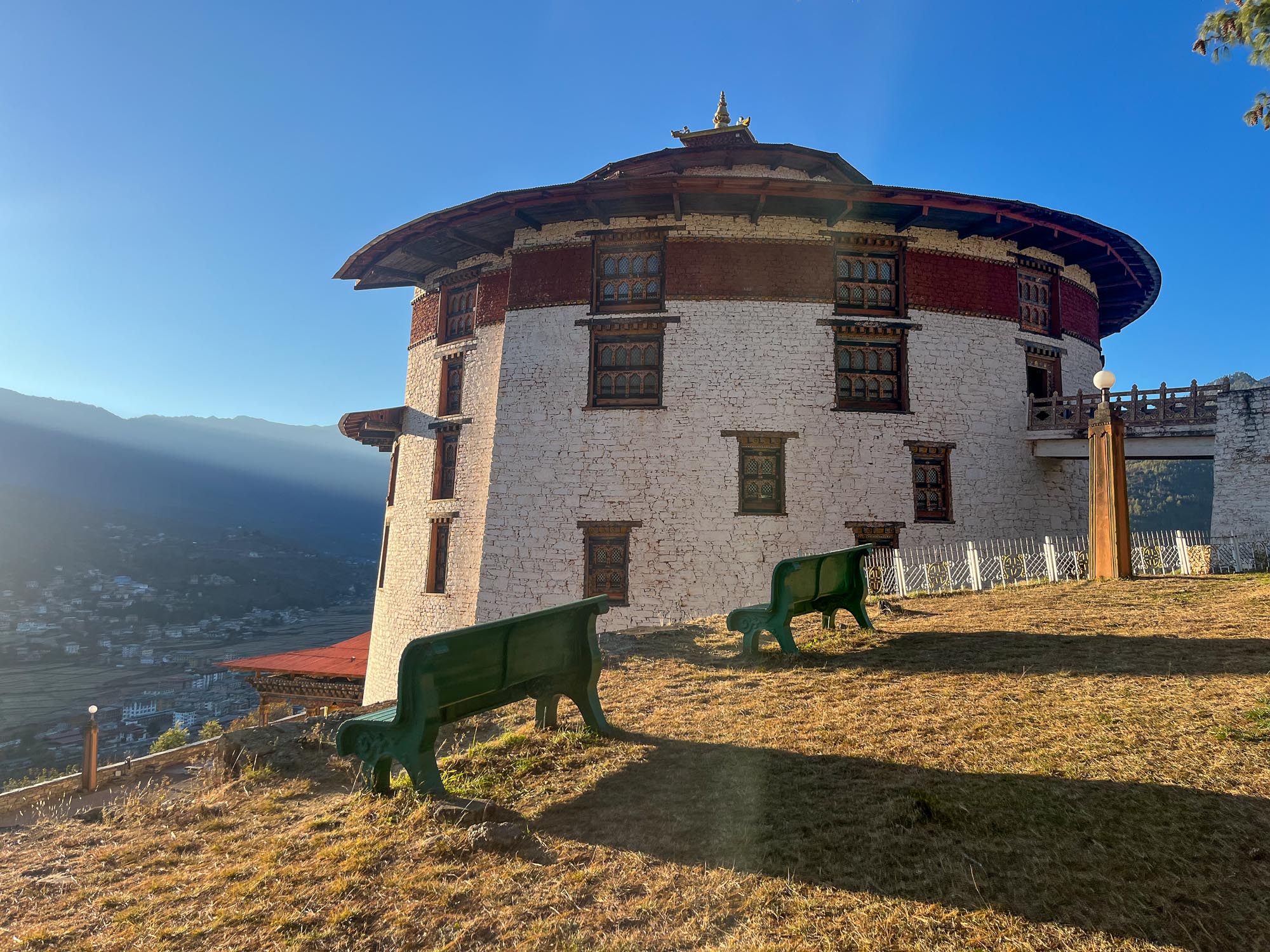
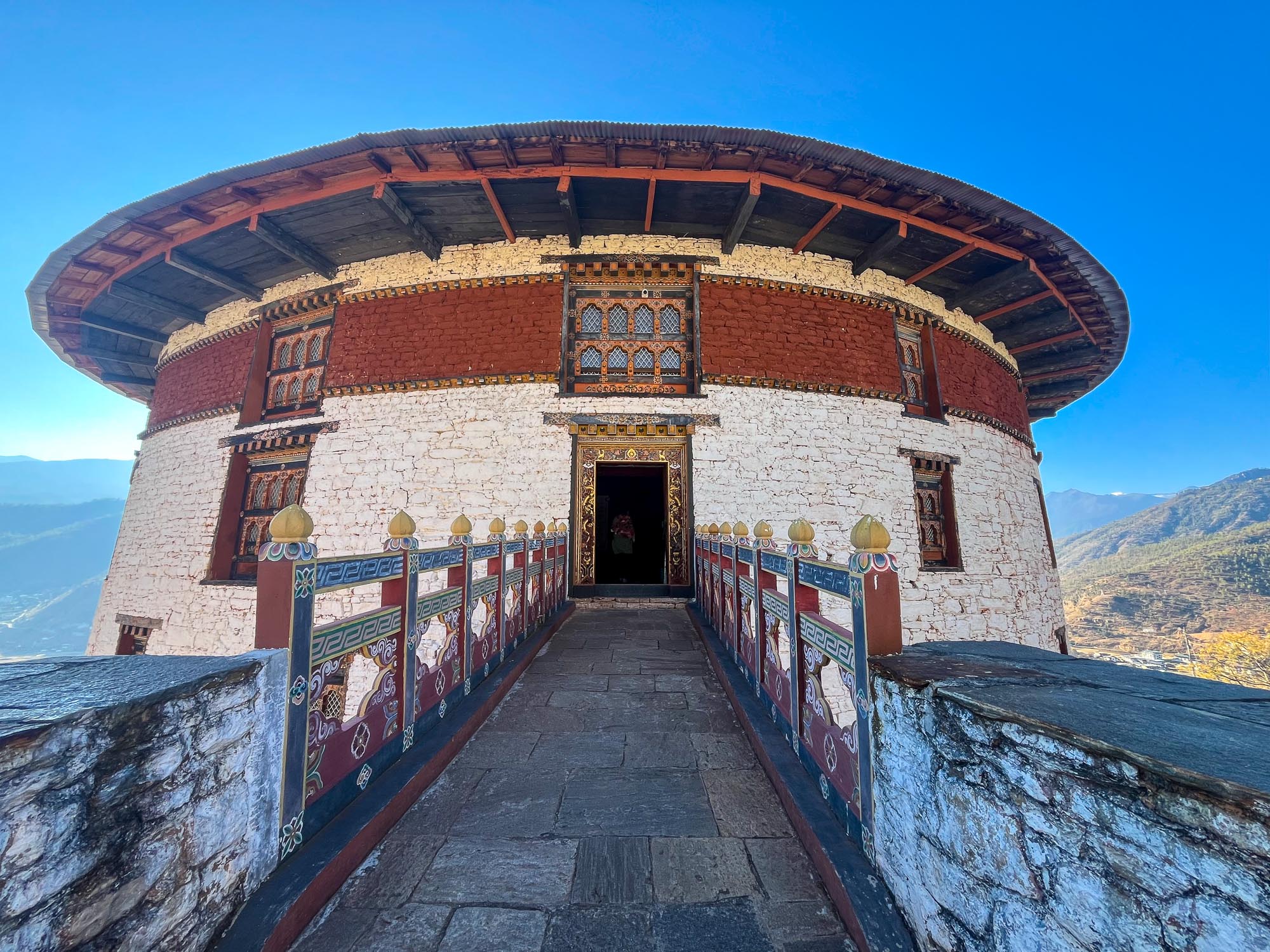
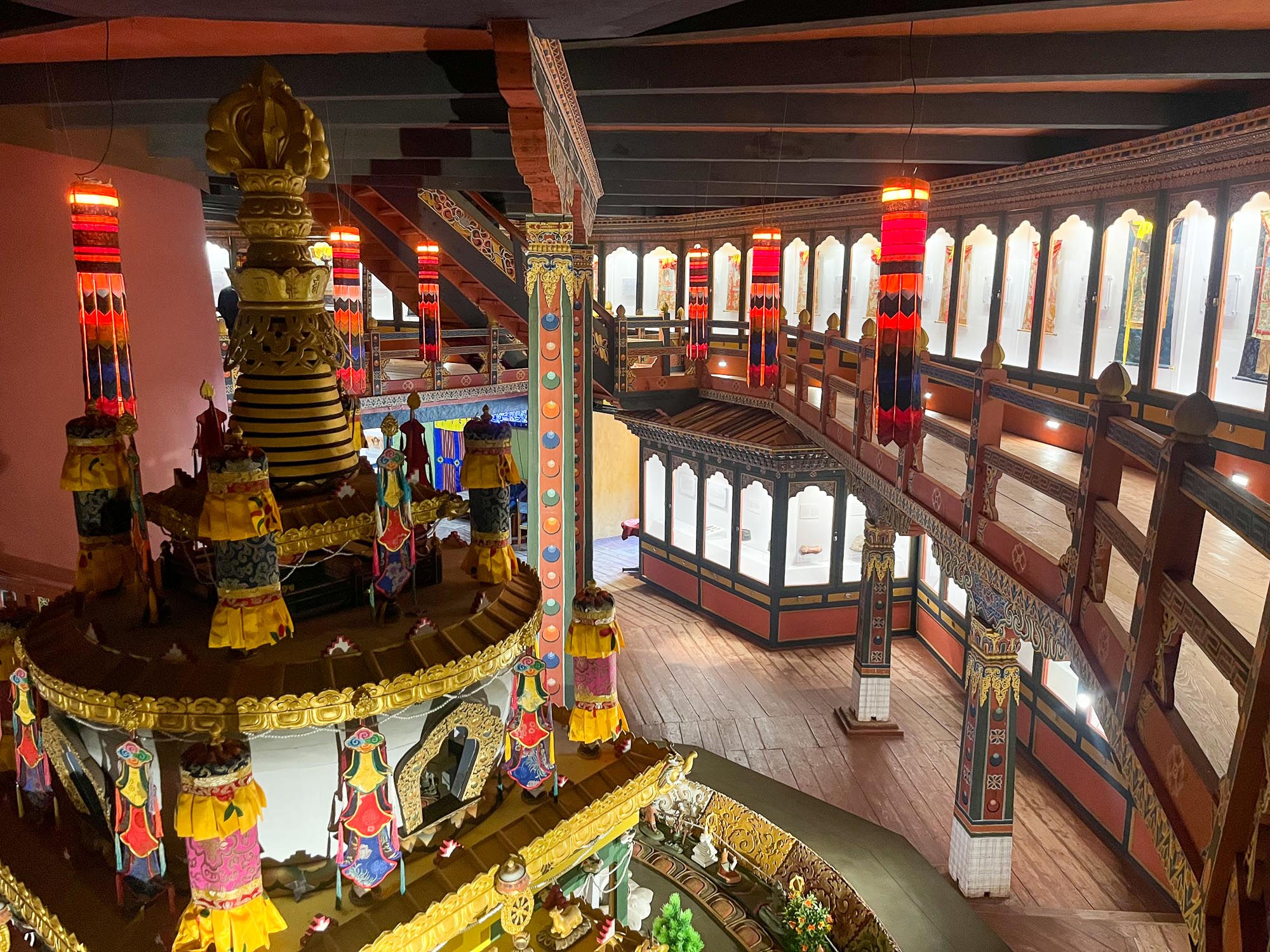
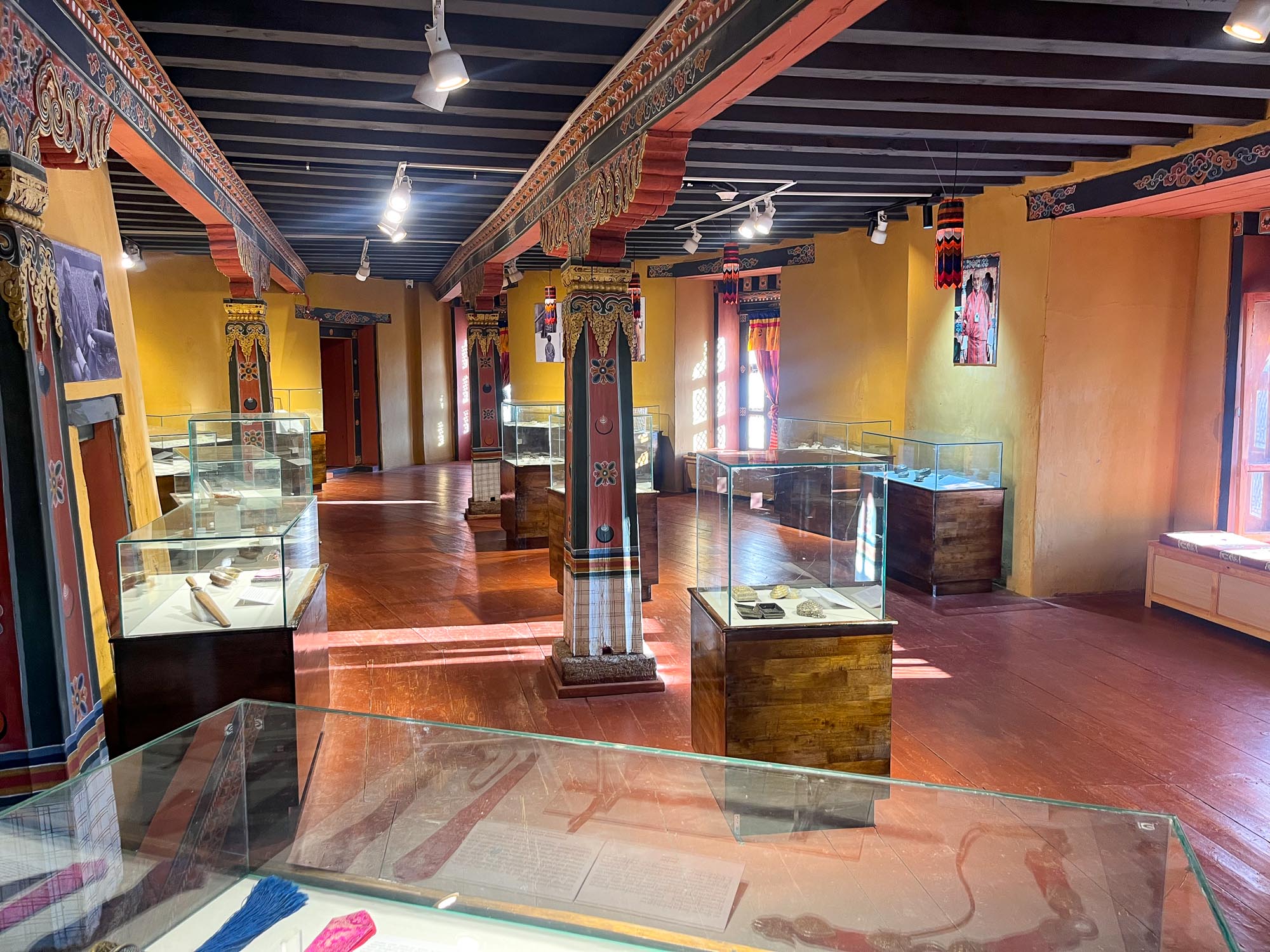
From afar, Paro is defined by the imposing Rinpung Dzong, with the Taa Dzong fortress above it, which today serves as the National Museum. Before visiting the museum, it’s almost impossible not to stop and watch airplanes landing in the narrow valley—Paro’s airport is considered one of the most technically demanding in the world, which is especially evident from this vantage point. Taa Dzong was built in 1651 as part of the defensive system protecting the nearby Rinpung Dzong and the Paro Valley. Its circular shape, massive walls, and strategic position on a hill above the town reflect its original military purpose—controlling the valley and providing early warning against potential invasions. Today, the fortress houses a well-curated museum collection with interesting exhibits covering Bhutan’s history, religion, and everyday life.
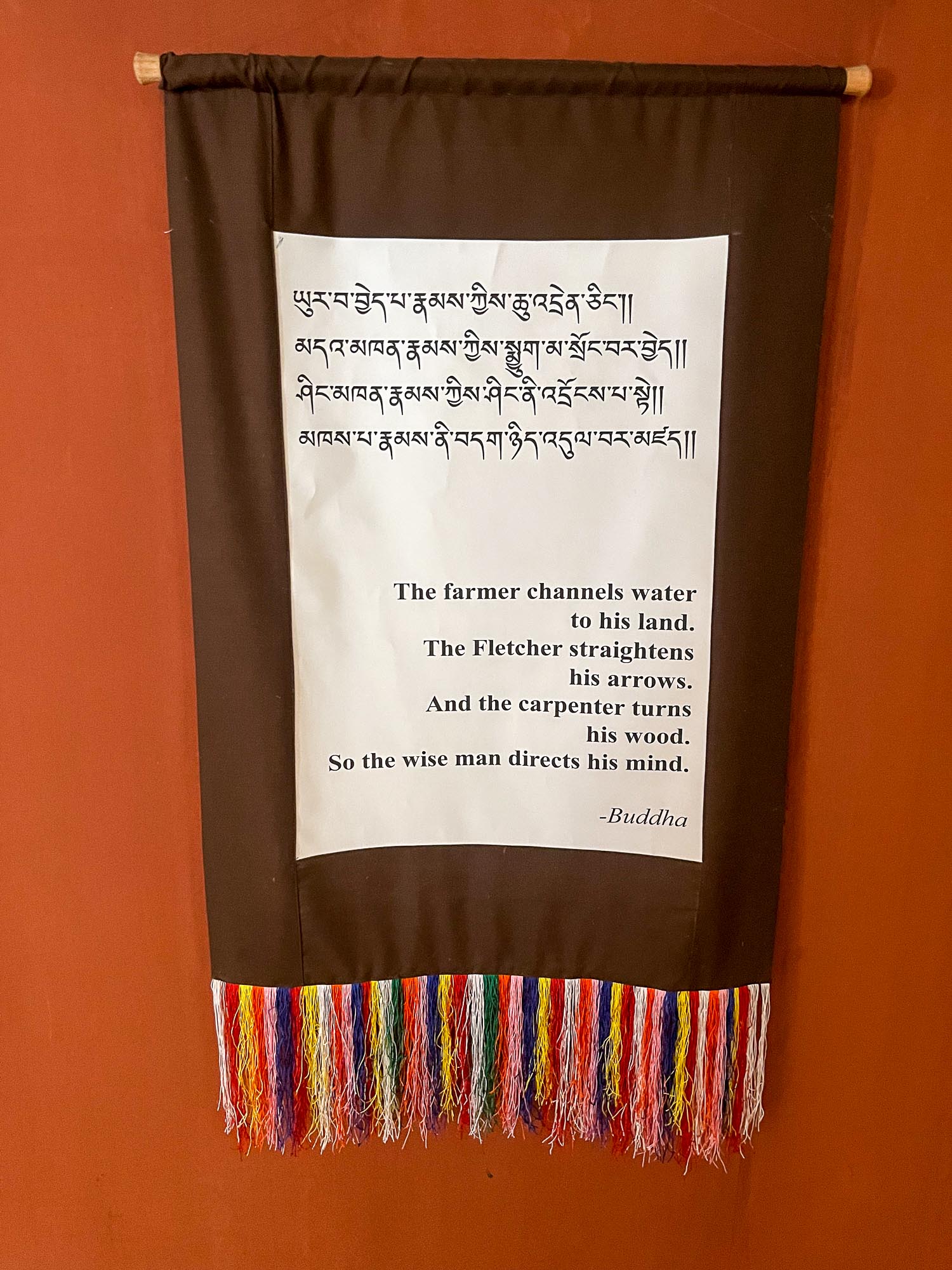
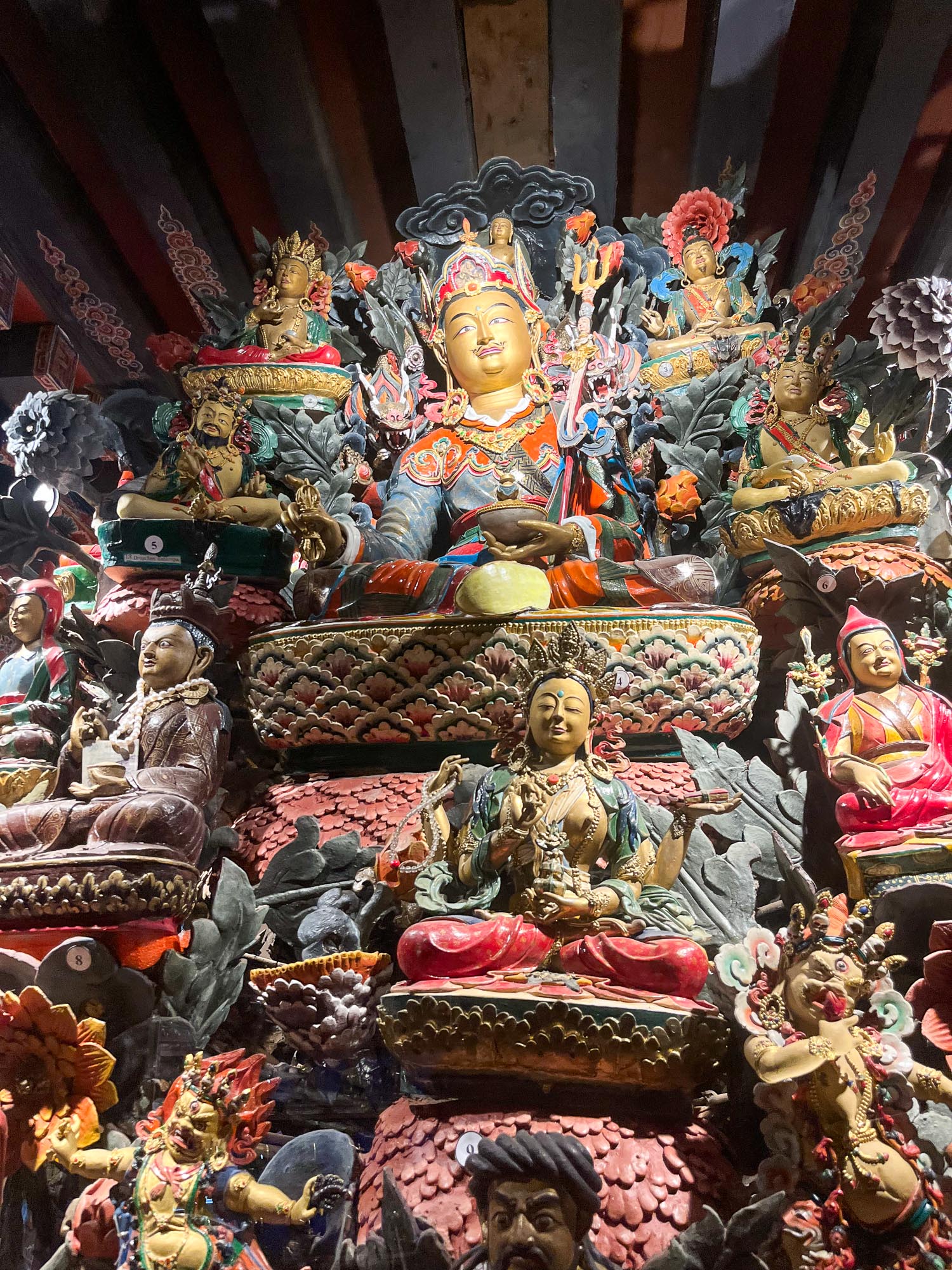


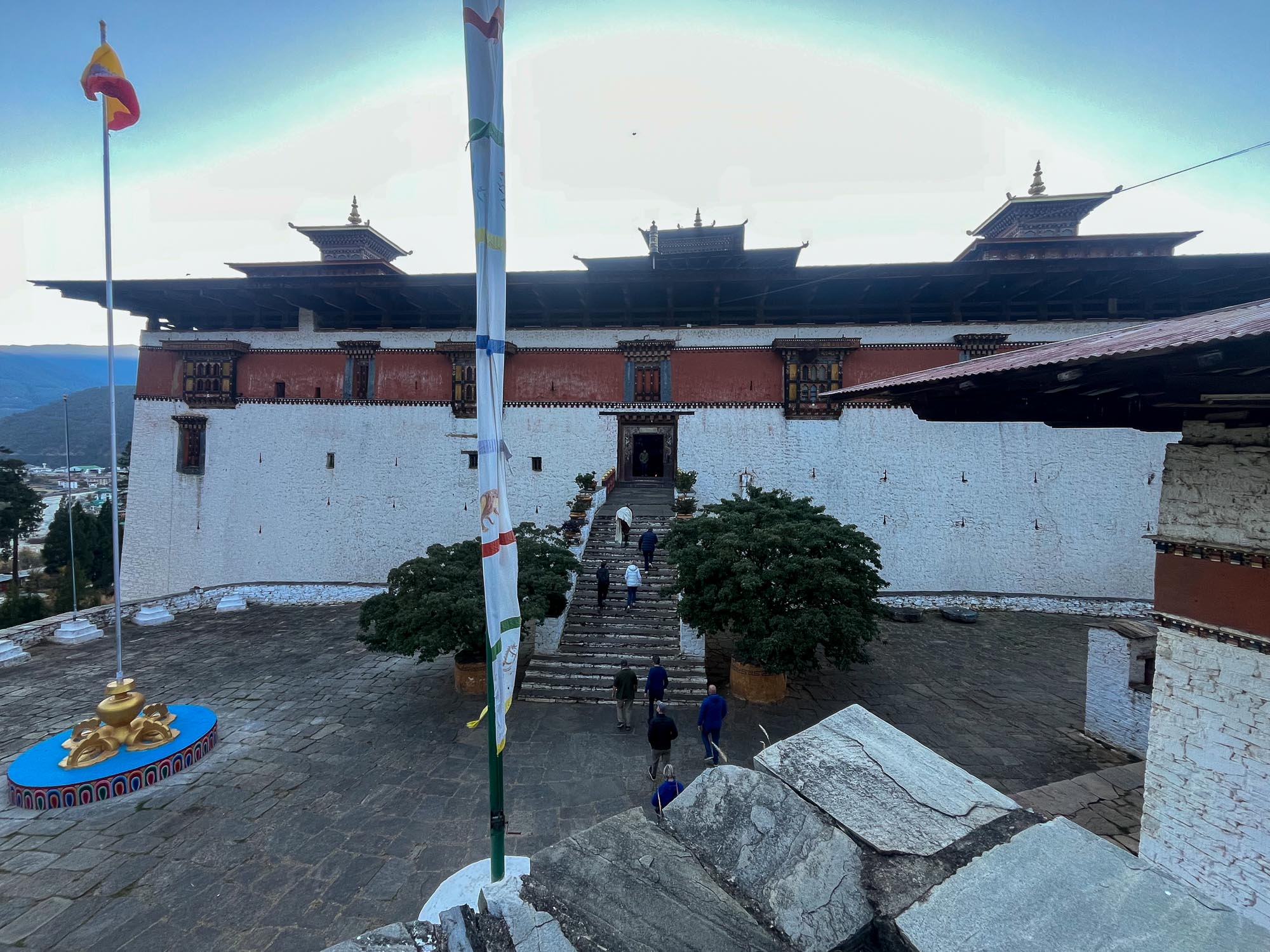
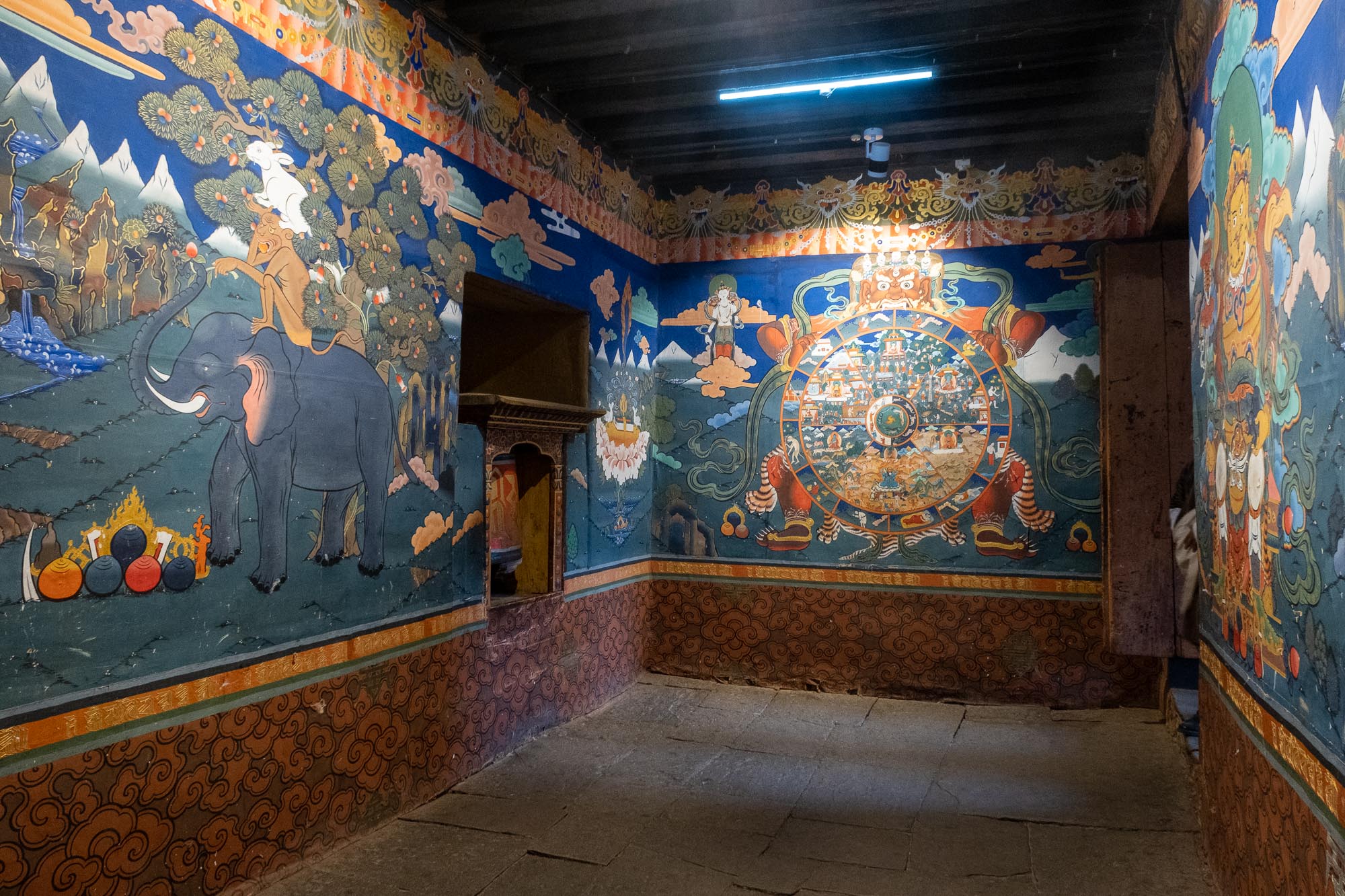
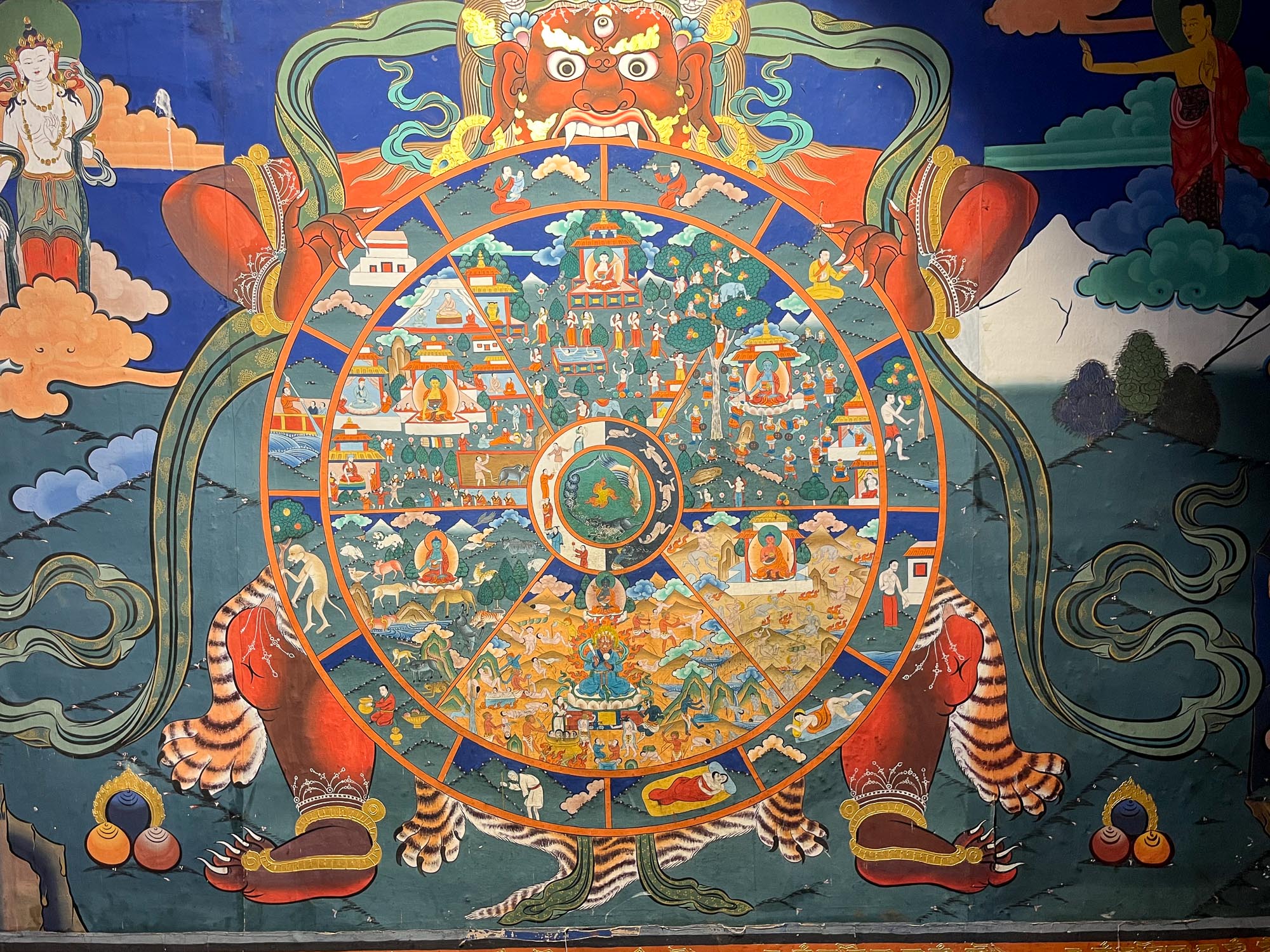
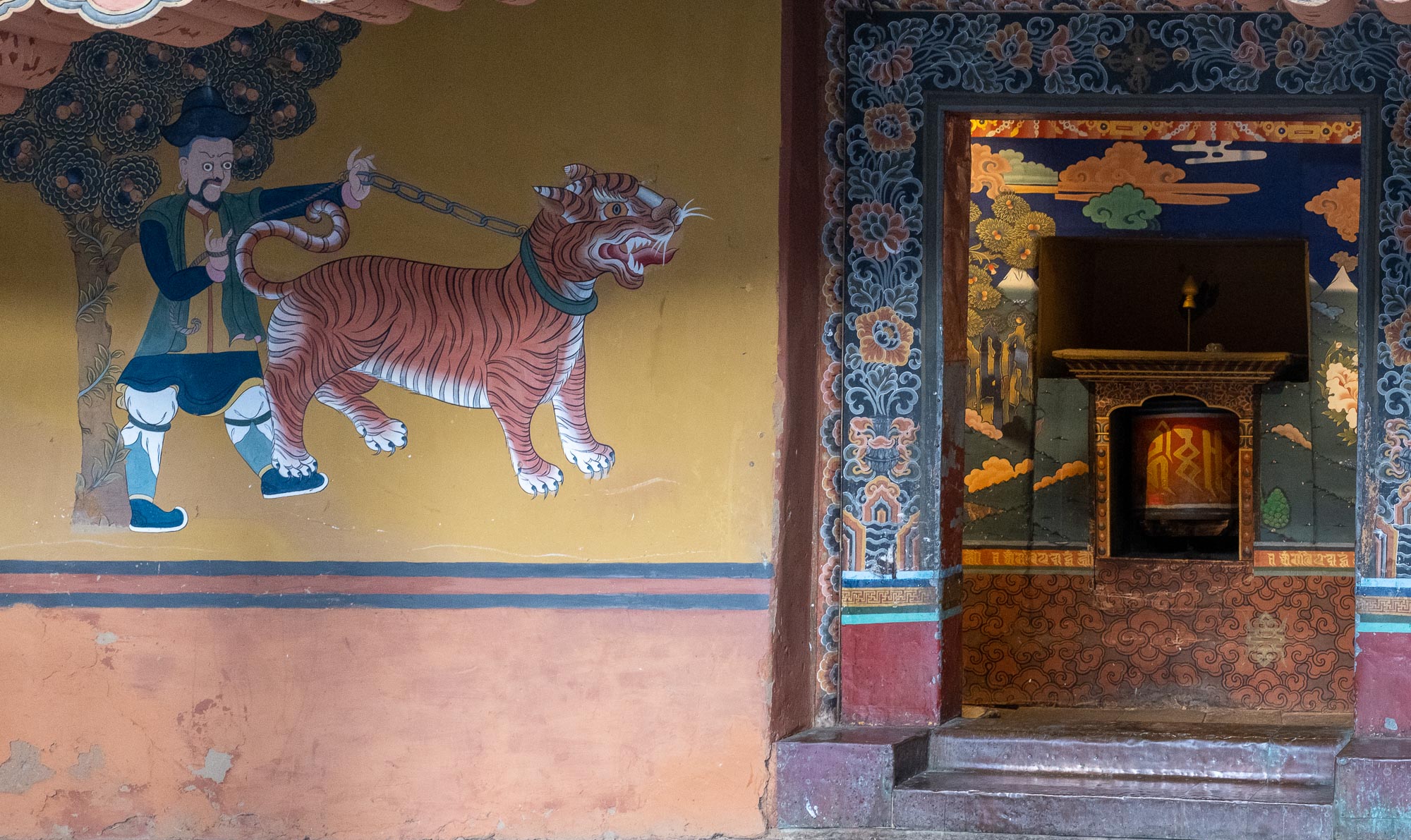
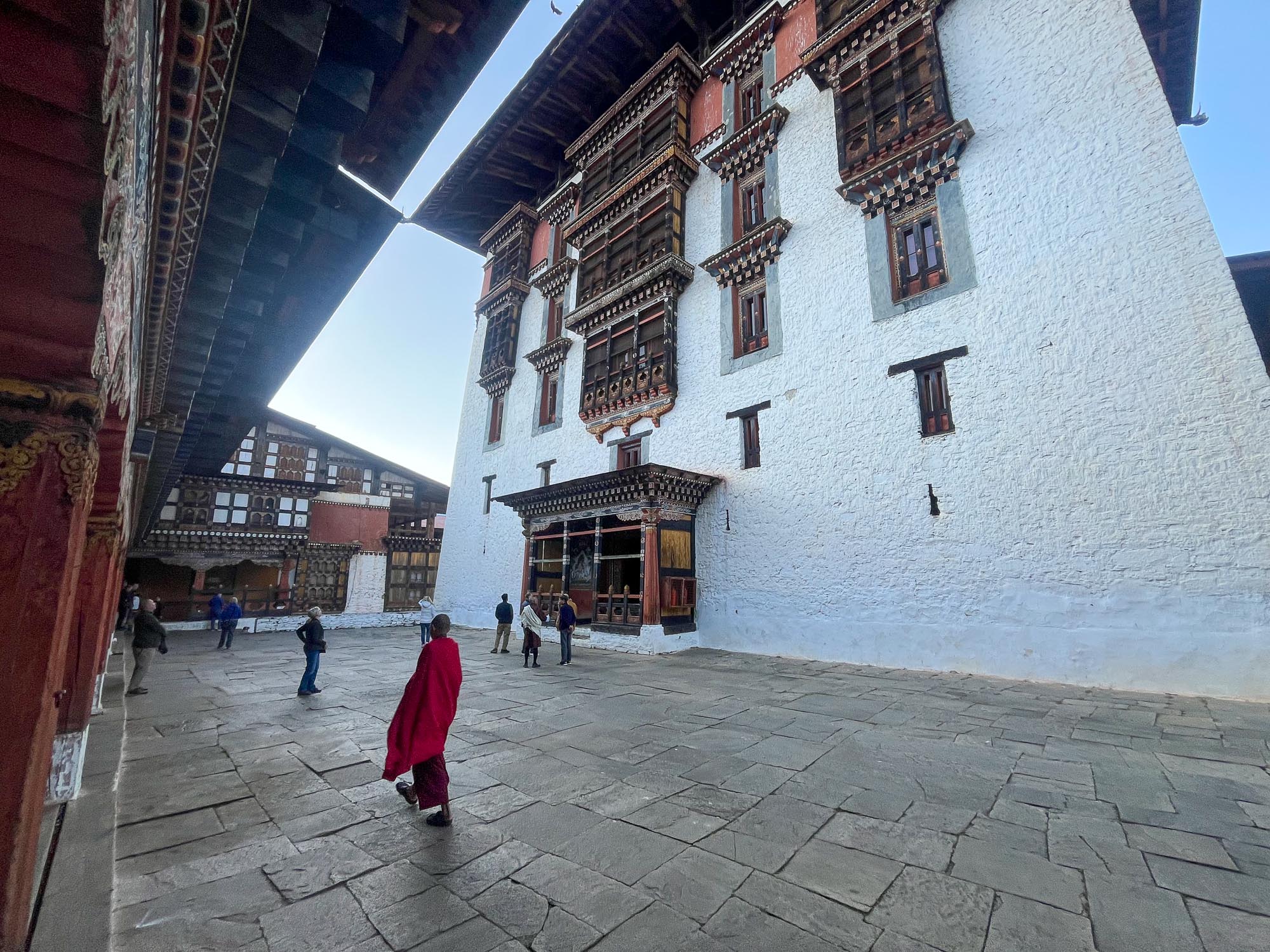
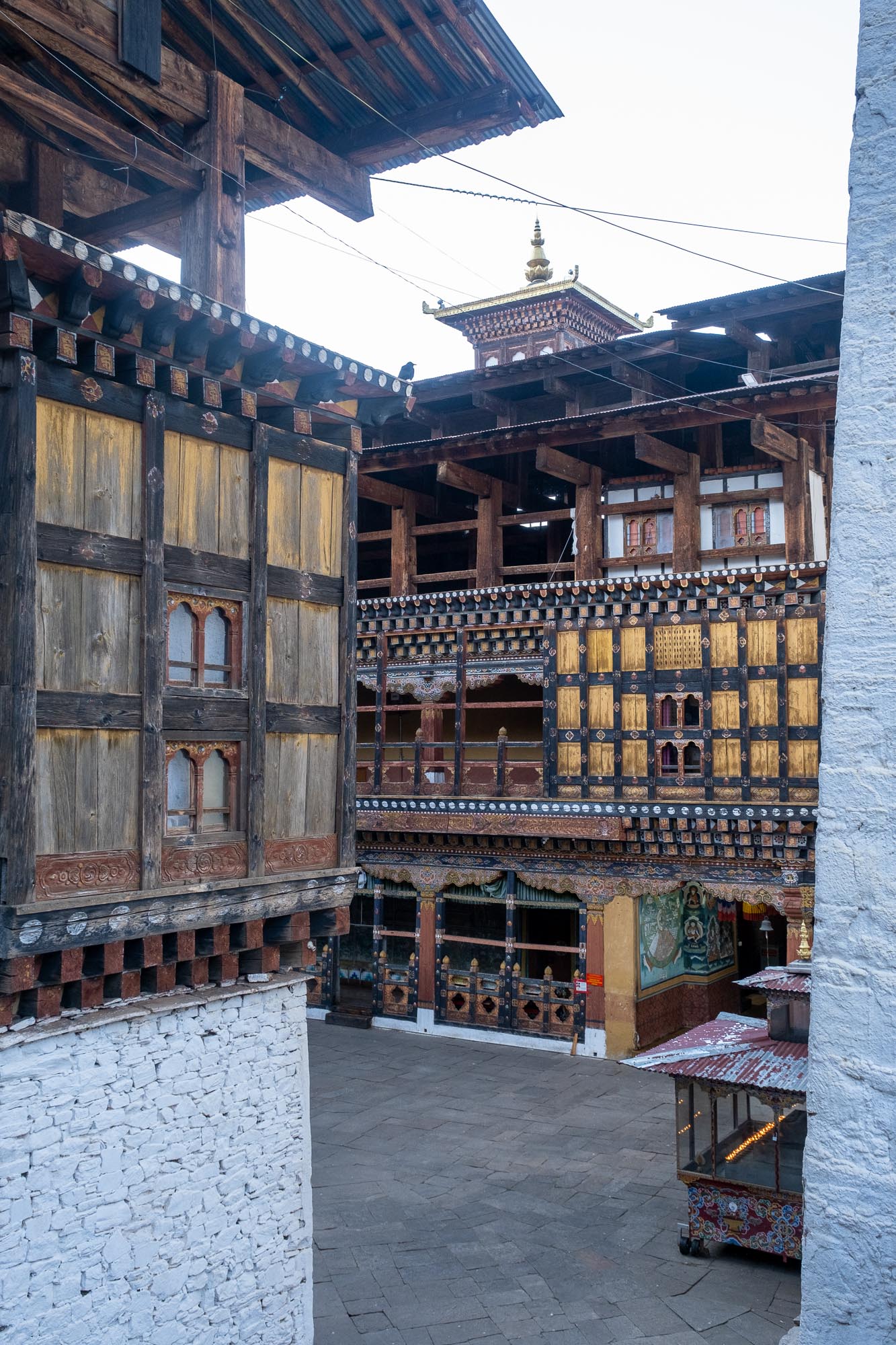
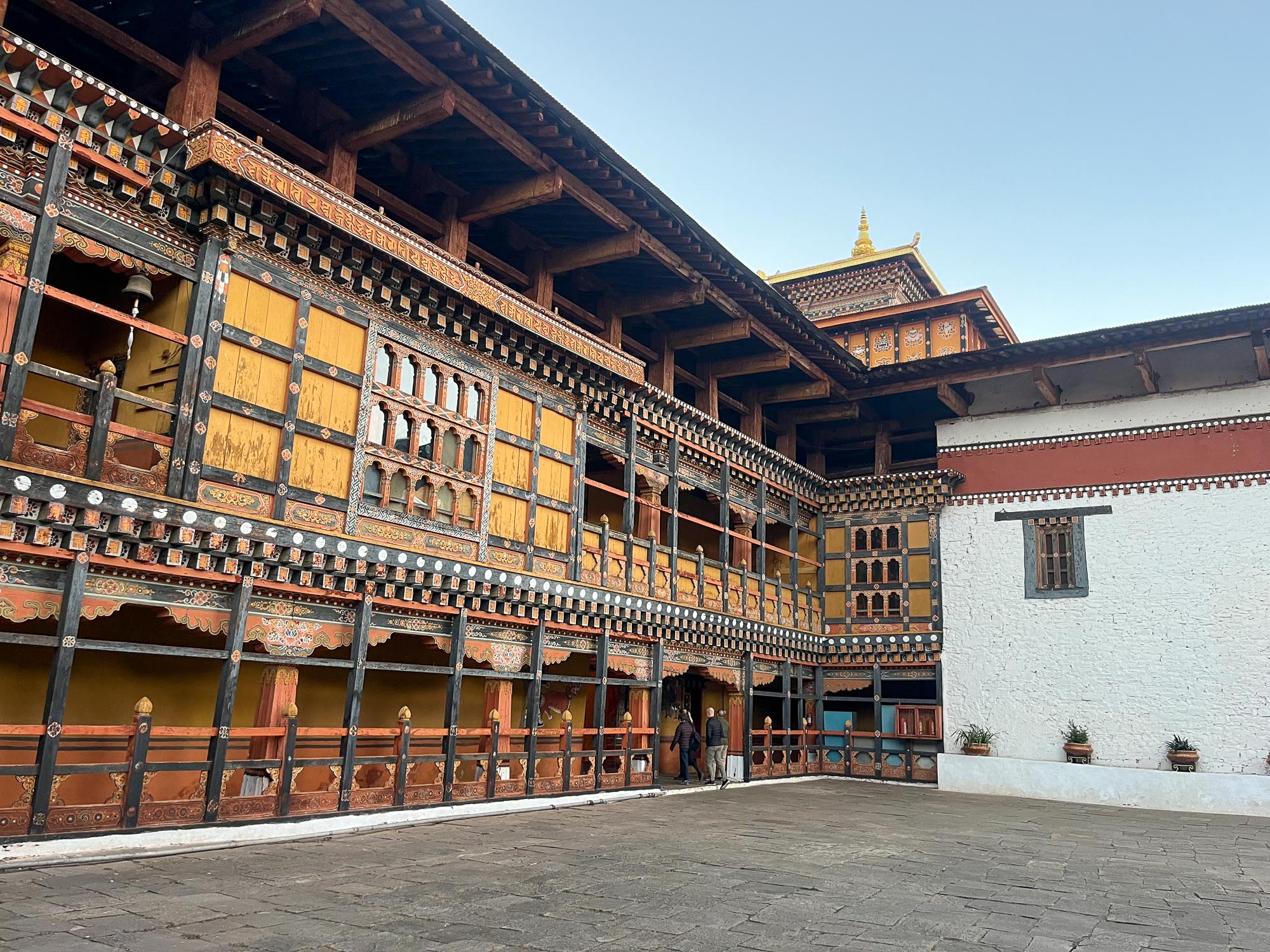
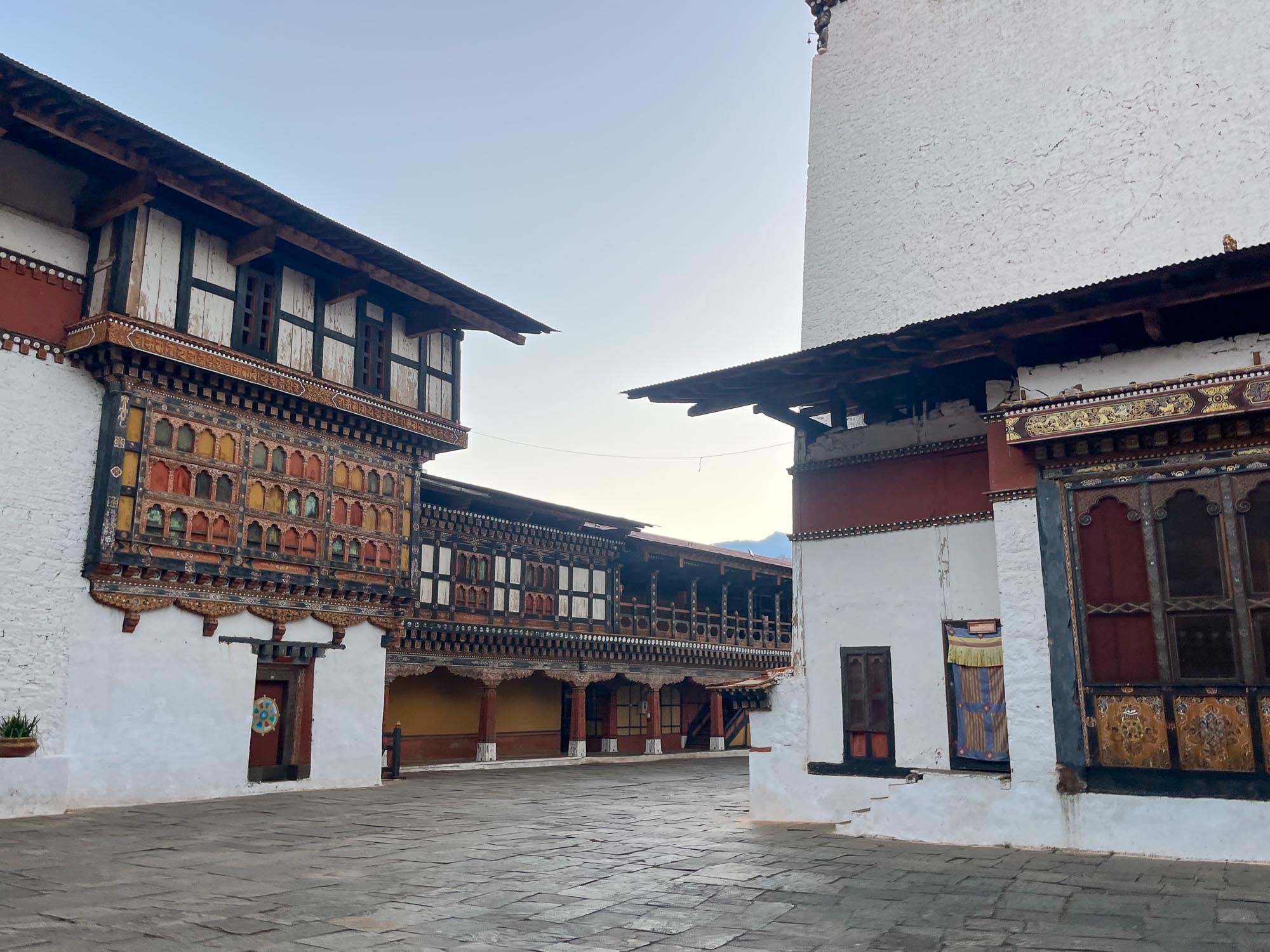
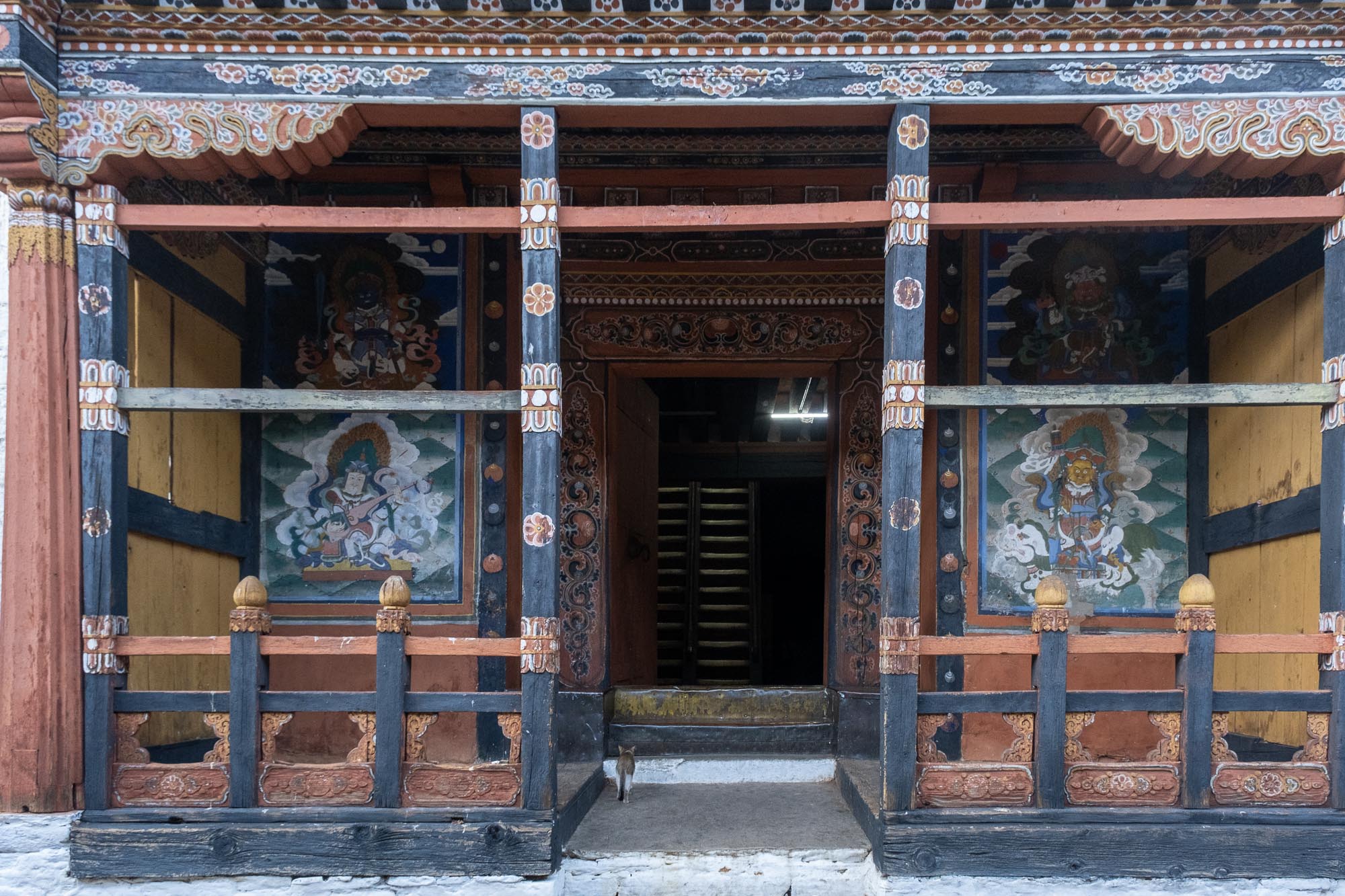
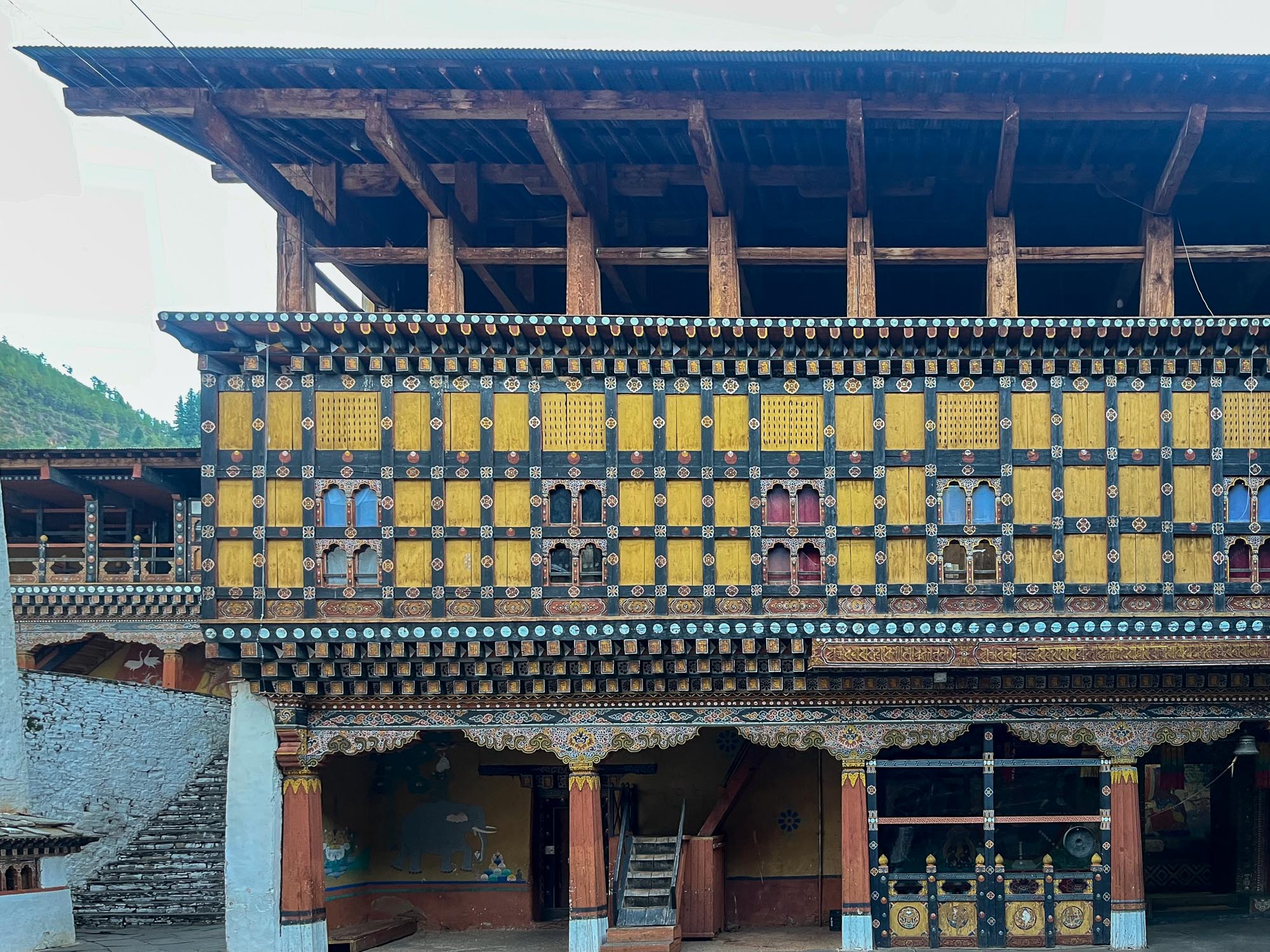
This is followed by a visit to Rinpung Dzong, one of the most important dzongs in the country. We literally catch the last minutes before entry closes at 5 p.m. The dzong impresses with its large courtyards, massive white walls, richly painted interiors, wooden galleries, and temples where religious rituals still take place. A special charm of the visit is that we are almost alone—no other visitors. Well, almost: shortly after us, the familiar group of very spiritual Spaniards arrives and settles into one of the rooms to begin meditating. Fortunately, our guide finds an alternative entrance into the inner temple, so we can continue the visit without interruption. From the dzong’s balcony, a beautiful view opens over Paro, the valley, and the surrounding hills. In the quiet, without crowds, and bathed in late-afternoon light, this is one of those moments when travel truly settles in—no rush, no noise, just space, history, and peace.