At last, it’s time for the trek to the Tiger’s Nest (Taktsang Lhakhang), the most iconic temple in Bhutan. The drive to the trailhead, which lies at around 2,400 meters above sea level, takes only about 15 minutes. The ascent itself is divided into two quite distinct sections.
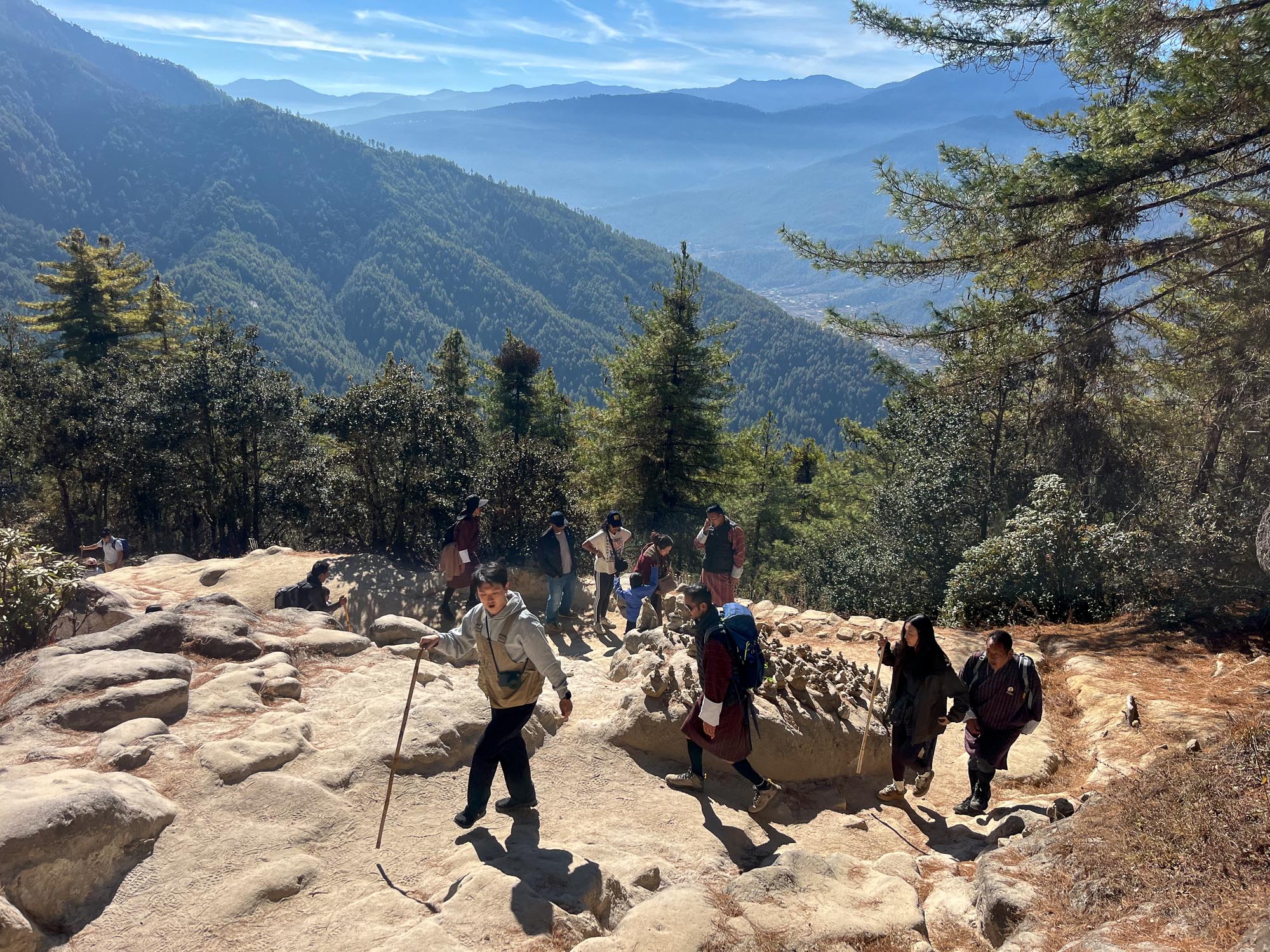
At the start of the trail, horses are waiting, and those less prepared can cover the first part on horseback. For most of the way, hikers and riders share the same path, so occasional bottlenecks form (and yes, i was walking fast and stopping too often for a photo). I don’t even want to imagine what it’s like here during peak season. I especially admire the horse guides—interestingly, at least at the time of my visit, most were women, the owners of the horses, who earn extra income this way. The ride costs 1,500 Bhutanese ngultrum (around 15 euros). They walk fast and make this trip at least once a day.


About halfway up, there’s a small, modern tourist complex with a large restaurant (I’m just waiting for the day when a cable car reaches this point). This is where the first truly impressive view of the Tiger’s Nest opens up, clinging to a cliff high above the valley. Up to here, the trail is about 3 kilometers long with roughly 320 meters of elevation gain, lets say that walking up here takes approximately one hour.
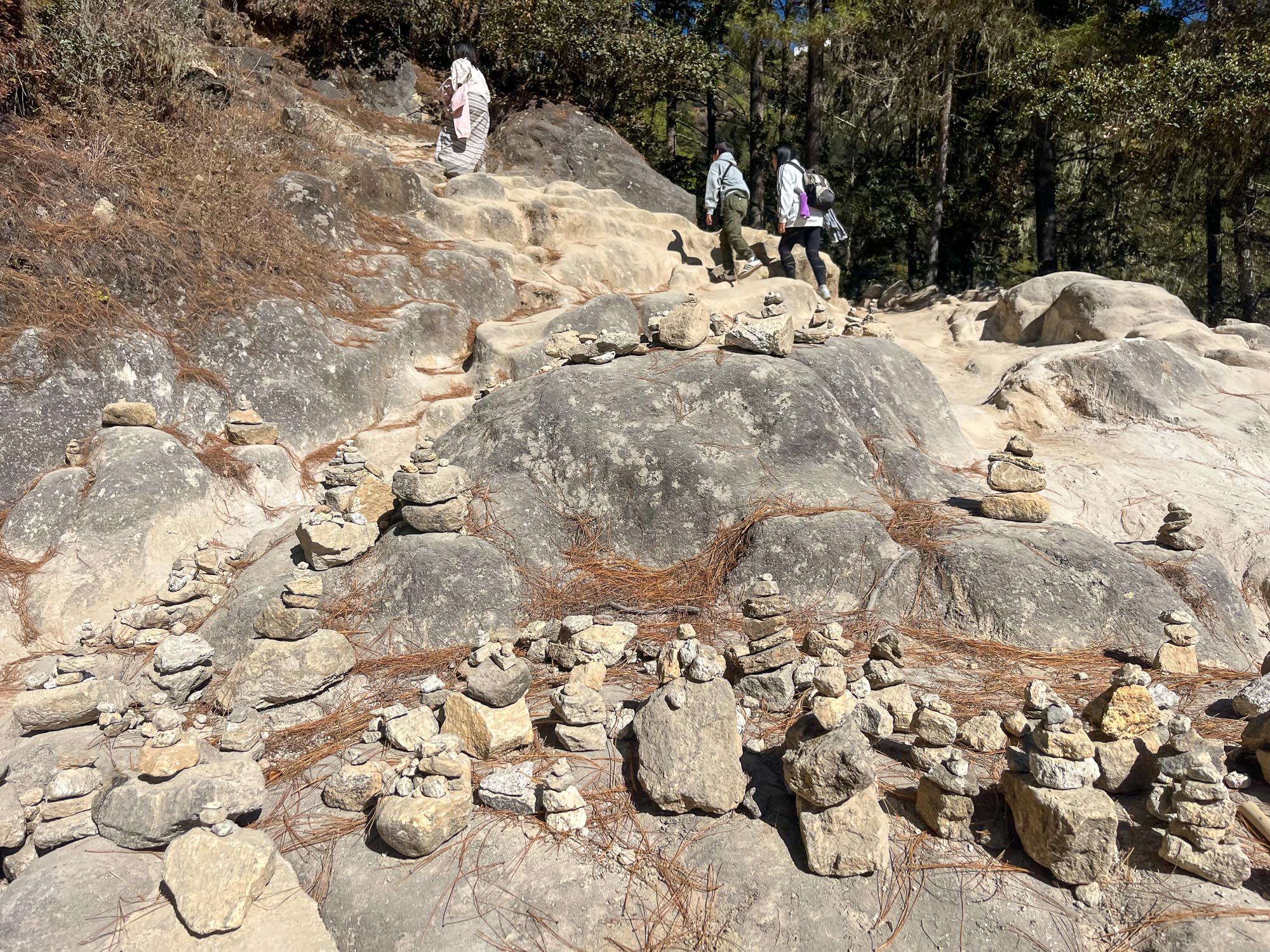
The second part of the trail is shorter but steeper and more demanding. The first kilometer continues uphill much like before, then, at one of the most beautiful viewpoints, the stairs begin. This is also the highest point of the trek (around 3,250 meters)—from here, the temple can be seen slightly below. What follows is a steep descent down the steps and then one final ascent toward the temple itself. It’s here that I encounter larger numbers of people for the first time: Westerners, Indians, and locals. The second section measures a little over 2 kilometers and adds another roughly 300 meters of elevation gain. And again around 1 hour of walking from halfway point (though, someone relatively fit, without too much stopping, would be able to do the whole ascent in 1h30m-1h45m. But hey, first ascent up there should be an enjoyment of views, not a race).
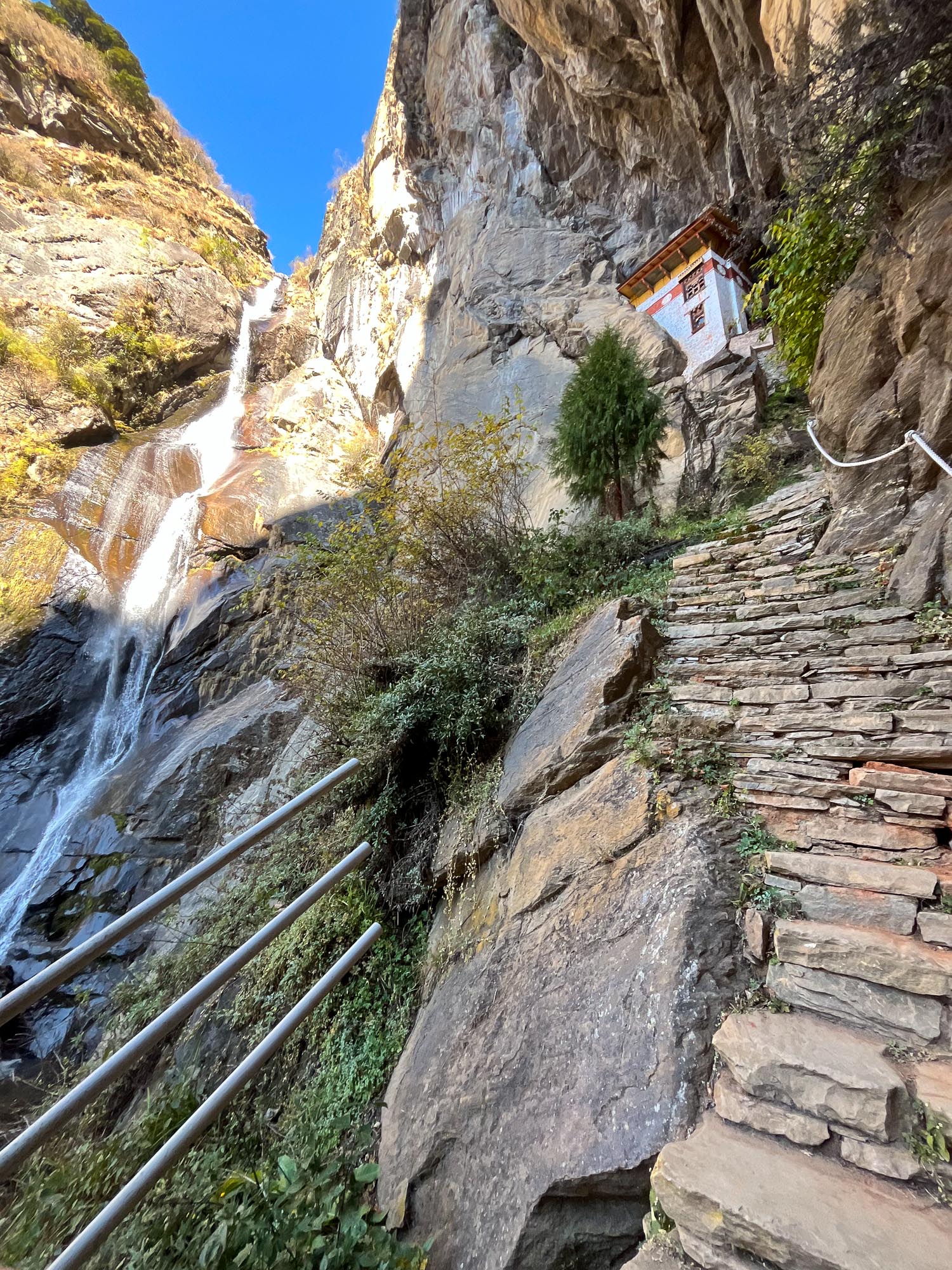
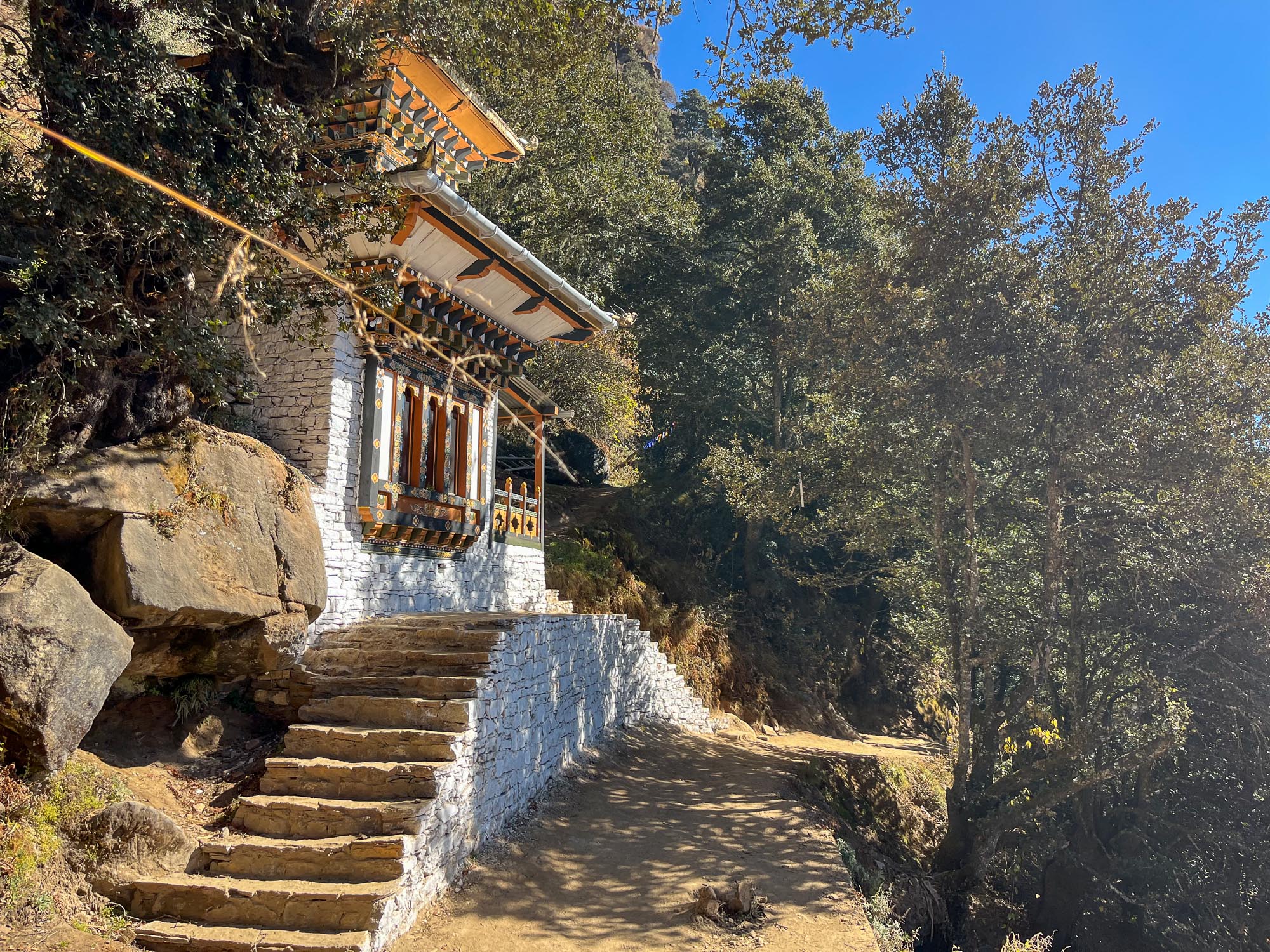
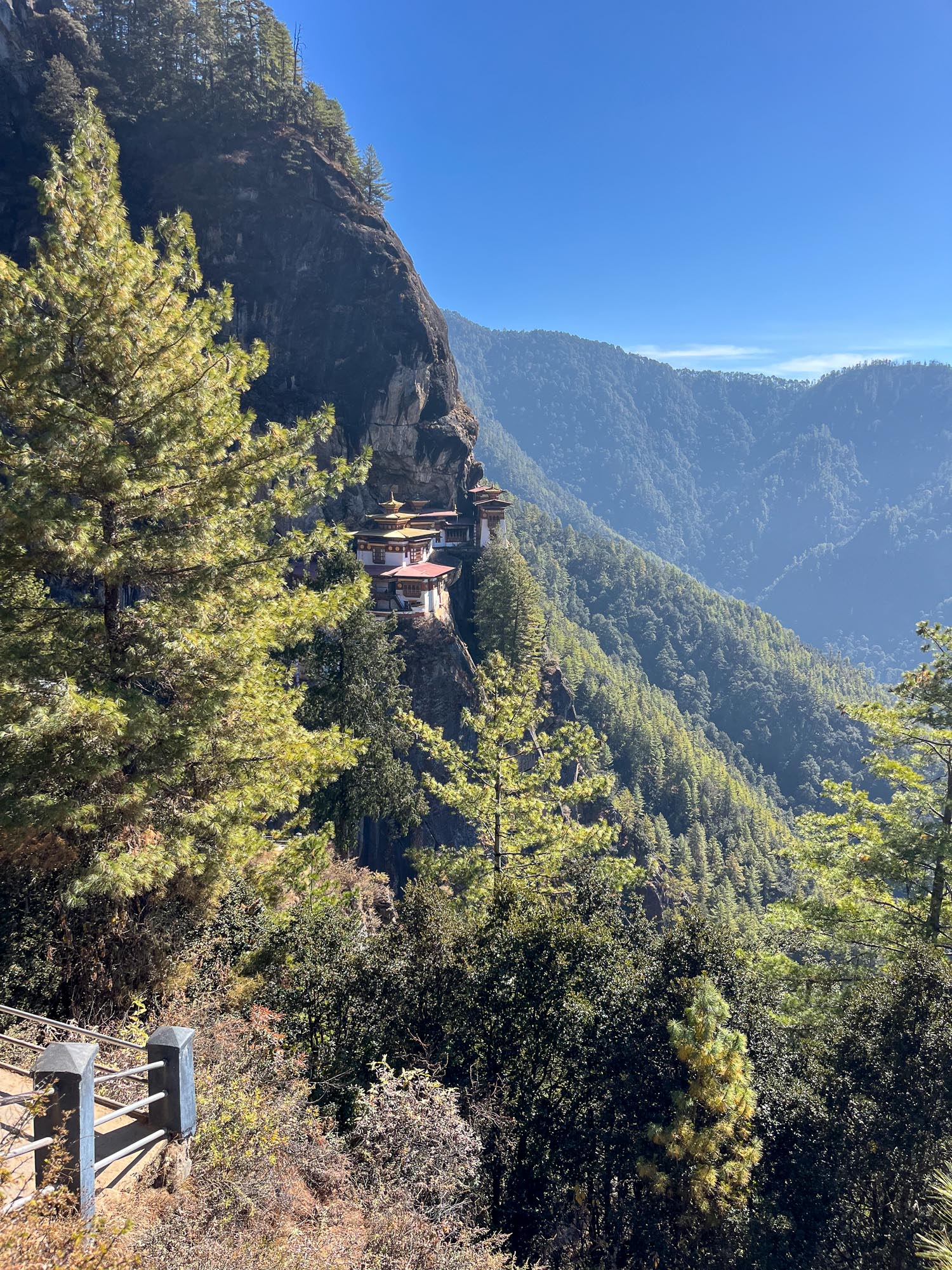
Taktsang Lhakhang is built into an almost vertical rock face, almost 900 meters above the Paro Valley. Inside the temple, cameras, phones, or any electronic devices (or backpacks) are not allowed. Perhaps that restriction is part of the charm. Inside are several small shrines and meditation rooms, connected by narrow corridors and steep staircases. The atmosphere is dark, quiet, and intense—the smell of incense, flickering lamps, wall paintings, and statues of Padmasambhava create a sense of deep spirituality. This is not a place for a quick visit, but for silence and respect. In the cave of Pelphug (the Lotus Cave), Guru Rinpoche (Padmasambhava) is said to have spent several months in deep meditation, having arrived there, according to legend, on the back of a tiger (or a tigress goddess). The temple takes its name from this legend (yes, I know—the story itself is quite a bit more “complicated”). The cave itself lies behind closed doors and, of course, cannot be entered—it is only large enough for a single person and contains no decoration, only symbolic objects and incense.
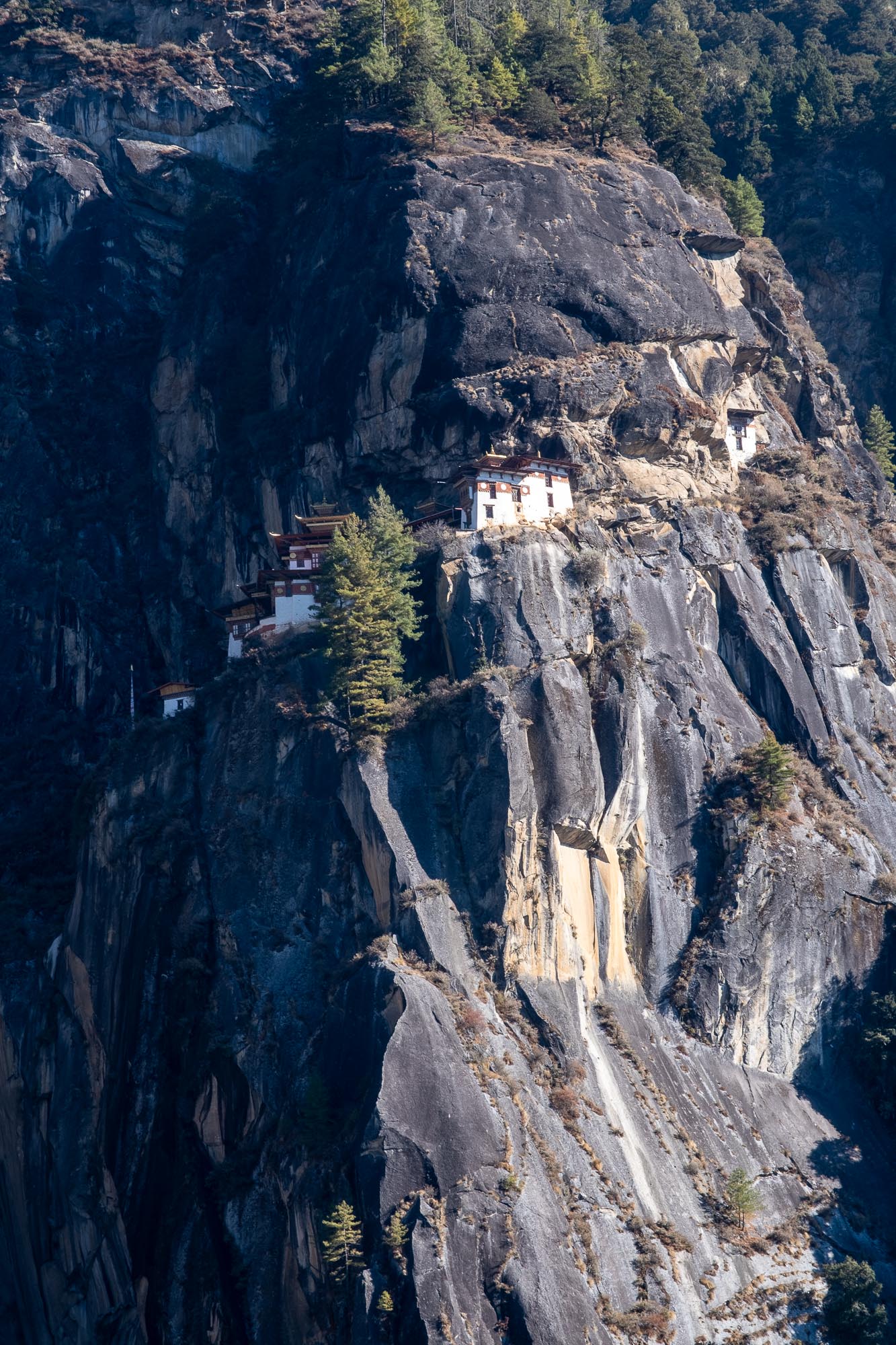
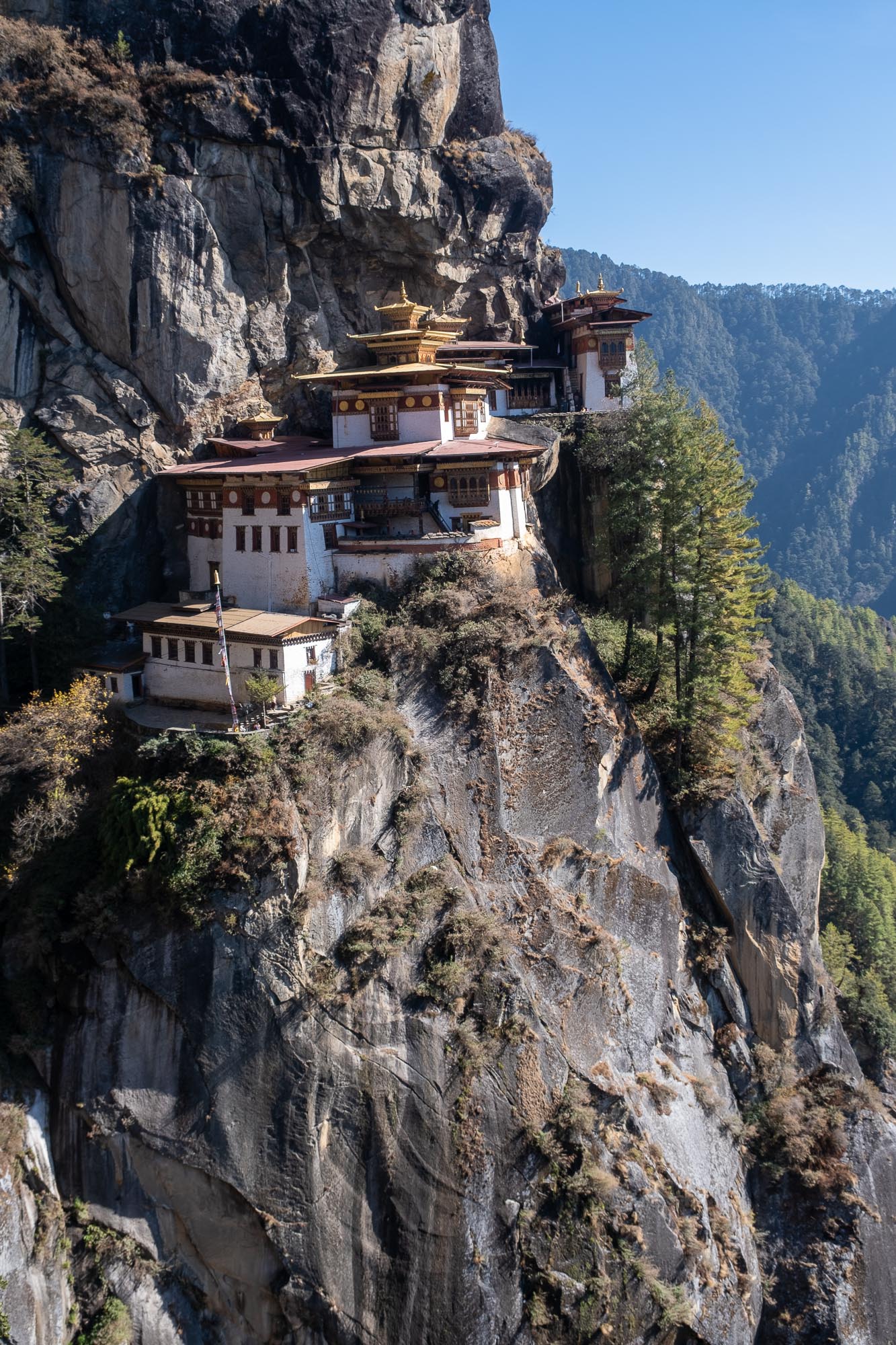
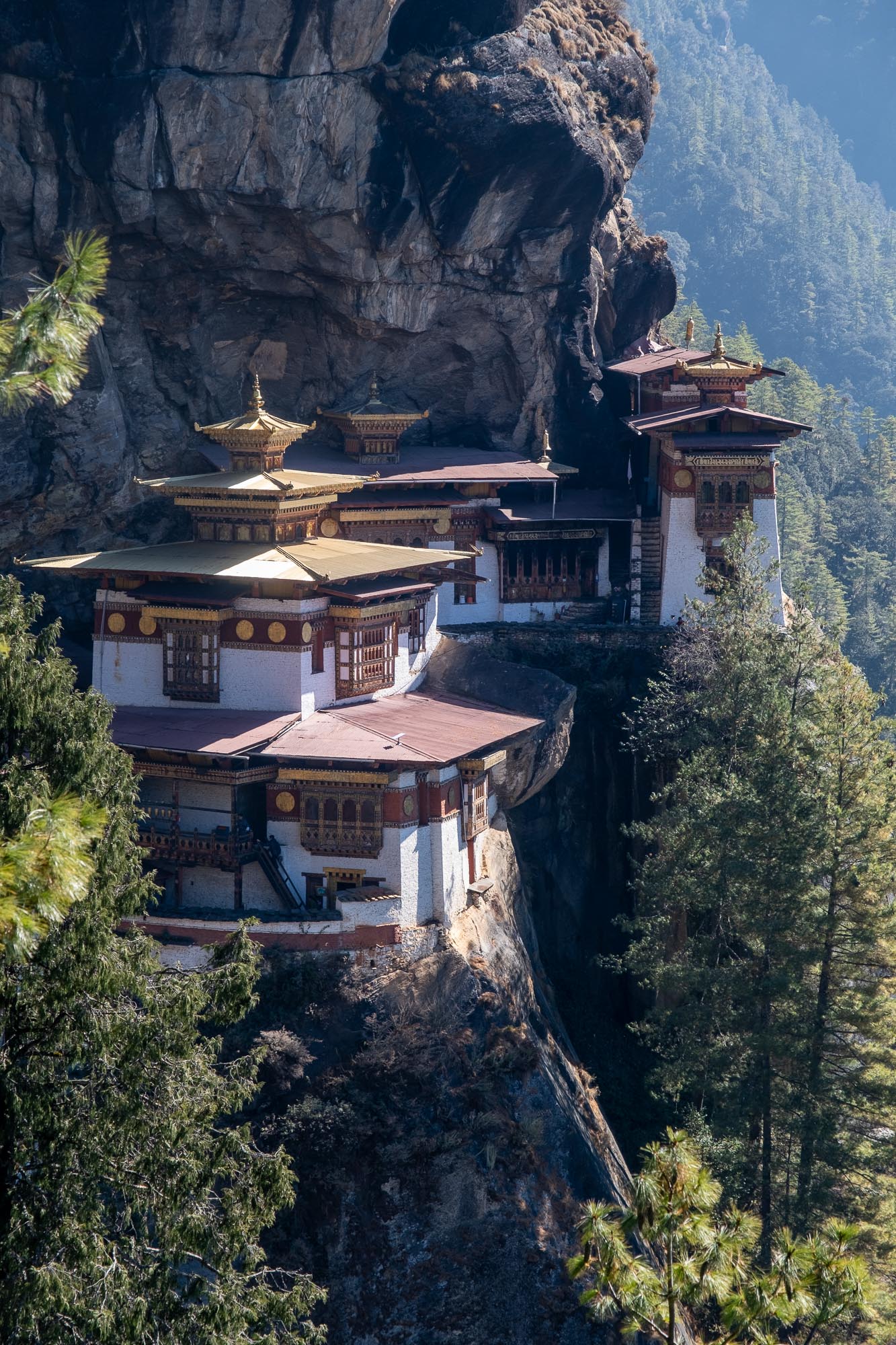
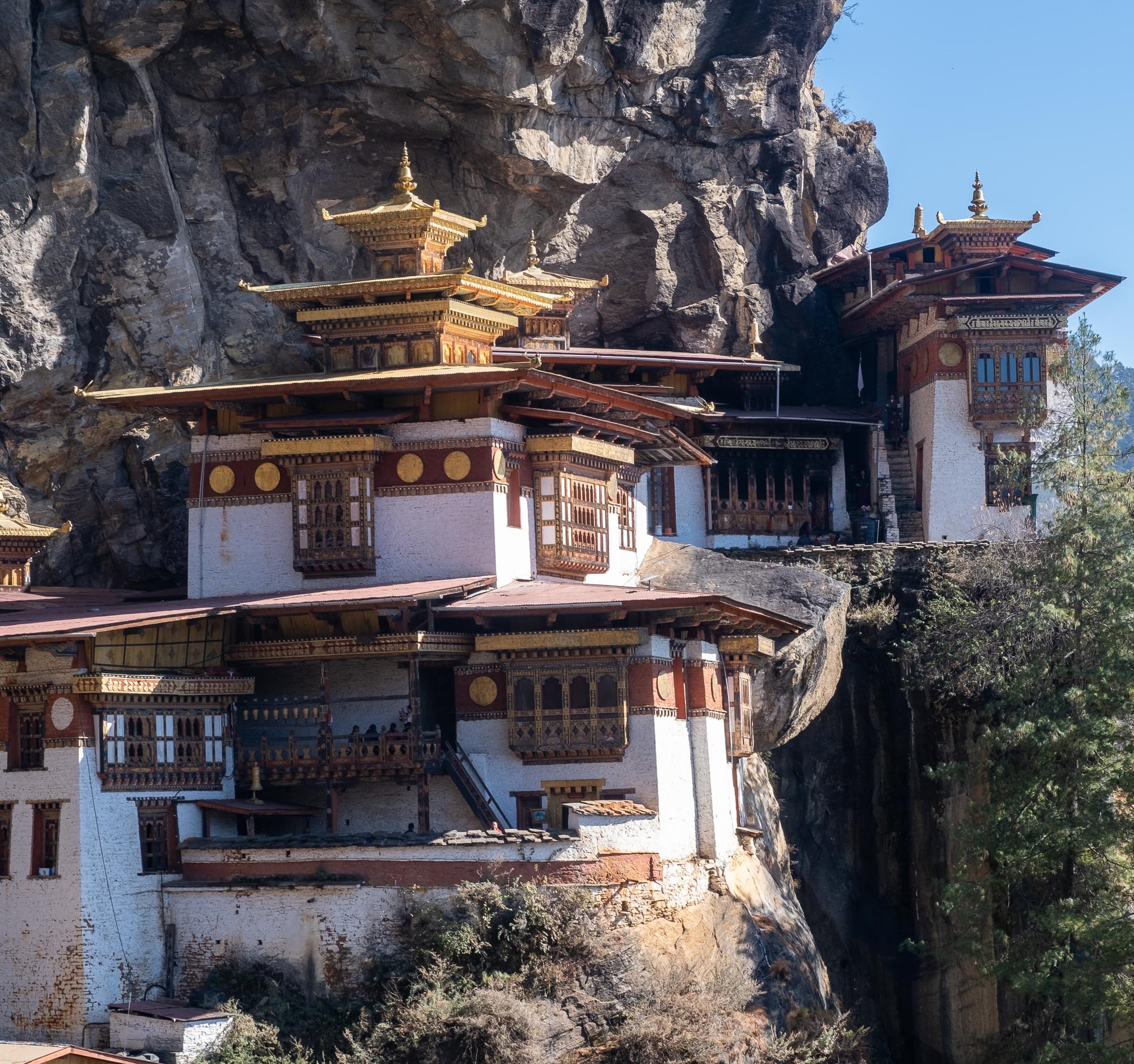
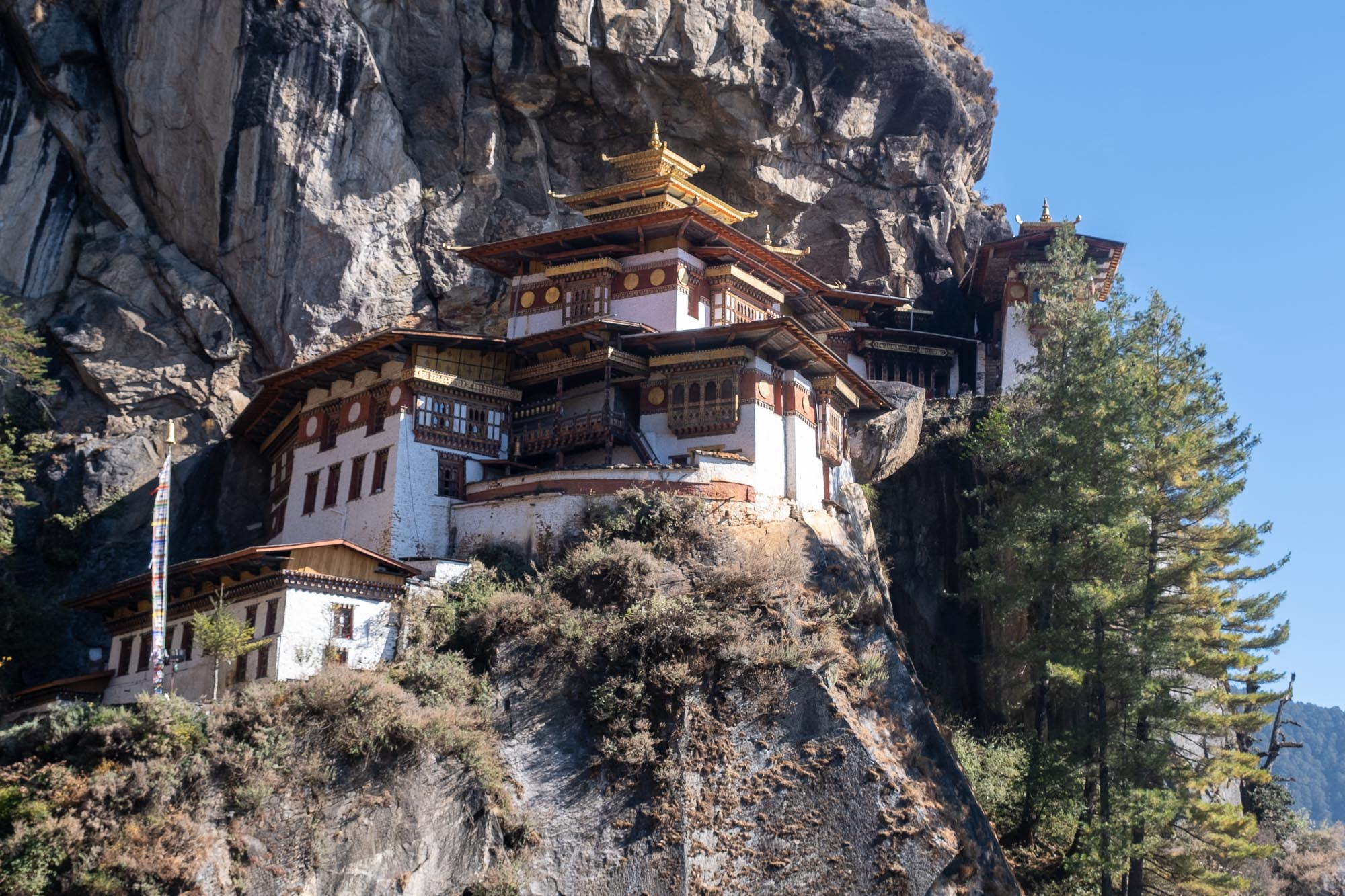
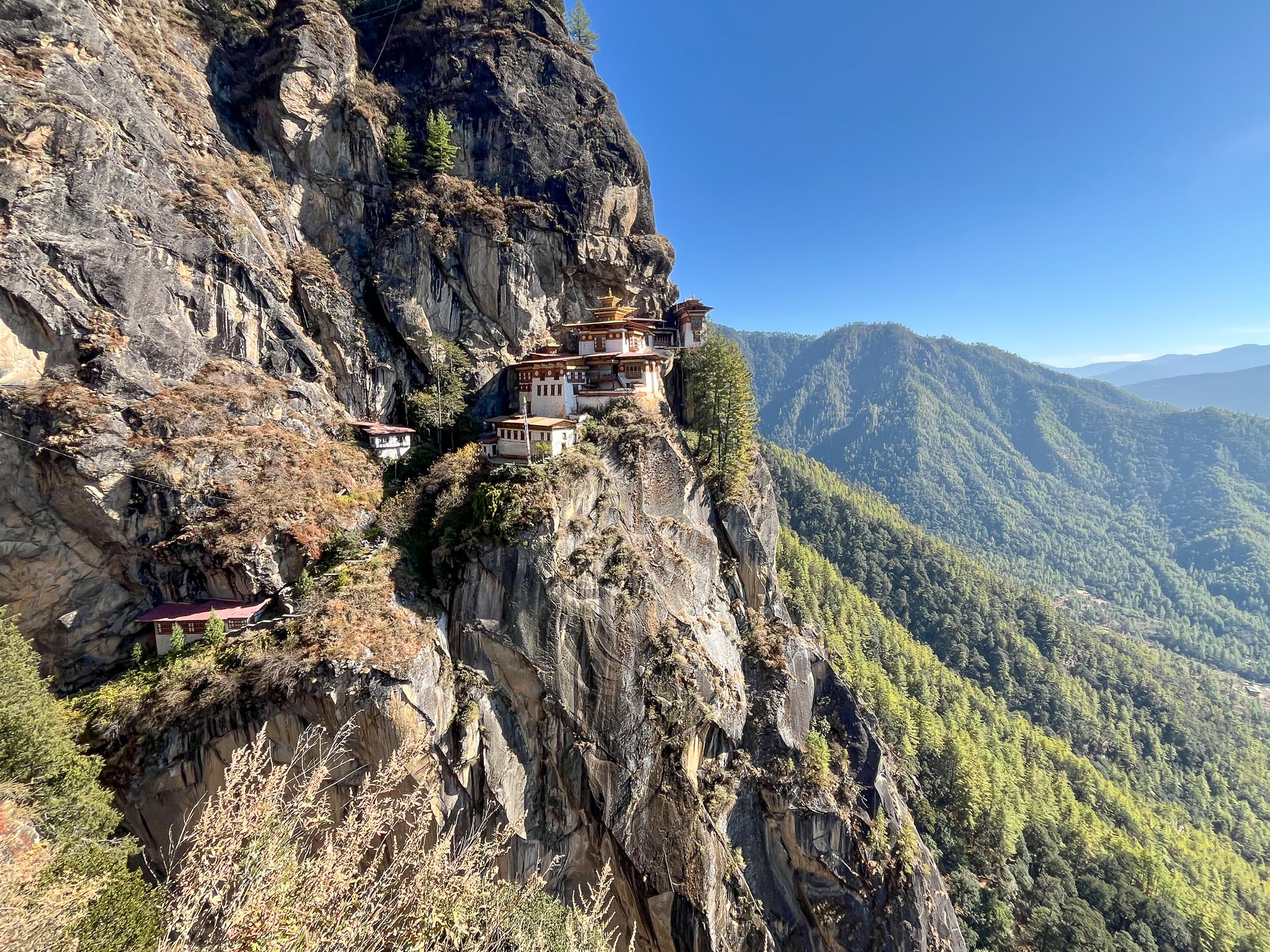
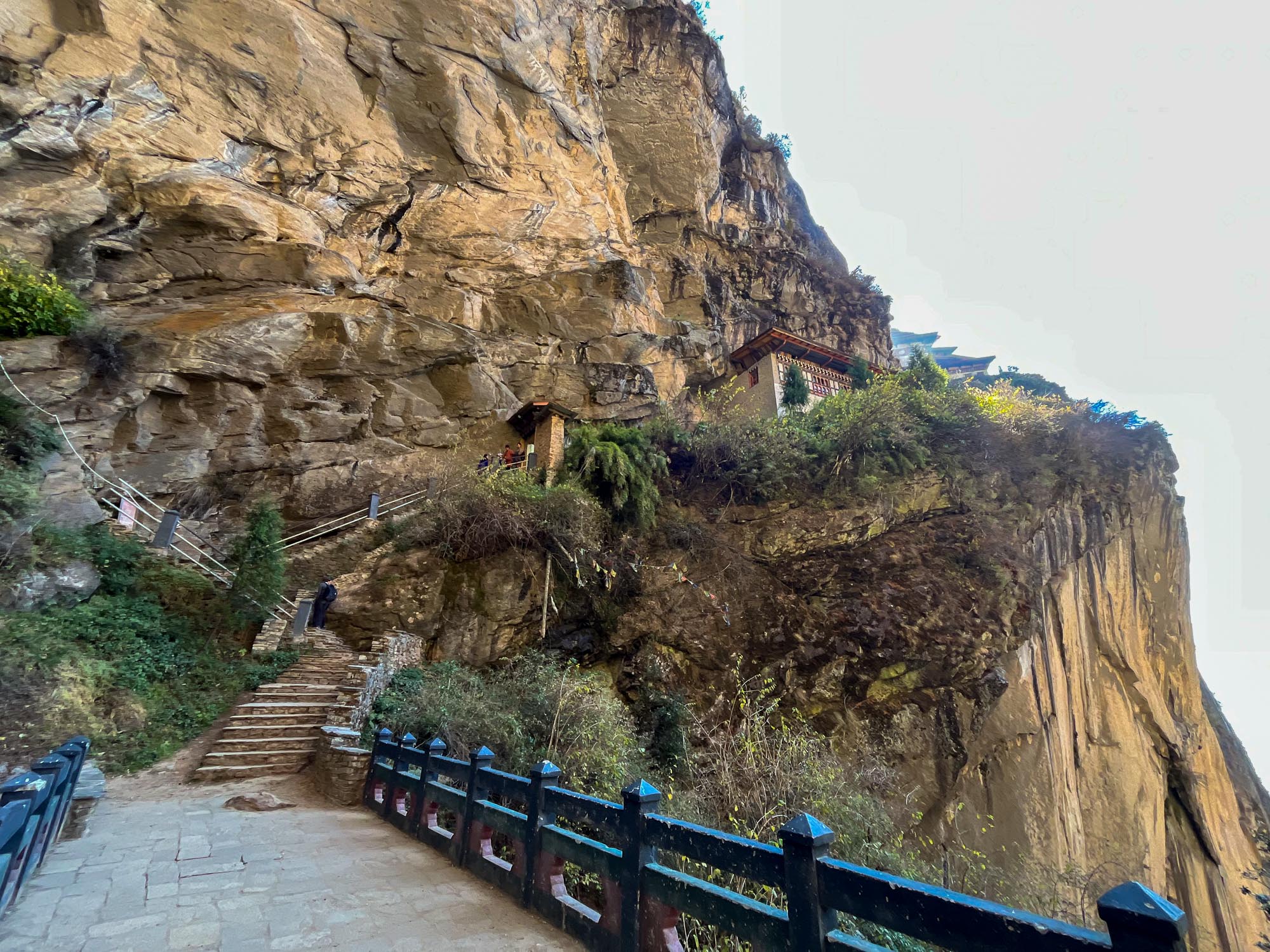
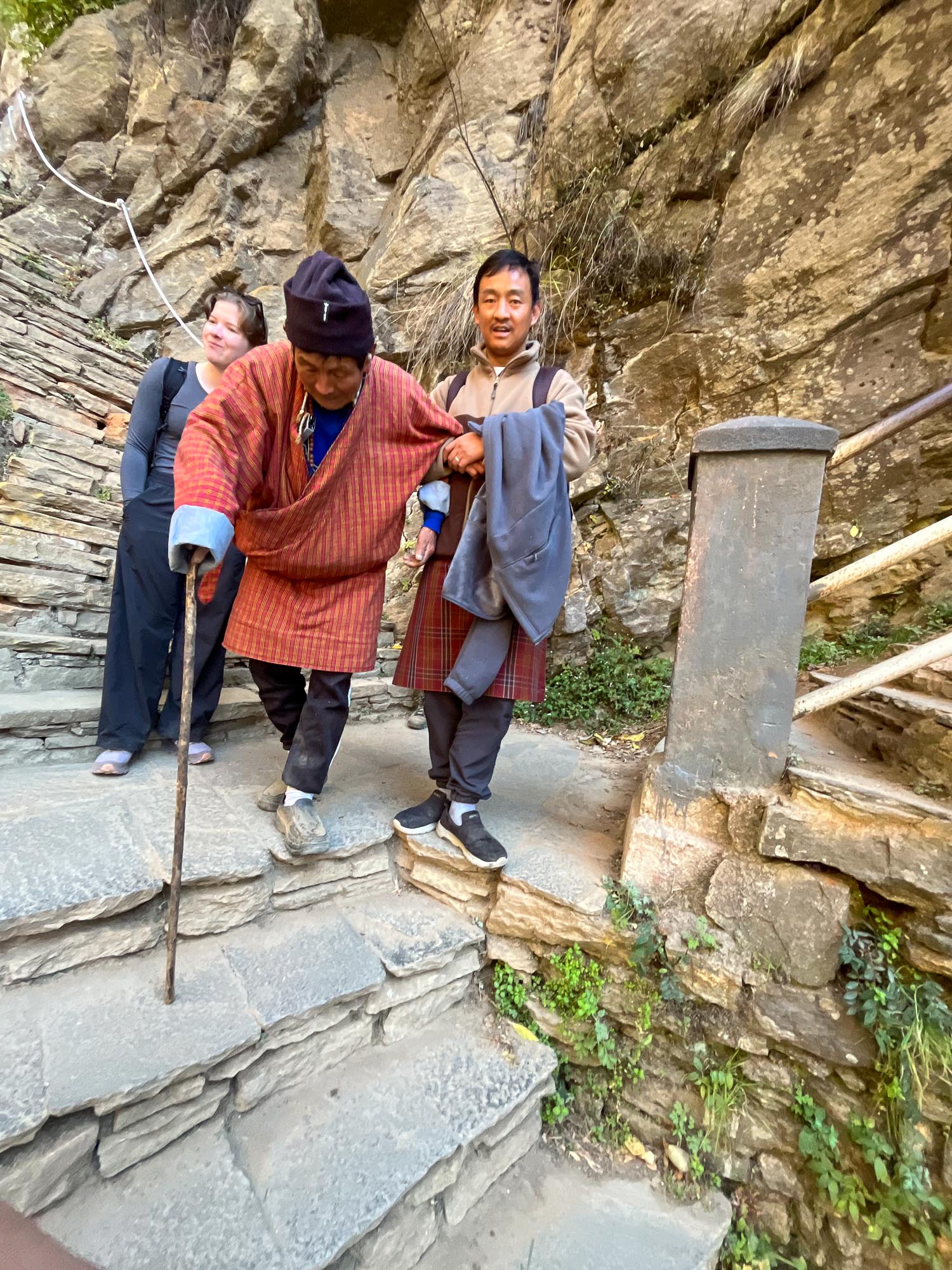
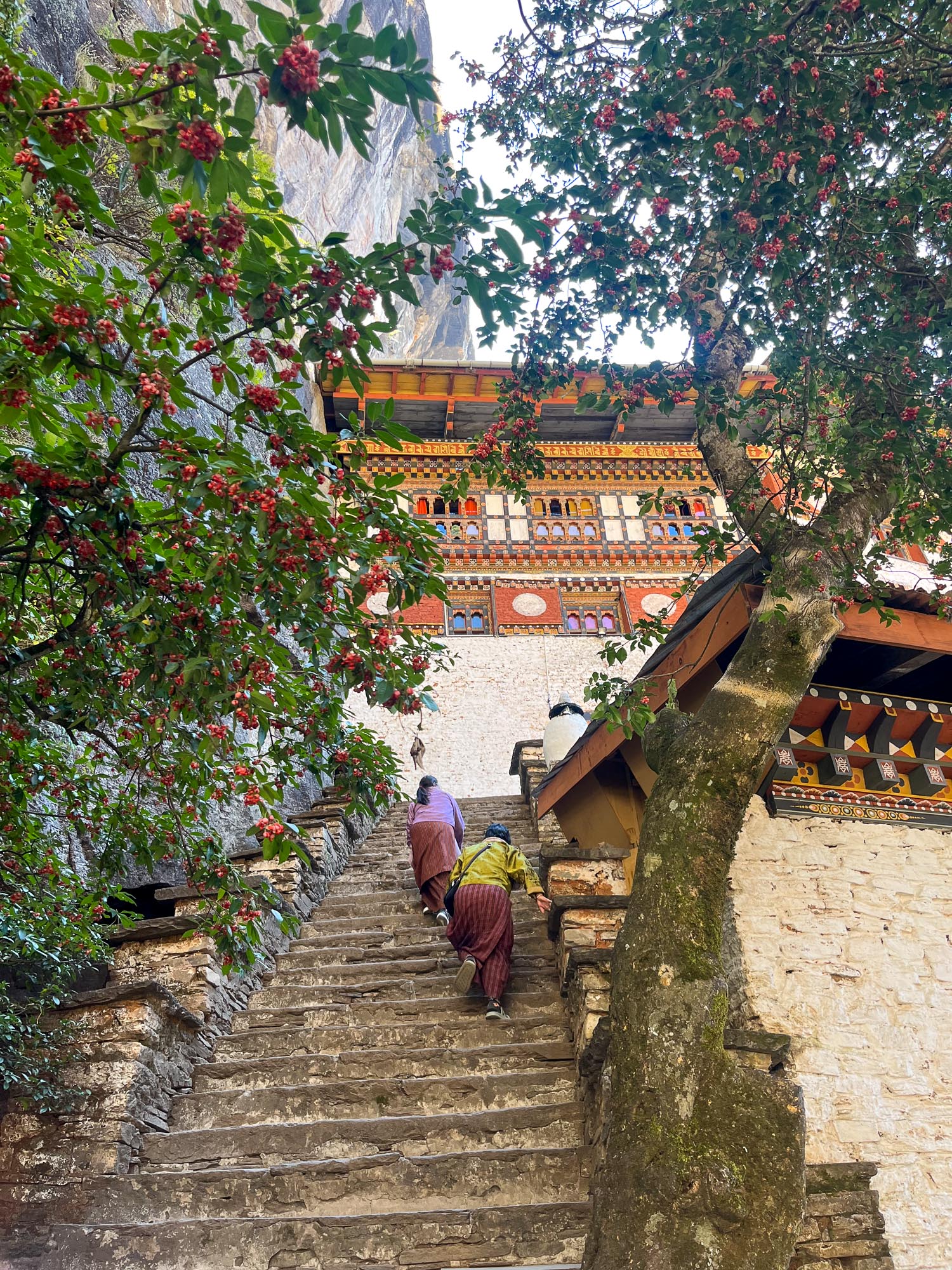
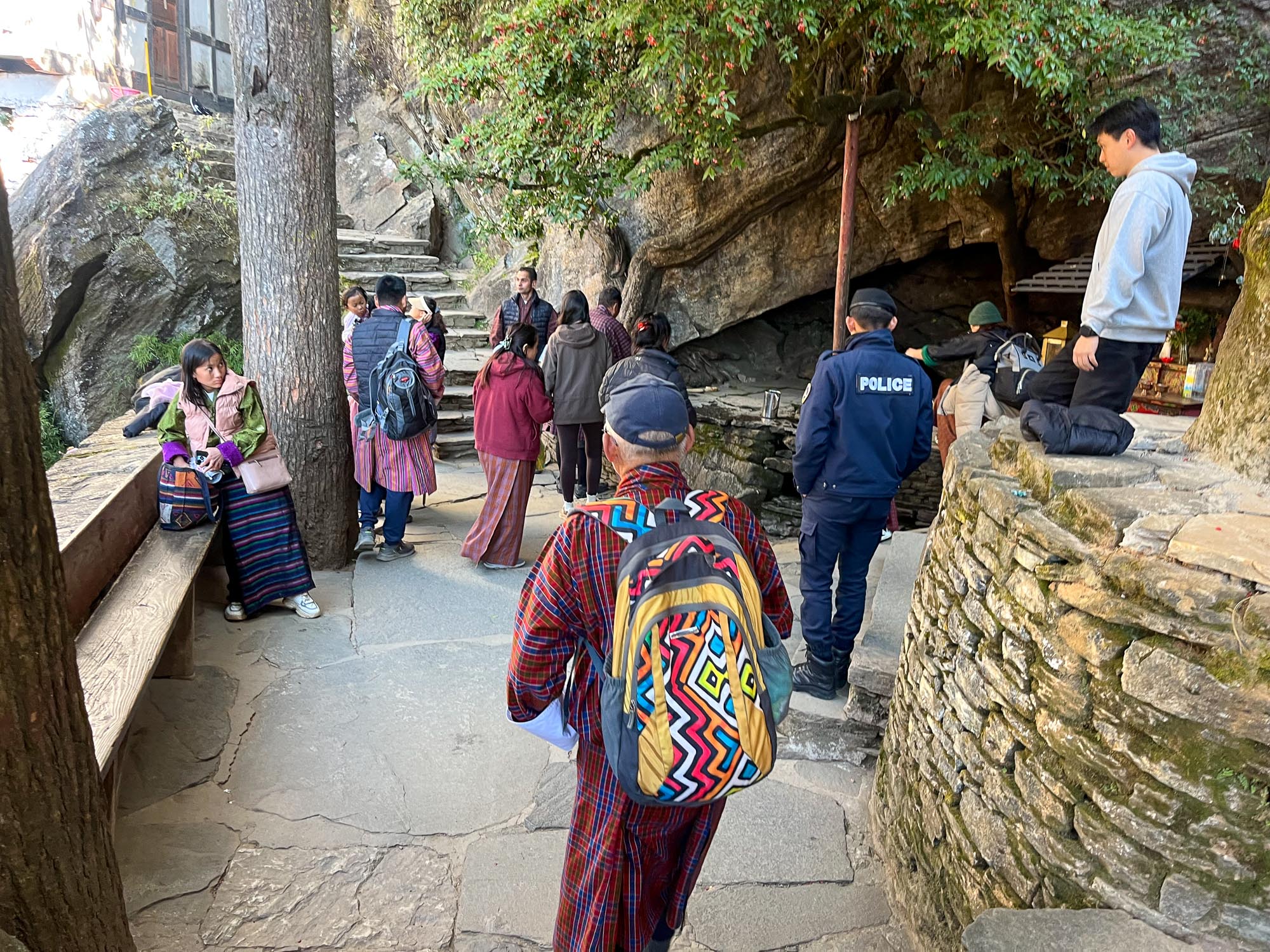
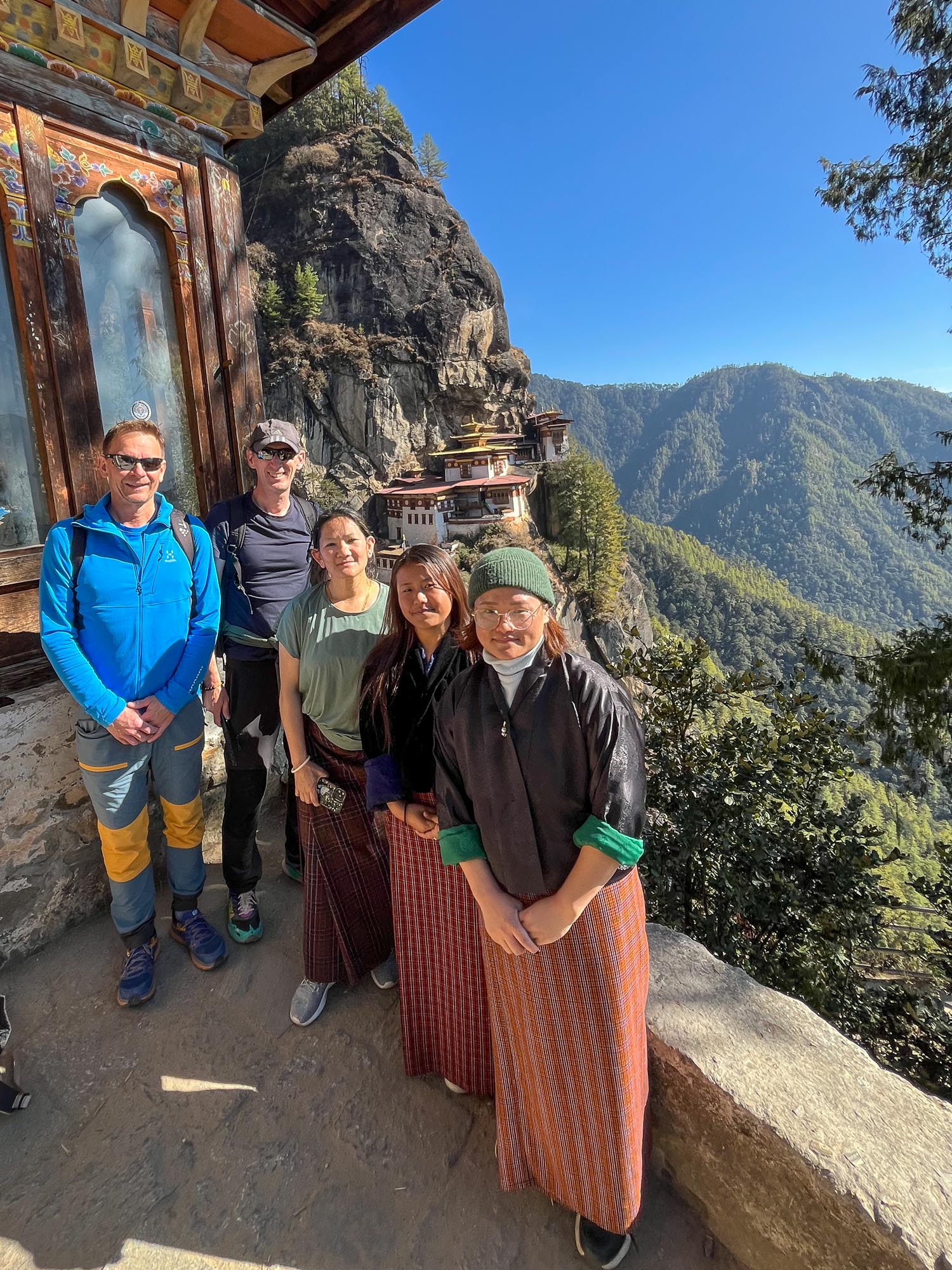
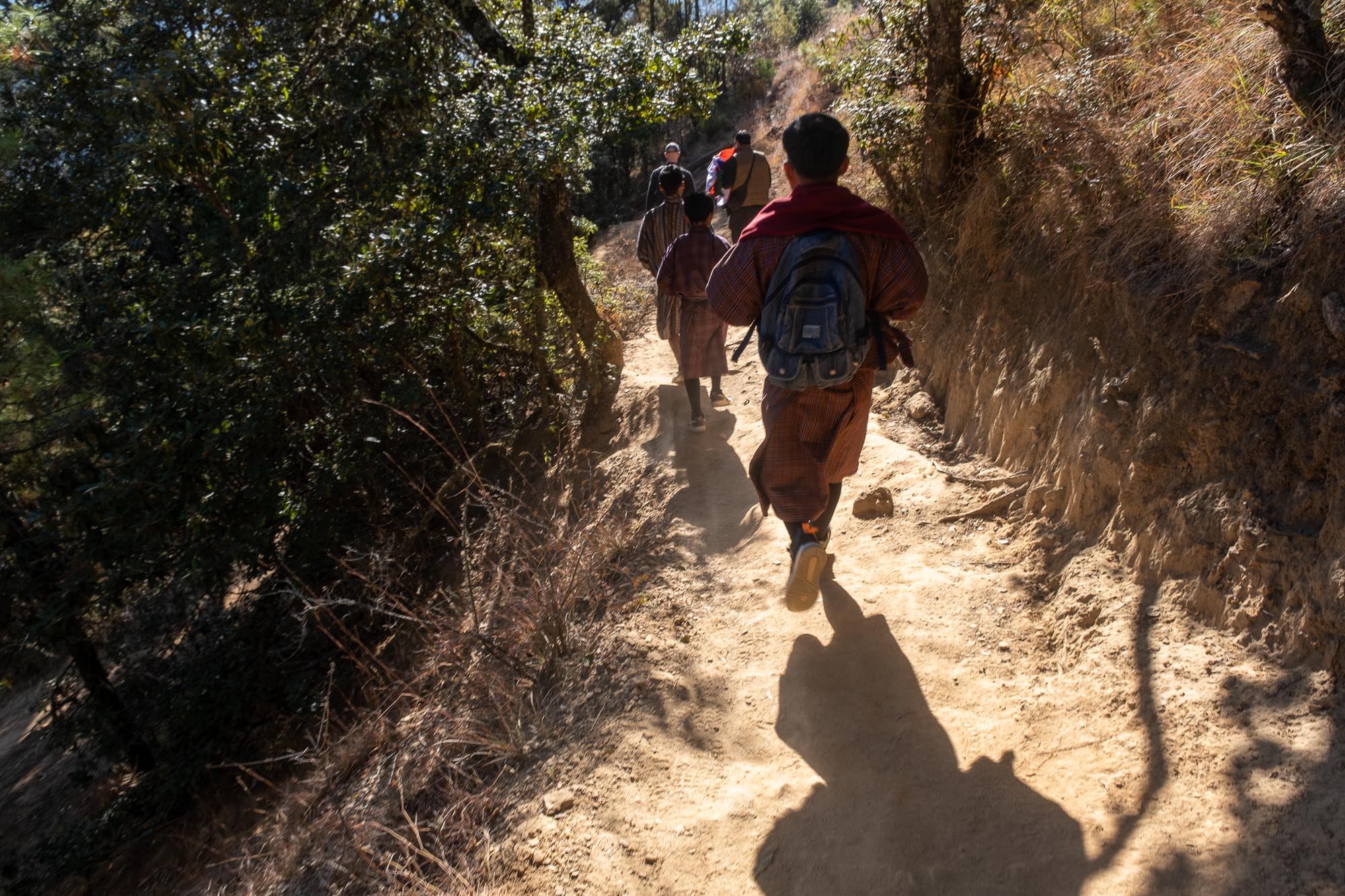
In short, the Tiger’s Nest is a Bhutanese “must-do.” The hike alone is a wonderful experience, with beautiful scenery and nature, especially on a clear day. If I had the chance to go again, I would almost prefer a midday or afternoon visit, as during our morning ascent the sun was always “behind” the temple. Seeing the monastery at sunset must be truly magical. Not to mention how it would look in snow—although snowy days are very rare here. Winters are cold but mostly dry; most rain and snow fall during the monsoon season. Taktsang is a place where the landscape, the path, and spirituality blend into a beautiful experience that stays in the memory for a long time.