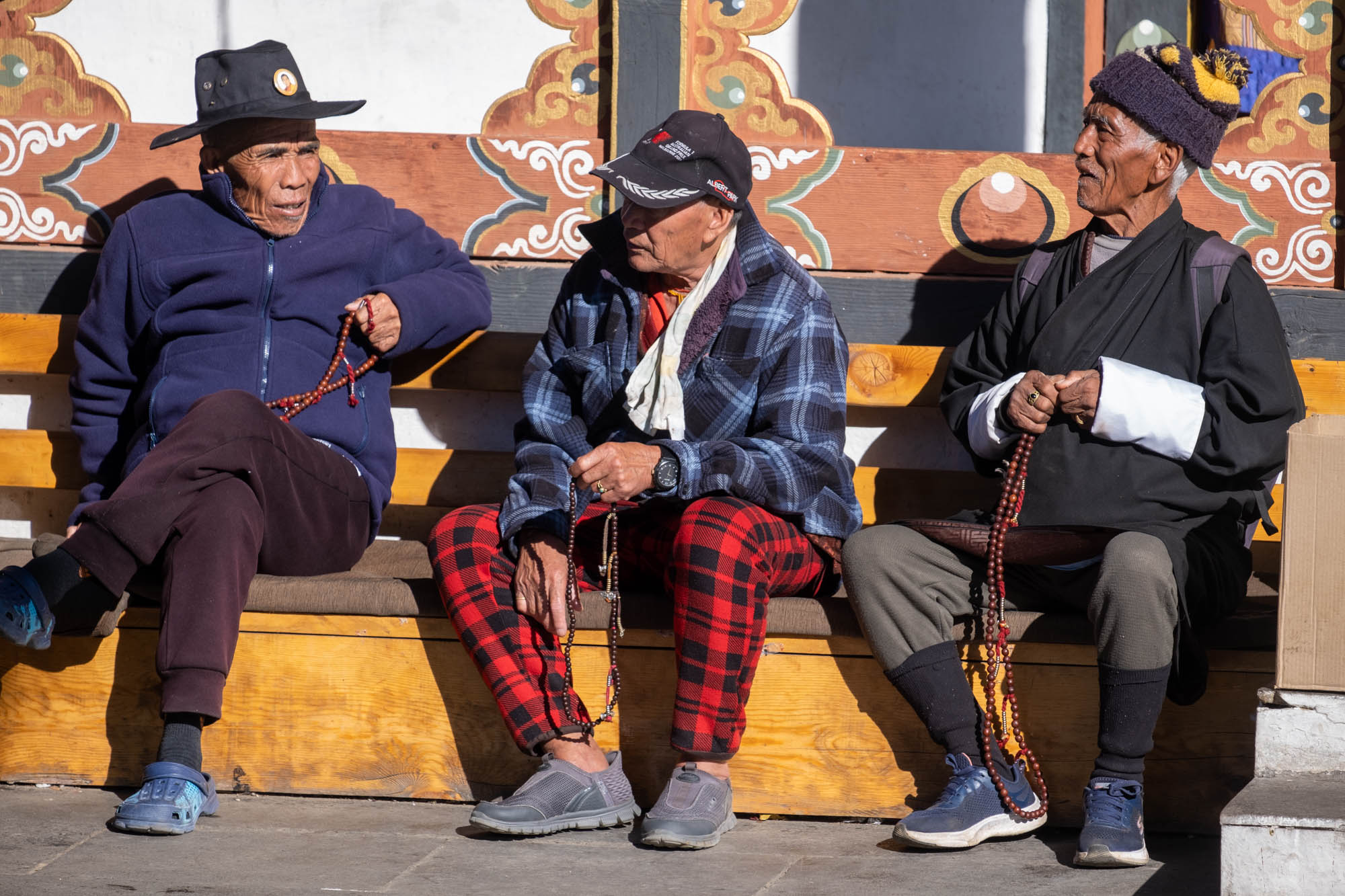
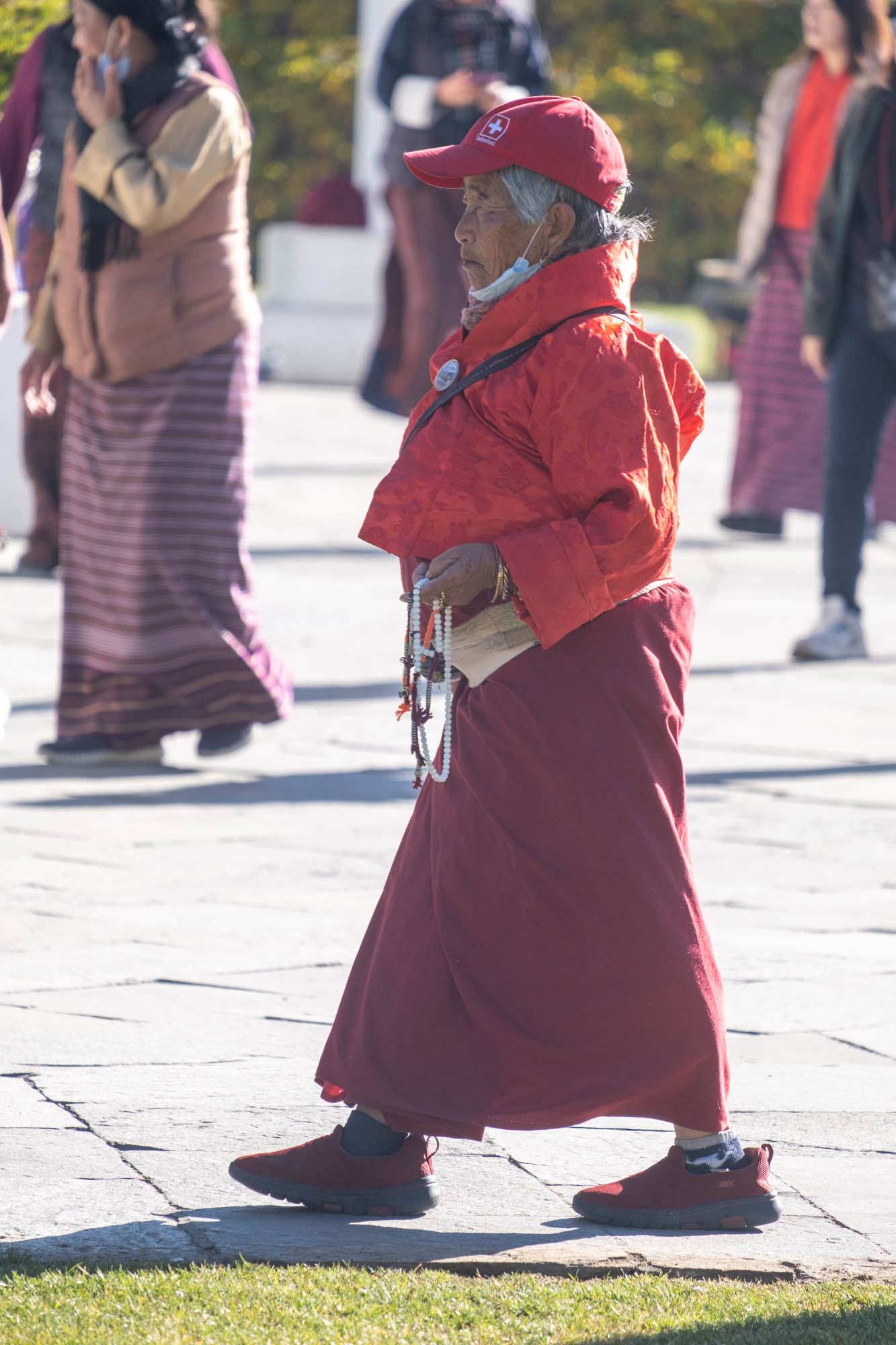
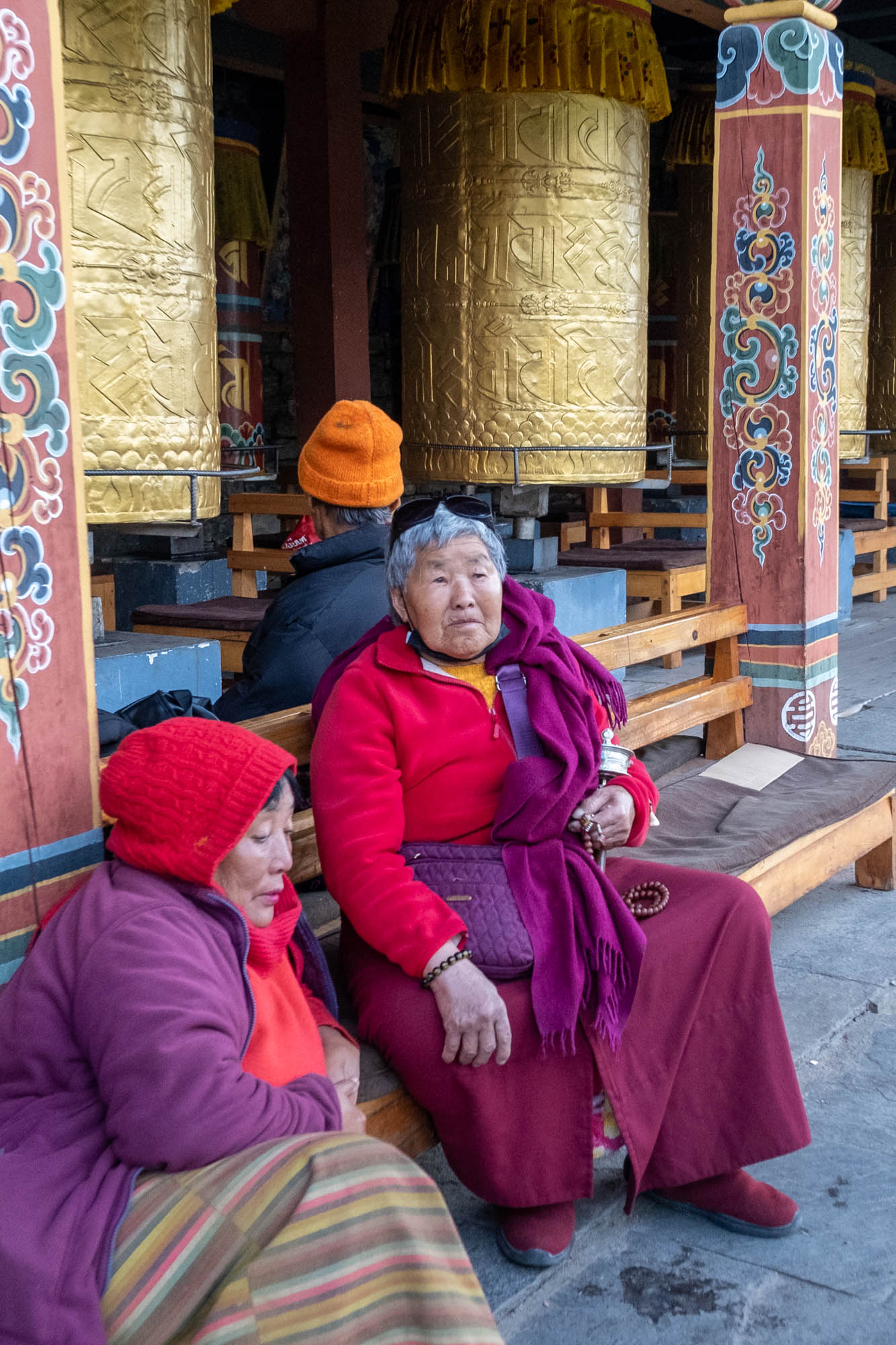
People in Bhutan are known for their strong sense of community, deep spirituality, and respect for tradition. Most Bhutanese follow Buddhism (Vajrayana, which is part of the Mahayana branch of Buddhism). Every year, numerous religious festivals (tsechu) take place, featuring colorful masked dances, music, and rituals that preserve centuries-old cultural heritage. Society is also strongly shaped by the mountainous landscape, as many communities live in small villages where farming and local crafts remain an important part of everyday life.
How would I describe them? Very friendly, open, and approachable—especially toward guests and foreigners. Hospitality is an important value in their culture, so visitors are often welcomed with warmth, respect, and a willingness to help. I also noticed that they are consistently polite and quite patient, which is likely connected to their Buddhist way of life.
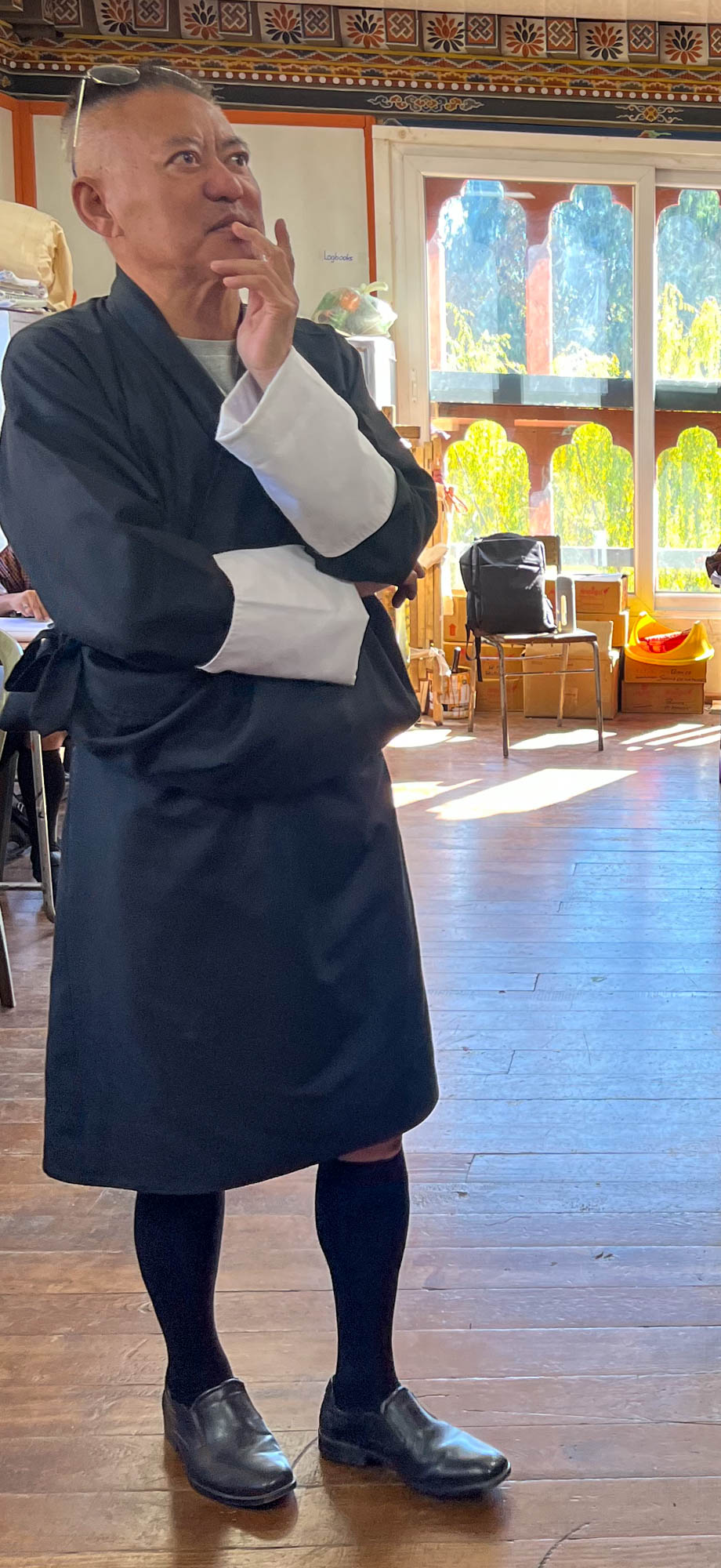
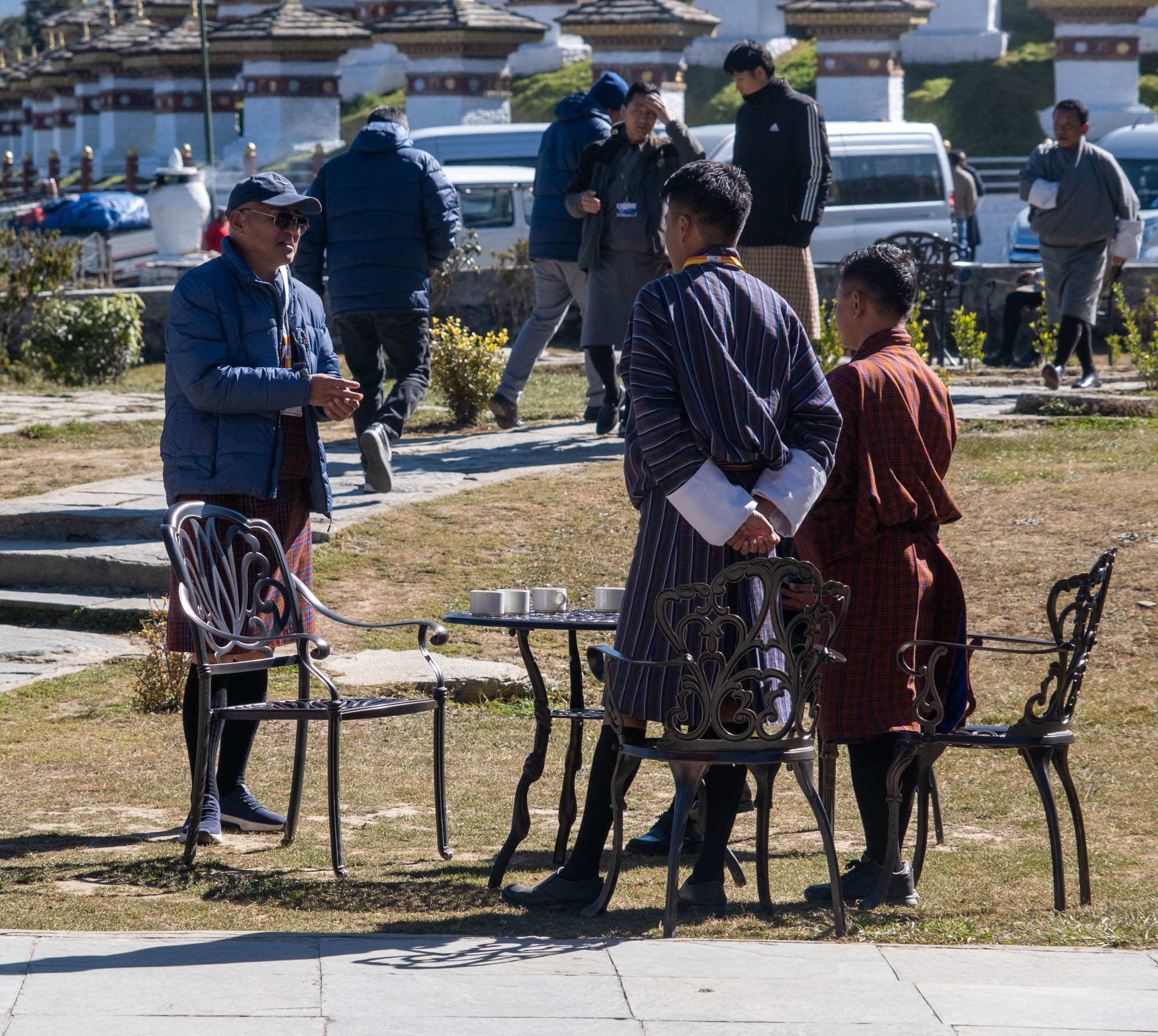
Traditional clothing plays an important role in preserving cultural identity and is part of daily life. Men in Bhutan typically wear the gho, a kind of long tunic (knee-length garment) tied at the waist with a belt called kera, usually worn with long socks. The gho is often made of wool or cotton and can be worn as everyday clothing or richly decorated for special occasions (for example with an additional “scarf”). Women wear the kira, a long woven dress wrapped around the body and fastened with brooches.





Our local guide was Garab Dorji guide with many years of experience who later turned out to be the president of the Bhutanese Tour Guides Association. He is knowledgeable, well informed, and holds very clear views on Bhutanese tourism; some of his explanations differed from what I had previously heard about Buddhism (for example, regarding reincarnation). It was also interesting to observe his relationship with younger guides, who all addressed him with great respect. He was strict with them—sometimes very strict. Bhutanese tour guides (I did not encounter any female guides) are required to wear traditional national dress, as prescribed by both law and cultural norms.