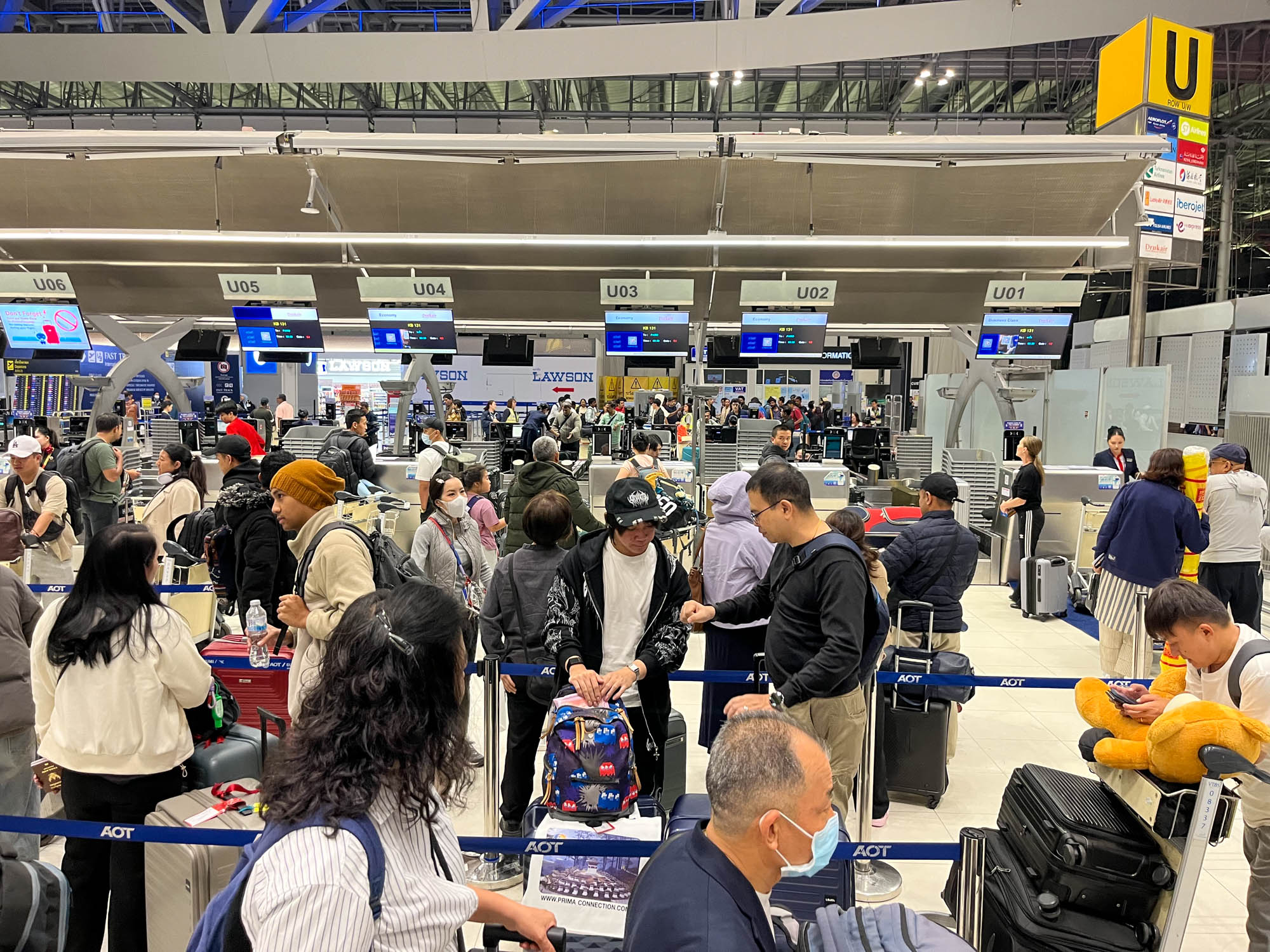
The night was short, since the alarm went off just after 2:00. The taxi was booked for 2:30, and Bangkok was completely empty at that hour. What was interesting, though, was that our check-in at the airport at 3:00 was anything but calm — there was a long queue, we were almost among the last, and the whole check-in process took forever. The airport itself felt almost deserted, with only a few sleepy passengers wandering through terminals that were only just waking up. Very few shops and restaurants were open, but I still managed to get a sandwich, while Gorazd had mango juice—which was way too cold (these Thais really overdo it).
Boarding started almost an hour before departure, around 4:45—very early. We were flying with Drukair, aka Royal Bhutan Airlines, and as an aviation geek I got to tick off yet another airline. Since Gorazd and I didn’t check in together, we didn’t sit next to each other either. Even just flipping through the in-flight magazine, I immediately got the sense of how incredibly proud the Bhutanese are of their king. Kindness and openness are clearly deeply rooted in their culture. My neighbor on the plane worked for Bhutan’s Ministry of Foreign Affairs and was an architect by profession, travelling the world presenting projects related to development aid—so of course we chatted for half the flight. Food on flights like this is often questionable, but honestly… it was totally fine (at least the noodles; apparently the omelet wasn’t tasty at all). This was also my first encounter with their national chili sauce 🙂
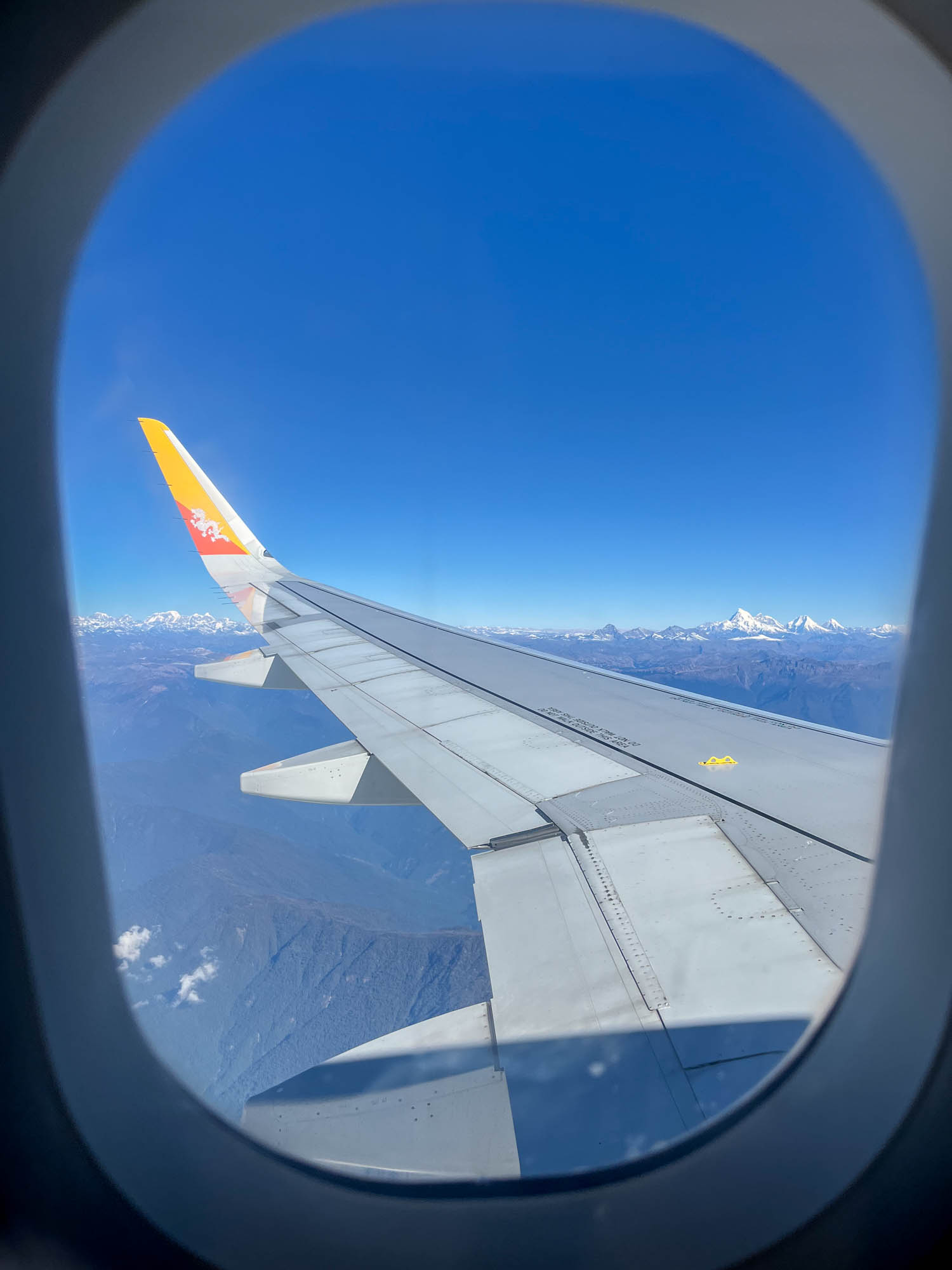
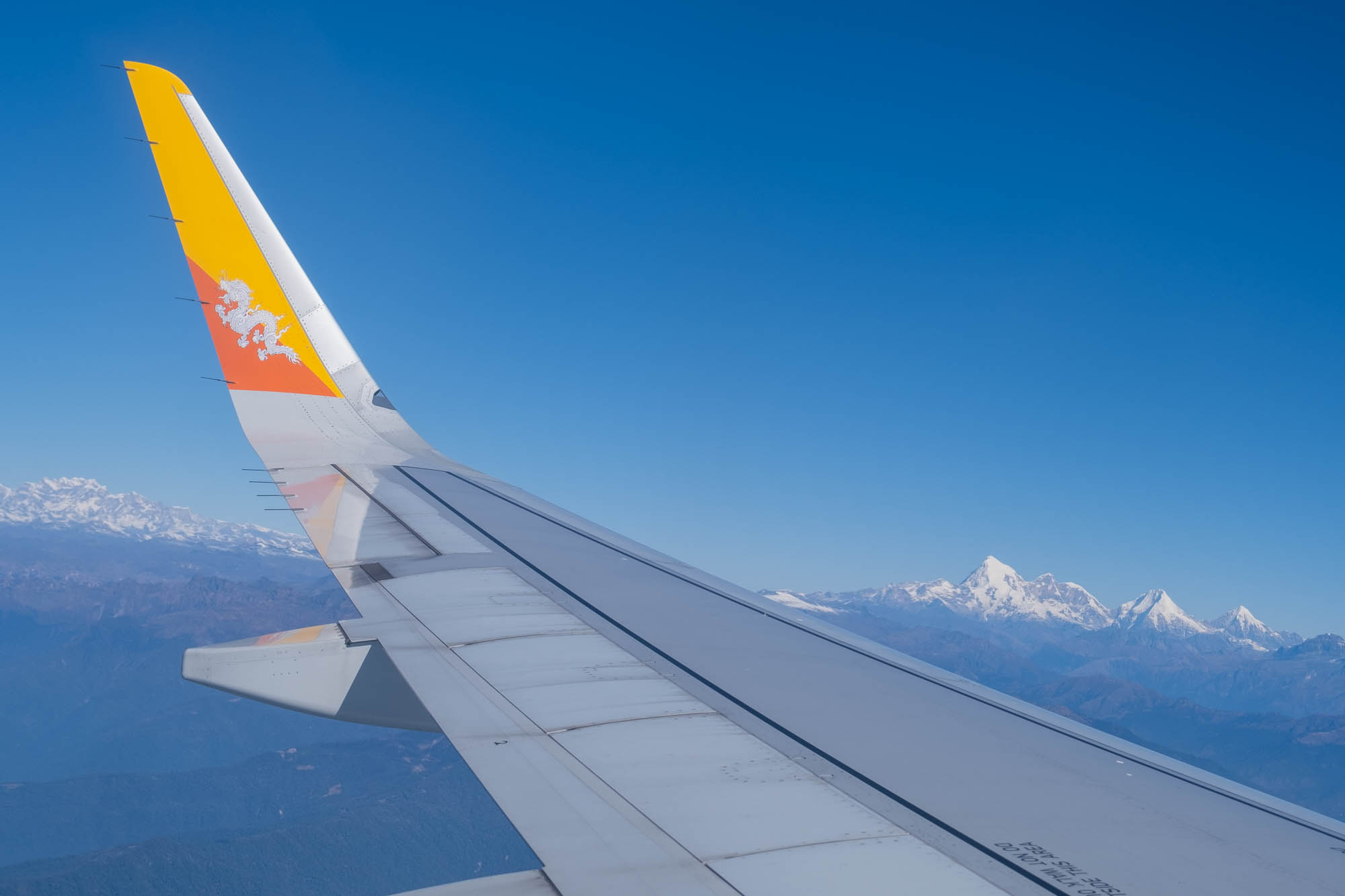
After about three hours we landed in Indian city of Bagdogra. A few passengers got off, even fewer got on. This was a regular stop, however we were then informed that due to fog the landing in Paro would be delayed by 30 to 45 minutes, so we waited on the ground for quite a while. In the meantime I, of course, fell asleep—and woke up only to an absolutely stunning view of the Himalayas. In the distance, Kangchenjunga was clearly visible. The landing was exactly how I had imagined it: flying through a valley, wings relatively close to the ground, with low, almost dramatic turns. Paro airport is small and pleasant—you simply walk from the plane straight to the terminal. The surroundings are fascinating; you can already see a temple in the background, and the whole place gives you the feeling that you’ve truly arrived somewhere special. Border formalities were quick, and Gorazd and I were officially in Bhutan.
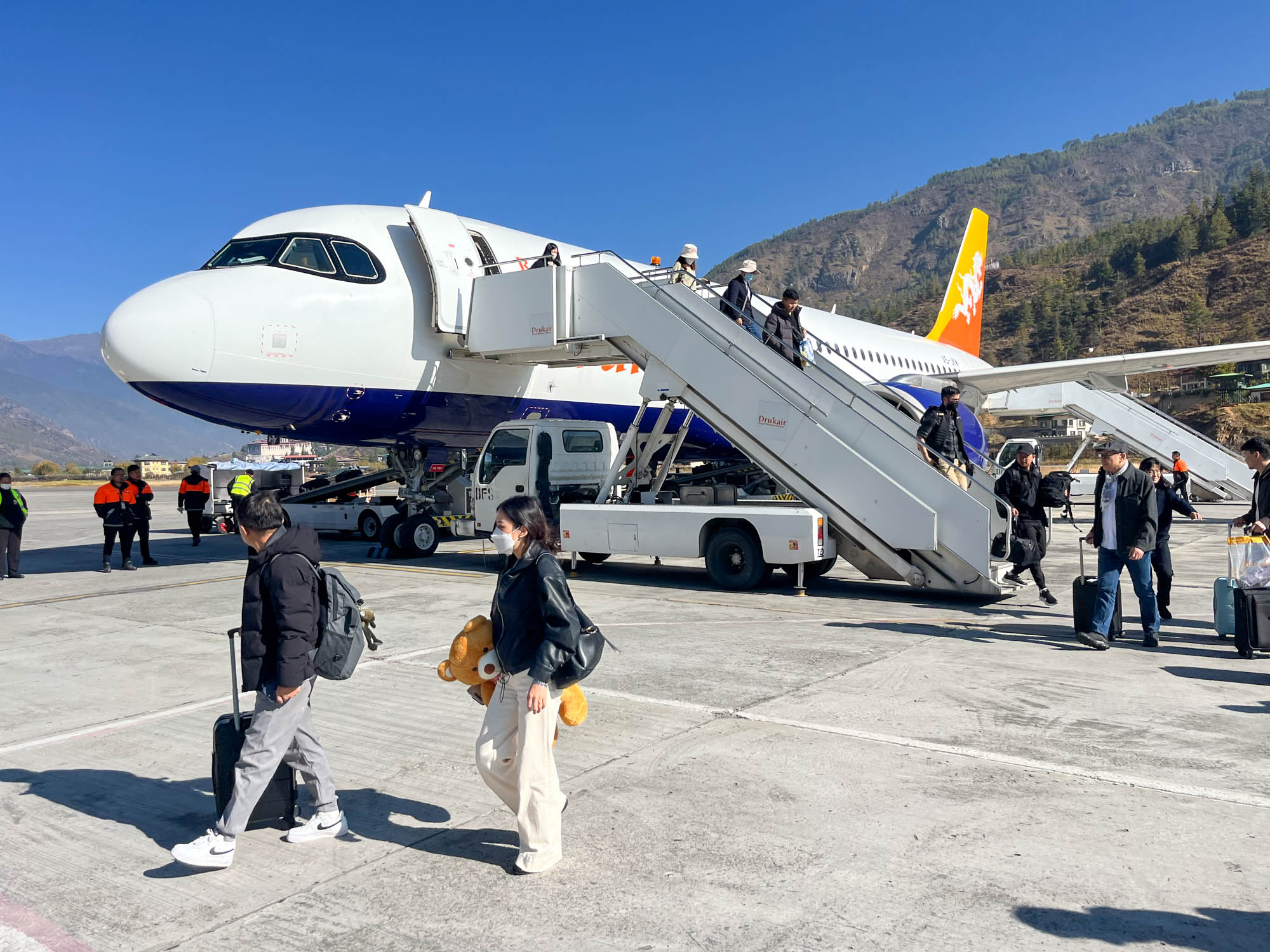
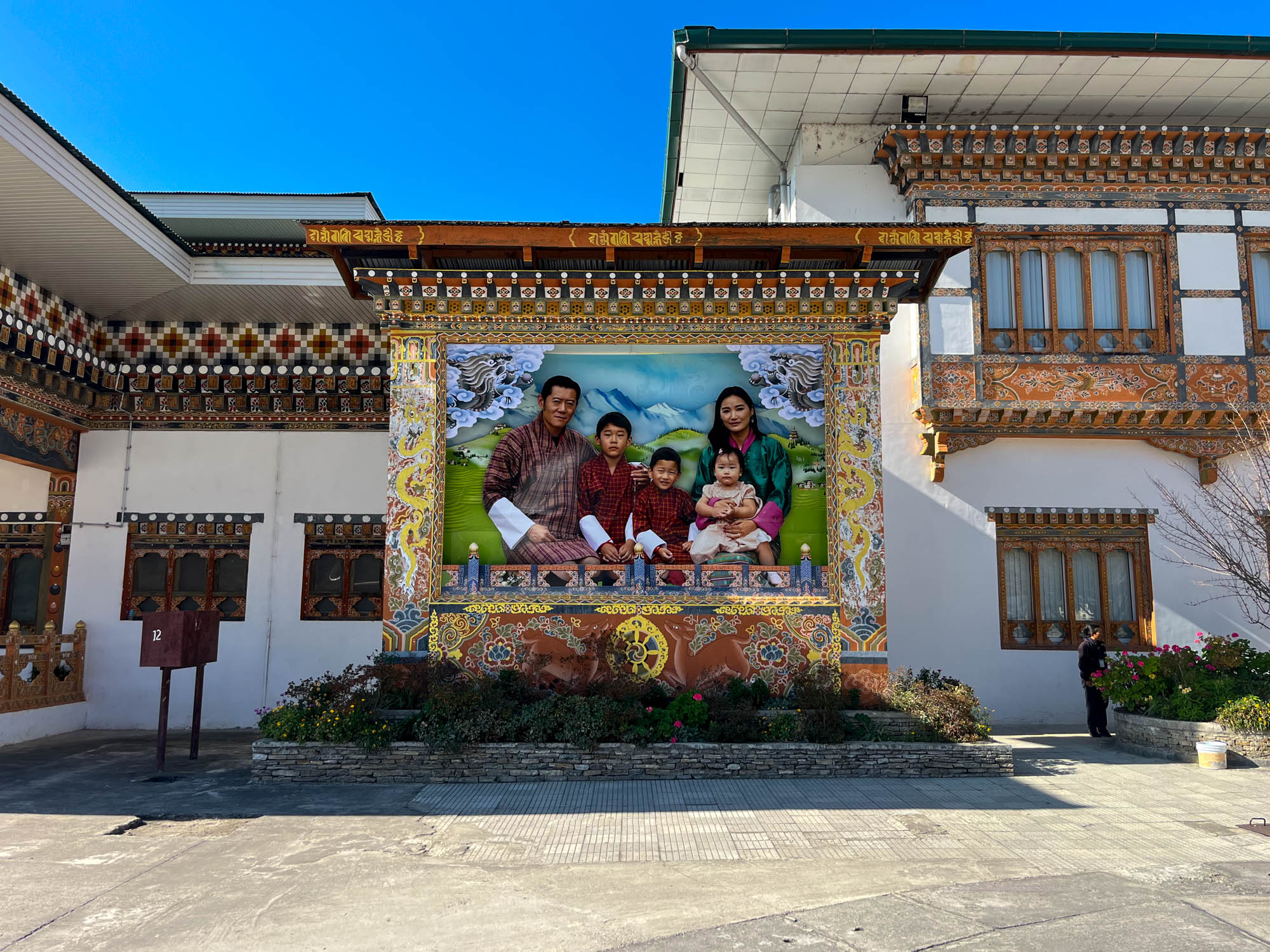
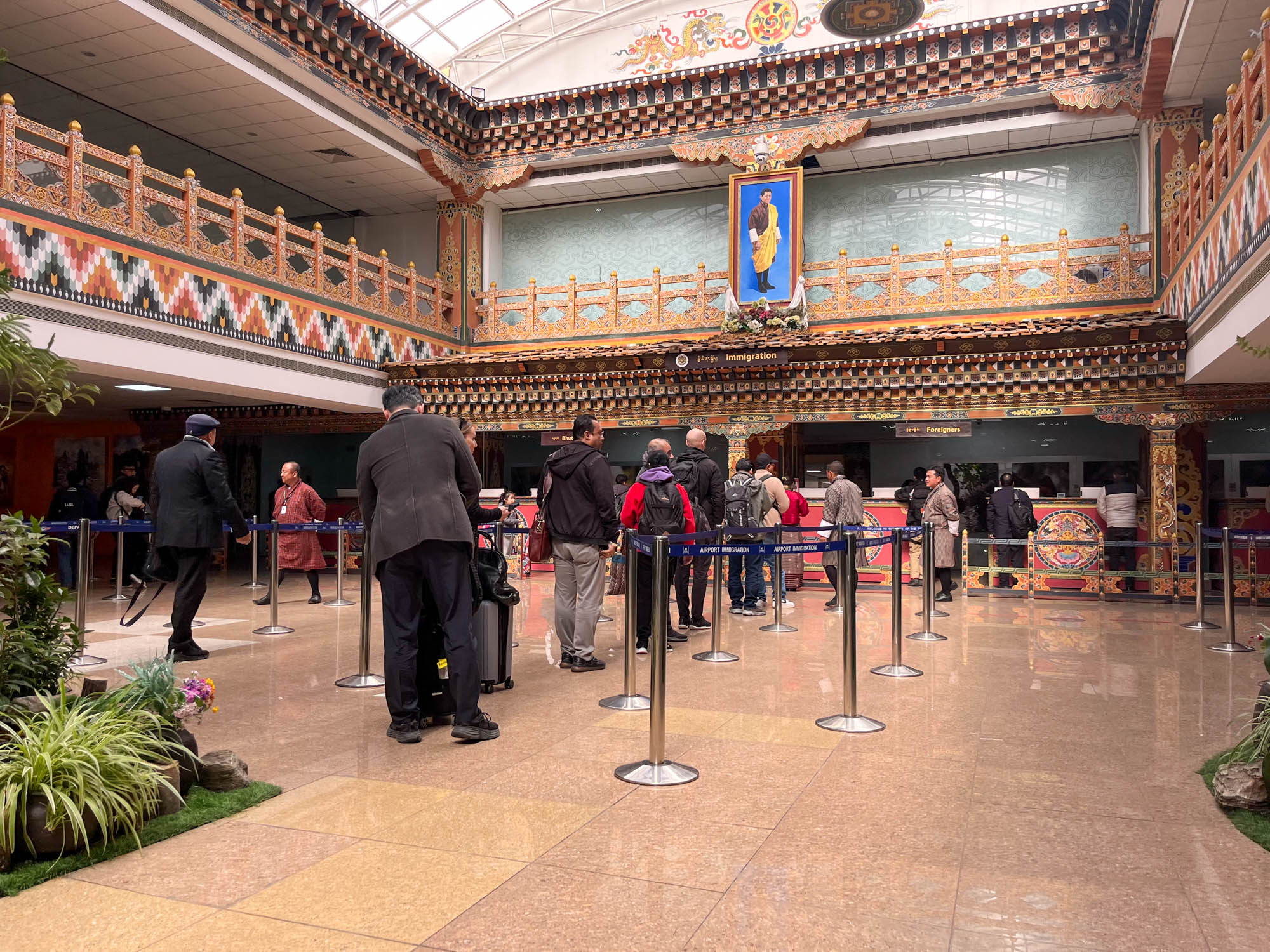
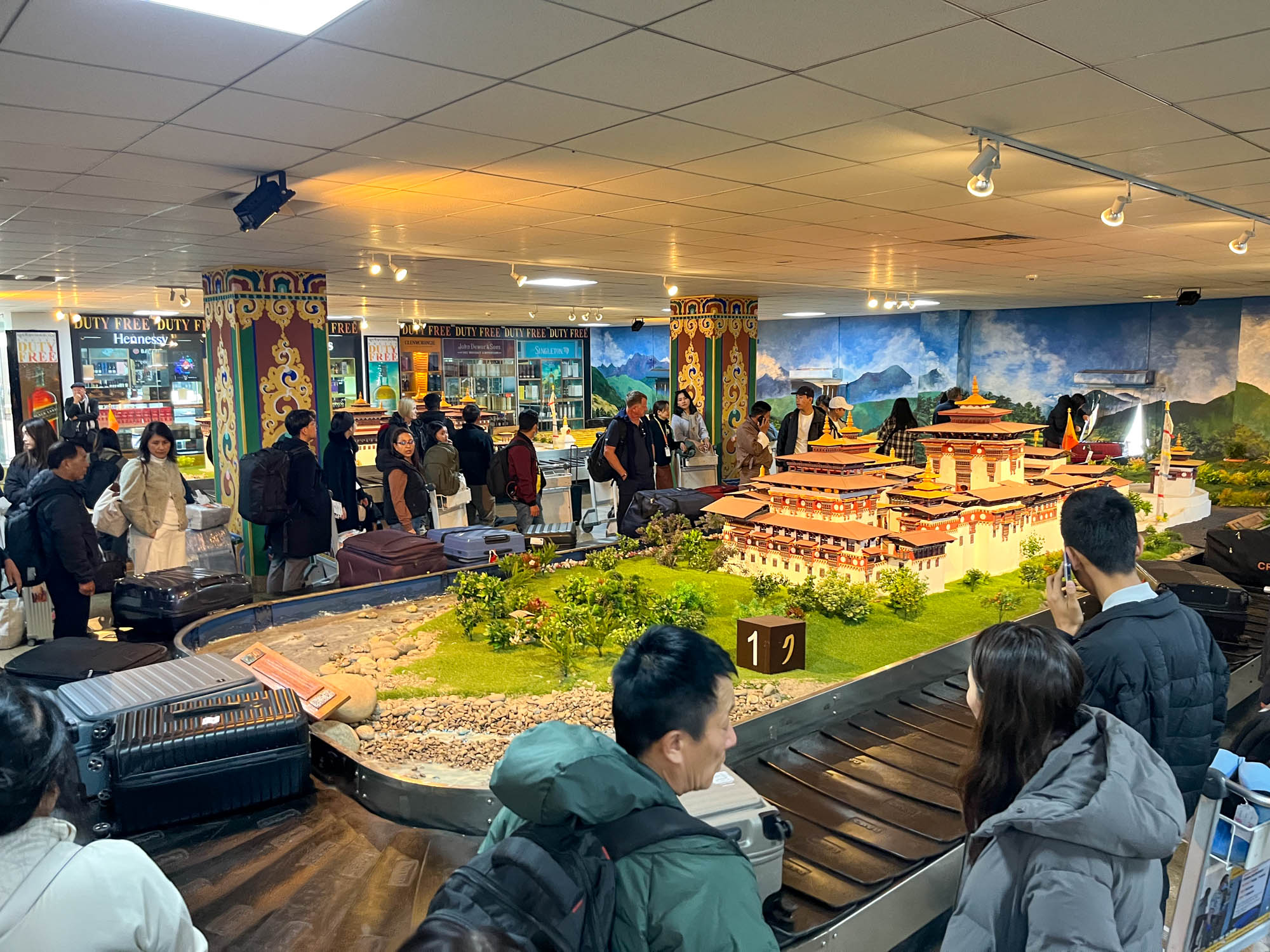
We met our guide in front of the terminal and waited in a small café corner for the arrival of the flight from Dubai. The group seemed friendly and quite mixed: a few Australians, Brits, Americans, a Romanian, a Norwegian—and of course two Slovenians. Most were seasoned travelers, for whom this wasn’t their first destination.
The drive to Thimphu takes about an hour and a half. Not because the distance is large, but because the main road is narrow and very winding, and the speed limit is 50 km/h. The first part of the drive follows the Paro River, and then the Thimphu River. It quickly becomes clear just how calm the traffic is on this “main” Bhutanese transport artery.
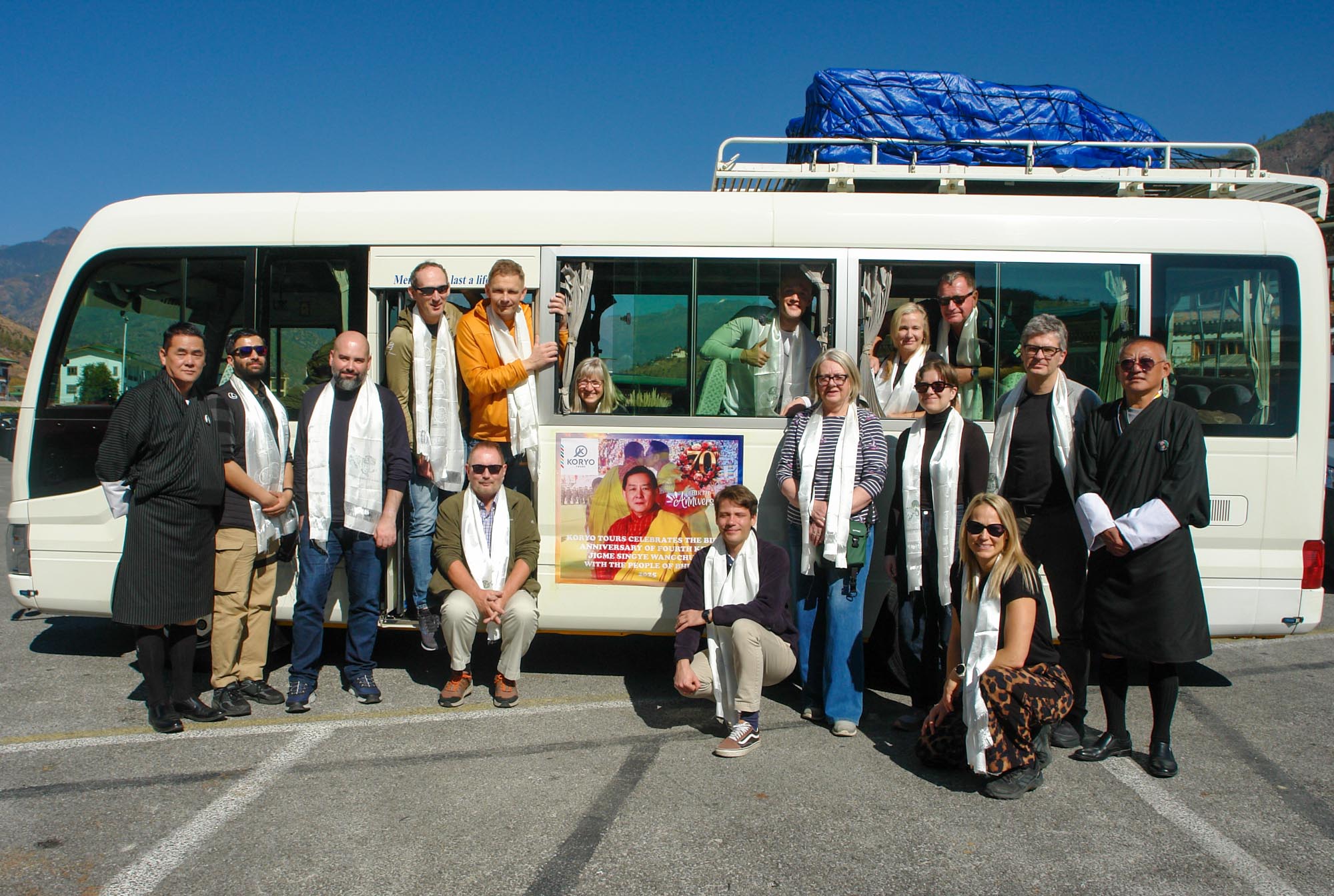
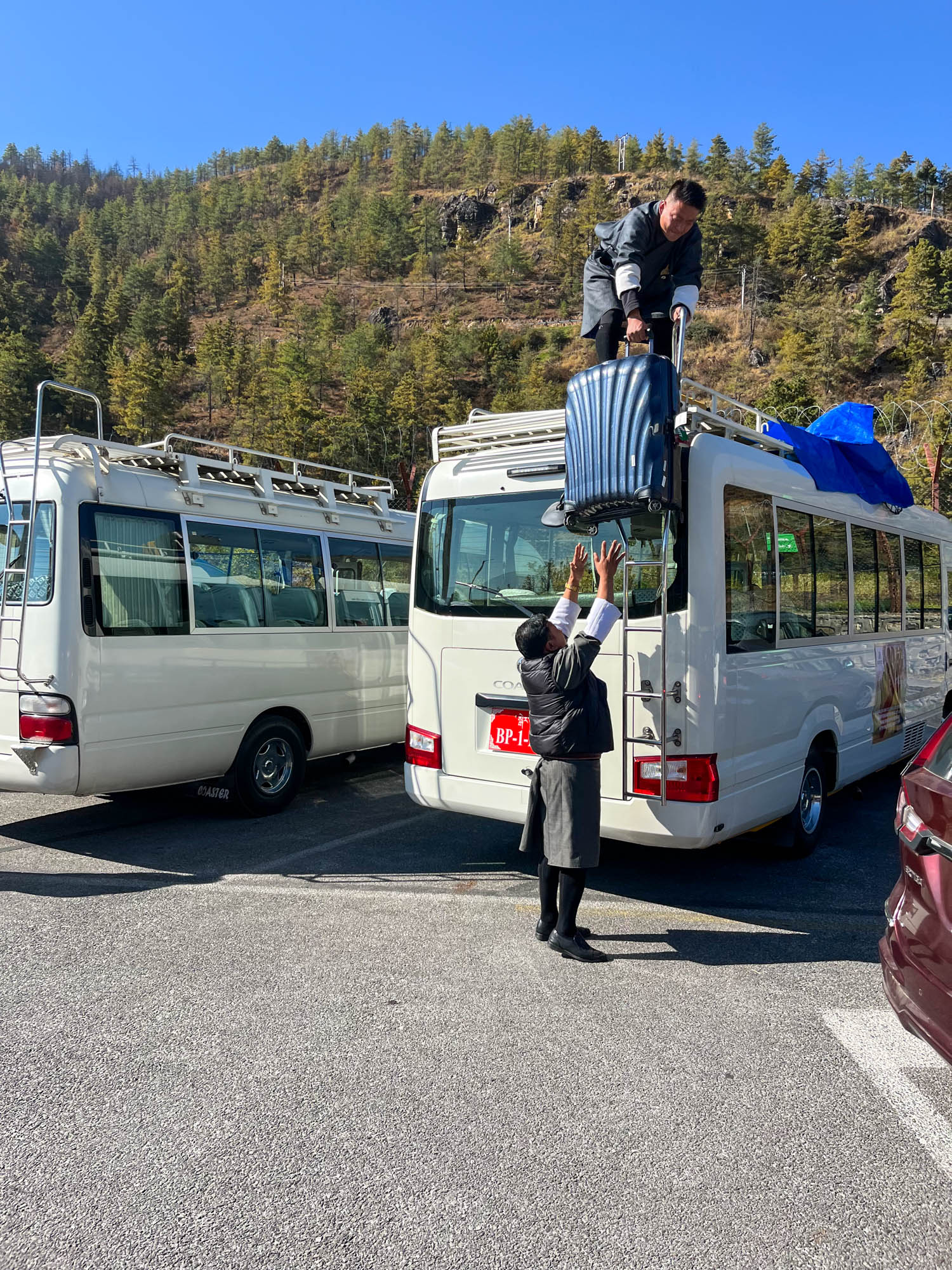
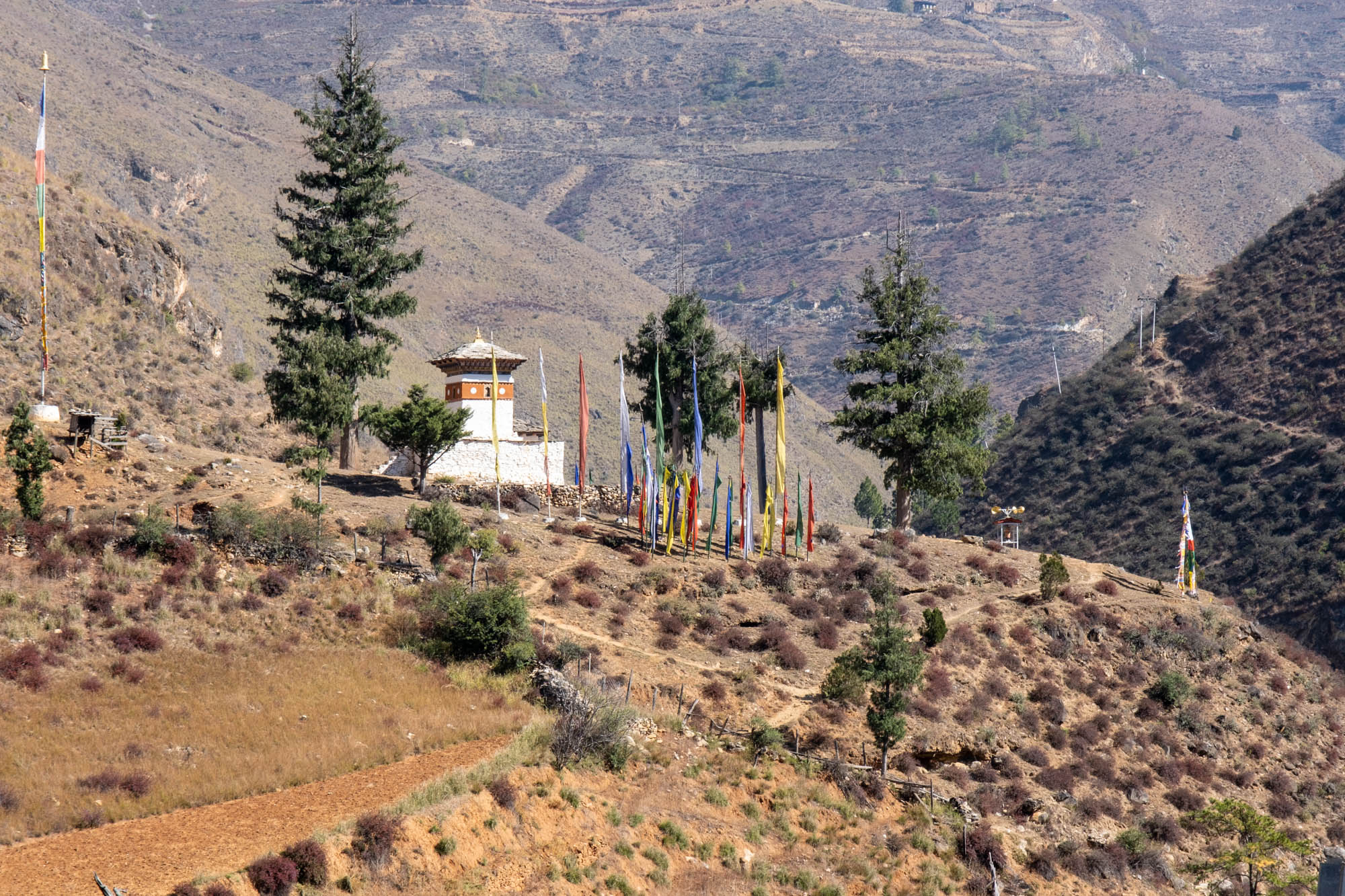
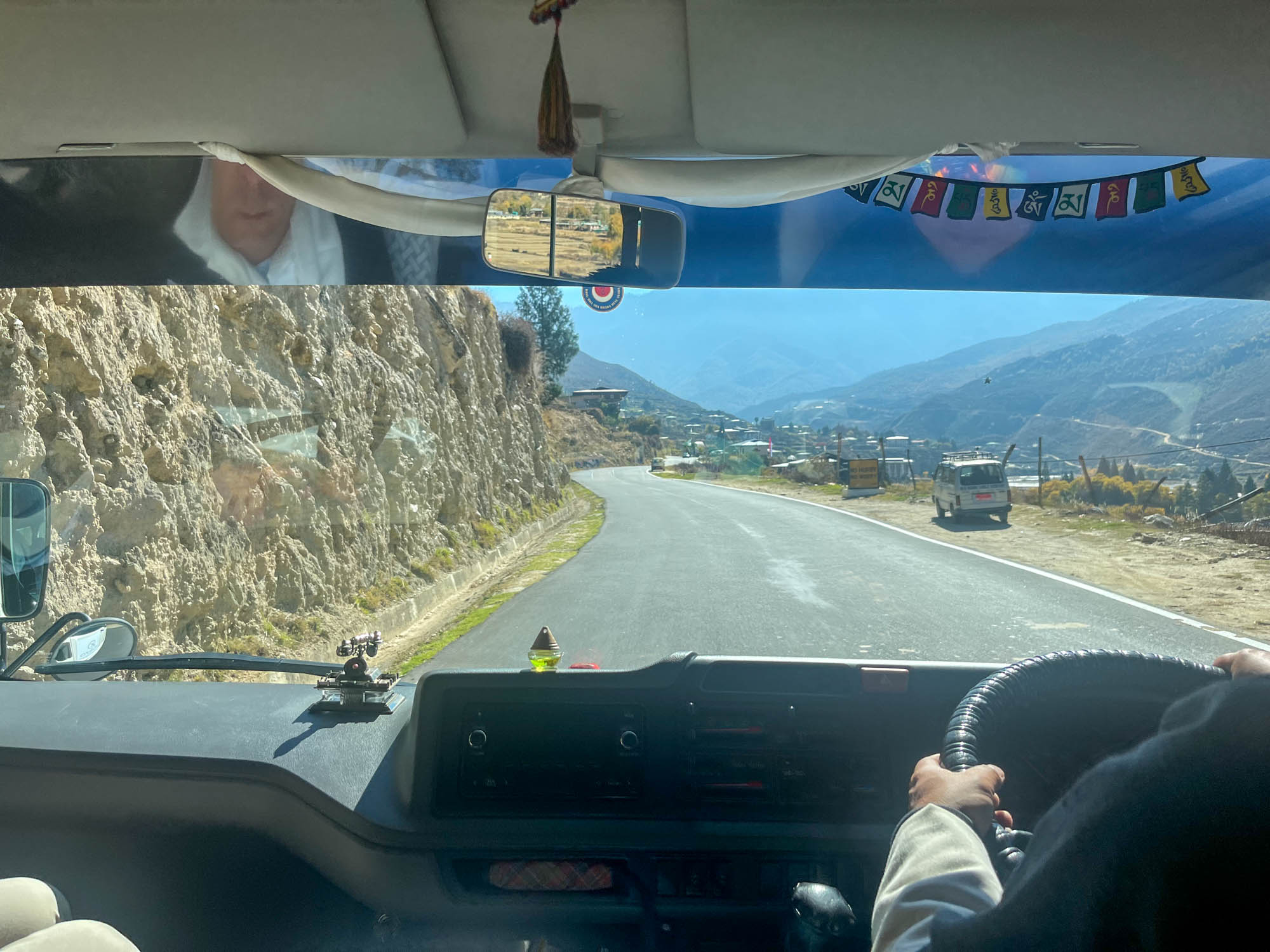
Thimphu is the capital and largest city in Bhutan, as well as the political, religious, and economic center of the country. It lies at around 2,400 meters above sea level and is surrounded by hills rising to roughly 4,000 meters. The city hosts the ministries, parliament, and the royal palace. Despite being the capital, it has developed gradually and in a controlled way, without the rapid urbanization typical of many Asian capitals. One particularly interesting fact is that the city has no classic traffic lights—traffic is directed by police officers at intersections.
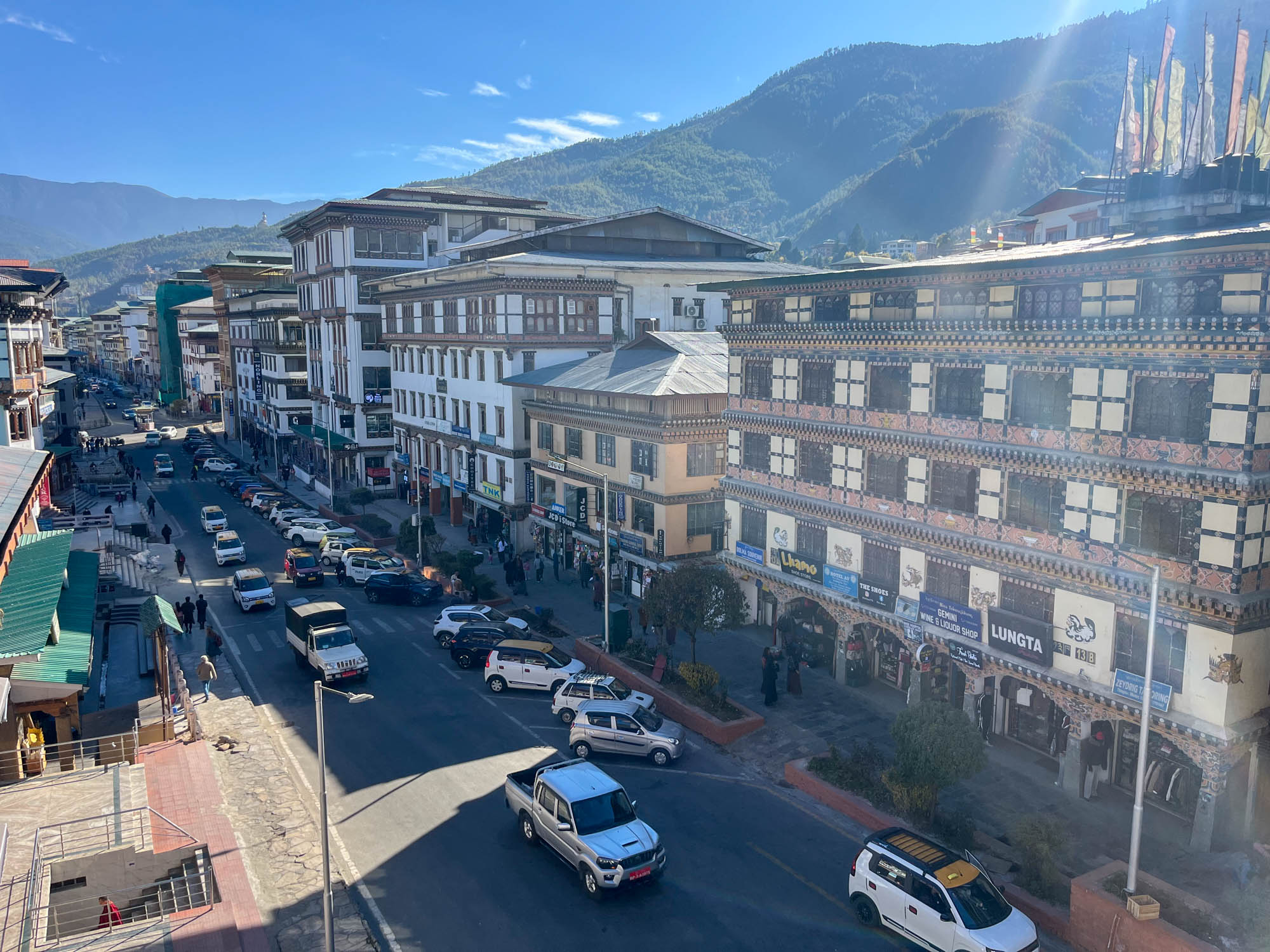
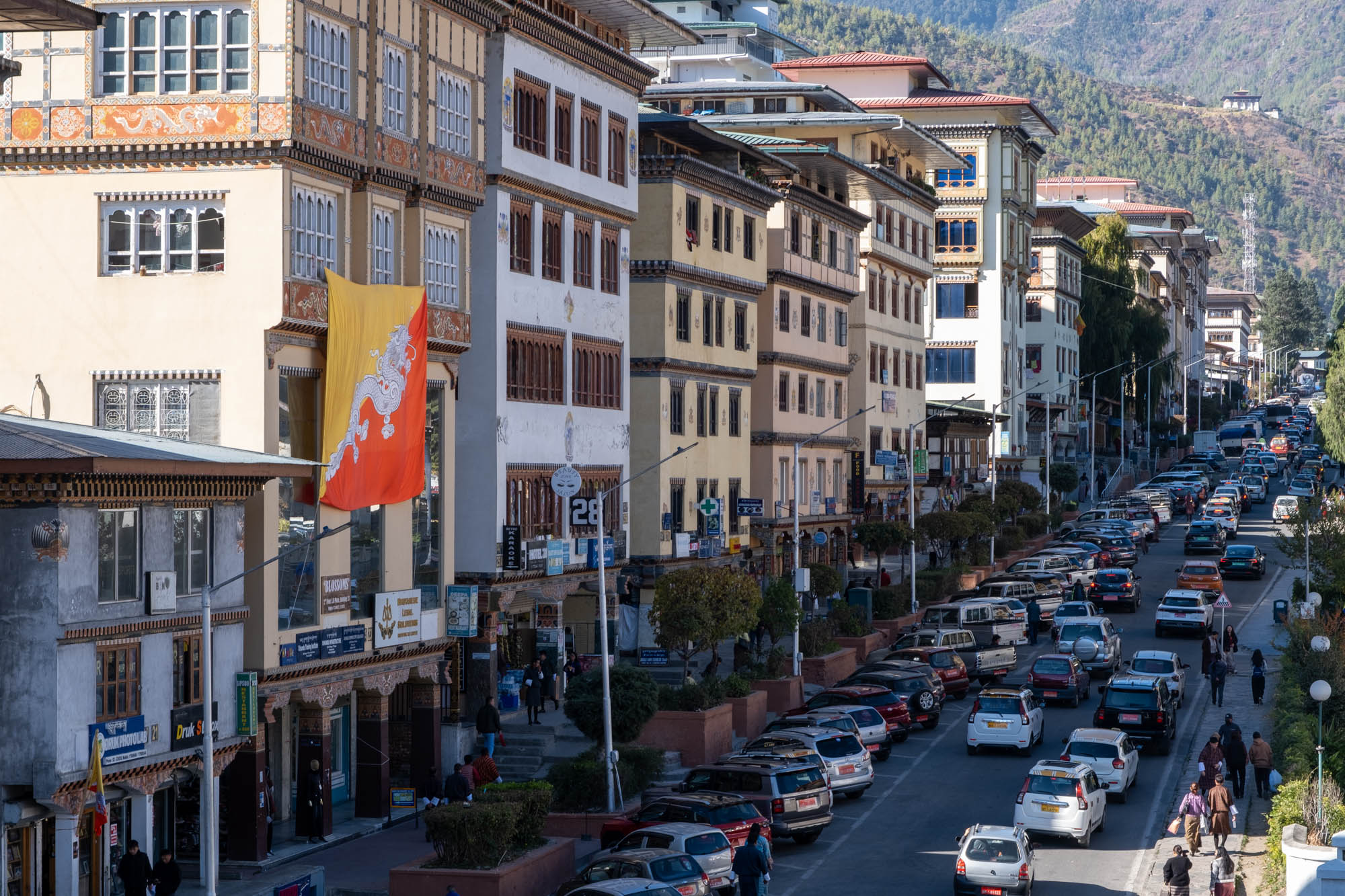
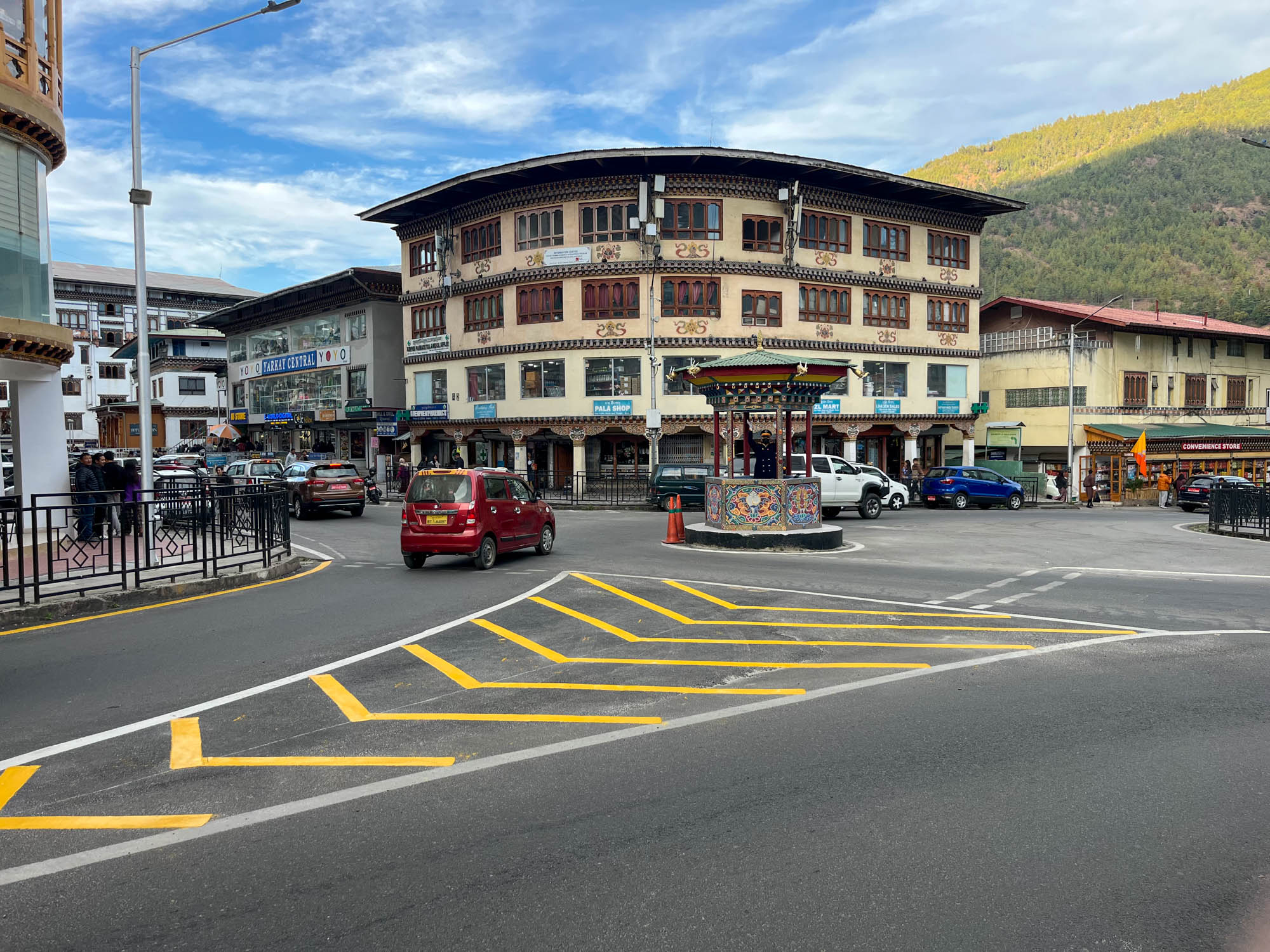
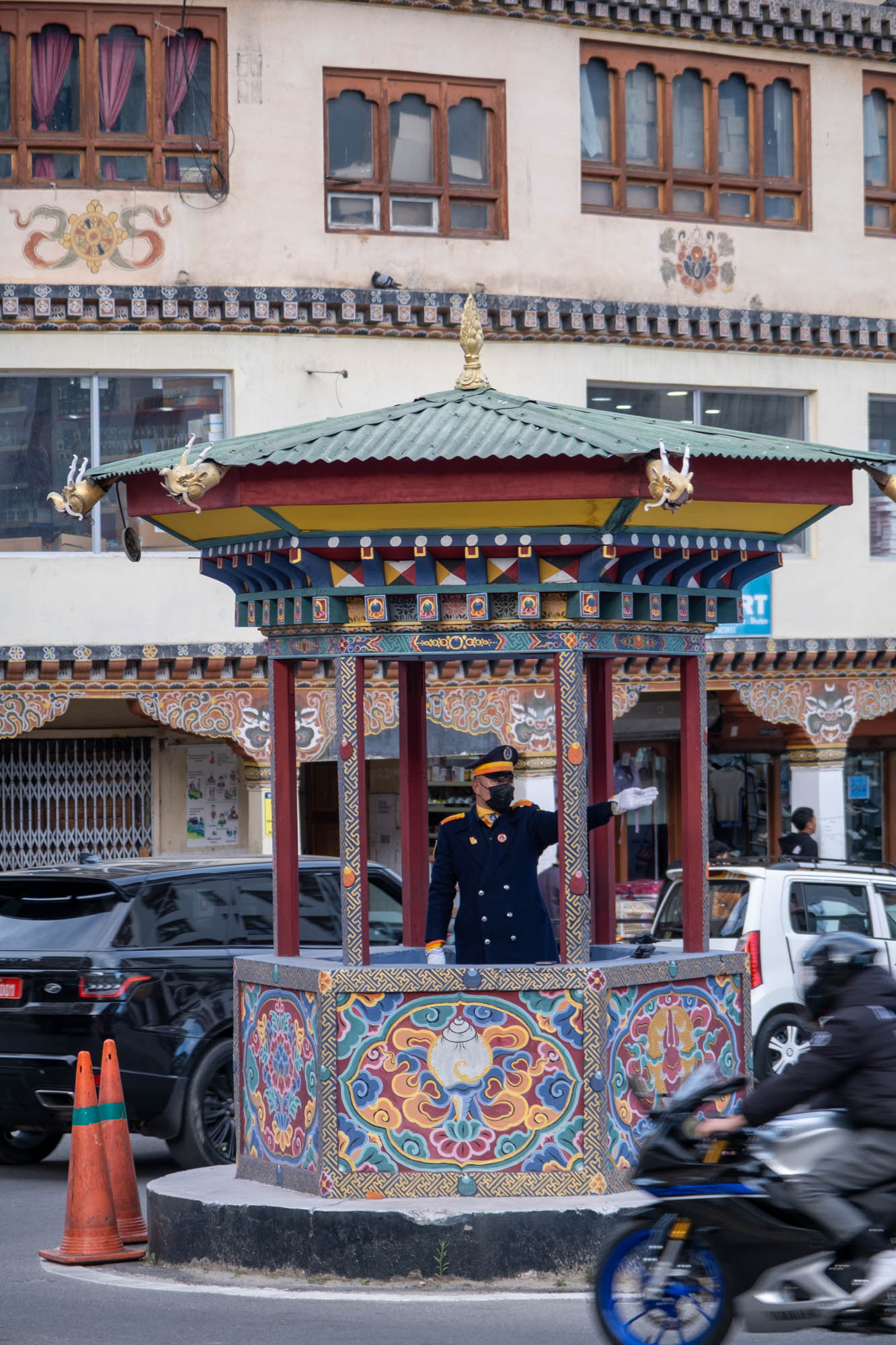
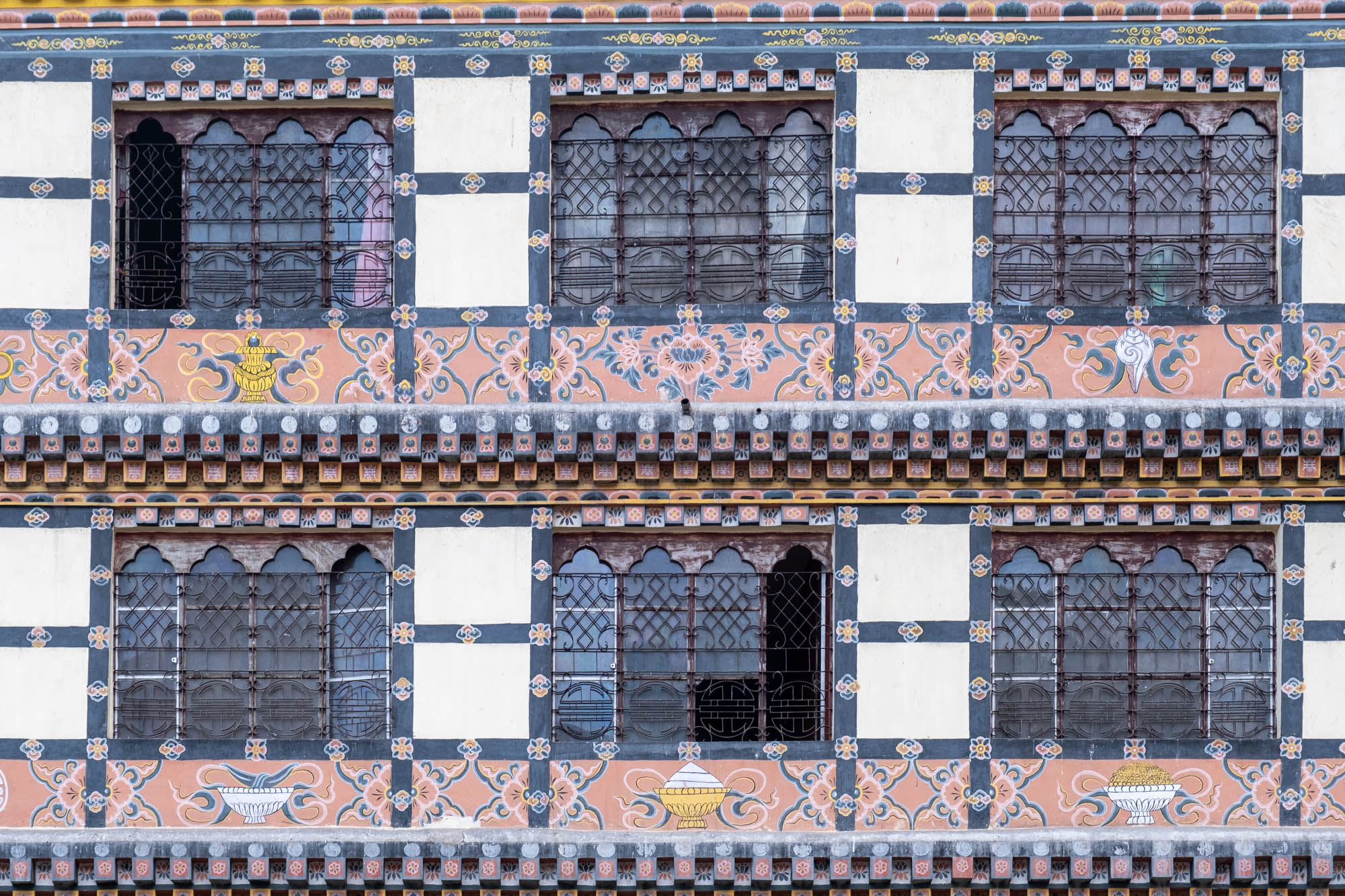
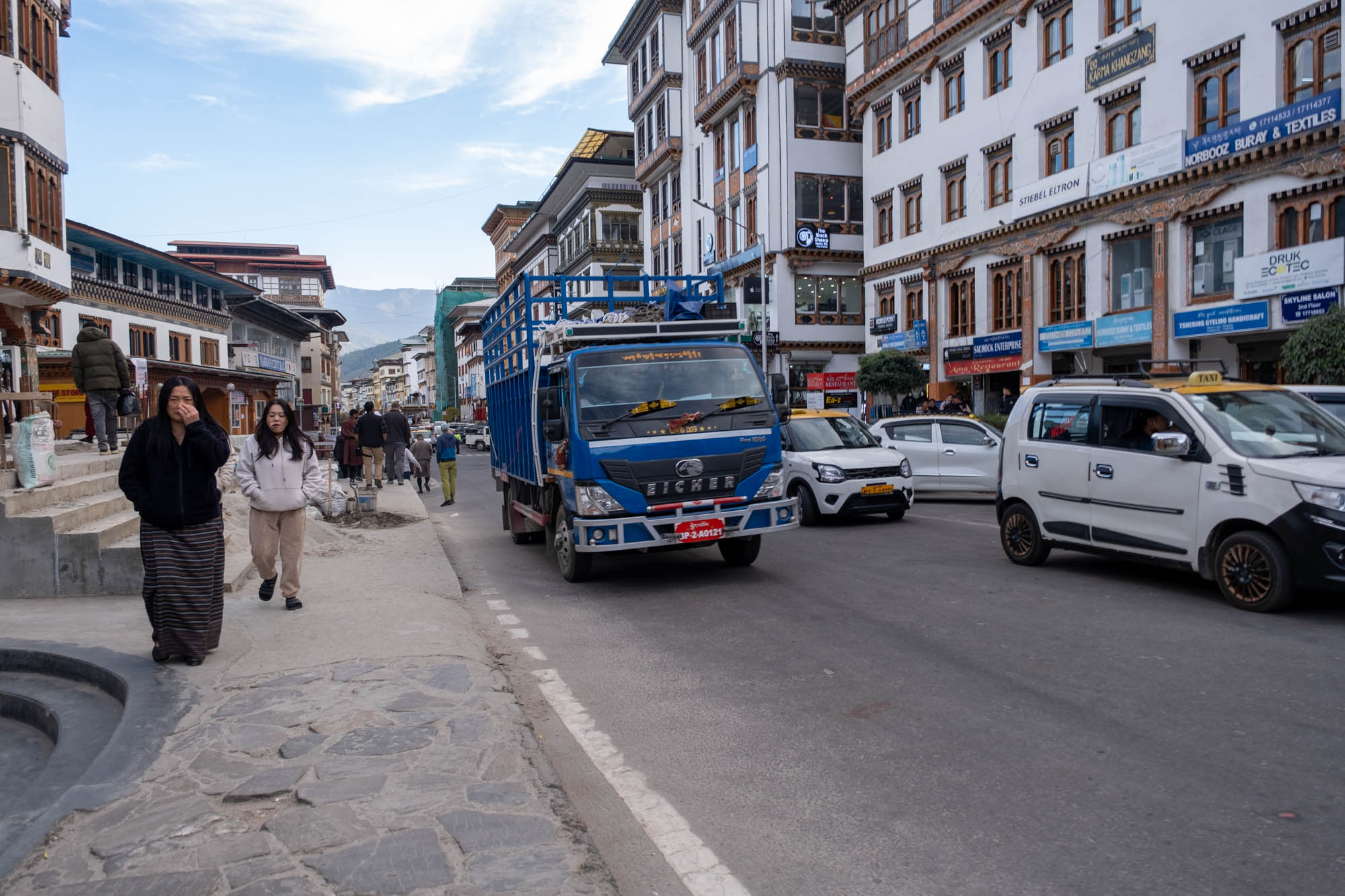
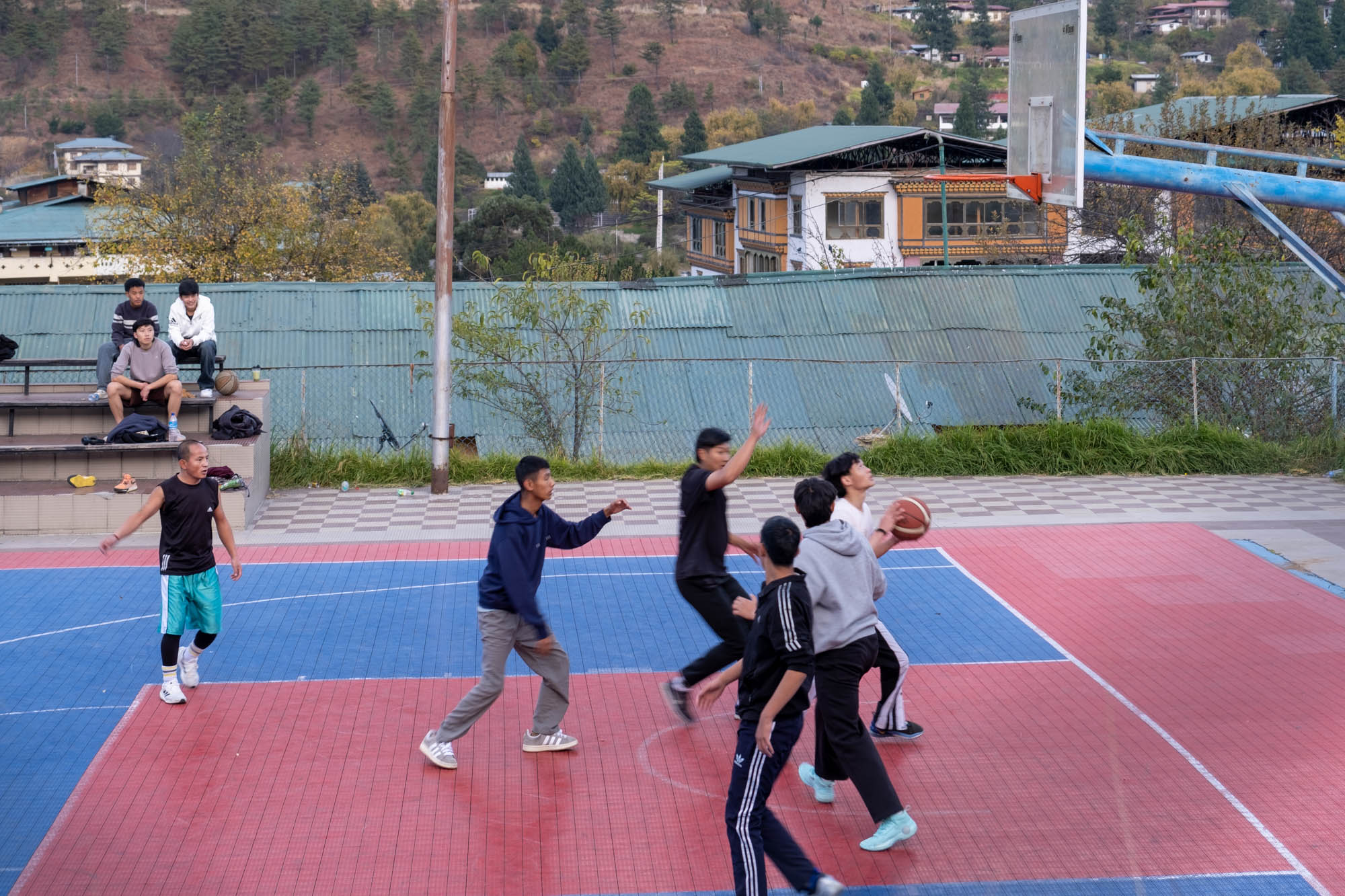
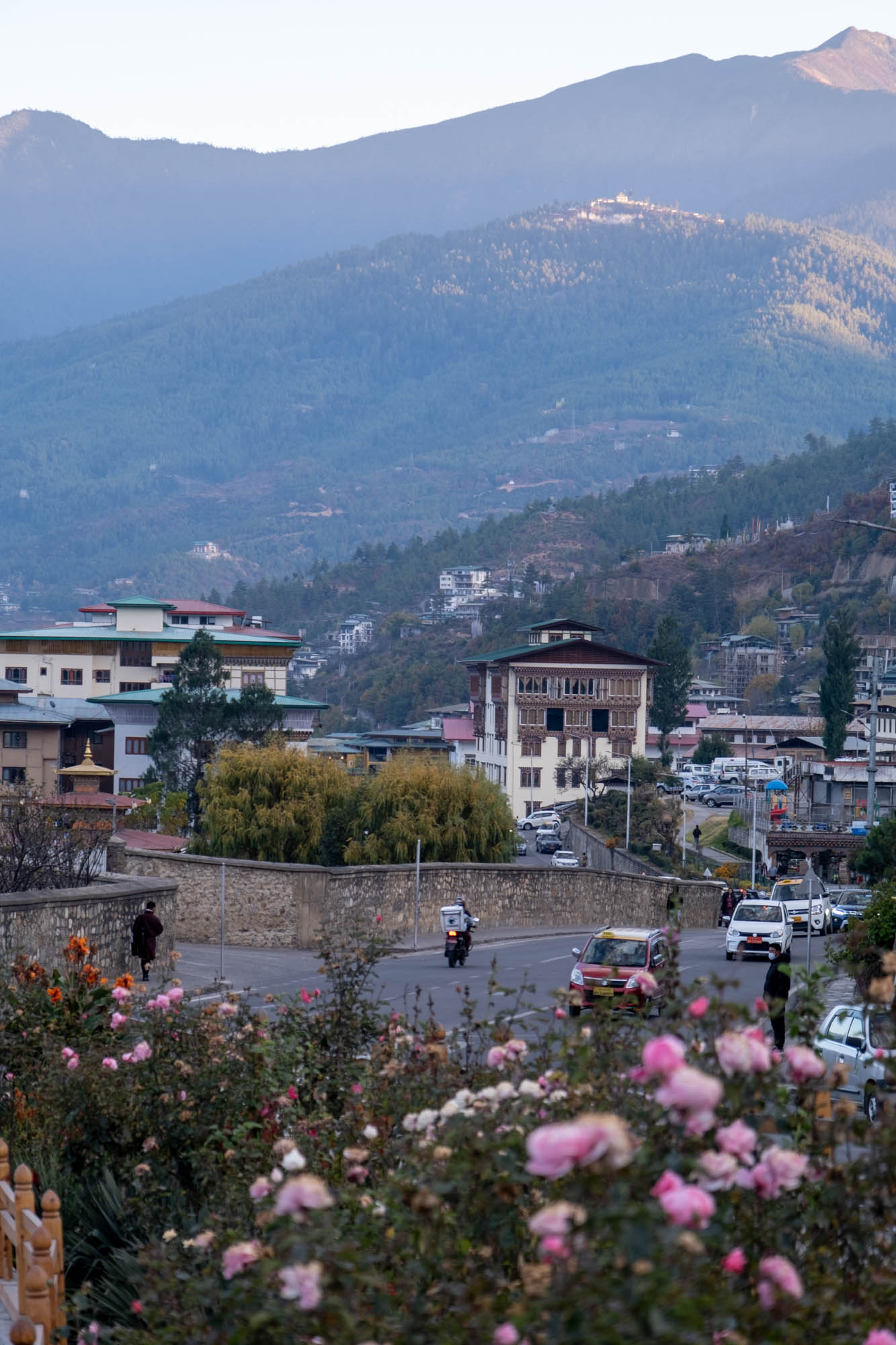
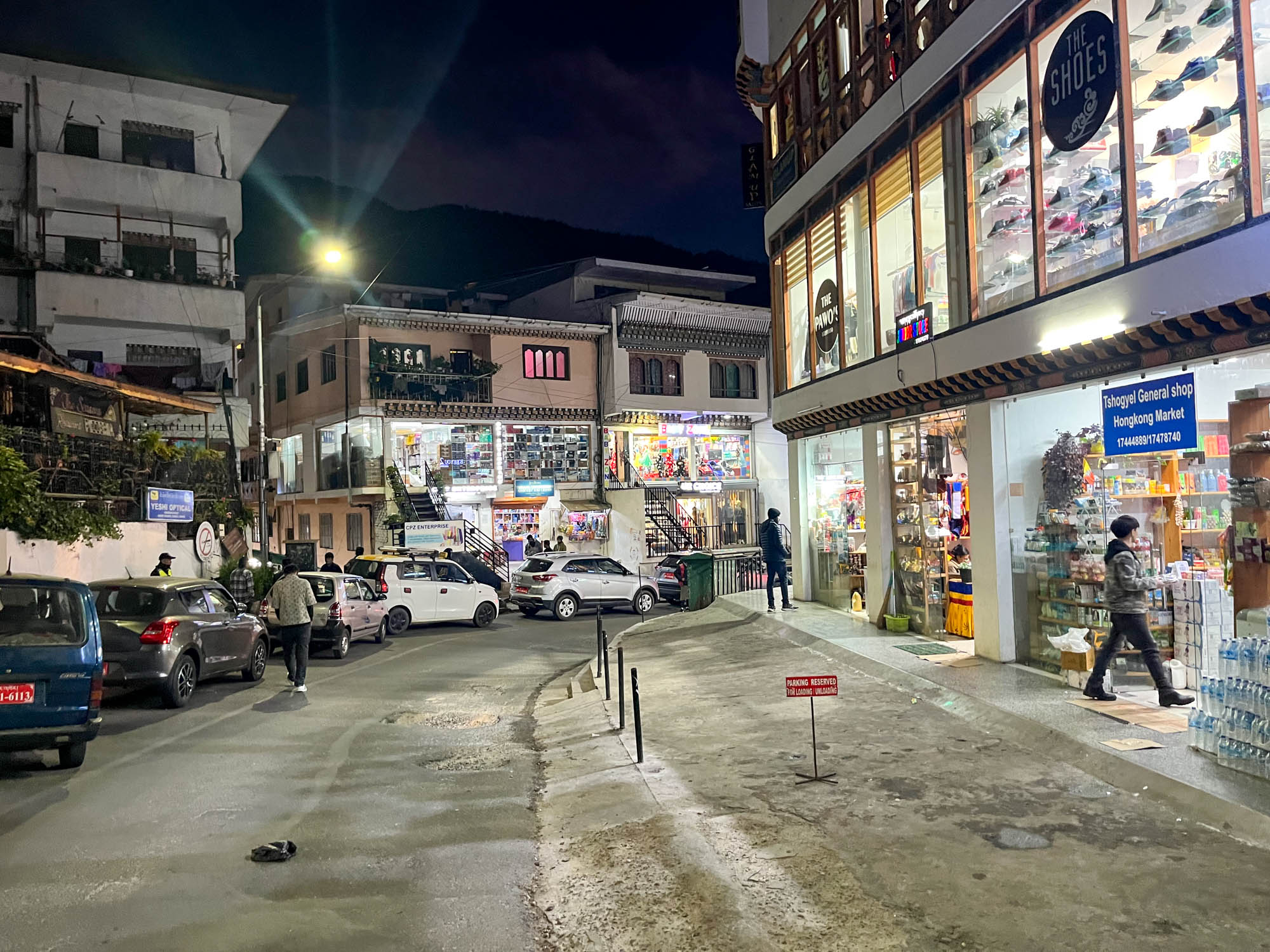
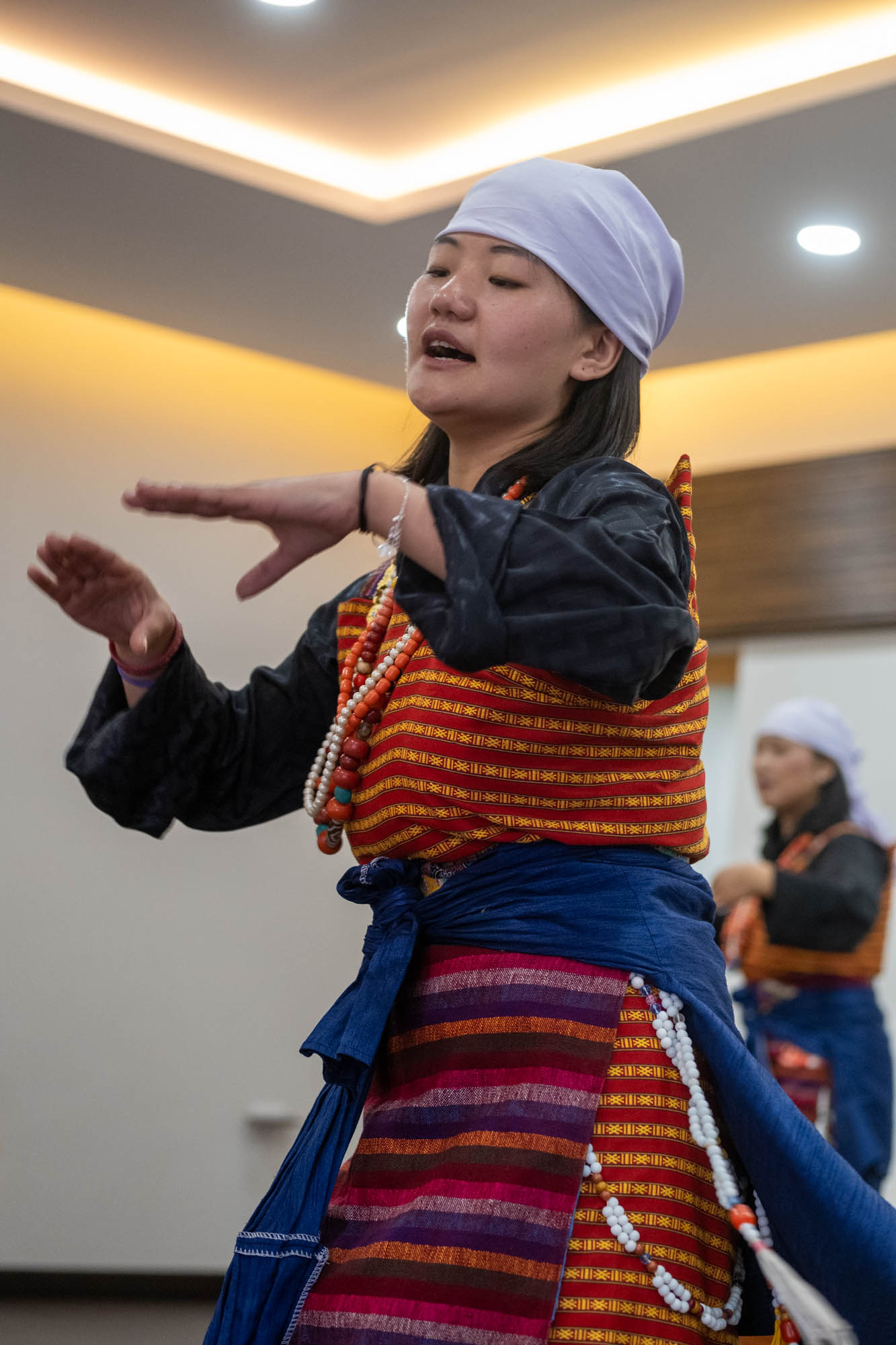
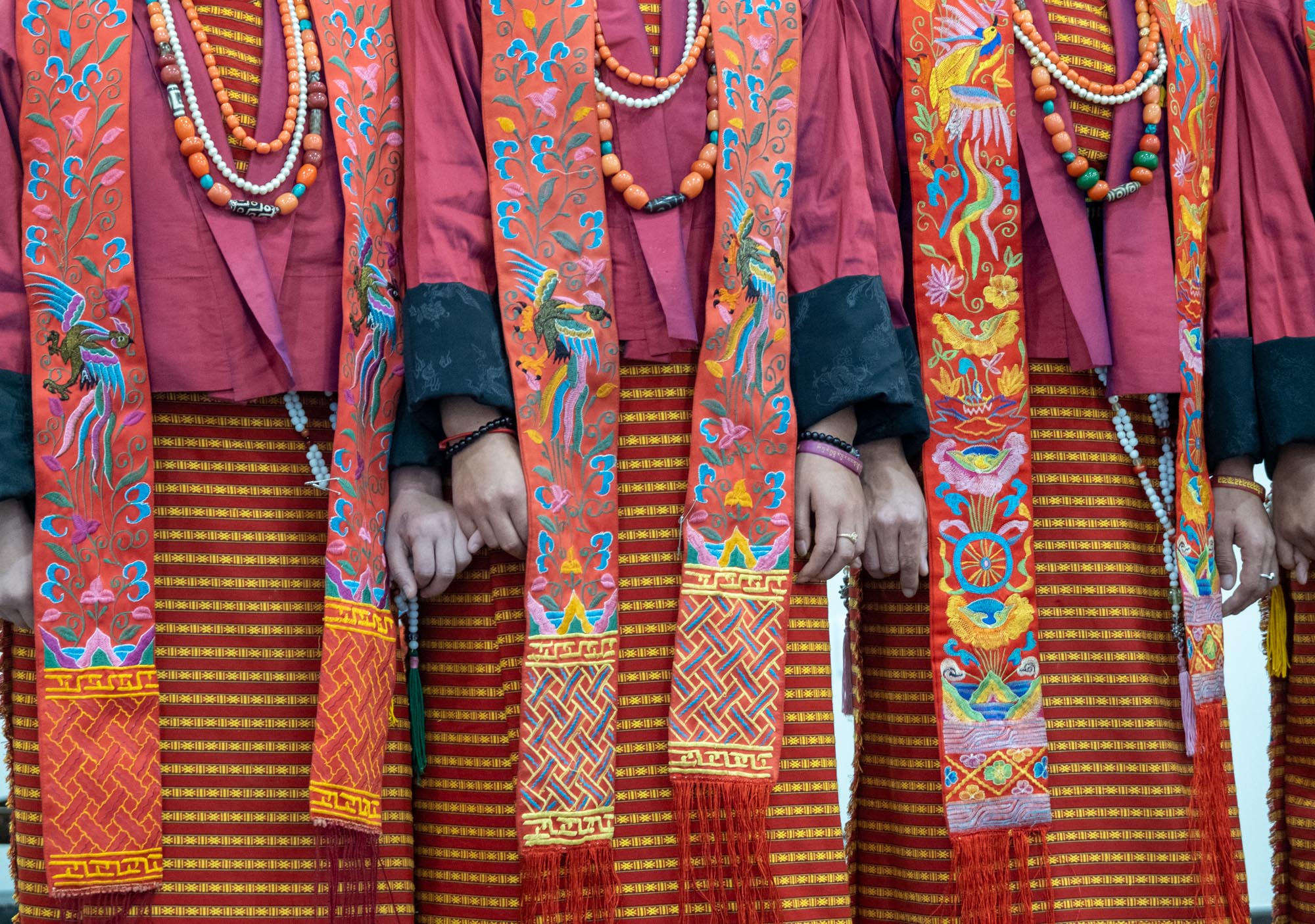
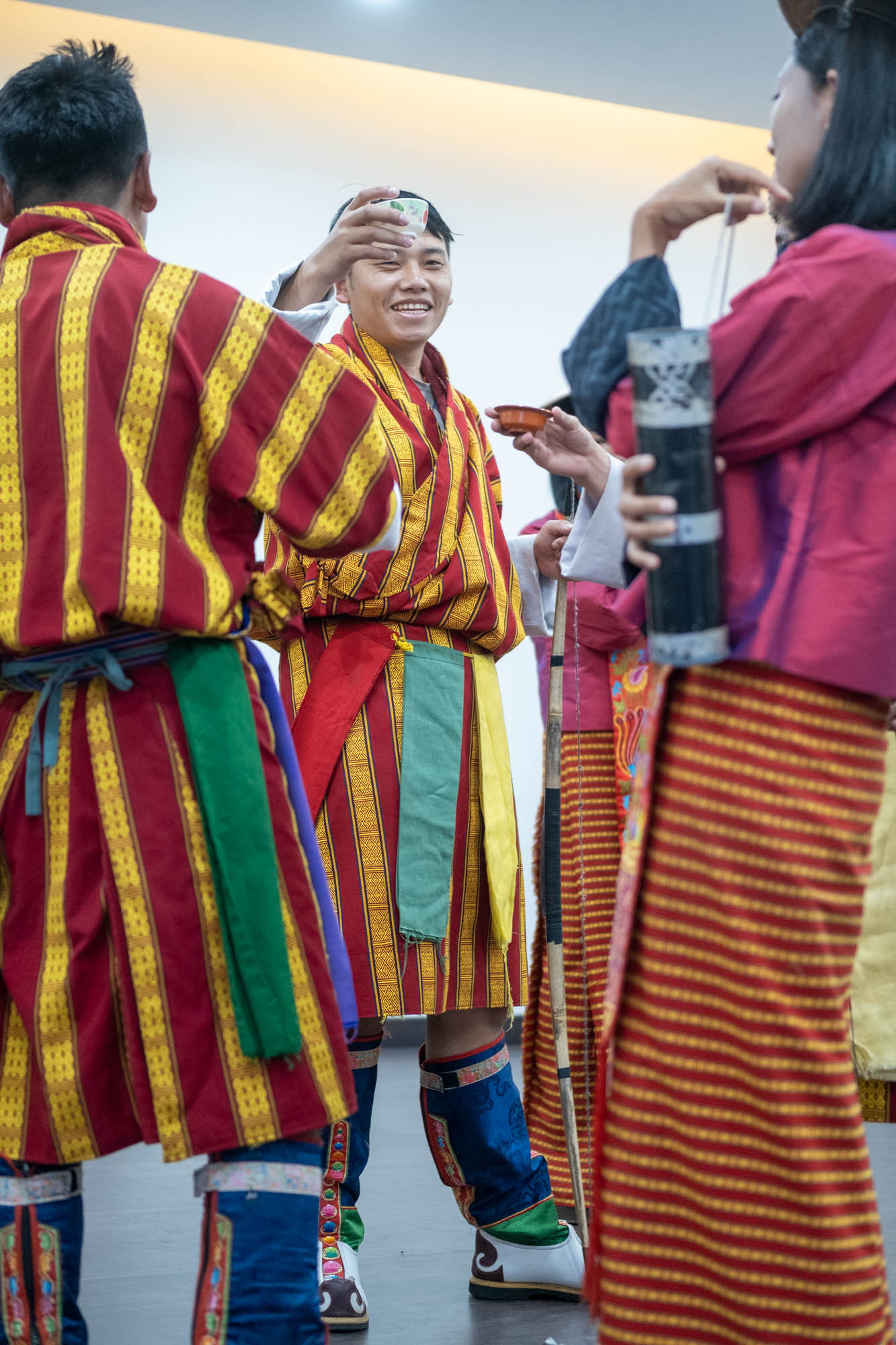
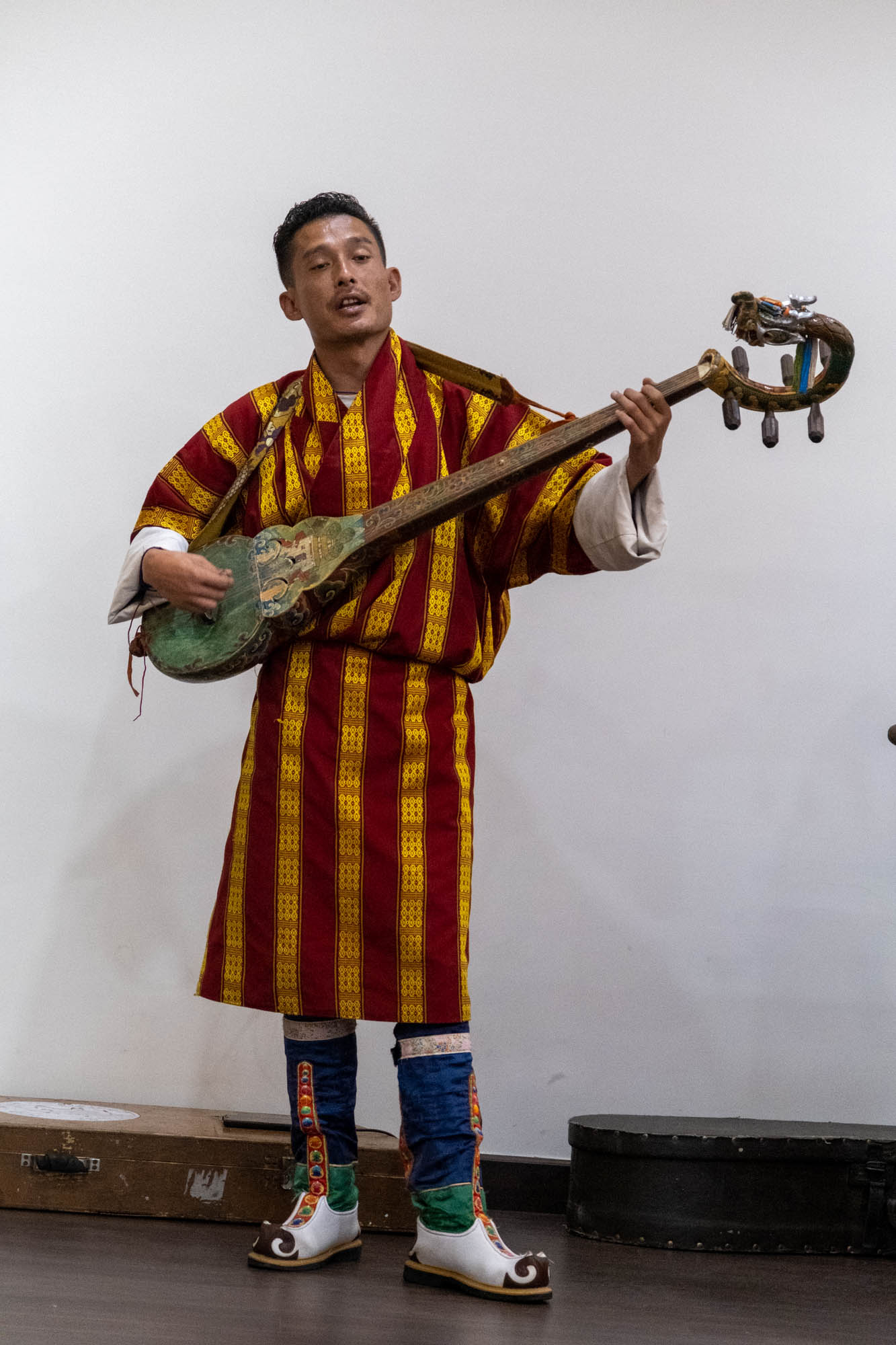
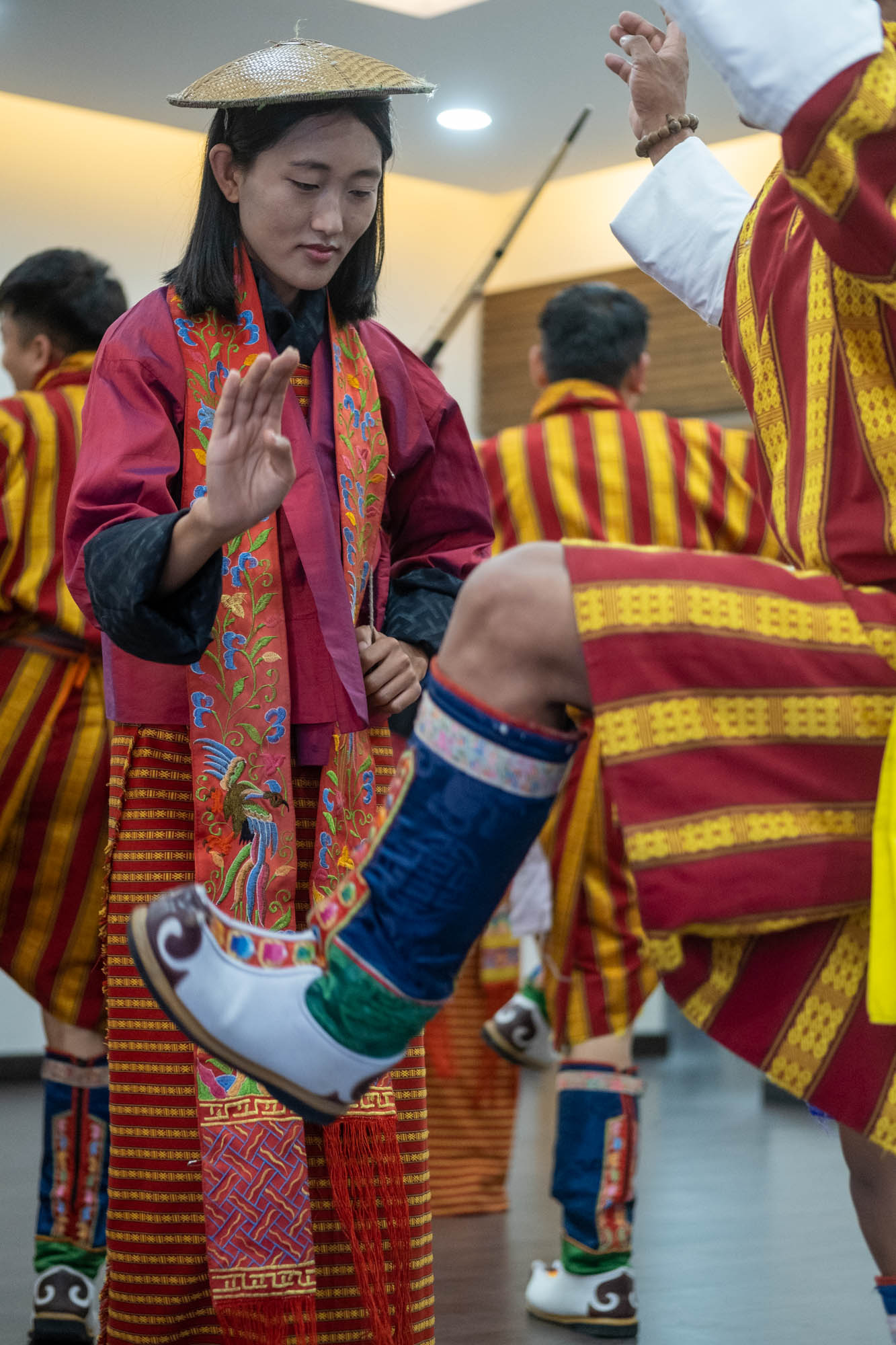
Our hotel was the Thimphu Central Hotel, a solid three-star option—nothing more, nothing less. It’s popular with larger tour groups, the rooms are spacious enough, the Wi-Fi works, and the food is average. Soon we had a short “cultural” program with traditional dances and singing, which was a nice introduction to Bhutanese culture. Since there was still some time before sunset, Gorazd and I went out to explore the city.

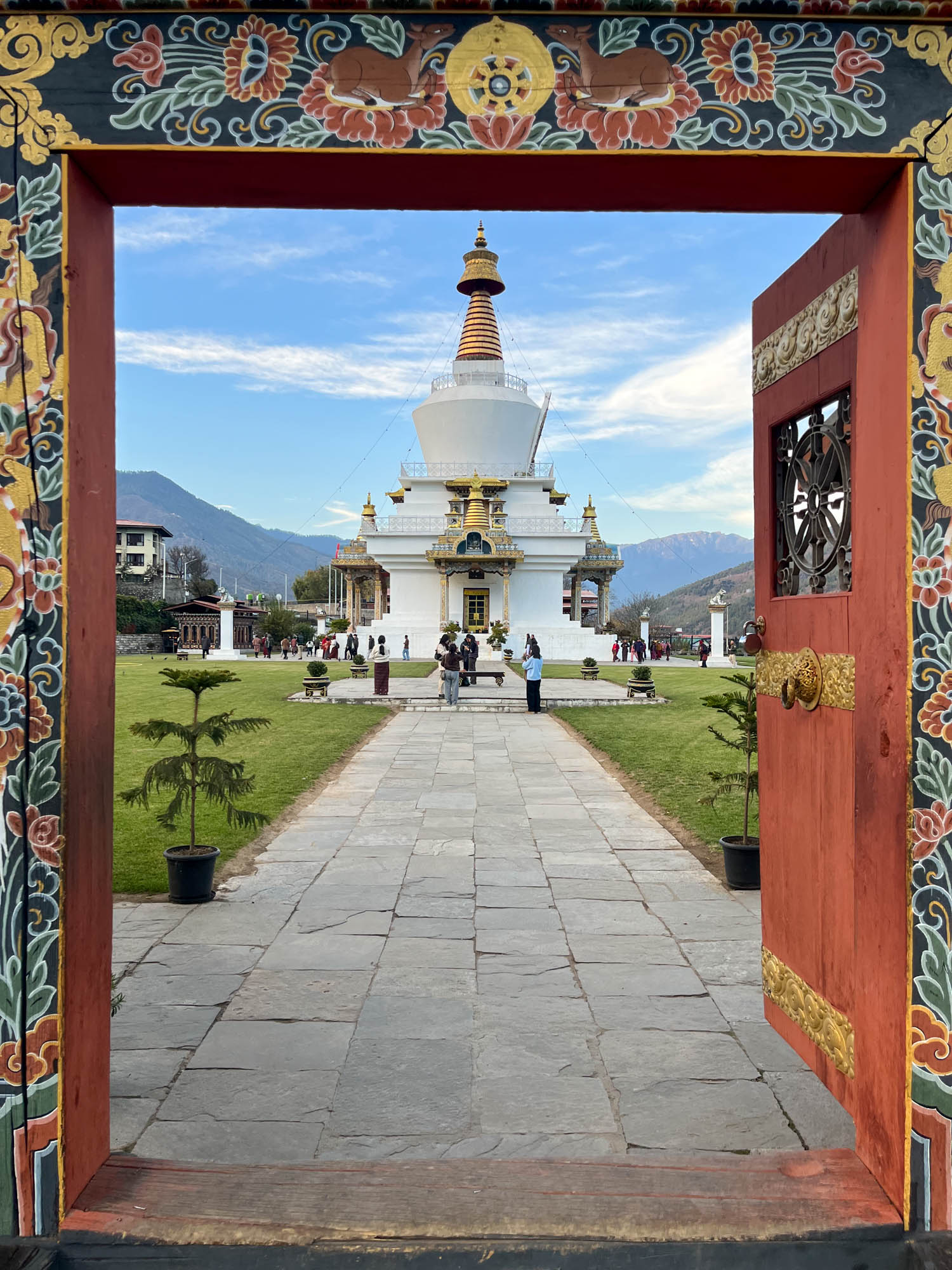
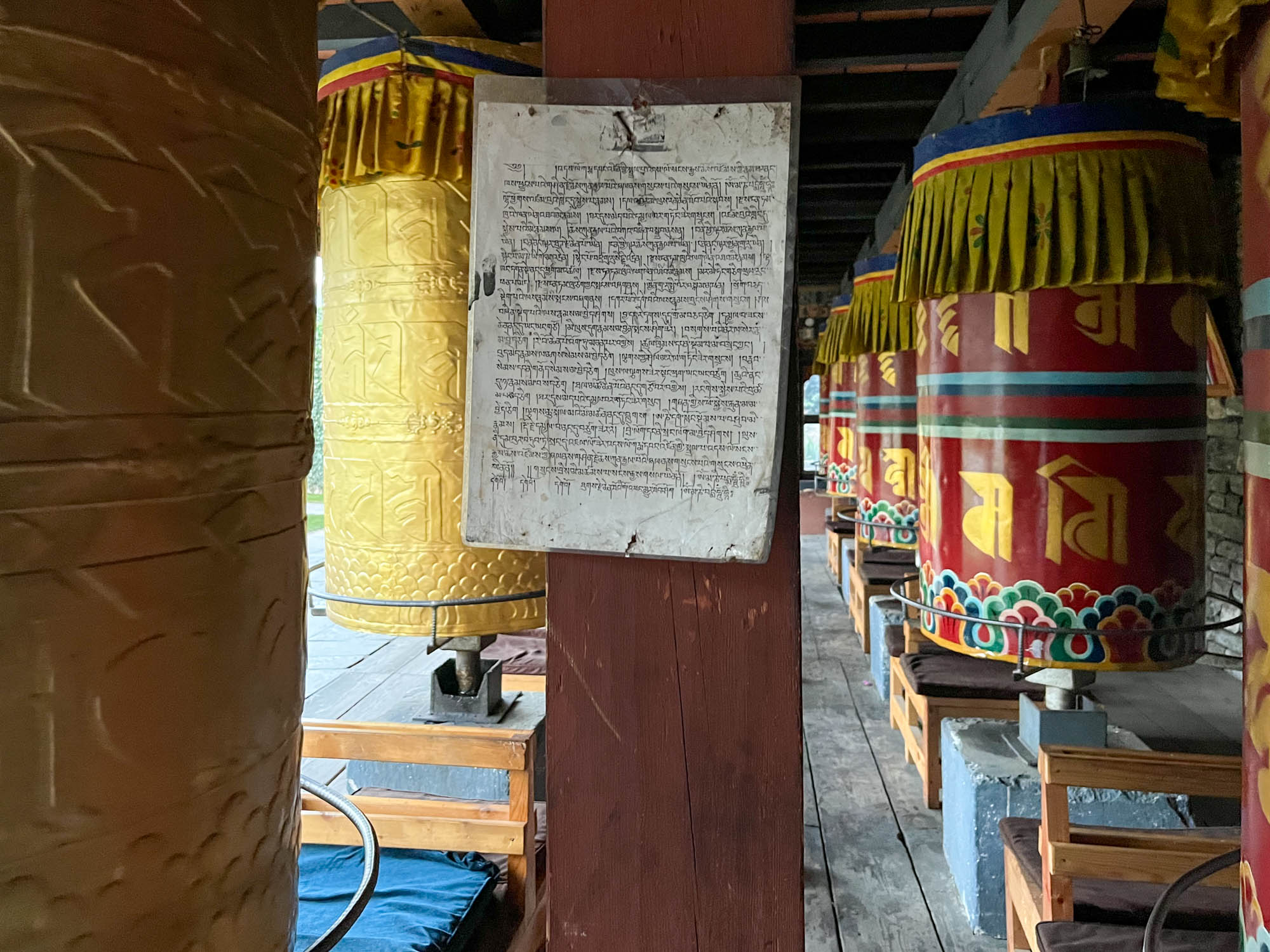
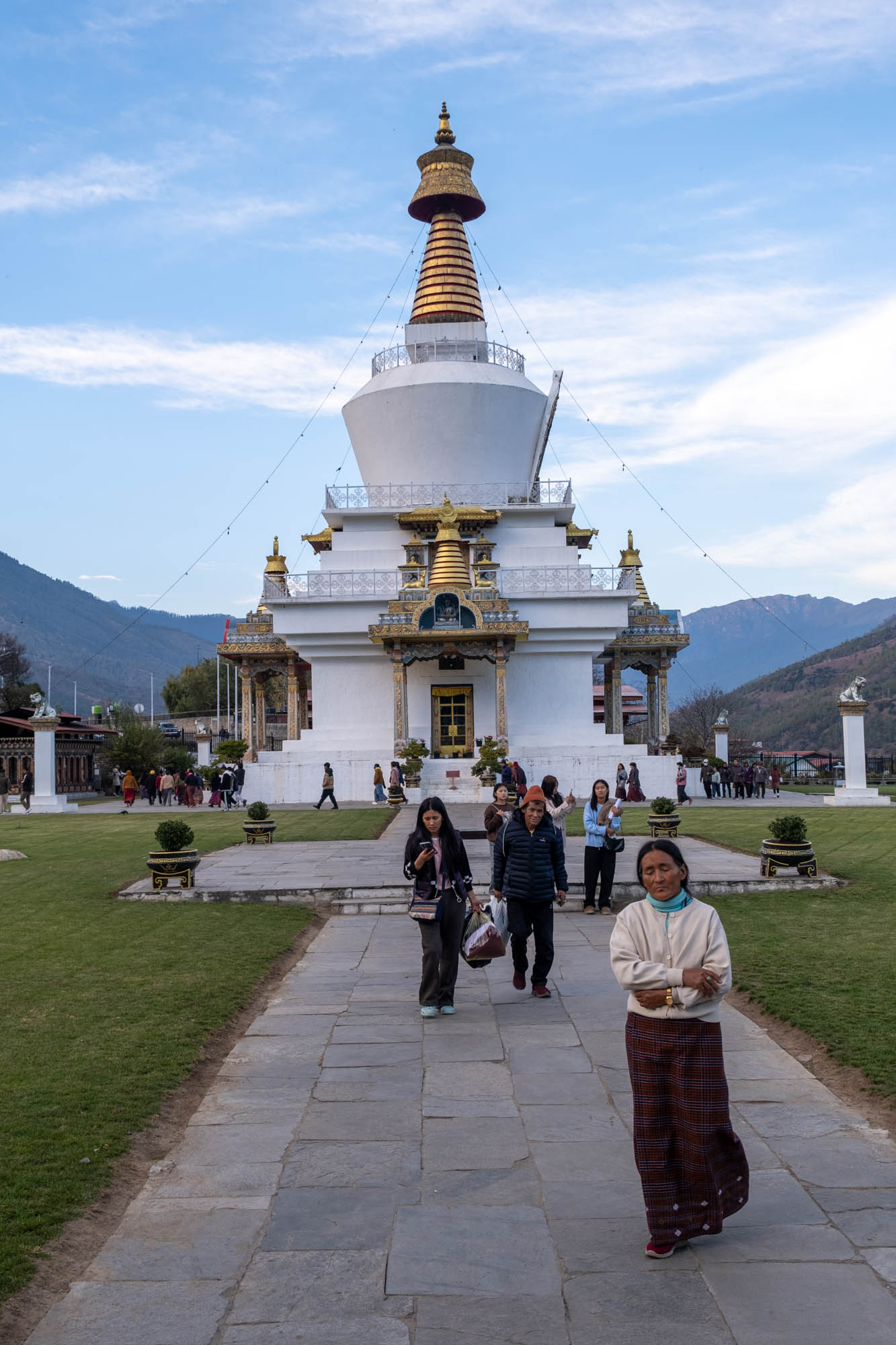
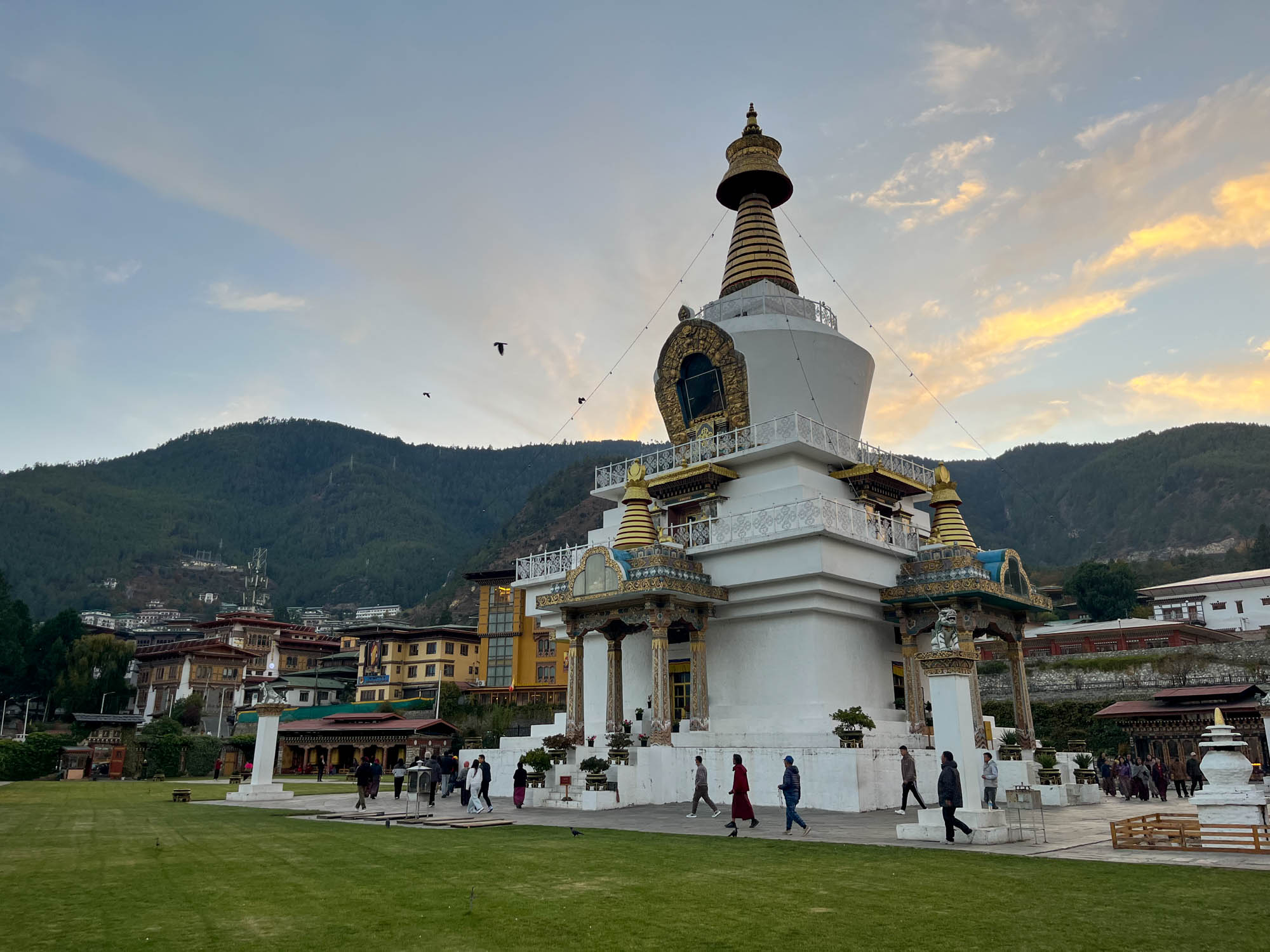
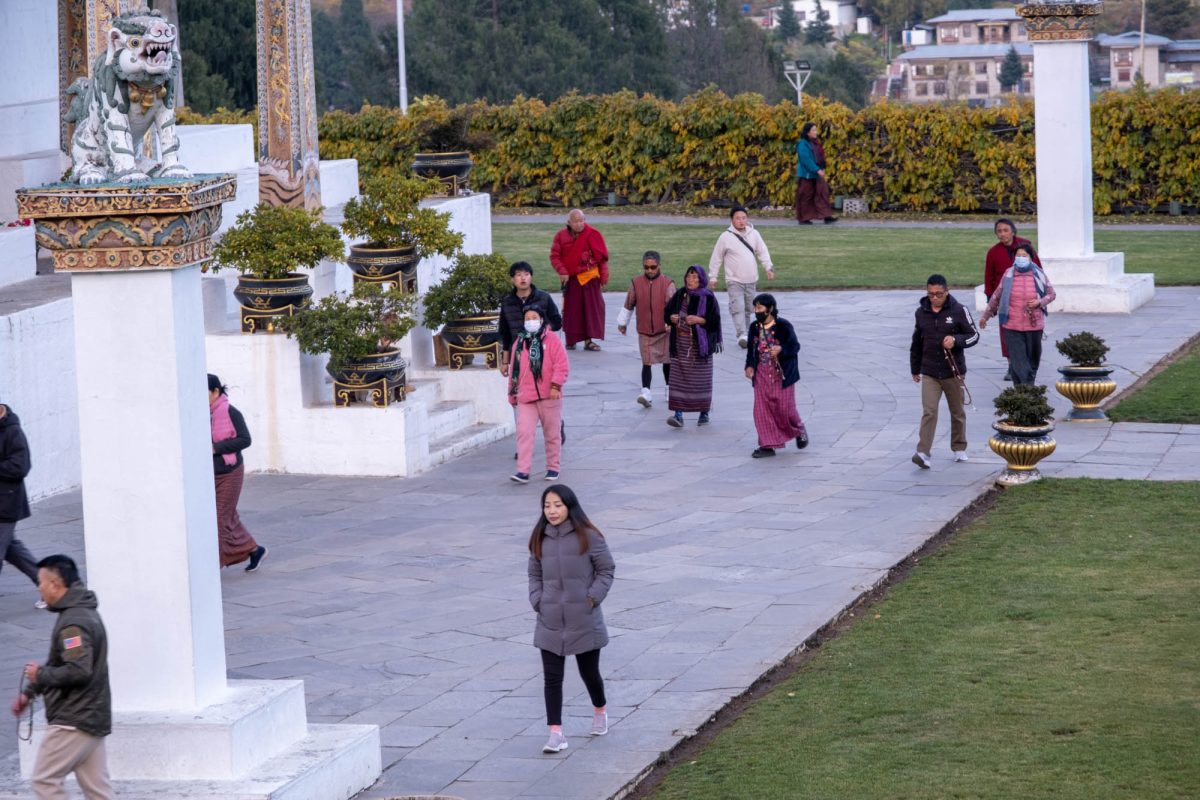
During our walk we reached the memorial stupa (chorten) dedicated to the third Bhutanese king, and of course we wanted to go inside. Immediately a policewoman stopped us and asked where our guide was. Uh-oh. We were on our own. Do you really need a guide to visit? With incredible friendliness she explained that until 17:00, entry requires a fee and a guide. Then she added: if we come back a few minutes after 17:00, she’ll let us in so we can do one circle around the stupa—but we won’t be allowed inside the stupa. Deal. Our first real encounter with the exceptional kindness of people in Bhutan.